Appeals Court Vacates Injunction Blocking Iowa Book Banning Law
In a brief six-page ruling, a three-judge panel of the Eighth Circuit Court of Appeals held that school officials and politicians have broad discretion over what school libraries can remove from library shelves without violating the First Amendment.

In a blow to the freedom to read, a three-judge panel of the U.S. Court of Appeals for the Eighth Circuit this week vacated an injunction that had blocked enforcement of a controversial book banning provision of Iowa state law S.F. 496, and remanded the case back to the district court for a third crack at the case.
In a brief six-page ruling, a conservative three-judge appeals court panel—made up of two Trump appointees and a George W. Bush appointee—held that school libraries are “part of the school curriculum” and that school officials and local politicians thus have broad discretion over what school libraries can make available to students. And, citing the Fifth Circuit’s stunning May 2025 decision in Little v. Llano County, the court ruled that school library book decisions do not implicate a student's right to receive information, concluding that the First Amendment “does not guarantee students the right to access books of their choosing at taxpayer expense.”
In the decision, the appeals court acknowledged that school library decisions are neither “student speech” nor “government speech,” concluding instead that school library books fall into a third category: "school-sponsored speech," which, the court explained, consists of "expressive activity" that a school "affirmatively promotes" as opposed to "speech that it tolerates."
Leaning heavily on a standard largely set forth in a 1988 Supreme Court decision in Hazelwood v. Kuhlmeier (which involved a school principal’s decision to pull articles on divorce and teen pregnancy written by students for the school newspaper) the panel held that school officials and legislators can exercise "editorial control" over decisions in a school setting so long as they are "reasonably related" to "legitimate pedagogical concerns."
"In the context of school-sponsored speech, actions 'reasonably related to
legitimate pedagogical concerns' do not run afoul of the First Amendment," the court held.
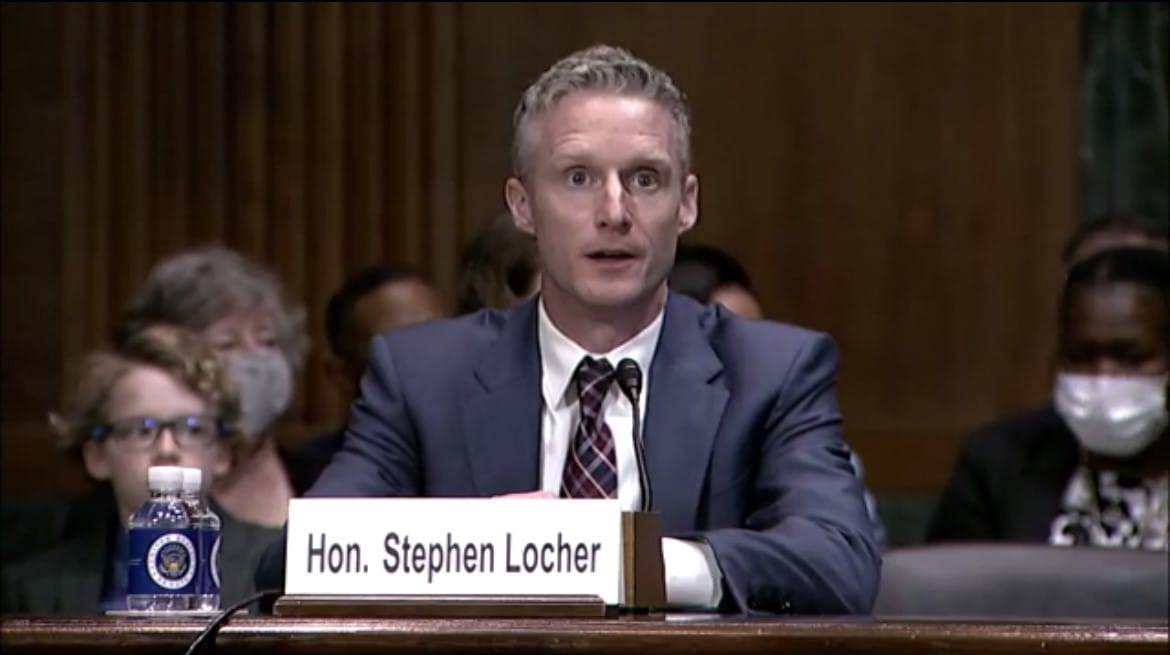
In their decision, the appeals court noted that district court judge Stephen Locher, in his March 2025 decision to block the book banning provisions of S.F. 496, expressly rejected the application of the Hazelwood standard. But the panel overruled Locher.
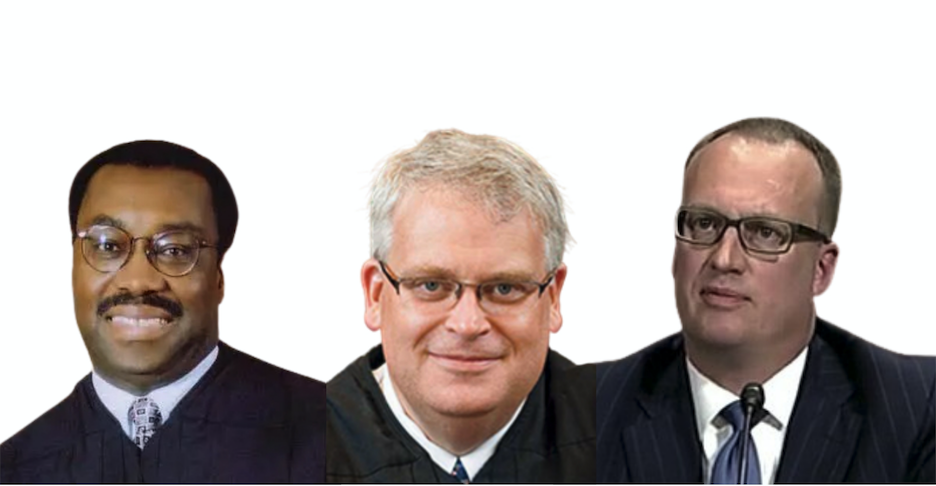
"The Hazelwood standard applies to school activities that ‘may fairly be characterized as part of the school curriculum.’ And a school library is such an activity," the decision states. "Thus, even under a standard less strict than government speech, the selection of books in a school library implicates school-sponsored speech, and the Iowa legislature’s action relating to the curation of school libraries is reasonably related to legitimate pedagogical concerns."
Furthermore, the panel disagreed with Locher that S.F. 496 is unconstitutionally vague.
"Plaintiffs contend the law is so amorphous that it is difficult to apply and requires librarians and teachers to make judgment calls," the decision states. "We find these contentions unavailing. The plain language of the statute prohibits books containing ‘descriptions’ or ‘visual depictions’ of six categories of specified sex acts. The specified sex acts are detailed under Iowa law. The library restrictions are neither amorphous nor unreasonable." The court offered no explanation, however, of how or why it is reasonable for the state to bar 17 year-olds from accessing award-winning books like Toni Morrison's Beloved in their school libraries.
The decision now sends the case back to the district court, barring a move to have the full Eighth Circuit rehear the case en banc. More importantly, it allows the law’s provisions to take effect, which likely means the widespread removal of books from school library shelves across Iowa.
Government Speech by Another Name?
Signed by Iowa governor Kim Reynolds in May 2023, S.F. 496, among its provisions, bans all books and materials with depictions of sex, written or visual, from school libraries, and makes librarians and educators liable for any alleged noncompliance. The law also includes a "Don't Say Gay" provision, barring educators from addressing gender identity and sexual orientation for grades K-6, and it requires school officials to notify parents if their children are using a different name or pronouns or asking for any other gender-related accommodations.
In response to the law, Iowa school districts reportedly pulled hundreds of titles from their shelves when the law was first passed—more than 3,400 according to one study by the Des Moines Register—including a disproportionate number of books that contain LGBTQ characters, historical figures, or themes.
The law prompted two separate legal challenges: in November 2023: Lambda Legal and the ACLU of Iowa filed the first suit to challenge the law, calling it “a clear violation of public school students’ First Amendment right to speak, read, and learn freely.”
Days later, Penguin Random House and the Iowa State Education Association, along with a group of bestselling authors, also sued.
On December 29, 2023 Locher delivered his first 49-page opinion and order blocking the book banning provisions of the law, which he found to be unconstitutionally vague and "wildly overbroad."
However, in August 2024, a three-judge panel of the Eight Circuit vacated Locher’s initial December 2023 injunction and sent the case back to Locher with instructions to more fully assess whether the plaintiffs’ facial challenge to the constitutionality of the law was proper under a test set out in a 2024 Supreme court decision in Moody v. Netchoice.
In March 2025, Locher once again blocked provisions of the law. In an emphatic 40-page decision, the judge found the facial challenge to the law’s constitutionality to be proper, holding that S.F. 496 had resulted in the "forced removal of books from school libraries" that are not obscene, and, in many cases, have "tremendous pedagogical value."
Notably, as the court acknowledged, Locher's March 2025 decision specifically pointed out why the standard articulated in the Hazelwood case (and others cited by the state) are not applicable. Hazelwood involves “true student speech” in the form of student-written articles in the school newspaper, Locher pointed out. However, in the book banning provisions of S.F. 496, the "speakers" are not students, he pointed out, but "the authors and publishers" of the books subject to removal.
"The State Defendants have not identified, nor has the Court been able to locate a single case upholding school library restrictions as broad as those found in Senate File 496," Locher wrote in his opinion, noting that the statewide bans mandated by S.F. 496 are different from the traditionally narrow decisions on book removals made at the local level.
"Books like Nineteen Minutes are not merely being removed from one bookshelf in one school district, but rather from school libraries in dozens of school districts across the state," Locher pointed out. "It is appropriate in this context not merely to apply First Amendment cases involving students’ rights," he concluded, "but also First Amendment cases involving authors’ rights."
Locher also suggested that the state was attempting to use Hazelwood as an end run around the first appeals court panel’s rejection of the state’s government speech argument.
“Hazelwood’s permissive ‘legitimate pedagogical concern’ test governs only when a student’s school-sponsored speech could reasonably be viewed as speech of the school itself,” Locher explained, pointing out that in the Eighth Circuit’s first decision, the three-judge panel concluded that the placement of a book in a school library could “not reasonably be viewed as the school speaking.”
While acknowledging that "school sponsored speech" resides between student speech and government speech, Locher suggested that the initial Eighth Circuit decision treated "government speech" and "school-sponsored speech" as more-or-less synonymous and suggested that applying the Hazelwood standard would "undermine" the Eighth Circuit’s initial ruling by effectively viewing school library books as "government speech after all."
A Long and Winding Legal Road
In a statement, Iowa Attorney General Brenna Bird said the ruling was “a huge win” for Iowa parents. “Parents should always know that school is a safe place for their children to learn, and not be concerned they are being indoctrinated with inappropriate sexual materials and philosophies.” Of course, "inappropriate" sexual content was already barred from school libraries prior to the passage of S.F. 496, critics point out.
The plaintiffs, meanwhile, vowed to press on. "This ruling is a setback, but it is not the end of this fight," said Nathan Maxwell, Senior Attorney at Lambda Legal, in a statement. "Iowa's S.F. 496 is a cruel and unconstitutional law that silences LGBTQ+ children, erases their existence from classrooms, and forces educators to expose vulnerable students to potential harm at home. We will continue to use every legal tool available to protect these young people.”
Dan Novack, Penguin Random House VP and Associate General Counsel also said the legal battle would go on. “While we’re disappointed that the injunction is no longer in place, we are actively evaluating next steps," he said. "The fight continues, and we stand with authors, educators, librarians, and students to protect access to books and the freedom to read.”
Freedom to read advocates have always acknowledged that the legal path to victory can be long and winding would require patience, and that's proving to be the case. After a winning streak in court at the end of 2024 and into early 2025, the Eighth Circuit decision this week is yet another recent setback for freedom to read advocates—with several more important cases involving public and school libraries still in the pipeline.
This week's Eighth Circuit ruling comes after the Supreme Court's December 2025 decision not to review the controversial Fifth Circuit decision in Little v. Llano County, which held there was no right to receive information in public libraries.
Also in the pipeline, two appeals in the Eleventh Circuit: Parnell v. School Board of Escambia County (in which a district court, leaning heavily on the Fifth Circuit's Llano decision, agreed there is no First Amendment right to receive information in a school library), and an appeal of judge Carlos E. Mendoza's August 2025 decision to wipe out two controversial book banning provisions in HB 1069.
The Eighth Circuit is also reviewing a 2024 decision to strike down Arkansas’s Harmful to Minors law, Act 372.
The Ninth Circuit, meanwhile, recently revived a challenge of Idaho's recently enacted law HB 710, which requires schools and libraries to remove books vaguely deemed to be “harmful” to minors.
Two more closely watched book banning cases are also proceeding to trial at the district court level. In Colorado, Crookshanks, et al. v. Elizabeth School District is heading to trial after the defendants abruptly abandoned an appeal before the Tenth Circuit in January, just days before oral arguments, leaving in place an injunction that ordered 19 books be returned to a high school library’s shelves.
And in Utah, a coalition of plaintiffs is suing Utah state officials alleging that H.B. 29, the state’s “Sensitive Materials Law,” is overbroad and in violation of the First and Fourteenth Amendments.