Librarians Say the Library Ebook Market Needs Another Breakthrough Moment. Can Legislation Help Deliver It?
Amid surging demand, budget stress, high prices and unwieldy restrictions, librarians say the digital library market is unsustainable and they are looking to a new wave of proposed legislation to support some fundamental reforms.

This month marks a milestone of sorts for the library community: it was 15 years ago, in March 2011, that HarperCollins first instituted its 26-lend “metered” access model for library ebooks.
No, you probably won’t see too many librarians celebrating, though many librarians say they have warmed to the model over the years, with several telling Words & Money that they find it workable, if not necessarily ideal.
More broadly, librarians also recognize that the move by HarperCollins—which was highly controversial at the time it was announced—ultimately, in retrospect, proved to be a breakthrough moment for the library ebook market. Over the next four, often contentious years, the 26-lend model would become the foundation upon which all of the major publishers would eventually agree to get into the market.
Some 15 years later, digital lending is now a core—and growing—service for public libraries. Yet the marketplace, librarians say, remains fraught.
“It’s complicated,” says Michael Blackwell, Director of the St. Mary’s County (Maryland) Library, when asked about the state of the digital library market today. “On the positive side, there is more availability of titles than ever before. Even among the smaller independent publishers, digital availability is now pretty much equivalent to print. That’s a huge change from 2011, when many publishers, including half of the then Big Six publishers, weren't offering us access at all.”
But the growth in the market doesn’t tell the whole story, Blackwell says. And after a decade of ups, downs, and plateaus, the library ebook market, he suggests, is desperately in need of another breakthrough.
“Between increasing demand, rising costs, the need to re-license popular titles, and the lack of perpetual access, it’s unsustainable,” says Blackwell, who is also an organizer of ReadersFirst, a coalition of librarians dedicated to improving digital access. “We've created this monster that is eating up our budgets. And we get less and less every year for what we put into it.”
The Path to Here
Tension within the digital library market is nothing new, of course. Blackwell notes that over the last decade, all of the Big Five publishers have unilaterally raised prices, and several have scaled back license terms over the objections of libraries. And in 2019, Macmillan shocked the library world by instituting a two-month embargo on the company’s new release ebooks for libraries, sparking a national controversy.
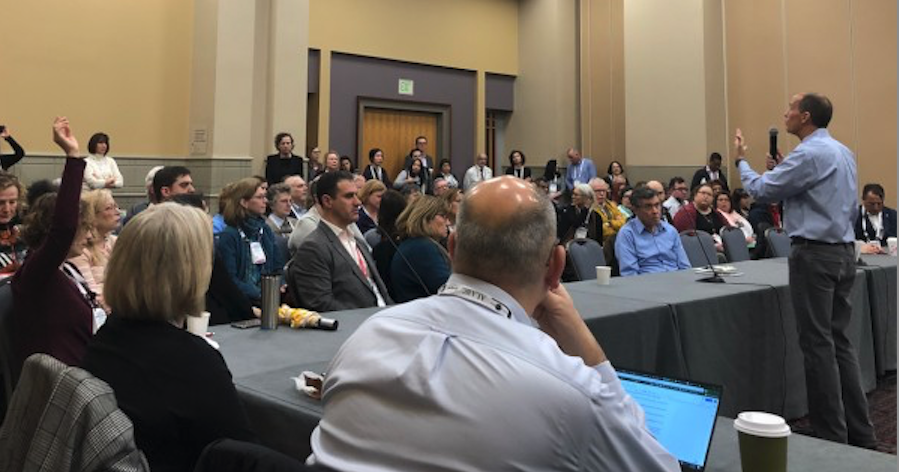
In a January 2020 appearance at the ALA Midwinter Meeting in Philadelphia, then Macmillan CEO John Sargent told skeptical librarians that 55% of Macmillan’s digital “reads” in the U.S. (whatever a “digital read” is) were coming from libraries. Citing murky data that he declined to share—much of which he conceded came from Amazon—Sargent suggested that library ebook lending was throwing the overall book market “out of balance.” He also expressed broader concerns that libraries were training digital readers that they didn’t have to pay for books.
Three months later, with the arrival of the Covid-19 pandemic, Macmillan abruptly abandoned the embargo. “There are times in life when differences should be put aside,” Sargent said in a brief memo. The embargo hasn’t returned since.
But the pandemic had another consequence for the library ebook market: it took digital demand in libraries to a whole new level. And in the immediate aftermath of the pandemic closures, several publishers—including Macmillan—dropped their digital prices and eased license restrictions, briefly raising hopes of a pandemic silver lining: After years of tension, might this period of shared struggle and forced digital experimentation lead to a reset for library ebooks?
Alas, that reset didn't materialize. And, in 2021, the tension in the library ebook market ramped up again when the state of Maryland—as a response to Macmillan’s embargo—passed the nation’s first library ebook law.
Introduced in January 2021, the bill moved quickly and passed the Maryland General Assembly unanimously. Among its provisions, the measure sought to compel publishers selling digital books to consumers in the state to also offer licenses to libraries on “reasonable” terms.
But in December 2021, the Association of American Publishers sued, arguing that the Maryland law conflicted with the federal Copyright Act. And in a speedy 28-page decision, judge Deborah Boardman agreed, and blocked the law’s enforcement.
Undeterred, a coalition of legal and policy experts formed the eBook Study Group in 2023, and went back to the drawing board. Led by librarian and copyright lawyer Kyle Courtney, the effort yielded a new legislative framework that avoids the copyright conflict that doomed Maryland’s effort, instead focusing squarely on contract law.
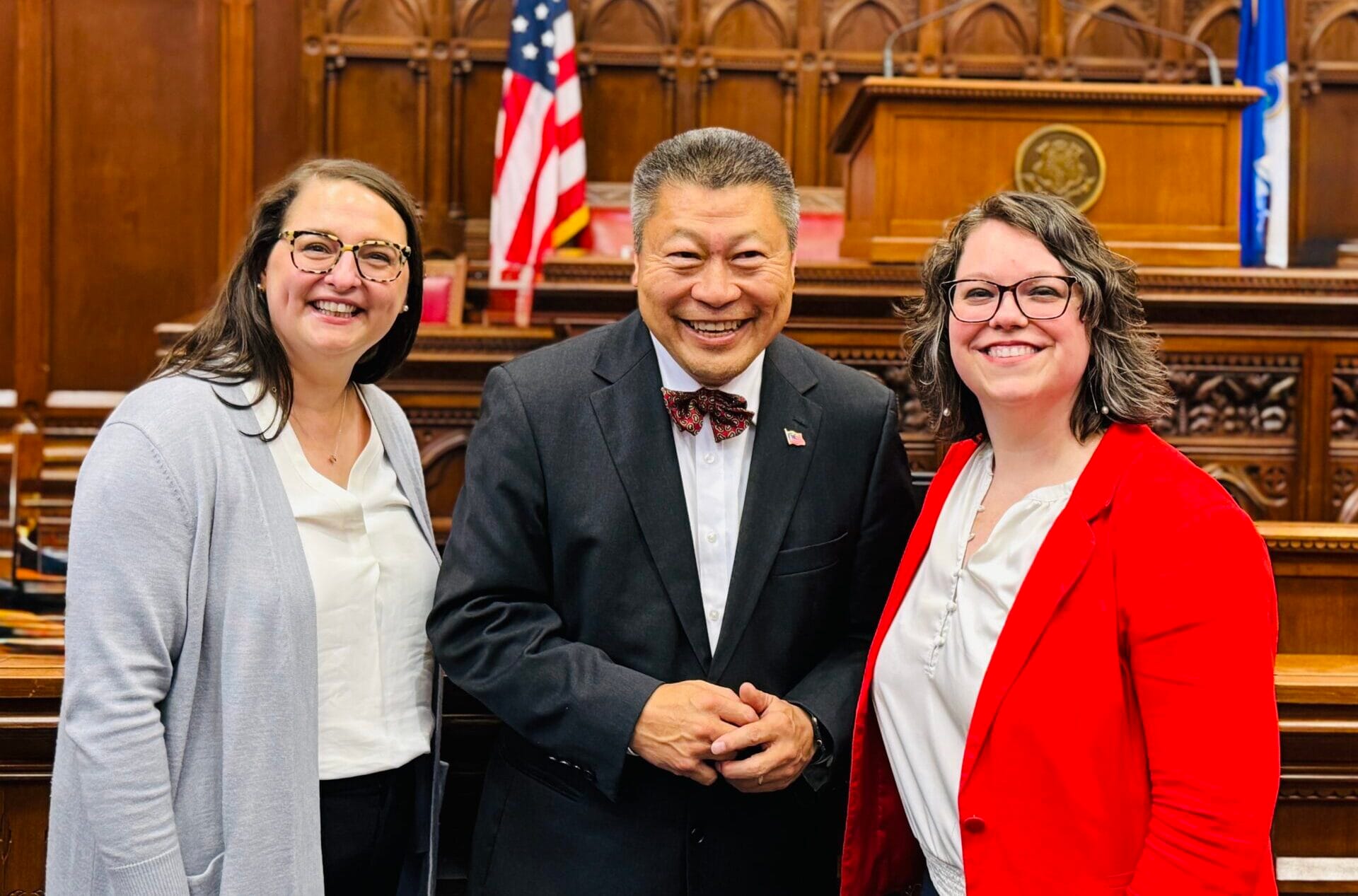
And in May 2025, Connecticut became the first state to pass a new library ebook law based on this new framework.
In essence, the law bars Connecticut libraries from entering into contracts with publishers that include terms that run counter to the library’s mission. Among its provisions, the law addresses two of the most immediate pain points libraries say must be addressed: it prohibits libraries from agreeing to contracts that impose both lending limits and time restrictions; and it prohibits libraries from agreeing to license works from publishers who offer metered licenses without also offering a “commercially reasonable” option for perpetual access, or pay-per-use.
But the law's overarching goal is more broad.
“The objective is to restore the right to negotiate,” says Connecticut Library Consortium executive director Ellen Paul, who shepherded Connecticut’s library ebook bill across the finish line last year. “We’ve reached a crisis point because so much of the content we license, at a great cost, is constantly disappearing off of our shelves. We can’t keep up with reader demand let alone build meaningful collections for our users.”
Notably, the Connecticut bill is not yet in effect. That’s because the law also contains a so-called “trigger clause” that requires an additional state or states with a total population of seven million to also pass library ebook legislation, an effort to build national momentum for reform.
On that score, similar bills have also emerged in several more states—with mixed results so far. Just this week, on March 24, Illinois lawmakers advanced their library ebook bill (H.B. 5236) out of committee, while in Rhode Island, legislative efforts appear to have stalled after lawmakers voted to hold their bill (S. 2525) for further study, following a March 4 hearing.
In New Jersey, State Senator Andrew Zwicker first introduced his library ebook bill last year, and reintroduced it as S.1674 in January. And the District of Columbia also introduced a bill late last year, and held a hearing in mid-December.
Taking a more cautious approach, the Massachusetts House of Representatives is considering a bill that would establish a commission to explore the issues in the digital library market after the Massachusetts senate approved the measure last November in a 37-0 roll call vote.
For librarians, the pivot back toward library ebook legislation in 2026 marks an interesting new phase in their advocacy efforts. After years of hoping they could talk through their issues with the major publishers, the pursuit of legislation reflects a realization that’s been slowly dawning on many librarians over the last decade: the library ebook market has a fundamental flaw.
Market Power
Whether it's actually flawed or not, to be sure, the digital library market is a different beast than its print counterpart.
For most of the library's history, copyright law protected the ability of libraries to acquire books, build collections, and to lend those books at will. In the digital realm, however, access must be licensed, and content owners are free to set prices and terms however they wish, without negotiation.
Librarians are of course no strangers to licensing content, so that’s not the problem. Furthermore, librarians are quick to point out that the vast majority of publishers actually work well with libraries in the digital marketplace, with most independent publishers offering libraries fair prices and terms for their digital editions, often including perpetual access, and in some cases actual ownership of the digital files.
Rather, the “flaw” in the library ebook market, librarians suggest, stems from a publishing ecosystem in which demand is dominated by handful of large corporate publishers—the so-called Big Five (Hachette, HarperCollins, Macmillan, Penguin Random House, and Simon & Schuster). According to Publishers Weekly, the Big Five publishers largely control the market for bestselling books, accounting for some 83% of the adult bestseller list slots in 2025.
And therein lies the issue: copyright law gives all publishers the legal power to dictate their license terms, but the demand for their books gives a handful of large publishers the market power to charge higher prices. Librarians say the major publishers charge significantly higher prices than their indie counterparts, and on average can charge as much as 3-4 times more than print (although, librarians say HarperCollins is better than the other four in terms of prices and terms).
And while the major publishers will insist that their prices and terms are reasonable and reflect the need protect their consumer sales and pay their authors, many librarians believe at least part of the reason the Big Five charge higher prices and impose more restrictive terms than their indie competitors is because they can. And in a marketplace without negotiation, they say, it's hard to know otherwise.
Meanwhile, the effect of this small but dominant group of publishers on the digital library market has been well-documented over the last decade. For example, because libraries can't afford to buy as many expensive Big Five licenses, that often means long wait times for patrons for the most popular books, much longer than in print. And for librarians, they say a third of their digital budgets on average, often more, now go to re-licensing popular works rather than buying new releases, or taking a chance on a new author, impacting the breadth and depth of their collections. And, of course, every expensive, temporary license from a Big Five publisher, equals a few indie books that a library can’t buy.
“Libraries exist to serve everyone in our community, but the prices and terms dictated to us by the major publishers are making that impossible,” Paul says. Furthermore, she says, it’s a matter of public accountability. “We simply cannot be good stewards of public money, nor can we fulfill our mission to build and retain diverse collections when we are forced into accepting licenses with non-negotiable high prices and restrictive terms from the major publishers.”
Jennie Pu, director of the Hoboken Public Library in New Jersey, agrees.
“When I started looking at this issue, it struck me because, in any public procurement setting, a public buyer like a library would normally have some say on the terms of a deal,” Pu says. “And it gets even more complicated, because, while the publishers set the prices and terms, we don't actually purchase from the publishers. We purchase through platforms. And right now, there is one dominant platform. So, what we basically have is a marketplace with thousands of fragmented public buyers all across the country, collectively spending hundreds of millions in taxpayer dollars for digital licenses every year, mostly from a handful of large publishers, without any negotiation, and mostly through one platform. It's extraordinary.”
And the situation is getting more challenging. Pu says that member libraries of the Urban Libraries Council, for which Pu serves as a board member, now spend more than half their budgets on digital content. And growing. “And that's all driven by user demand,” she says. “At the Hoboken Public Library, for example, we have a lot of cardholders who now interact with us almost exclusively in digital, like over 40%.”
Given the growing number of digital only library users, Pu rejects the idea that libraries in 2026 can direct users unhappy over a long wait for an ebook to the print edition instead, something that in the past was often suggested as an option.
“Look, this is how people read now,” she says. “And if I have to say, ‘I’m sorry, but you can get the print,’ that’s a denial of access. I may not be smart enough to tell you exactly how the market should work, but the way the market works now, if we offer the ebook, we overpay and have less money for other books. And if we don’t offer it, we fail in our mission, because our mission is to supply access to the books the public wants.”
At Scale
But it’s not all on the publishers, some librarians concede.
“I have to admit that librarians, including myself, bear some blame here for creating this situation,” says Michael Blackwell. “We rushed into digital to meet demand and were gung-ho for the new frontier, but we never really pushed back hard enough as the terms got worse and worse. Now, too many librarians feel like we have to provide this content, no matter the terms. And we’ve backed ourselves into a corner.”
“I think there’s a ton of truth in that,” says Micah May, who oversees the library-based digital library platform the Palace Project, which is now part of Lyrasis. “The buying behavior of libraries has created this kind of inelastic demand curve. A lot of librarians just buy off their holds ratio, and the Big Five publishers have come to realize that, as long as the demand is high, a lot of libraries are going to license their bestsellers regardless. So, the rational economic response for a Big Five publisher is to keep their prices high.”
May, who also serves as co-chair of the ALA’s eBooks Interest Group, says legislation can certainly be part of the solution. But librarians’ buying decisions are a big part of the mix, too.
“What if more librarians realized that their undifferentiated holds queues are driving the market dynamics?” he says. “What if it became the norm for librarians to say, OK, Hachette title here, two years for $90, I'm going to let that holds ratio go to 12 to 1, as opposed to an independent book that's $20 for perpetual access?”
In fact, that is happening. In 2024, the Seattle Public Library, for example, published a blog post explaining why it was reducing its digital holds limit to 10, from 25. "This may seem surprising, but patron holds are the single biggest factor in rising costs," the post noted. "To maintain reasonable wait times, the library buys additional licenses of a digital title when patrons place more holds on it. That means that when hundreds of patrons place holds on a single New York Times bestseller, the costs of 'buying down the holds' can quickly become astronomical."
As an example, Pu says that at her library, The Correspondent by Virginia Evans currently has a holds ratio of 12-1 in ebook, and 16-1 in audio—a holds ratio she would never accept in print.
And while she agrees that librarians must look at their own agency in the marketplace, she also points out that patrons want what they want, and books generally can’t be substituted on a title level, which is why a growing number of librarians believe some kind of market reform is needed.
“When a user wants to read The Correspondent, nothing else can replace that,” Pu says. “So I think the more pressing question is: how are libraries spending more money than ever before on digital content, hundreds of millions of taxpayer dollars, and yet we have no ability to influence the terms of the market? Price complaints have been the framing of this issue for years, and, yes, prices are too high. But to me, that’s a symptom. The problem we must address is that we have a market that was never designed for public institutions at scale.”