Supreme Court Declines to Hear Key Texas Book Banning Case
The denial in 'Little v. Llano County' lets stand a controversial Fifth Circuit decision empowering local leaders in three states to remove books from public libraries at will, even for unconstitutional viewpoint discretion.

In a blow to the freedom to read—at least for now—the Supreme Court on December 8 denied a petition to review a key Texas book banning case, Little v. Llano County. The order was delivered without explanation and comes after a scheduled December 5 conference.
The petition before the high court came after the U.S. Court of Appeals for the Fifth Circuit in May, in a stunning decision, held that there is no First Amendment right to receive information in libraries. While that decision is not binding nationwide, lawyers say the Supreme Court denial effectively gives local leaders in the three states where the Fifth Circuit holds jurisdiction (Texas, Louisiana, and Mississippi) sweeping power to remove books from public libraries at will, even for unconstitutional viewpoint discretion.
 Andrew Richard Albanese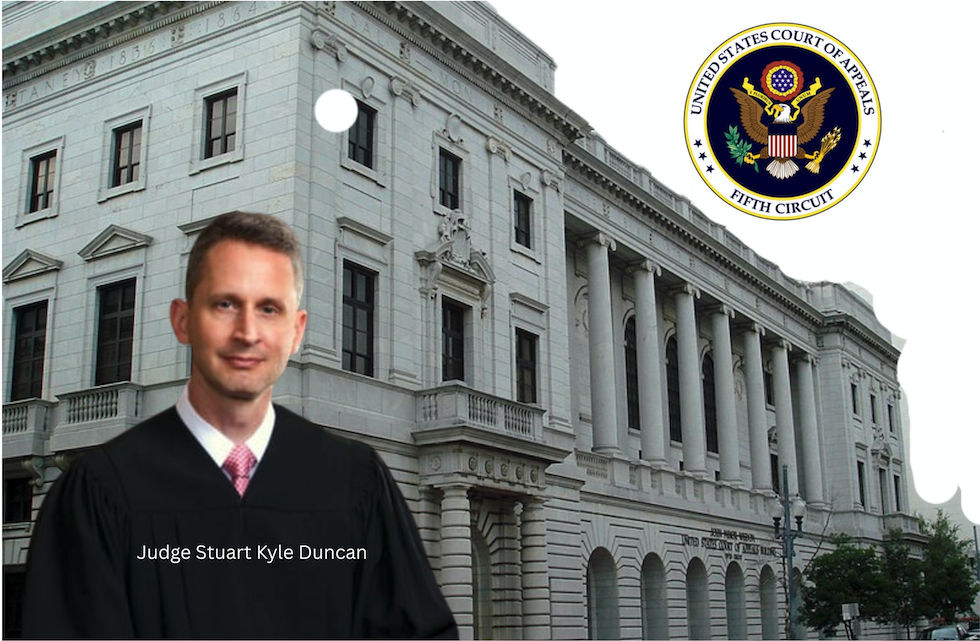
The original case, the first major lawsuit of this current wave of right-wing book bans, was filed in April 2022 by seven Llano County, Texas residents. It accused Llano County officials of improperly removing some 17 books from library shelves because they disapproved of the content.
In a forceful March 2023 decision, federal judge Robert Pitman found for the plaintiffs, and issued a preliminary injunction ordering the books returned to library shelves and barring the county from removing any more books while the case proceeded.
More than a year later, in June 2024 (a suspiciously long delay for such a straightforward case, lawyers noted), Pitman’s decision was affirmed by a split three-judge panel of the Fifth Circuit—but with a fiery dissent by conservative justice Stuart Kyle Duncan.
Weeks later, on July 3, 2024, the Fifth Circuit abruptly vacated the panel’s decision, and ordered the appeal to be reheard en banc by the full Fifth Circuit. And in May, by a 10-7 margin, the full Fifth Circuit voted to reverse Pitman, in the process overruling its own 30-year old, unanimous precedent in Campbell v. St. Tammany Parish School Board, a 1995 First Amendment decision that has long served as an anti-censorship bulwark for librarians.
This time, Duncan wrote the majority opinion: “Yes, Supreme Court precedent sometimes protects one’s right to receive someone else’s speech. But plaintiffs would transform that precedent into a brave new right to receive information from the government in the form of taxpayer-funded library books. The First Amendment acknowledges no such right,” Duncan concluded. “A plaintiff may not invoke that right to challenge a library’s decisions about which books to buy, which books to keep, or which books to remove.”
Notably, a seven judge plurality of the Fifth Circuit also agreed with Duncan that library book decisions are “government speech” and therefore not subject to First Amendment challenges, a concept that has animated several right wing legislative efforts to ban books in libraries in recent years. But with only a plurality of Fifth Circuit judges agreeing with such a massive expansion of the government speech doctrine, which holds that the First Amendment does not impose “a requirement of viewpoint-neutrality” on speech undertaken by the government, that conclusion is not binding.
In a stinging dissent, Fifth Circuit judge Stephen Higginson, writing for the minority, blasted the Fifth Circuit's majority opinion.
"The majority concedes by silence that the district court did not clearly err in finding that Defendants’ removal decisions likely were motivated by discrimination against certain ideas and a desire to limit access to those ideas,” Higginson wrote. “Nonetheless, our court instead announces a new abridgement of the First Amendment, holding that public library patrons may not challenge even politically motivated book removals. Hereafter across Texas, Louisiana, and Mississippi, it simply does not matter legally if public officials, motivated by political hostility, target and remove books they deem inappropriate or offensive, in order to deny the public access to the information and ideas therein.”
The Legal Battle Is Not Over
In a December 8 statement, plaintiff Leila Green Little thanked her lawyers and fellow plaintiffs, and echoed Higginson’s criticism.
“[The Supreme Court’s denial] means that the en banc ruling of the Fifth Circuit Court of Appeals will remain in effect for Texas, Louisiana, and Mississippi,” Green Little said. “This means that public library patrons have no First Amendment rights to access information. This means we now live in a censorship state.”
But while the decision not to take the case is a blow to the freedom to read, especially in the three states where the Fifth Circuit ruling is binding, even the Llano County defendants acknowledge that the issues at the heart of the Llano case are likely to reach the high court again soon, with at least four other high-profile lawsuits now in process.
"The Court will eventually have to resolve whether (and to what extent) the Speech Clause prevents government-owned libraries from removing materials in their collections," lawyers for the Llano defendants conceded in an October 24 brief in which they urged the high court not to take the case.
Specifically, lawyers for Llano County argued that the Supreme Court should decline the Llano case and wait for three other book banning cases to be decided: In the Eighth Circuit, Penguin Random House v. Robbins (in which a district court found Iowa's sweeping book ban provision in SF 496 to be unconstitutional); in the 10th Circuit, Crookshanks v. Elizabeth School District (in which a lower court found that 19 book removals in a high school were unconstitutional); and in the Eleventh Circuit, Parnell v. School Board of Escambia County (in which a district court, leaning heavily on the Fifth Circuit's Llano decision, agreed there is no First Amendment right to receive information in a school library).
In addition, the Ninth Circuit is currently reviewing a challenge of Idaho's recently enacted law HB 710, which requires schools and libraries to remove books vaguely deemed to be “harmful” to minors.
But, as the plaintiffs argued in their November 10 reply brief urging the Supreme Court to take the case, that the issues in the Llano case are likely get to the Supreme Court eventually is cold comfort for residents in the three states where local officials are empowered to remove library books virtually at will.
"This case turns on the 'bedrock principle underlying the First Amendment': that 'the government may not prohibit the expression of an idea simply because society finds the idea itself offensive or disagreeable,’” lawyers for the Llano plaintiffs argued their brief. “If this Court were to postpone review, state and local governments in the Fifth Circuit could freely deploy public libraries as instruments of 'naked censorship' during that period of delay. Leaving such a system in place—even for 'another year or two,' is antithetical to our Nation’s most cherished constitutional values."
Reaction
At press time, reaction to the Supreme Court's denial was beginning to roll in.
“The Supreme Court’s decision not to review Little v. Llano is a setback in timing, but not in justice," said Penguin Random House Associate General Counsel Dan Novack, in a statement on behalf of a coalition of major publishers and authors. "We are undeterred and remain committed to defending the freedom to read in courtrooms across the country, including our ongoing challenges in the Eighth, Ninth, and Eleventh Circuits. This issue will return to the Supreme Court in the near future, and we are working to establish strong, constitutional precedents that counter the Fifth Circuit’s ruling.”
"By allowing the Fifth Circuit’s decision to stand, the Supreme Court has added yet taken another step in the rapidly evolving and deeply troubling expansion of Government Speech Doctrine," EveryLibrary executive director John Chrastka told Words & Money. "The notion that the First Amendment does not apply in libraries is both an existential threat and a tactical weapon against free expression. Denying a hearing seems to signal that a majority of the Justices are permitting the 'facts on the ground' to shift in ways that favor that doctrine. This means we need to heighten our vigilance against overreach by would-be book banners within the Fifth Circuit and against improper attempts to apply this ruling beyond its jurisdiction."
"By declining to review the Fifth Circuit’s decision, the Supreme Court has empowered state and local governments to limit what materials people can access in their libraries. As a result, millions of library users now face a diminished right to read and explore information free from government interference," said American Library Association president Sam Helmick. "The ruling threatens to transform government libraries into centers for indoctrination instead of protecting them as hubs of open inquiry."
"Leaving the Fifth Circuit’s ruling in place erodes the most elemental principles of free speech and allows state and local governments to exert ideological control over the people with impunity," said Elly Brinkley, staff attorney for U.S. Free Expression Programs, in a statement. "The government has no place telling people what they can and cannot read."
This is a developing story. We will update as more reaction comes in.