The Queue: Library News for the Week Ending February 6, 2026
Among the week's headlines: Congress funds the IMLS, but the future remains uncertain; why South Carolina Rep. Nancy Mace wants IMLS to pause funding for one library in her state; Iowa seeks to end school and public library partnerships; and Library Futures responds to OverDrive’s broadside in D.C.

Congress Saves Federal Library Funding for FY 2026
 Greg Landgraf
After a brief government shutdown, President Trump this week signed a budget bill that will fund most of the government through FY 2026—including nearly level funding for the Institute of Museum and Library Services.
The deal comes after the Trump administration proposed the permanent elimination of the agency in its FY 2026 budget proposal last spring, and after Trump in his first term proposed the elimination of the IMLS in each of its four budget proposals, only to be rebuffed by Congress.
Among its duties, the IMLS distributes grant funding under the LSTA (Library Services and Technology Act) to all 50 states and several territories, funding that is crucial for libraries, especially in such a challenging budget environment.
In American Libraries, Lisa Varga, associate executive director of the ALA’s Public Policy and Advocacy Office, reported that Congress passed a modest $1.4 million increase for library programs run by IMLS through the Library Services and Technology Act (LSTA), "bringing LSTA funding to $212.5 million for FY2026, and level funding of $30 million for the school library–focused Innovative Approaches to Literacy (IAL) program." Overall, however, IMLS saw a slight decrease, "largely reflecting the reduction in staffing at the agency (a smaller IMLS staff will administer the increased grant funding)," Varga explained.
Perhaps the best news is that the funding bill shows once again that Congress remains broadly supportive of library funding (and, that library advocacy works). "These library wins are not the result of good luck. In the worst climate in recent memory, libraries succeeded because advocates showed up," Varga stressed. "We need to celebrate this win—and keep that signal strong."
Still, the future of the IMLS remains very much in flux, as the administration is still pursuing its legal bid to shutter the agency via executive order. Furthermore, it is unclear how the IMLS, under the interim leadership of Deputy Labor Assistant Labor Secretary Keith Sonderling, who has pledged to steer the agency "in lockstep" with the Trump administration's priorities, might choose to appropriate the agency's non-LSTA, competitive grant funding.
"We cannot take our eyes off what comes next," warned EveryLibrary executive director John Chrastka, in a post this week. "FY2027 is already on the horizon, and we are deeply concerned about how the Administration may attempt to redirect congressionally appropriated funds away from authorized grant programs and services and toward pet projects and agenda-driven activities."
Chrastka specifically cited "misallocations tied to America 250 initiatives that stray from Congressional intent," such as the IMLS's recently launched “Freedom Trucks," which "function less as library services and more like propaganda vehicles," and "political directives aimed at reshaping historical interpretation at institutions like the Smithsonian and within the National Park Service to fit a narrow American Exceptionalism frame."
New IMLS Grant Guidelines Called 'Chilling' and 'Horrific'
 Jaimie Seaton
ProPublica this week reports on concerns about the future political tilt of the Trump administration's IMLS grants. "In cover letters accompanying [grant] applications, the institute said it 'particularly welcomes' projects that align with President Donald Trump’s vision for America," the report states. "The solicitation marks a stark departure for the agency, whose guidelines were previously apolitical and focused on merit."
Giovanna Urist, who served as a senior program officer at the IMLS from 2021 to 2023, told ProPublica that the new agency guidelines were “chilling.” And former IMLS director R. Crosby Kemper III, "a lifelong conservative Republican," also blasted the administration's efforts to remake several cultural agencies, including IMLS, through executive fiat. "All these Trump executive orders—and I mean all of them—are just extensions of his own animus towards anybody who disagrees with him and his outsized ego,” Kemper told ProPublica, calling the orders "nonsense" and the grant guidelines "horrific."
South Carolina Reps Want to 'Pause' Library's IMLS Funds Over Allegedly Pornographic Books

Despite Congress agreeing to fund the IMLS, South Carolina Congresswoman and 2026 gubernatorial candidate Nancy Mace wants to block funding for the Charleston County Public Library, pending a materials review. In a February 2 letter, Mace demanded "an immediate pause to all federal funding for Charleston County Public Library (CCPL)" after she says "graphic sexual materials were found accessible to children," and hysterically accused CCPL of turning the library "into a distribution center for pornographic material targeting our kids."
 Ian Kayanja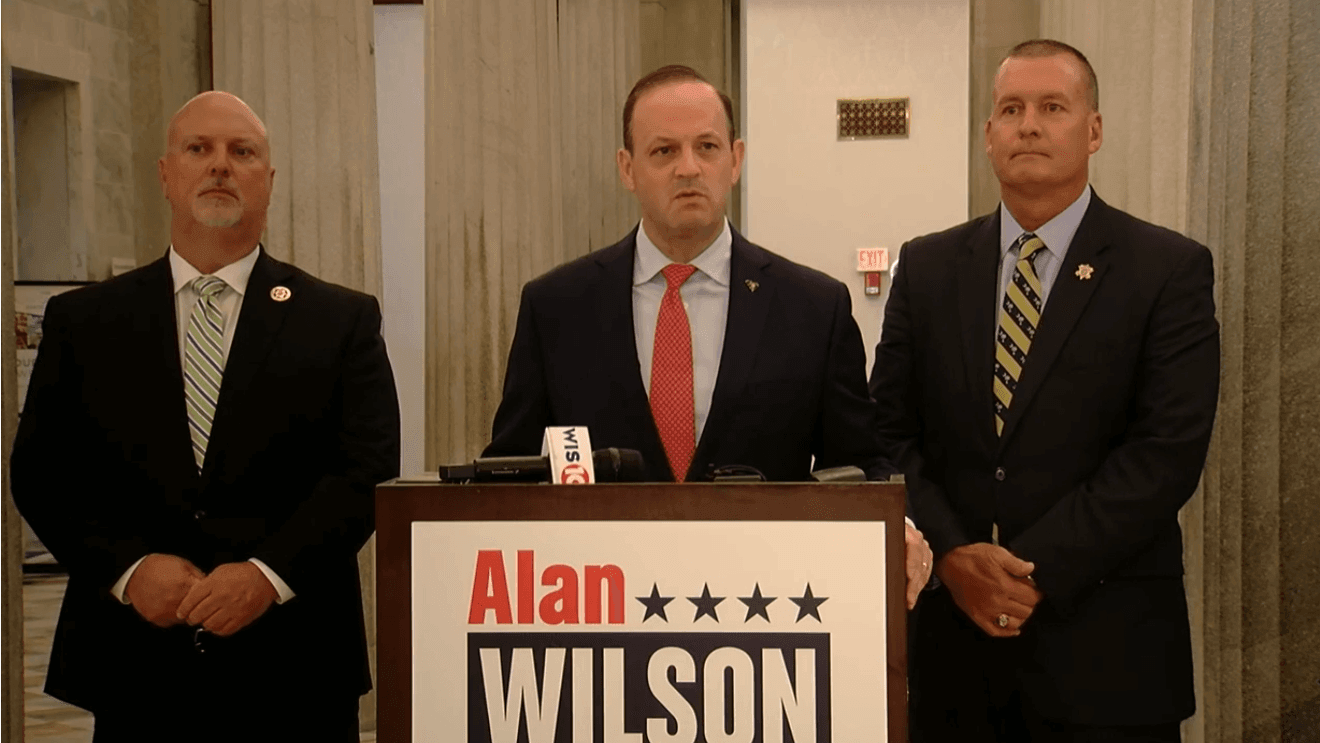
The move comes after two books were recently challenged and subsequently moved or removed from the library, under the library's existing policies. But Mace now wants IMLS to hold back funding until CCPL "conducts a full review and removes sexually explicit content from children's reach."
Citing Allegedly 'Obscene' Books, Iowa Lawmakers Advance Bill to Block School and Public Library Partnerships
 Maya Marchel Hoff, Gazette-Lee Des Moines Bureau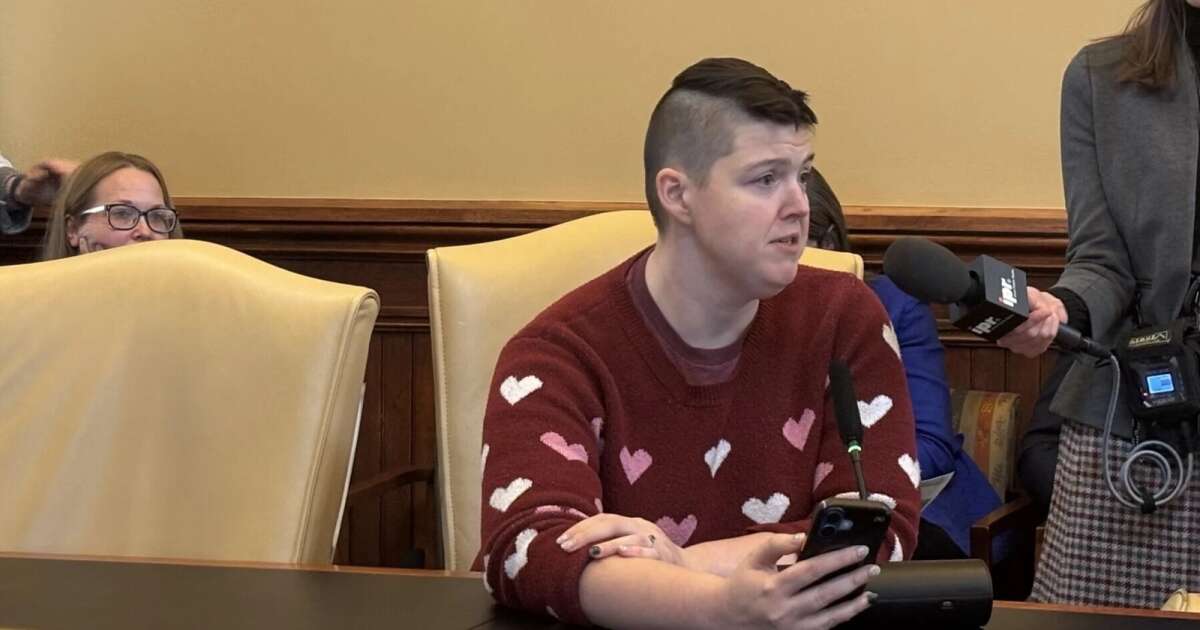
Via the Gazette, Iowa lawmakers have advanced a bill that would prohibit public and charter schools from collaborating with public libraries to provide access to books and other materials. “The legislation, House Study Bill 636… is the latest effort by Republicans in the Legislature to limit children's access to content and materials they view as obscene,” the outlet reports.
The legislation comes as an appeals court, for a second time, considers whether a federal judge erred in blocking a sweeping book banning provision in a 2023 Iowa state law S.F. 496.
Oklahoma Lawmakers Approve Bill Blocking 'Sexually Explicit' Books from School Libraries
 Paige Taylor
Via local affiliate KTUL, news that Oklahoma lawmakers have advanced HB 2978, a bill that seeks to ban books with allegedly “sexually explicit” content from Oklahoma public school libraries. The bill’s sponsor, the unironically-named state rep. Chris Banning, said the bill seeks to target “stuff that is demeaning to women and should not be around minors." The bill now heads to the House Education Oversight Committee.
Georgia Legislators Want Librarians to Face Criminal Charges for Allegedly 'Harmful' Books
 Ty Tagami
Via Capitol Beat News Service, Georgia lawmakers are once again considering legislation that would expose librarians to criminal prosecution for making allegedly “harmful” books accessible to minors.
“Senate Bill 74 passed the Senate last year, the first half of the biennial legislative session, and now it is advancing through the House,” the report states. “The legislation maintains the shield from prosecution when librarians are ‘not aware’ that harmful material was available in their library. But Mike Cooper, a trustee of the DeKalb County Public Library system, worried that an ‘overzealous’ prosecutor would assert that an accused librarian must have been aware.”
In Alaska, Community Turns Out to Defeat Library Book Ban Proposal
 Amy Bushatz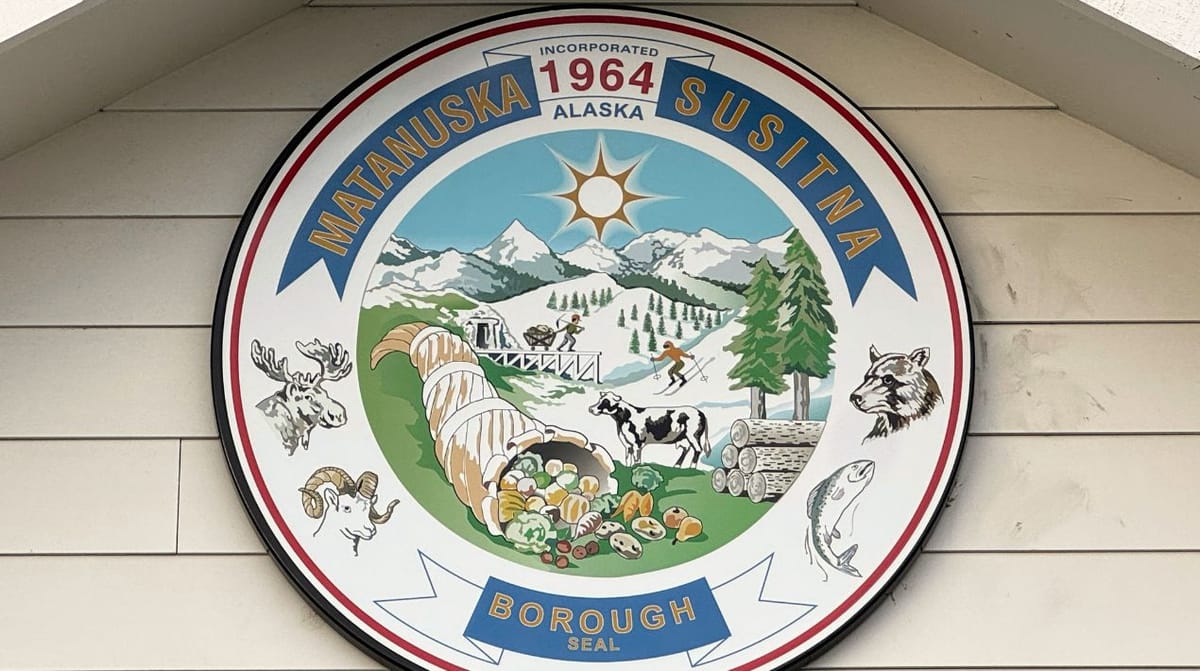
Here's some good news for library advocates and a rare display of common sense. The Mat-Su Sentinel reports that a proposed ban on books depicting sexual acts from the Mat-Su Borough libraries was dropped this week at the request of its sponsor. The legislator said he removed the bill from the agenda “because of pushback from a wide range of residents, including some he described as conservatives, and because he felt it created too much new government oversight,” the report states.
New Jersey School District Adopts Pro-Library Policy
 Alexis Tarrazi
More good news, this time from New Jersey, which has a “freedom-to-read” law on the books. Patch.com reports that the Hillsborough School District “is standing with its librarians to protect them and its library materials,” although not without some drama. “The Board of Education voted at its Jan. 29 meeting to approve policy 2535 titled Library Material, but not without pushback from some board members,” the report notes.
Among its provisions, Policy 2535 states that the local Board of Education must: “Recognize that library material should be provided for the interest, information, and enlightenment of all students and should present diverse points of view in the collection as a whole,” and that “library material shall not be removed from a school library because of the origin, background, or views of the library material or those contributing to its creation.” The policy also explicitly acknowledges that “the school library media specialist is professionally trained to curate and develop the school library collection that provides students with access to the widest array of developmentally appropriate library material available to schools.”
Amid State Funding Dispute, Alabama Library Stands Firm on Book Decisions
 Jacob Holmes
Via the Alabama Political Reporter, the Fairhope Public Library Board of Trustees has unanimously agreed not to move the 10 books that the Alabama Public Library Service ordered them to move as a condition of receiving state aid. “My feeling is if you give into something like this, it’s a slippery slope to something more,” said Randal Wright, president of the FPL board, according to the report. "The vote by APLS in January put an exclamation point on a months-long battle between the local library and the state agency," the article adds. "FPL has already lost a little over $20,000 in state funding and stands to lose $40,000 in the coming year."
A Look at Four Freedom-to-Read Bills Advancing in State Legislatures
 Kelly Jensen
Over at Book Riot, Kelly Jensen leads off her weekly censorship news column with a look at four bills to protect the freedom to read currently advancing in state legislatures. "There is something crucial in these bills: politicians working to pass anti-book ban bills are signaling to constituents that they are listening to library workers, authors, and readers, and that they care about what’s happening to libraries," Jensen writes. "Even if their attempts are only moderately successful in addressing the issues, they’re majorly symbolic."
Library Futures Responds to OverDrive CEO's Broadside Over D.C. Library Ebook Bill


In a post this week, Library Futures executive director Jennie Rose Halperin responded to attacks leveled by OverDrive CEO Steve Potash in his 54-page testimony against a proposed library ebook bill in Washington D.C.
In a brief, two-page letter to the D.C. committee considering the D.C. bill, Halperin said Potash mischaracterized the group and its work.
“Despite Mr. Potash’s assertion that our organization is trying to undermine copyright, I was chosen by the ALA to chair the Copyright Legislation and Advocacy Committee, which I have proudly led for three years. In 2021, we posted Model Legislation on our website that individual libraries could independently adapt for use in their state. Very occasionally, library leaders will consult our team in early exploration of legislative remedies to their contractual concerns. That was not the case with [the D.C. bill]. Library Futures played no direct role in its development beyond providing the model legislation on our website,” Halperin wrote. “Given this context, we were surprised by such an extensive set of unsubstantiated claims and the antagonistic tone in Mr. Potash’s testimony.”
Halperin goes on to rebut Potash’s claim that the D.C. bill is “rooted in” controlled digital lending, a legal theory developed in part by Library Futures founding member Kyle Courtney, and that was rejected by the courts in 2024 in a lawsuit over the Internet Archives scanning and lending program.
“This claim misunderstands the purpose of the bill and CDL itself. CDL is a process involving materials that a library has purchased and digitized. This bill, in contrast, focuses on materials that libraries license or rent from publishers. He conflates these two distinct issues in order to claim that CDL is unlawful, and also to lob the insult of ‘copyright deniers’ at hardworking librarians in your state,” Halperin told lawmakers. “Invoking CDL injects an unrelated issue into the discussion of this bill.”
Halperin's full letter is here.
RAILS Shares Advocacy Tools For Libraries to Address Challenges in the Digital Library Market


Illinois consortium RAILS (Reaching Across Illinois Library System) has released a suite of advocacy tools, including "flyers, sample social media graphics, and sample copy" that libraries can adapt and use to raise awareness in their communities of the challenges libraries are facing in the digital library market.
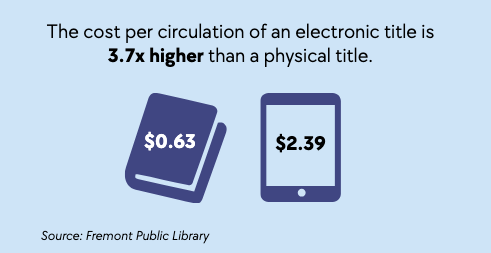
"The downloadable social media carousel graphics can be shared across all platforms. Libraries are welcome to download the Canva template to add their logo in the lower left corner. RAILS has provided alt text for these graphics," the post notes. "Working together, libraries have the opportunity to make their voices heard on this issue. By sharing these messages with our communities, we can build a greater understanding of the need for fair access to e-books and audiobooks."
ALA Announces the Election of Two New Executive Board Members

The American Library Association Council has announced the election of Lesliediana Jones and Shauntee Burns-Simpson to serve on the ALA Executive Board, with their three-year terms beginning in July 2026 and concluding in June 2029.
Jones is the director of the Arthur Neef Law Library at Wayne State University (Detrit, MI), Library Systems and assistant professor at Wayne State University Law School, and currently serves as councilor at large on the ALA Council, president of the Freedom to Read Foundation and member on the Committee on Legislation.
Burns-Simpson is director of youth & family services at the District of Columbia Public Library, Washington, D.C. and also serves as an ALA councilor representing the Black Caucus of ALA (BCALA) and as president of the Graphic Novels and Comics Round Table. Burns-Simpson also serves on the Freedom to Read Foundation Board and will continue serving on the PLA Board of Directors until her term on the ALA Executive Board begins.
And Finally This Week...
 Ron Charles
Amid the terrible and depressing news of the mass layoffs at the Washington Post, including the entire books team, longtime WaPo critic Ron Charles delivers a masterclass in, well, class, via his Substack.
With his typical wit and humor, Charles talks about his exit. And the good news is that Charles is not done, even if Jeff Bezos is done with books... and, you know, democracy.
I'm a Ron Charles fan (actually I'm a fan of the entire books team at the Post) and for me this is sad news. But I'll leave you with the Ron Charles video above, from 2012, when we at Publishers Weekly, my former employer for 16 years, gave our annual Person of the Year award to Fifty Shades of Grey author E.L. James.
For the record, I still support that choice. But it's hard not see Charles's video as a perfect response.