The Queue: Library News for the Week Ending March 13, 2026
Among the headlines this week: uncertainty looms large for libraries in Library Journal's recent annual budget survey; Seattle's mayor proposes a funding boost for the Seattle Public Library; a Texas librarian tangles with Moms for Liberty; and a defiant Alabama library doubles down in epic fashion.

Amid Grant Cuts and Rising Costs, Library Budgets Face an 'Uncertain' 2026
In her excellent 2026 Budget and Funding Survey for Library Journal, April Witteween, Library Director at the Oregon State University, Cascades campus, gets right to the point: "Words like 'uncertainty' and 'unprecedented' took up significant space in the American lexicon in 2025," she observes. And while there may be some silver linings in this year's LJ budget survey—for example, 62% of libraries surveyed said they anticipate "an increase in total operating budgets in the upcoming fiscal year"—the article notes that funding trends in 2025 reflect, at best, "an unsettled landscape," with "few identifiable trends and many questions about what the future may hold."
Like many in the library community, I look forward to the annual budget feature from LJ, and if you haven't already, do check the piece out. It offers valuable perspective and does an excellent job of capturing the budget picture in regions around the country. Among the trends that caught my attention:
First, this year's survey captures the sudden decline in grant funding in the wake of the Trump administration's efforts to destroy the IMLS: "28% of libraries reported decreases [in grant funding], leading to a net decline over last year of 17.1%. [The 2025] survey had a net increase of 8.3% in grant funding."
This year's survey also points to a spike in digital costs exacerbated by a corresponding rise in digital demand: "The overall net change for digital materials spending rose sharply this year, from an increase of 6.4% in 2024 to a 15% bump in 2025," the survey found. "It may be tempting to assume that these increases in spending mean equally increased access to more ebooks, however, 2025 saw multiple news stories about libraries being swamped by increasing digital license costs passed down from publishers."
And finally, ongoing budget stress is contributing to a worrying decline in circulation: "Per capita circulation can be closely tied to both personnel and open hours—if a library isn’t staffed, it can’t be open, and if it’s not open, items are not being checked out," Witteween explains. In addition, analysis suggests "that user behavior, format preferences, and service models, as well as fewer open library hours, have shifted more permanently to impact physical checkouts."
As the library world gets ready for the upcoming Public Library Association conference in Minneapolis, this report is important context.
A New Hampshire Library Leader's Budget Battle
 Rebeca Pereira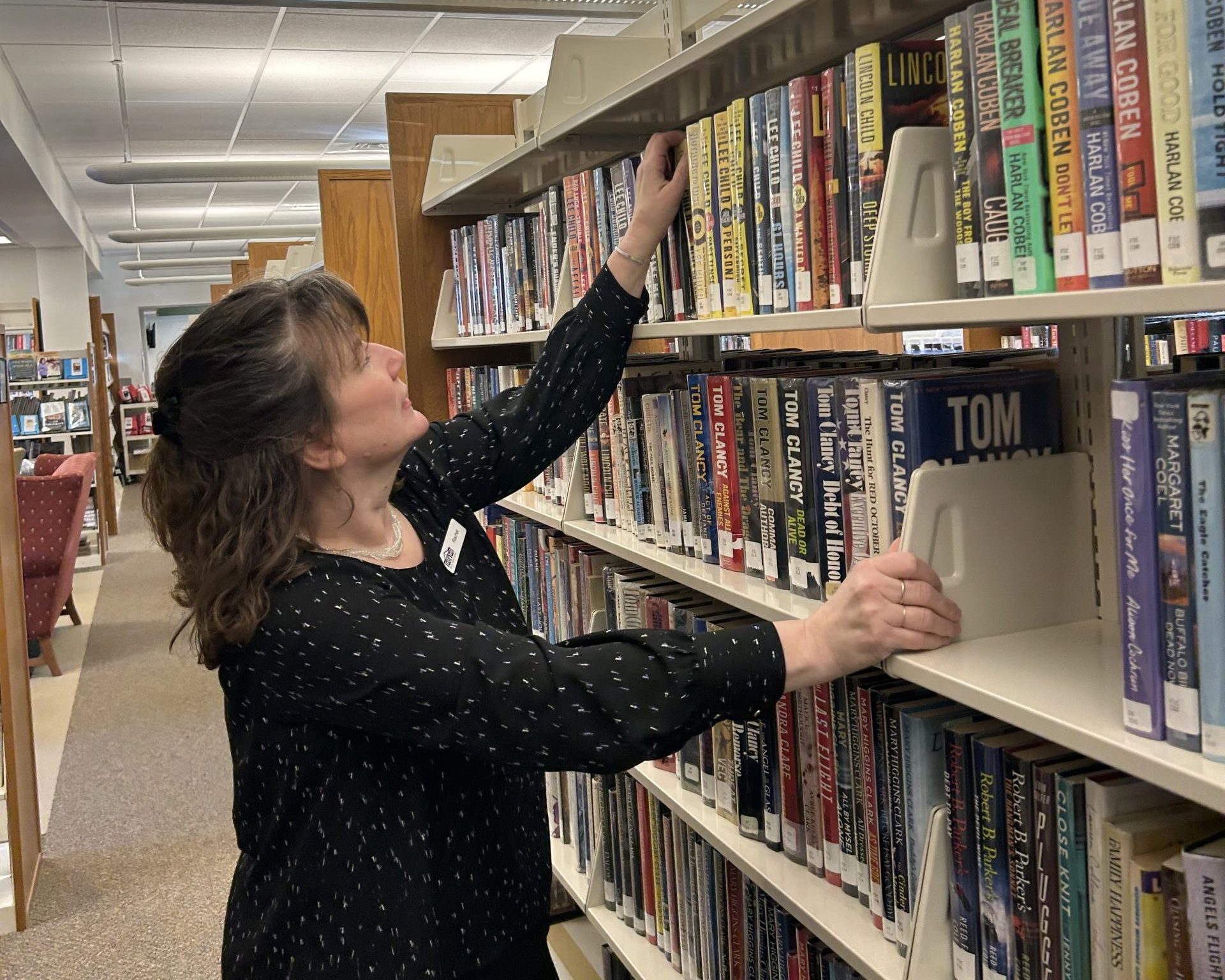
In New Hampshire, the Concord Monitor has an excellent piece that shows how library leaders fight for their community libraries, and how tough 2025 really was as the New Hampshire state library was nearly shuttered by Trump's IMLS funding cuts. "Rachel Baker is accustomed to pleading the case for the Elkins Public Library to the keepers of Canterbury’s municipal budget," the report notes. "Her annual advocacy to keep the public library a priority was quietly equipping her to face the challenges of her one-year tenure as president of the New Hampshire Library Association, which ended on December 31, 2025. Unbeknownst even to herself, Baker was preparing to fight, tooth and nail, to promote the public library’s mere existence."
So far, Baker and New Hampshire librarians have staved off disaster. But as the LJ Budget survey makes clear, uncertainty remains for 2026. “I don’t want to say we’re at the happy ending, because we’re very far away from a happy ending," she told the Monitor. "We’re really just on eggshells, just hoping that, at the federal level, there’s no more cuts. But what it kind of allowed is this dialogue about the value of libraries.”
Massachusetts Library Facing Existential Budget Threat
 Leigh Blander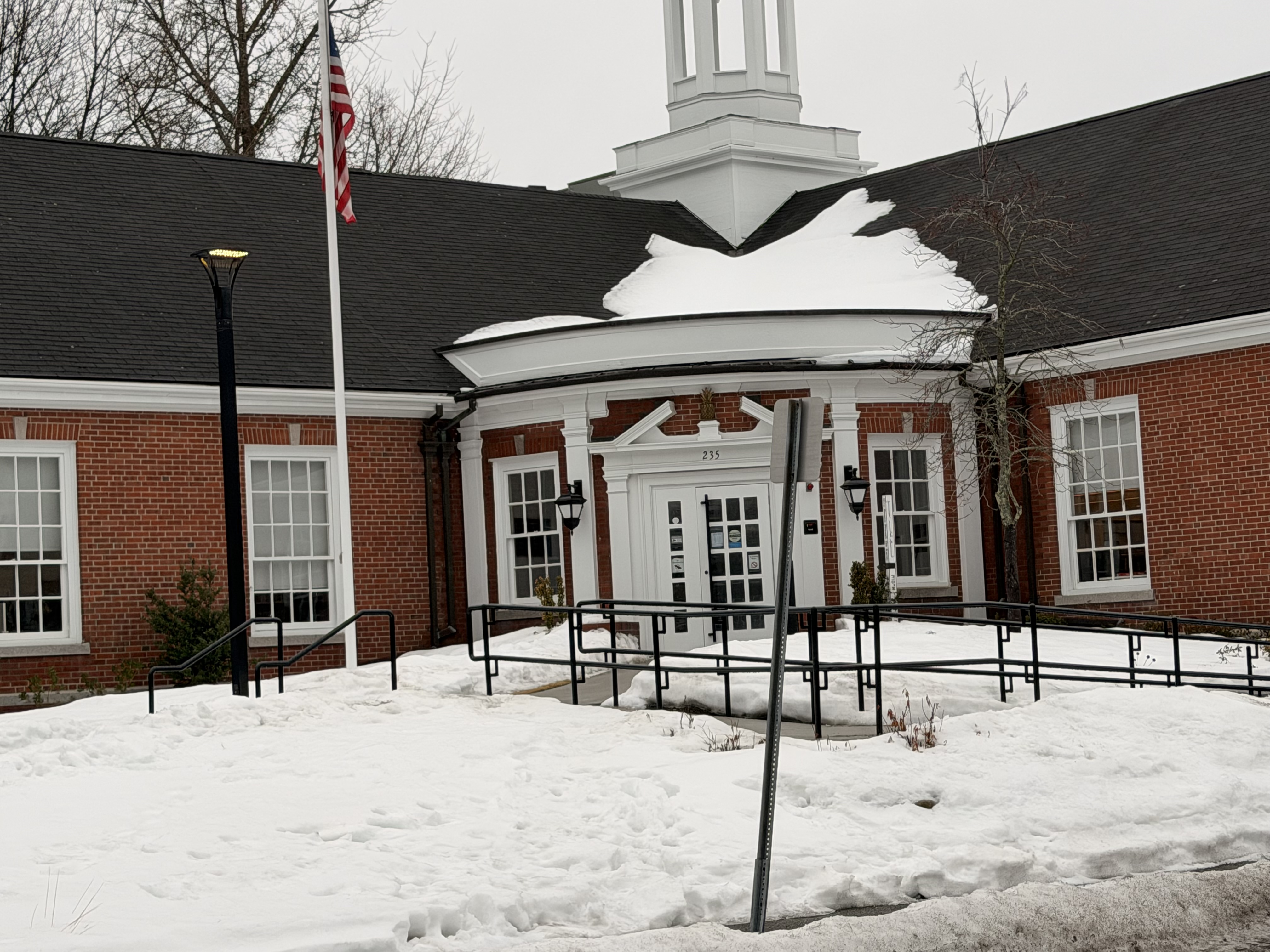
Another fascinating story this week that shows how complex public library budgets can be: The Marblehead Current reports that the Abbot Library in Marblehead, Massachusetts—which was newly renovated in 2024, is seeing a "surge" in use (circulation reportedly rose 47% in 2025), and is approaching its 15oth anniversary in 2027—could be forced to close its doors by the end of the year in the wake of a projected $7.7 million budget deficit.
According to the article, town officials have laid out two scenarios to address the budget gap: One would simply close the library all together. The second would cut the library’s salary budget by about half and "eliminate its materials budget." But the second scenario would lead to closure, too, library officials explained, because the cuts would lead the library to be decertified and thus ineligible for state funding. "For a century and a half, through world wars and economic shifts, Marblehead has prioritized the shared knowledge of its citizens," Gary Amberik, chair of the Abbot Library’s board of trustees, told reporters. "To shutter these doors now, just months before a historic milestone, would be a profound break in the continuity of our town’s identity.”
Mayor Proposes a Significant Increase for Seattle Public Libraries
 City Council News Releases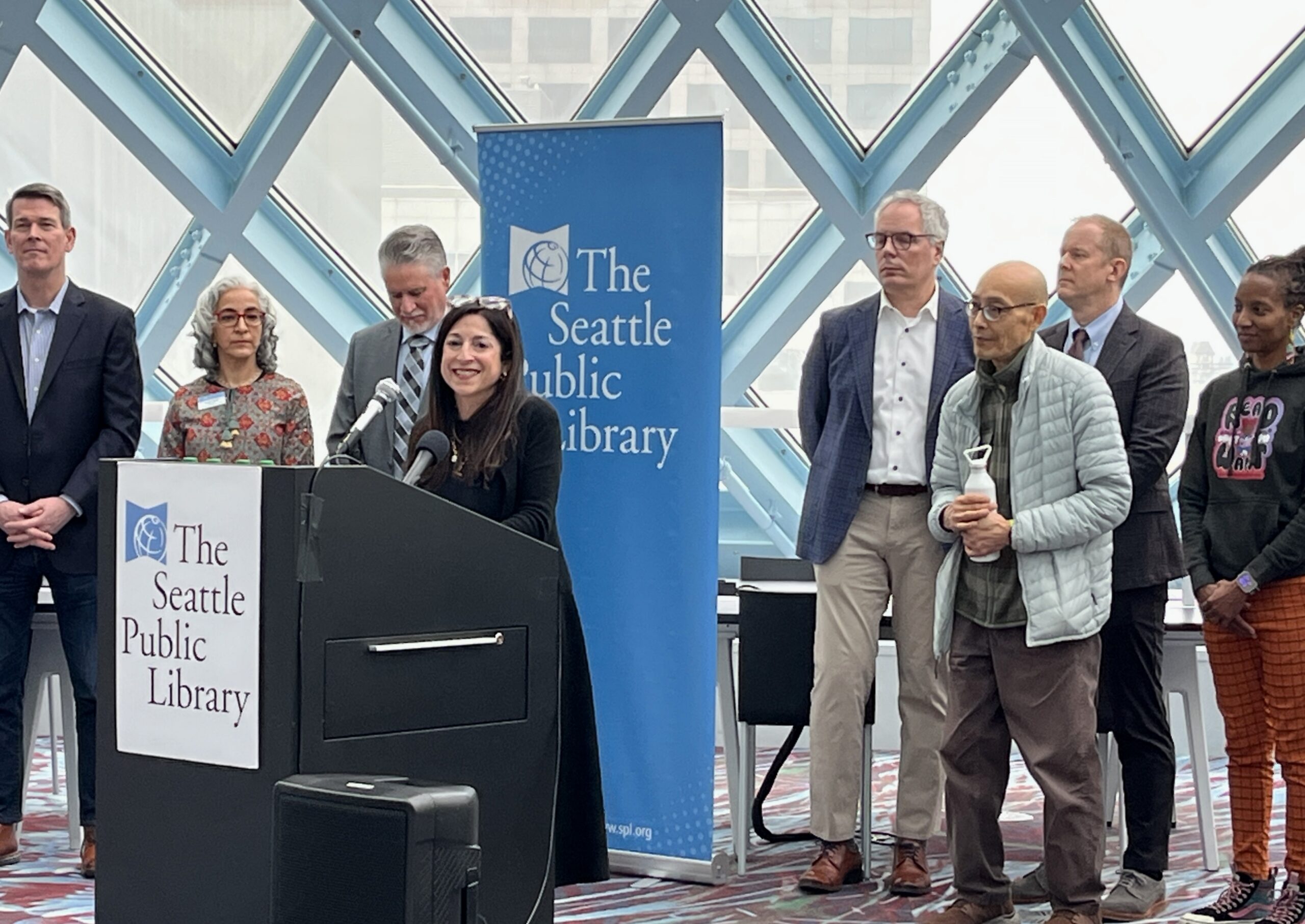
Here's a good headline for library supporters this week: The Seattle Times reports that Seattle Mayor Katie Wilson held a news conference this week to propose "a seven-year, $410 million property tax levy" to support the Seattle Public Library. "The proposal, which would be on the ballot this August upon approval by the Seattle City Council and go into effect in 2027, is nearly 50% larger than the 2019 levy expiring at the end of this year, when accounting for inflation," the Times reports.
In a release, City council member Maritza Rivera, Chair of the city council's Libraries, Education and Neighborhoods Committee, praised the measure. "This proposed $410 million levy renewal upholds the city’s commitment to preserving library open hours, providing books in the format that readers want, delivering programming for tots all the way up to seniors, and maintaining welcoming branches that reflect the diversity of their neighborhoods,” Rivera said, adding that the city's residents describe their libraries as "beloved third places, centers of learning, and safe spaces that are worth the investment."
New Library Standards Proposal Moving Along in Maine

The Maine News Center reports that the Maine Library Commission is reviewing a new draft of requirements for the state’s libraries, after an earlier proposal, "which would have required all libraries to have paid directors or risk losing access to interlibrary loan services and other state support" was blown up by pushback from small libraries. The current proposal will now go through what could be "a yearlong rulemaking process to establish enforceable standards."
Chairman Bryce Cundick, library director at the University of Maine at Farmington and the commission’s representative for large academic libraries, said the standards are important because "we live in a world where services are getting more expensive and resources are getting more spartan,” adding that "state library staff members need clear guidance from the commission to make decisions."
A High School Librarian vs. Moms for Liberty
 Kalyn Gensic
This is a really good read: Author and high school librarian Kalyn Gensic writes for Texas Monthly about her experience with the new Texas book banning law S.B. 13, and how one local Moms for Liberty leader—Tammy Fogle, despite having no children in the school—swiftly filed 27 book challenges.
"After two months of sitting through board meetings dominated by Moms for Liberty, the librarian at the other high school, Kate Stover, and I began inviting parents to come and voice their own perspectives, and a group formed who now attend regularly," Gensic writes. Ultimately, many of the books challenged by Fogle were actually kept. But the battle is not over: Gensic reports that Fogle has now filed a petition directly with the Texas Commissioner of Education, Mike Morath, to have the books removed.
"It is widely known but nonetheless fun to share in small talk that most people are more afraid of public speaking than they are of death," Gensic writes. "It isn’t that I’m more afraid of public speaking than death; it is that public speaking feels like it could cause my death. But I do it every month because I am a high school librarian in the state of Texas in times such as these."
This is Texas Law S.B. 13 in Action
 Aubrie Harris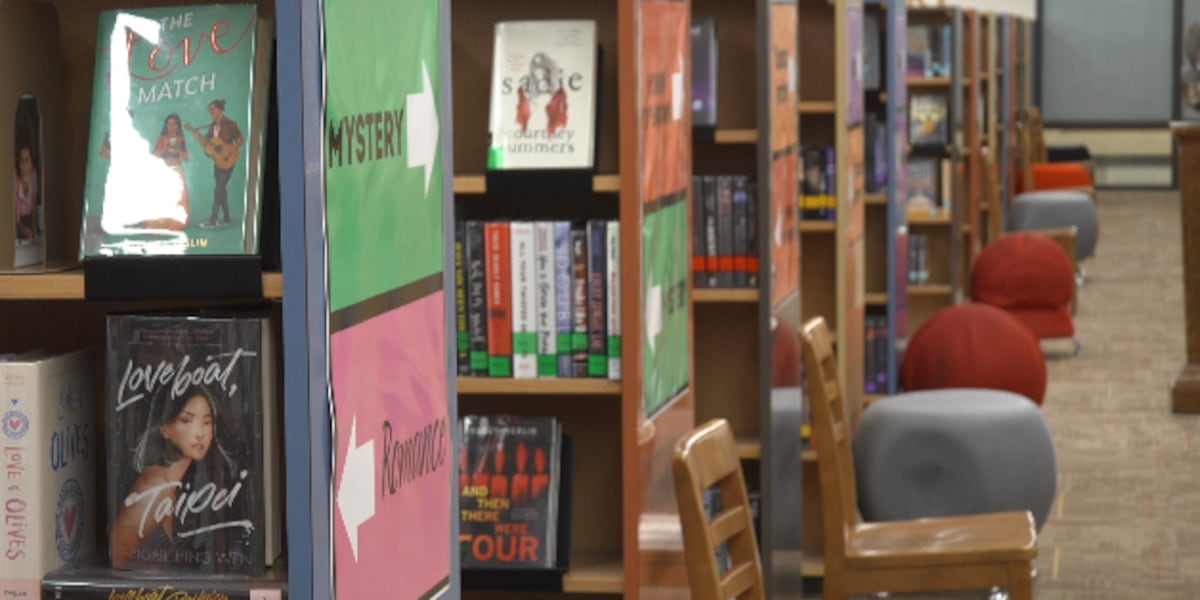
If you've read the story above, this piece from local affiliate KCBD offers a little more on how S.B. 13 in Texas is playing out. "Lubbock ISD is revising the review process for its School Library Advisory Council as Texas lawmakers reshape what books can be placed on public school library shelves," the report notes, explaining that under S.B. 13 any community member can now challenge a book, and once challenged, the book is immediately pulled from circulation until a local SLAC (School Library Advisory Committee) weighs in. Which, the article notes, they can do for virtually any reason. "In previous board and SLAC meetings," the report states, "one woman claimed students are getting slowly desensitized to 'liberal ideology,' comparing it to a frog getting more accustomed to a boiling pot."
Oklahoma Senate Passes 'Harmful to Minors' Bill
 Katrina Crumbacher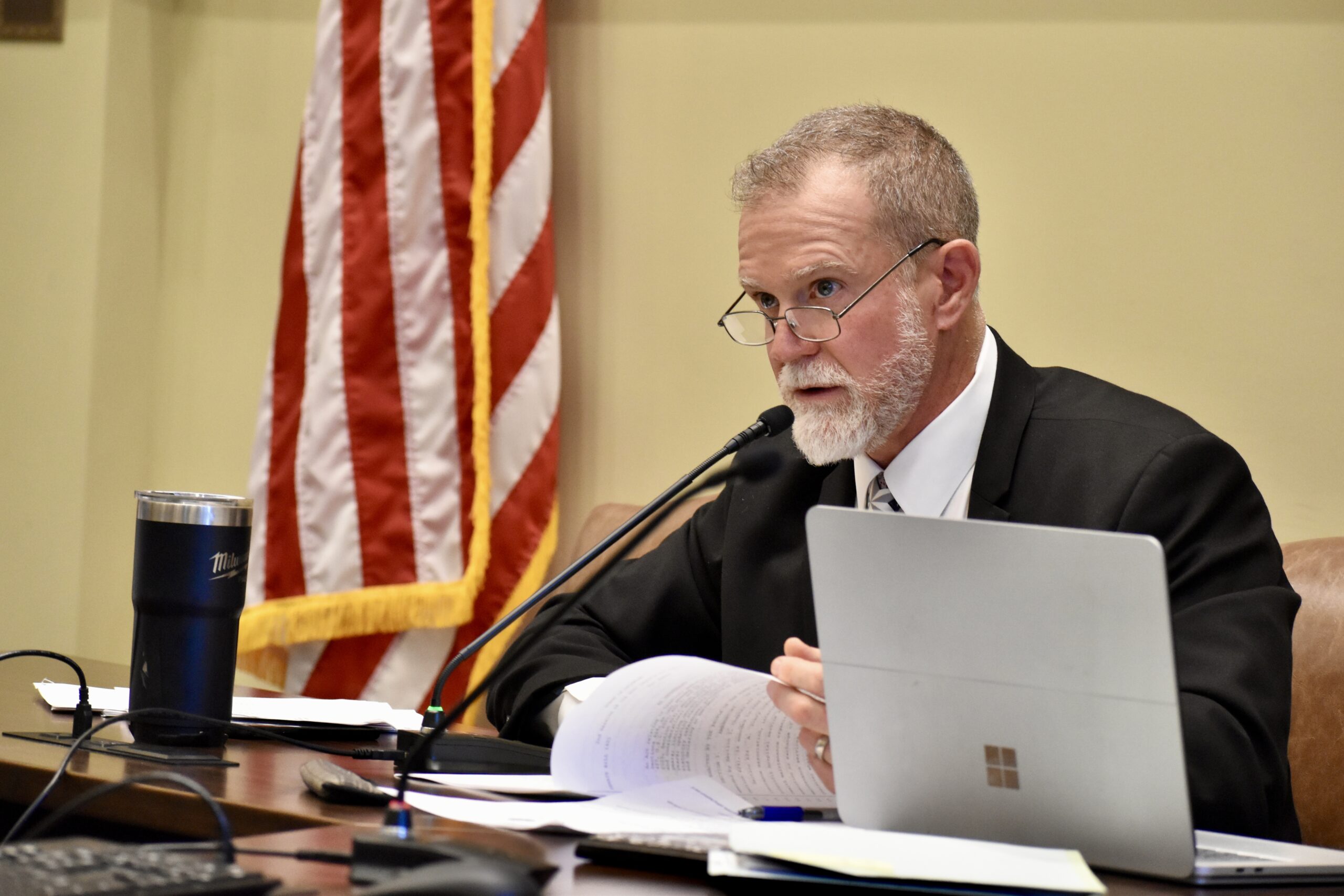
Via the Journal Record, Oklahoma's ban on "sexually explicit" books in school libraries, Senate Bill 1250, passed the State Senate floor this week. The bill would bar school libraries in the state from having “any materials containing or depicting obscene material, sexually explicit content, nudity” or material deemed “harmful to minors,” under penalty of having their funding reduced.
“I Know Why the Caged Bird Sings by Maya Angelou, The Color Purple by Alice Walker, and other such widely-regarded foundational literary works may be banned in Oklahoma public school libraries if an Oklahoma Senate bill becomes law," the report states, observing that Oklahoma already has "written policies and procedures for removing library materials deemed obscene."
Government Speech? After Ninth Circuit Setback, Legislators Look to Amend Book Idaho Banning Law
 Ryan Suppe and Kevin Richert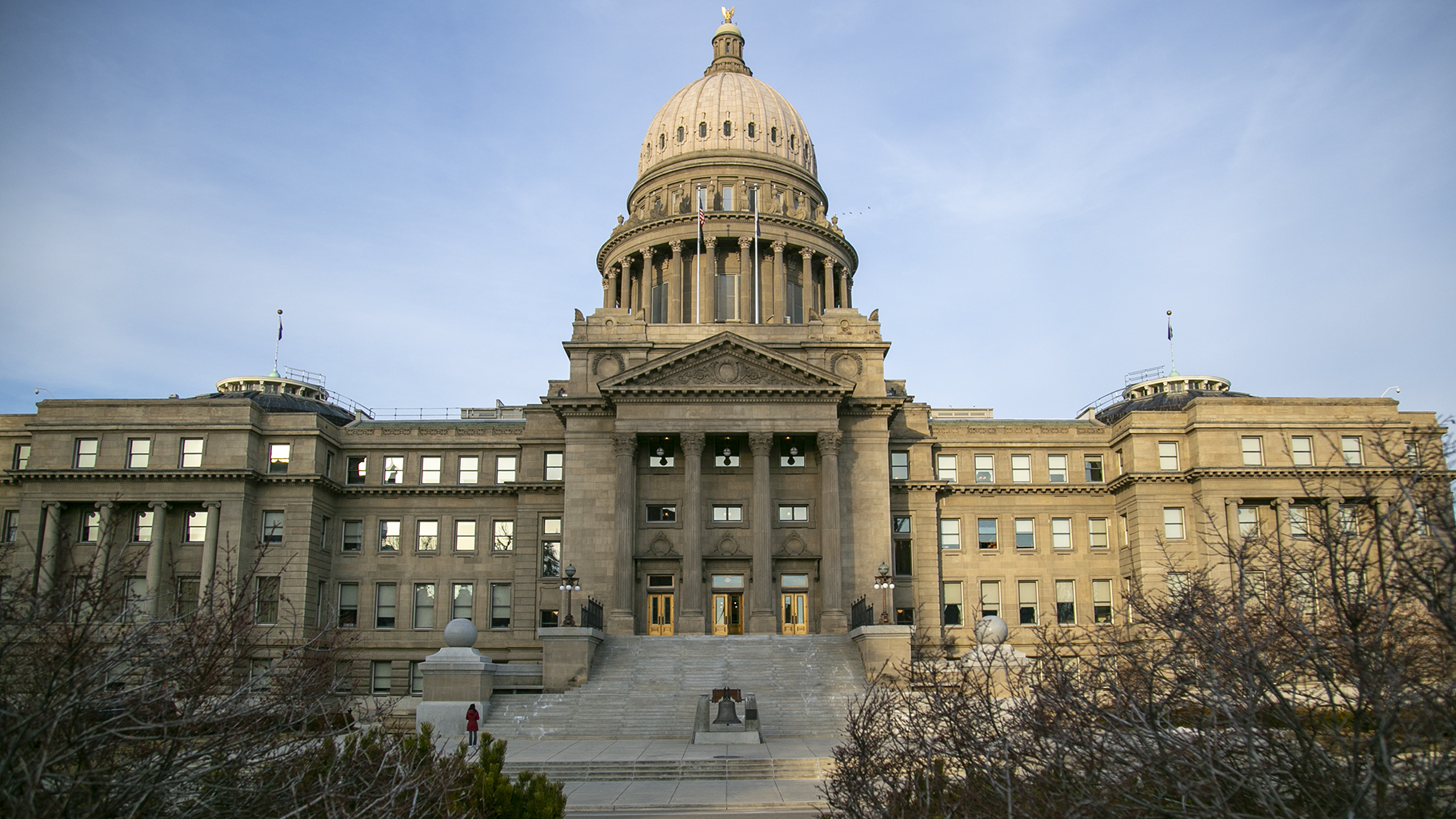
Idaho Education News reports that the Idaho legislature is looking to amend its controversial 2024 "harmful to minors" law, House Bill 710, after an appeals court decision in January. "Two bills that would amend the state’s “harmful materials” library law are heading to the full House," the outlet reports.
One bill, House Bill 819 appears to draw on the Fifth Circuit's bombshell ruling in Little v. Llano County, and notes that library book choices should be immune from challenge as "government speech." A second bill, House Bill 795, which the outlet calls "a less controversial proposal" would remove a key "context" clause in the existing law. "Most people who testified during a public hearing Thursday opposed HB 819," the report notes. Lance McGrath, president of the Idaho Library Association, told reporters that the group "was neutral on HB 795 while it opposed HB 819." Passed in 2024, H.B. 710 allows people to win money from libraries for finding allegedly inappropriate books on library shelves.
As Words & Money reported in January, the Ninth Circuit court of appeals found that the lower court that had erred in initially dismissing a library-led challenge to H.B. 710, and instead found that the law was in fact likely overbroad and unconstitutional. In addition, a a second suit over H.B. 710 was filed in February 2025 by publisher Penguin Random House, the Authors Guild, several bestselling authors, and the rural, 1,000 square foot Donnelly Library, which was reportedly forced by the specter of paying damage awards to go "adults only" after the law went into effect.
Alabama Library Caught in Fight Over State Funding Appoints Anti-Censorship Board Member
 Jacob Holmes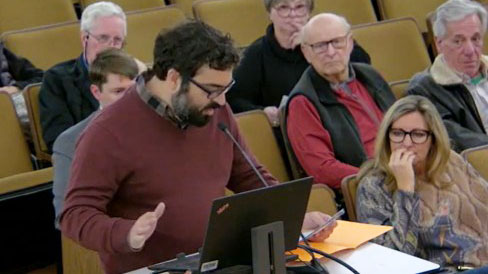
Via the Alabama Political Reporter comes the latest twist in a long-running censorship battle in Alabama between book banners on the state's Public Library Service and the Fairhope Public Library. This week, the Fairhope City Council week approved a new library board member, Gustavo Douaihi. Described as"a vocal advocate of the library," Douaihi in January shared concerns that "America is falling into similar patterns that he saw as a boy" in Venezuela, the outlet notes. "In a free society, there must be a free exchange of ideas," he told the city council during an open comment period.
Where's the ALA When You Need It?
Also in Alabama, AL.com reports that The Eagle Forum, a right-wing Christian group "that has been outspoken about inappropriate books for children," is suing the Tuscaloosa Public Library in federal court over its decision to stop the group from using its meeting rooms. But the irony was apparently too good to pass up for the outlet: "The American Library Association’s Intellectual Freedom group said 'courts have consistently held that libraries may not exclude religious groups from their meeting rooms solely because the group is religious in character or because the meeting may include religious activities,' according to the ALA website," the report states. "However, the state public library service left the ALA in 2024, a move that the Eagle Forum applauded."
How to Destroy a Library's 'Political Power'
 Kelly Jensen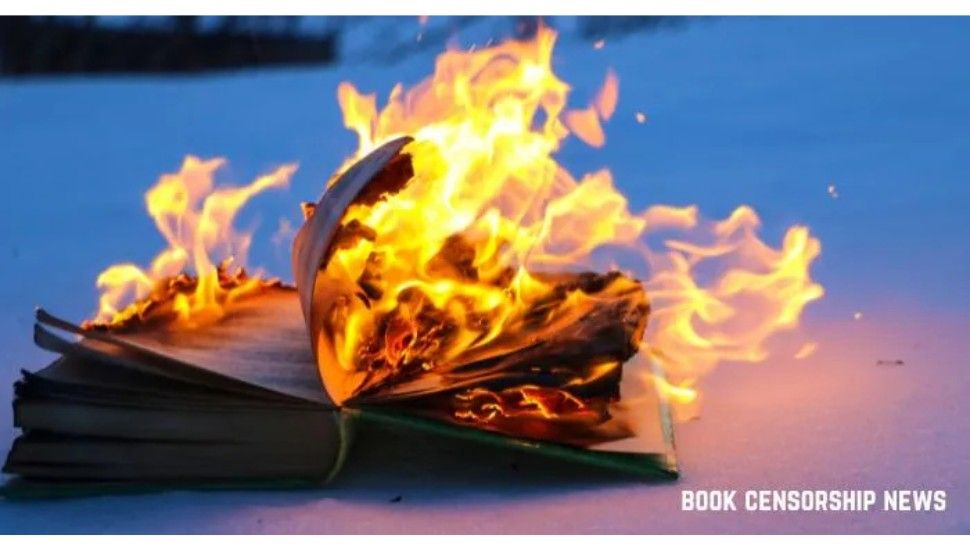
Over at Book Riot, Kelly Jensen leads off her weekly censorship news column with a look at Perkins County, South Carolina, and Randolph County, North Carolina, and the tactics being used to destroy libraries for political gain. "The rallying cry of 'local control' is not about local control. It’s about controlling everything, right down to the local level," Jensen observes.
And Finally This Week...
 christine.karpovage
As always, we like to close with some happy news when we can, and this qualifies: Delaware Governor Matt Meyer on March 12 signed a proclamation declaring March 12, 2026, Delaware Libraries Day. Hey, every little bit helps, right?
"For 125 years, Delaware Libraries have been a place where neighbors help neighbors, and where curiosity turns into opportunity,” Meyer said in his signing statement. "As we work to close our literacy gap, libraries are at the center of that work, powering the Delaware Literacy Alliance and connecting people of every age to books, technology, workforce support, and vital services in every community. My family still looks forward to a trip to the library, and I hope more Delawareans sign up for a free library card to take advantage of the resources and knowledge available to them just a few miles from home.”