The Queue: Library News for the Week Ending May 1, 2026
Among the week's headlines: an appeals court weighs whether to rehear an appeal of Iowa's S.F. 496; a new poll in Texas shows broad support for librarians; a Tennessee library advocacy group is honored by PEN America; More on the state of library ebooks; and ALA staff vote on their union.

Plaintiffs in Iowa Book Banning Case Seek 'En Banc' Rehearing to Address 'Egregious' Errors
As expected, the plaintiffs challenging provisions of Iowa state law S.F. 496 in two lawsuits have asked the full U.S. Court of Appeals for the Eighth Circuit for an en banc rehearing after a panel of three conservative judges last month vacated a district court's order that had blocked the state from enforcing the law's ban on books and materials from school libraries that contain sexual content.
As Words & Money previously reported, the appeals court panel leaned heavily on a novel reading of a 1988 Supreme Court decision in Hazelwood v. Kuhlmeier, which involved a school principal’s decision to pull articles written by students for the school newspaper. In its decision to vacate the lower court's injunction, the appeals court held that school library books met the standard articulated in Hazelwood to be considered "school-sponsored speech" and ruled that school officials and lawmakers thus have wide latitude to exercise "editorial control" over any activity (including library book selection) that "reasonably" relates to a "legitimate pedagogical concern."
 Andrew Richard Albanese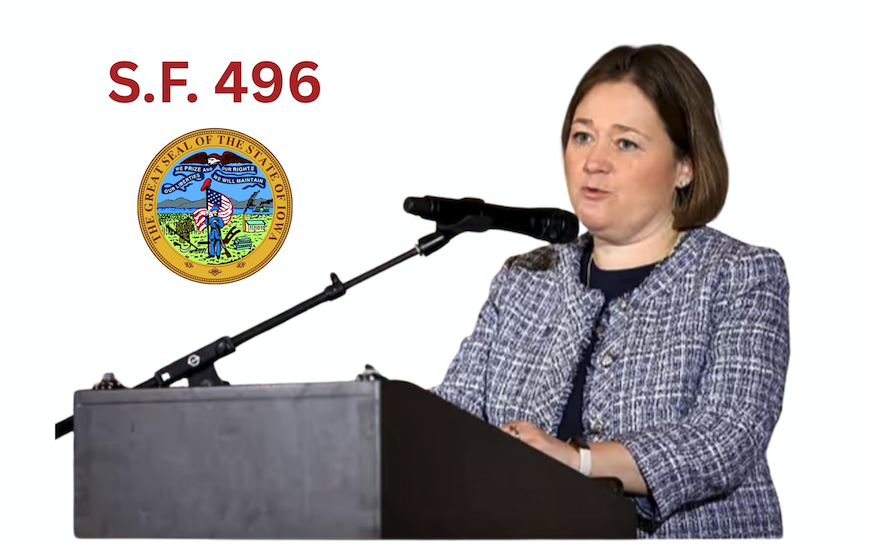
But in its April 20 petition, the plaintiffs argue that the appeals court's misapplication of Hazelwood to school library collections stands as the most "egregious" of several errors made by the panel that should merit a rehearing before the full Eighth Circuit.
According to the plaintiffs' petition, books in school libraries "bear little resemblance to the kind of speech that prior cases have held to be school-sponsored,” the brief states, concluding that the panel’s view that a sweeping, statewide ban of books from school libraries does not violate the First Amendment is "factually" flawed, even under the panel’s own "legitimate pedagogical concerns" theory.
“In passing S.F. 496, the Iowa legislature was acting as sovereign, not as educator,” the plaintiffs argue, pointing out that "educators and local school boards" had already deemed the "hundreds of books" removed from school libraries under S.F. 496 to be age appropriate and to have educational value.
"The transient nature of library collections and the diversity of viewpoints they contain make them incompatible with the government-endorsed speech doctrine's assumption of a unified governmental message," the petition concludes. "The local school boards determined that a wide variety of books are appropriate for interested students. The State may not override those decisions and enforce blanket bans on books whose messages the State disfavors."
A decision on the rehearing is expected to come quickly, and, if granted, could have major ramifications. Remember, the Fifth Circuit's stunning reversal in Little v. Llano County came after an en banc rehearing.
New Poll Shows Texans Strongly Support their Libraries

As we've previously reported, poll after poll shows public support for libraries remains high, as does trust in librarians, even in states where libraries have been targeted by a vocal minority seeking to ban books. Now, a new poll in Texas, commissioned by the Texas Library Association, is reinforcing that data.
"At a time when public discourse has questioned the relevance of libraries and the role of librarians, the data tells a very different story: Texans across political perspectives and demographics strongly support their libraries, trust library professionals, and believe in maintaining broad access to information," reads a release accompanying the poll results. "Nearly all Texans (95%) agree that public libraries play a vital role in providing free and equitable access to information, promoting literacy, and supporting workforce readiness. Nine in ten (90%) say libraries should be treated as an essential public service—placing them alongside
other critical community infrastructure."
Texas legislators have been at the epicenter of the current wave of book bans nationwide, but this poll appears to confirm the significant anecdotal evidence that this wave of attacks on libraries and the freedom to read are being driven by a small but active political minority.
Among the survey's notable findings: 89% of respondents trust librarians to select materials that reflect community needs and interests; 94% agree that libraries should provide access to a broad range of information and ideas; and 72% believe decisions about age-appropriate materials should be made at the local level "by parents and professional librarians—rather than through broad restrictions."
The full survey is available here.
PEN America Honors Tennessee Library Advocates
Andrew Albanese
As I reported for Publishing Perspectives this week, PEN America has announced that it will honor a coalition of local library advocates from Murfreesboro, Tennessee at its upcoming literary gala. "PEN officials said the Rutherford County Library Alliance will receive the 2026 PEN/Benenson Courage Award at the 2026 PEN America Literary Gala on May 14, in New York, for the group’s efforts to “galvanize its community against book bans” and for leading opposition to a state-mandated effort to remove children’s books deemed “inappropriate” from library shelves.
The PEN/Benenson award honors individuals for “exceptional courage in defending free expression often in the face of personal danger or intense public scrutiny.” Alliance VP Keri Lambert and Communications Director Tatiana Silvas, a high school English teacher, will accept the award on behalf of the group.
“These brave women represent a growing nationwide movement of everyday citizens who understand that censorship is not abstract, that it corrodes democracy, education, and young people’s right to see themselves and the world in the pages they read,” said Summer Lopez, PEN America co-CEO, in a release. “The Rutherford County Library Alliance is an important reminder that power lives in our communities, with the courage of individuals who refuse to be silenced.”
Utah Bans Two More Books Under New State Law
Carmen Nesbitt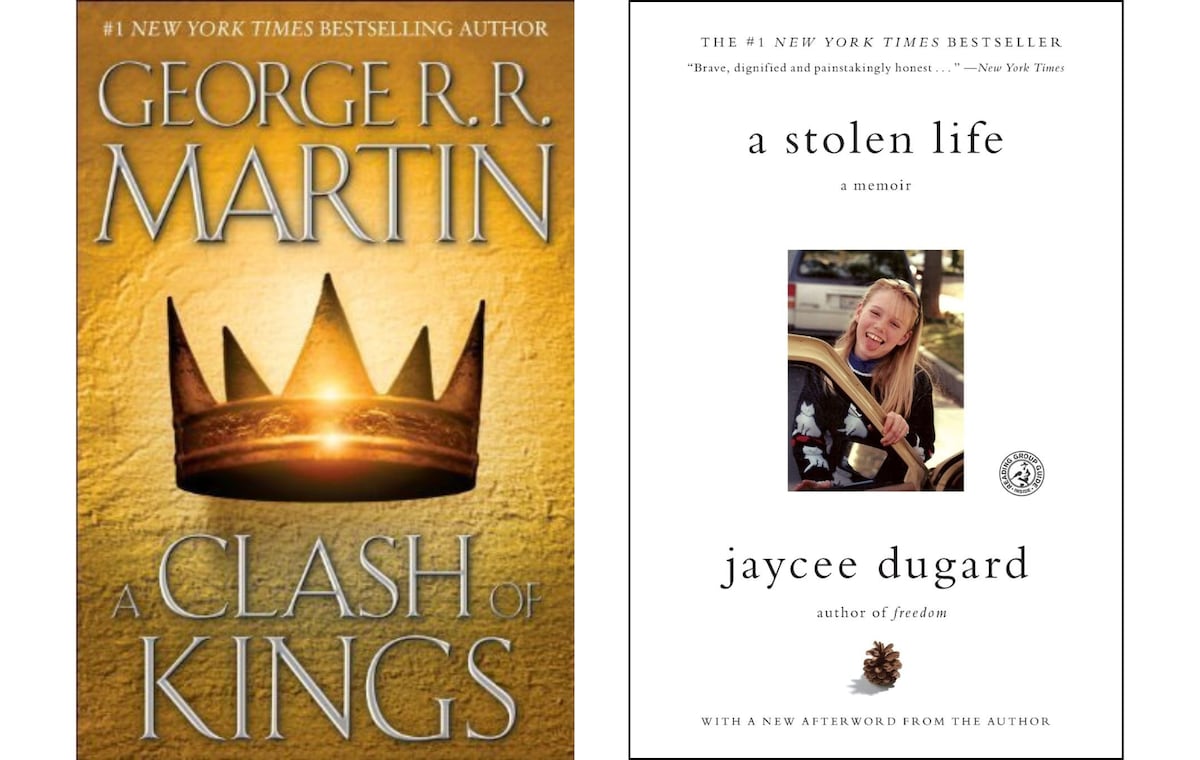
In what is unfortunately (though not unexpectedly) becoming a regular feature in this column, the Salt Lake Tribune reports that the state of Utah this week added two more books to the list of titles now banned from schools statewide under a 2024 state law that requires a book be removed from all public schools in the state if at least three school districts determine it contains "sensitive" material. George R.R. Martin's A Clash of Kings was banned this week after the Alpine, Davis, and Jordan school districts all removed the book, the Tribune reports, as well A Stolen Life: A Memoir by Jaycee Dugard, which was removed from the Davis, Cache County, and Granite school districts. The total number of books banned under the law now stands at 34 (at least until next week).
In Support of a Freedom to Read Law for Massachusetts
 Mary Benard and Gayatri Patnaik
In a good editorial for the CommonWealth Beacon, Mary Benard, publishing director of the Unitarian Universalist Association and Skinner House Books, and Gayatri Patnaik, director of Beacon Press, make the case for Massachusetts to pass its freedom to read law, which is now before legislators.
"This is not just a problem in 'red states' like Texas or Florida; it is an issue here in the Commonwealth, too. And it is one we have the opportunity to fix," they write. "The bill currently before the Massachusetts Legislature would not only protect access to books in the state and protect librarians and educators, it will also ensure authors, illustrators, booksellers, and publishers do not suffer economic harm from coordinated efforts to stifle free thinking and expression."
More on the State of the Library Ebook Market

In North Dakota, the Minot Daily News has a piece by Minot Public Library director Joshua Pikka on the "raw deal" libraries get in the digital space.
"If you are wondering why the wait for popular books is so long, it is because publishers charge libraries inflated costs. If you are wondering why we may not have a great selection of ebooks, it is because a lot of our budget has to go to re-purchasing the more popular titles that publishers have taken back from us," Pikka writes. "To date, attempts to negotiate with publishers or to enact laws that force them to give libraries more fair terms have failed. As of right now we are left with rising demands for ebooks and unfair business practices and unsustainable models in which we can purchase them."
Librarians and Indie Publishers Talk Digital Content at PLA
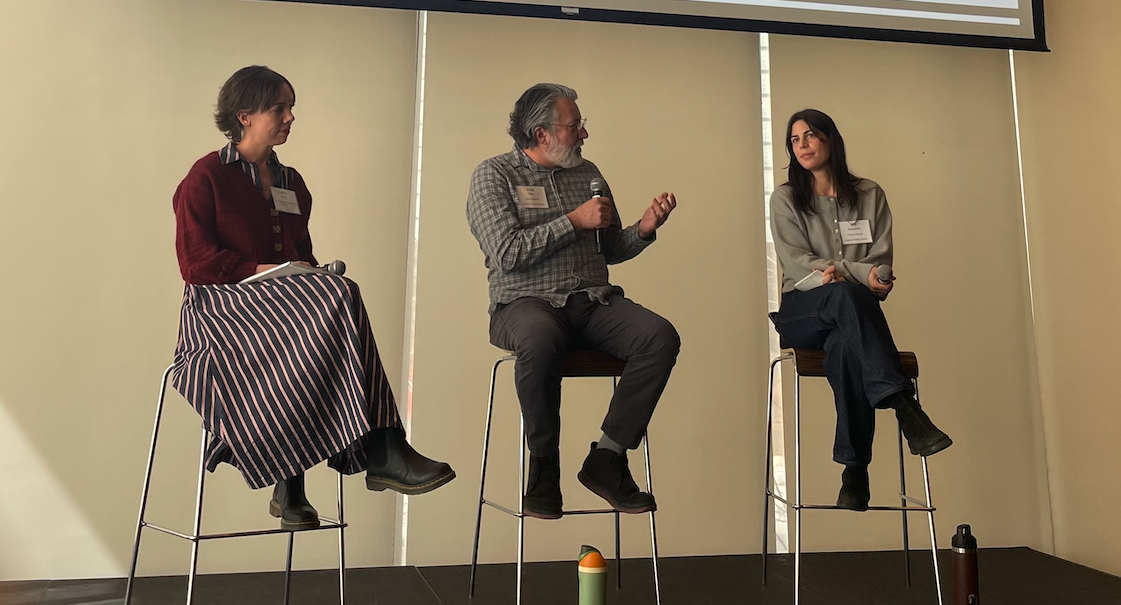
Over at Library Journal, Claire Kelley reports on the third IndieLib forum for independent publishers and librarians. "Hosted by the Independent Publishers Caucus (IPC) in partnership with the Digital Public Library of America (DPLA), the daylong forum held its inaugural event in Columbus, OH, in 2024 after IPC’s member presses recognized how rarely independent publishers have the opportunity to communicate directly with library decision-makers," Kelley, who is also one of the event's organizers, writes. "IndieLib Forum has consistently framed its panels with the premise that libraries and most independent publishers are mission-driven and committed to working together to facilitate access to information for the public good."
ALA President Sam Helmick On the Future of the IMLS
Terry Gerton
From the Federal News Network, ALA president Sam Helmick was a guest on Terry Gerton's The Federal Drive radio show, where they spoke about what's next for the IMLS after a win in court, but with the Trump administration still seeking to eliminate the agency's funding in the FY2027 budget. "So this is now the time, between now and June 5th, to talk to our Appropriations Committee and ensure that when they meet for their Labor Health and Human Services, Education, and Related Agencies bill review, that Americans have spoken up and said, please fund the Institute for Museum and Library Services," Helmick said.
Looking to Take Up the Slack from Baker & Taylor's Demise, Follett Announces New 'Street Date' Program
Follett Content
Follett Content, one of the companies expanding its work with public libraries in the wake of Baker & Taylor's collapse, this week announced new developments in its bid to serve as an adult collection partner for public libraries, including a new "Street Date" program.
"The program enables public libraries to preorder select, high-demand adult titles in advance of their publisher release dates, supported by curated title selection and advance planning windows. Titles ordered through the program are fulfilled and delivered ahead of release and held for circulation until the designated street date, helping libraries prepare to circulate the moment a book is available to the public, when interest and demand are highest," reads an April 30 release. Ordering and purchasing take place through Titlewave, Follett Content's collection development and ordering platform.
"We've invested in the catalog, the infrastructure, and now street-date capabilities to make sure libraries aren't just ready for patron demand, they're prepared for it," said Britten Follett, Chief Executive Officer of Follett Content, in a statement. The release added that Follett Content now offers "more than 600,000 adult print titles" and growing.
These Librarians Are Running for Office
Kelly Jensen
Over at Book Riot, Kelly Jensen leads off her weekly censorship news column with a look at some of the librarians who are running for elected office. "This year, a number of librarians across the United States are putting their hats in the ring to serve in their state congress," Jensen writes. "Here’s who they are, where they’re running, what they’re passionate about, and why they believe other librarians should consider running for something."
Authors Alliance Issues Final Report on a 'Public Interest' Corpus for AI Training
Dave Hansen
The Authors Alliance this week released the final report of the Public Interest Corpus project, a Mellon-supported effort that is exploring how research libraries can make book data available for "AI training and computational research" in ways that "serve the public interest, rather than reinforcing the existing concentration of access to texts among a small number of well-resourced commercial actors."
The report The Public Interest Corpus: A Framework for Implementation is also available in a version that allows for comments.
"Books are now widely recognized as among the highest-quality training data available for AI systems—they reflect sustained editorial processes and capture historically deep records of human thought across many disciplines and languages. Research libraries hold them at scale, often already in digital form," writes Authors Alliance executive director Dave Hansen. "But access to that data for AI development has so far been shaped largely by which commercial actors have the resources to license, scrape, or otherwise acquire it. Academic researchers and smaller public interest organizations have been mostly outside that conversation."
After Losing Its Ill-Conceived Effort to Ban Books, a Judge Orders Huntington Beach to Pay Up
Matt Szabo
The Daily Pilot reports that an Orange County Superior Court judge has ordered the city of Huntington Beach, California, to pay nearly $1 million in legal fees, after it lost a 2025 lawsuit over the board's unpopular attempt to restrict access to library books containing sexual content.
"Alianza Translatinx and three Huntington Beach residents sued the city in February 2025, claiming that the policy was a violation of the California Freedom to Read Act. Judge Lindsey Martinez agreed with the plaintiffs in a September decision," the report notes. And, now Martinez says that the city is on the hook for "$959,853.73 of attorney’s fees, divided between Jenner & Block, the First Amendment Coalition, the Community Legal Aid SoCal and the ACLU Foundation of Southern California."
And Finally This Week...
Sanhita SinhaRoy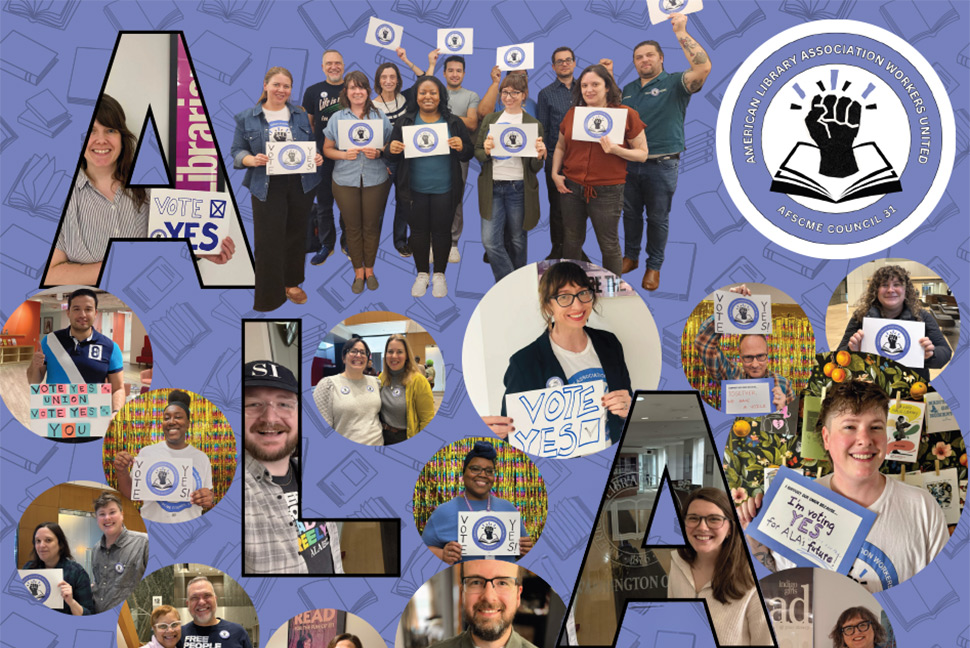
American Libraries reports that about 100 employees at the American Library Association have begun voting on whether to form ALA Workers United (ALAWU). "If a majority of the 101 eligible staff members out of 161 ALA employees vote to unionize, the National Labor Relations Board (NLRB) will certify the new union. Votes will be counted May 27," the report notes. The vote comes after ALA asked for voluntary recognition of the union from the ALA, which ALA leadership declined, despite issuing a statement saying it supported the staff's right to organize.
The union drive comes as morale among ALA staff was sinking amid a severe financial crisis, the report notes. "Last July, as part of its multiyear ALA Forward initiative, the Association launched a strategic plan designed, among other goals, to address its financial deficit, which stood at $15.4 million by the end of September," the article explains. "Also in July, several employees left ALA after staffers were offered voluntary buyouts, followed shortly afterward by workforce reductions, totaling 18 departures. Another 15 employees were affected by workforce reductions in October, heightening concerns among workers. (As of May 21, 2025, ALA had 198 employees. The three voluntary and involuntary reductions represented a 16.7% decline in the Association’s workforce)."
But a quote from former ALA President Emily Drabinski gets the last word this week. "My hope is that as this moves forward, people will see that unions are one way of organizing a workplace so that workers have a collective say in wages and working conditions and that it isn’t because the boss is bad," Drabinski told the publication. "Instead, she says, it’s a way to help bring democracy and equity into a workplace.”