The Words & Money Weekly Newsletter: October 23, 2026

Thank you for supporting Words & Money and helping to establish an independent media venture that aims to properly center libraries in the 21st century reading, writing, and publishing enterprises. If you're already a subscriber, thank you, and we encourage you to please share this newsletter with your friends and colleagues and ask them to subscribe as well. And if you can, consider supporting us with a premium subscription for just $45 annually.
Among the headlines in our weekly news roundup, The Queue: an excellent new white paper details Rhode Island's freedom to read law; a federal appeals court rules that school board members in Escambia County, Florida, can't avoid testifying about their motivations for banning books; in a test of the state's freedom to read law, a judge orders a banned book is returned to library shelves in Maryland schools; W.W. Norton earns librarians' thanks for a key change to its library ebook terms; and what Library Journal's latest survey tells us about the job market for librarians.
The Queue: Library News for the Week Ending October 23, 2026
New White Paper Offers a Legislative Blueprint for Defending the Freedom to Read
Via Unite Against Book Bans, advocates from Rhode Island are sharing a white paper on how they successfully passed the state's freedom to read law in 2025—and how you can do the same in your state.
 Lainie Castle-Cimfel
"Building a Freedom to Read Coalition: Lessons from Rhode Island’s Fight Against Book Bans was created to share what our coalition learned with others who are ready to demand the freedom to read," reads a release announcing the white paper. "Please use it to start a conversation or bring it to a local advocacy group. We want readers and voters all over the country in states blue, red, and purple, to feel empowered to do this work in their own communities in their own ways."
The paper is an outstanding and useful resource and an excellent model for legislative efforts in other states. Edited by lawyer, librarian, and advocate Nicole Dyszlewski, co-host of the Law 401: Legal Issues Decoded podcast and one of the founders and leaders of the Rhode Island Freedom to Read Coalition, the paper includes voices from Rhode Island's broad freedom to read coalition, including Cranston librarian Ed Garcia; publishing lawyer Dan Novack; authors Jeanette Bradley and Padma Venkatraman; publisher and freedom to read advocate Skip Dye; legislative affairs professional Rosie Stewart; psychologist Margaret Paccione, and pastor Eugene T. Dyszlewski.
As Words & Money has reported, Rhode Island is widely considered to be the gold standard among "freedom to read" laws, largely due to the broad coalition it brought together. Among the law's provisions, it includes prohibiting the removal of books from libraries due to partisan or doctrinal disapproval; a model policy for materials in public and school libraries; and shielding library staff from civil and criminal liability. Perhaps most notably, it offers groundbreaking protections against censorship for authors and readers.
As I wrote last week, after an initial winning streak at the district court level, freedom to read litigation appears to be hitting a "red wall" in the appeals courts, a development that makes legislation an increasingly important tool for ensuring the right to read freely.
In his essay, PRH associate general counsel echoed that concern: "Unless and until the Supreme Court weighs in favorably, we cannot assume the future health and vitality of the First Amendment," he wrote. "That is why it is so important to codify the right to read into state law."
Report: McKee Administration Dragging Its Feet on Freedom to Read Law Implementation in Rhode Island
 Steve Ahlquist
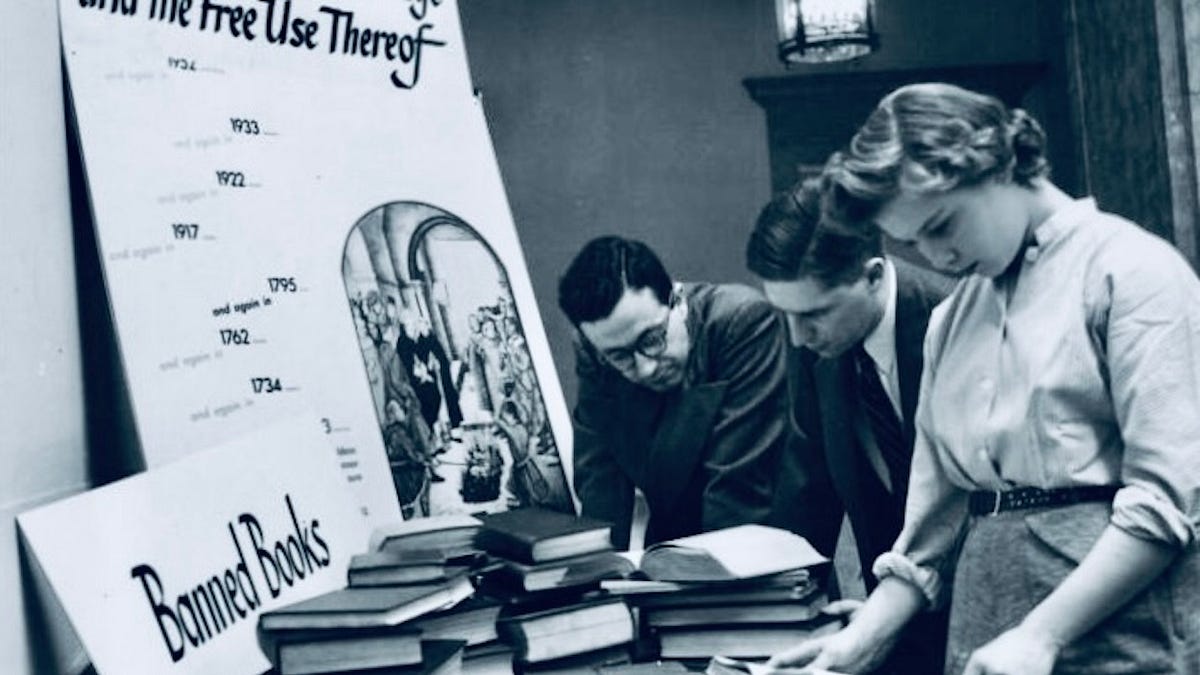
Meanwhile, a reminder that advocacy does not stop once a bill is signed into law. Local independent journalist Steve Ahlquist this week reports that freedom to read advocates in Rhode Island have submitted a formal petition demanding that the state fully implement the 2025 RI Freedom to Read Act.
"Governor Daniel McKee signed the Freedom to Read Act into law on July 2, 2025, making Rhode Island a leader in providing protections to librarians, authors, educators, and readers of all ages from book bans...Fifteen months later, Rhode Island’s administration has only published half the model policies required by the law," Ahlquist reports. “Our advocacy did not stop at the signature ceremony,” Sara Dorsch, co-leader of Rhode Island Authors Against Book Bans, told Ahlquist. “We’ve continued to push for the model policies laid out in the law to be published. And while we wait, there are people who are actively pursuing book bans here in Rhode Island.”
Citing the State's Freedom to Read Law, Judge Blocks Maryland School Board from Banning 'Flamer'
 Aliza Worthington

In Maryland, Baltimore Fishbowl reports on a timely example of how freedom to read laws can work, as a Harford County Circuit Court this week upheld a ruling undoing a ban on Mike Curato's young adult novel Flamer from school libraries in Maryland.
The decision comes after a reconsideration committee (that included a librarian, an administrator, two parents, two students and a community member) convened under Maryland’s Freedom to Read Act to consider a challenge to the book, the report notes, and unanimously recommended keeping the book for middle and high school libraries. A parent then appealed directly to the Harford County Board of Education, who "voted in a closed-door hearing without public notice to remove the book from all county libraries." But after hearing the case, judge Yolanda Curtin, citing the state's Freedom to Read law (among other points) ordered the book to be returned to library shelves.
“Yesterday, the Board argued that it could ban any book it wanted based on its ‘collective wisdom,’ but that is not the law in Maryland, said Erika Jacobsen White, Principal of Joseph Greenwald & Laake, P.A., who argued the case on behalf of Leslie Thompson and the ACLU of Maryland," the report notes. “Flamer will remain on the shelves, and the rule of law prevailed.”
Appeals Court Rules that Escambia County (Florida) Officials Must Testify About Book Bans—But Will It Matter?
 Megan Butler
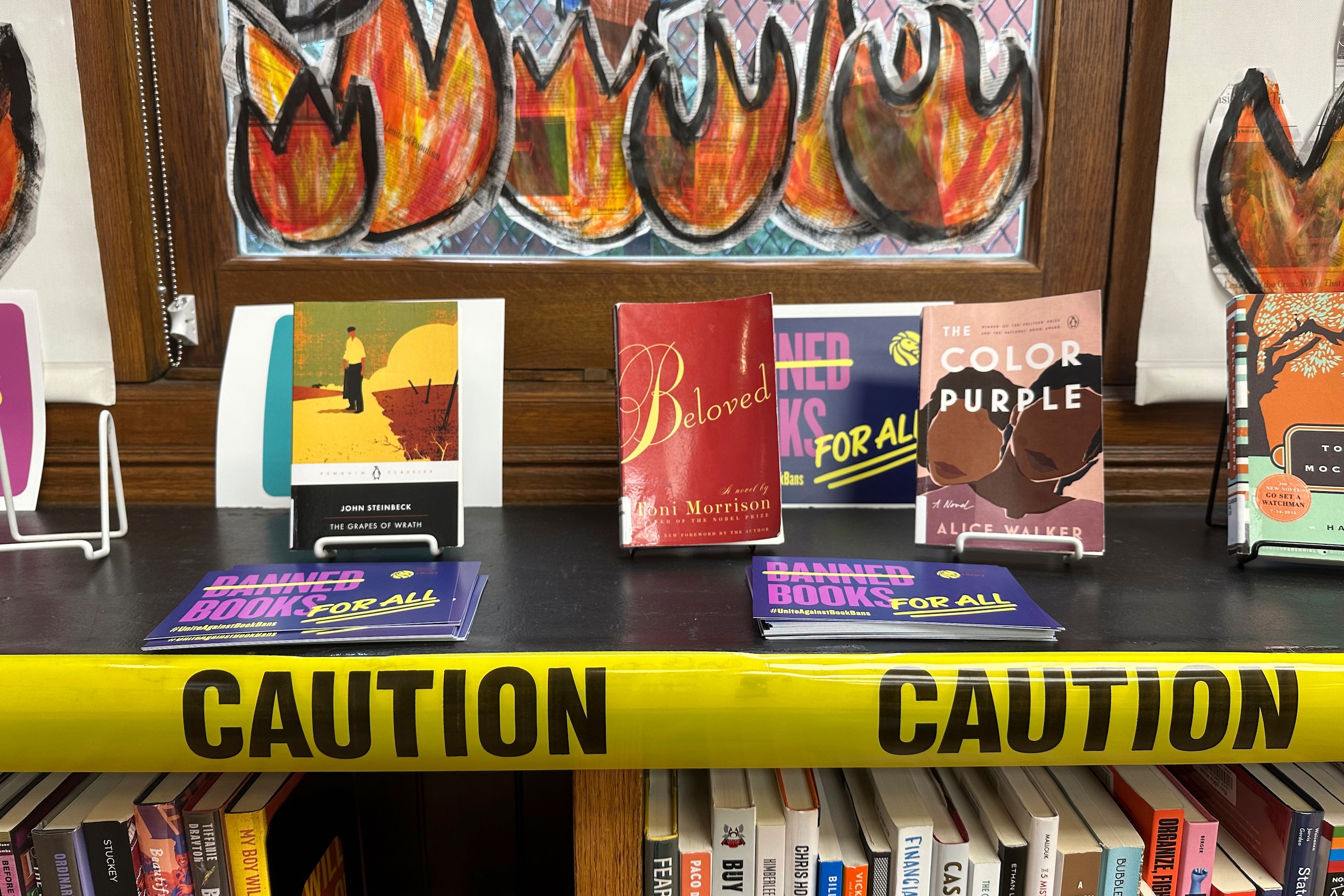
Courthouse News this week reported on an increasingly rare win for freedom to read advocates at the appeals court level.
In a 2-1 decision, the Eleventh Circuit U.S. Court of Appeals held that officials in Escambia County, Florida, must sit for depositions in a 2023 lawsuit challenging sweeping book bans in the county's public schools. The narrow decision comes after seven members of the Escambia County School Board had sought to quash subpoenas for testimony involving their motives for banning books from public school libraries, citing legislative privilege. But the majority held that the board's actions were "administrative acts, not legislative" and therefore not shielded from examination.
While it's good news the board will have to face some scrutiny (unless the decision is appealed to the full court and reversed) the holding also came with a reminder that the broader case still faces an uphill battle: In his dissent, Eleventh Circuit Chief Judge William Pryor (a George W. Bush appointee) argued that the board's decisions to remove books from school libraries is, in his view, "a public policy matter" and thus could be shielded from examination.
More concerning, however, as Words & Money reported earlier this month, during oral arguments in another freedom to read case before the Eleventh Circuit, Pryor suggested that he would vote to uphold a September 2025 decision by federal judge Allen Winsor (a Trump appointee) which held that "school library curation does not implicate any students’ or authors’ First Amendment rights." Thus, even if the depositions of the school board show that they blatantly removed books based on viewpoint discrimination, Pryor apparently believes such removals would still not be unlawful.
When it was first filed in 2023, the Escambia County lawsuit was hailed as a long-awaited response to the disturbing, politically-motivated surge in book bans and legislation since 2021. Among the case's eye-opening revelations, the initial complaint lays out how a single language arts teacher at a local high school, Vicki Baggett, kicked off what would become “a widespread—and largely successful—campaign to restrict access to books” throughout the Escambia County School District.
Escambia County School Board Orders Hundreds More Books Banned from School Libraries
 Mary Lett, Pensacola News Journal
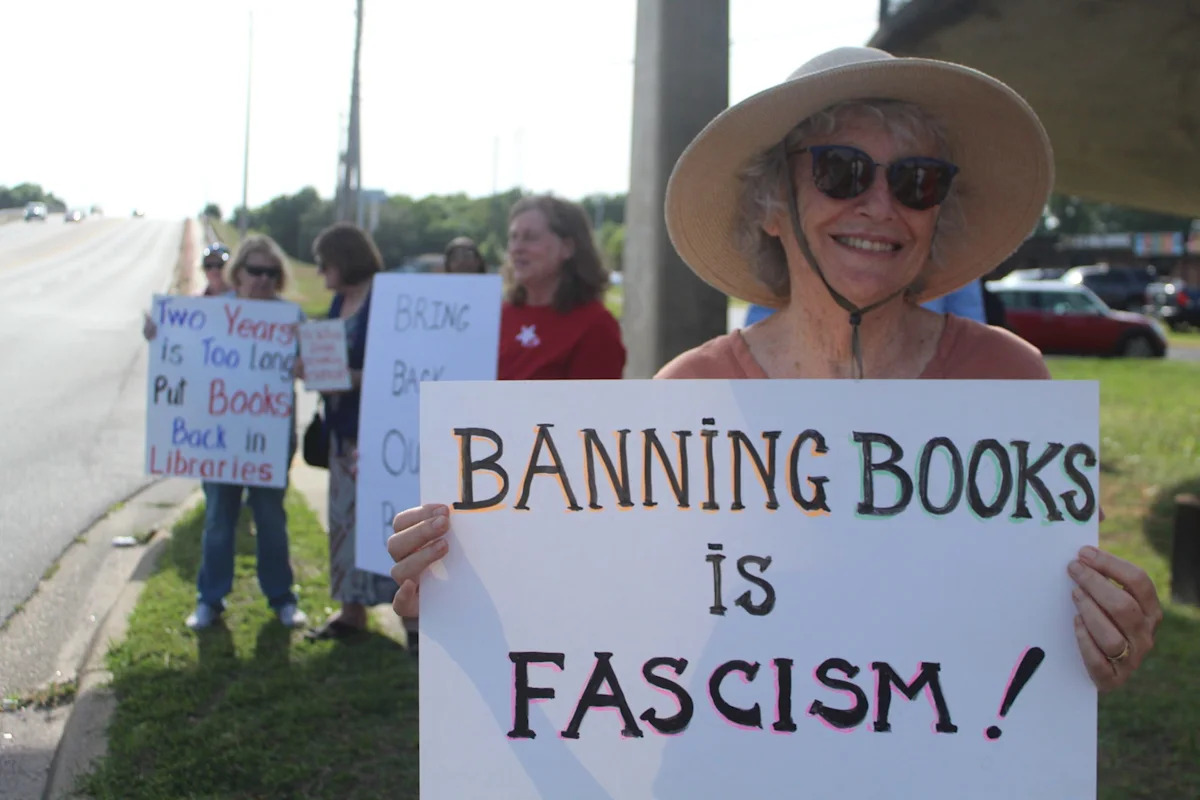
Meanwhile, The Pensacola News Journal reports that the Escambia County School Board (Florida) this week has ordered the removal of 258 more books from the county's school libraries. "Harriet the Spy and The Devil’s Arithmetic were among 258 new books the Escambia County School Board voted to remove from schools at its Oct. 20 board meeting,” the report notes, adding that most of the banned books “hadn't been challenged in Escambia schools,” but rather were challenged in neighboring counties. In addition, more than 40 books that were challenged in Escambia were not on the recommended Florida Department of Education State Objection Report.
“Despite hearing mostly opposition to the blanket removal of the challenged books," the board "unanimously approved the measure without discussion,” the report states. The report also quotes a history teacher and Holocaust education specialist, LeAnn Eubanks, who spoke out in defense of The Devil’s Arithmetic. “This is one of the best books used in education on the Holocaust," Eubanks said, adding that when she researched why The Devil’s Arithmetic was challenged in Clay County, "the most common reason was the word ‘devil’ in the title.”
Florida County to 'Pull and Review' some 1,800 School Library Books
 Zoey Thomas
Local affiliate WLRN has a lengthy report on how the Palm Beach County (Florida) school district is pulling and reviewing hundreds of library books under pressure by the state, with the burden falling on local librarians and administrators.
"From classic novels like The Scarlet Letter to nonfiction works delving into sexual health, over 1,800 titles have been flagged as part of a sweeping audit at the School District of Palm Beach County," the report states, adding the review comes after the Florida Department of Education issued a statewide memo urging districts to "proactively review their libraries," even though Palm Beach County parents haven’t challenged a single school library book in last two years.
"The review comes after members of the public read sexually explicit passages from books they said could be found on shelves at Palm Beach County schools at a Sept. 16 board meeting," the article points out. A spokesperson said the district didn't have an estimate of what the review would cost, in terms of both funding and staff hours, but it's clear that the situation in Florida is taking more than a financial toll.
"Former Palm Beach County media specialist Chelsie Blankenship said she left this year for a private school after the political pressure became too overwhelming," the report states. "Taking state-mandated trainings and spending hours vetting her library shelves left her suffering mentally and physically, to the point she 'just couldn’t do it anymore,' Blankenship said."
Tennessee School Pulls 32 Books Citing Recently Amended State Law
 Jared Austin
In Tennessee, local affiliate WVLT reports that the Jefferson County School District has removed 32 books from its libraries after a review determined the books violated Tennessee’s Age Appropriate Materials Act. According to the report, Director of Schools Tommy Arnold said that “a majority of the books were removed because of the new law, which outlaws books with depictions of sexual excitement or sexual conduct.” The article adds that Arnold will present his review findings to the school board next week, but he “does not expect much discussion on the matter.”
Librarians Praise W.W. Norton for Library Ebook License Change
 Michael Blackwell

Over at ReadersFirst, Michael Blackwell has a brief recap of the latest COSLA/Lyrasis/ReadersFirst webinar on digital content, held on October 13, including kudos to a major indie for a key change.
"Thank you to W.W. Norton for changing their basic license terms. They previously used to have a hybrid license: libraries had a title for either 52 circulations or two years, whichever came first...They have changed to just 52 circulations, and often at an attractive price," Blackwell reports. "Does it seem odd to anyone else that W.W. Norton can do well at 52 circulations for $40, or $.77 per, while larger publishers charge respectively $1.56 and $2.00? Over two and nearly three times the cost?"
In addition, Blackwell thanked Hachette and Macmillan, who are said to be experimenting with licenses metered by checkouts, rather than by time. Timebound licenses have been a major point of contention for libraries. It wasn't all good news, however, as librarians also reported that "access to titles on a pay-per-use model" has disappeared for more than 100 titles "with no warning or word about why." A recording of the webinar is available here.
'Library Journal' Survey Shows a Tenuous Job Market for Librarians
Library Journal has released its 2026 Placements and Salaries Survey, revealing a job market marked by uncertainty. “While the employment outcomes reported in this year’s survey remained generally level, an uncertain hiring environment is leading recent MLIS graduates to prioritize employment stability rather than swift movement among employers or ranks,” writes April Witteveen.
According to the report, "starting salaries for full-time positions across the survey slipped 1.5%, from $61,872 to $60,964. Average salaries in public libraries increased by a scant 0.9% to $54,156, decreased in college and university libraries by 1.6% to $57,101, and were relatively unchanged in school libraries." Meanwhile, “the number of graduates reporting unemployed status increased from 6% to 7.5% since 2024.”
Notably, despite “significant shifts in the information field,” of those who reported finding full-time positions, nearly half—49%—listed reference and information services as a primary job responsibility, while collection development came in next at 43%, “keeping these two traditional facets of librarianship at the top of the list across recent surveys. Circulation responsibilities were reported by 40% of respondents, up from 32% in the last survey.” On the other hand, outreach responsibilities fell from 39% to 36%, matching a trend reported in LJ’s 2026 Public Library Budgets and Funding survey, “which noted that [public] libraries are managing an interconnected triad of declining or condensed staffing, fewer open hours, and softening circulation.”
Some 28 graduate programs participated in the 2026 survey, with a total of 868 individual responses. In terms of demographics, respondents were “majority female (72%) and white (76%), corroborating the results of the American Library Association (ALA) ongoing demographic survey. Of the 471 who provided race/ethnicity information, 21.7% (102) identified “as other than white.”
Florida Property Tax Proposal Falling Short; Concerns Persist Over Wyoming Ballot Initiative
 Jonathan Lundy and Francine Frazier
No question, the upcoming elections will be important for libraries. And this week, we got some potentially good news out of Florida for library supporters: According to a recent University of North Florida poll, support for a controversial ballot initiative that would dramatically slash property taxes in Florida is currently failing.
Asked whether they support the measure, known as Amendment 3, some 50% of respondents indicated they would vote yes, 10 points short of the 60% supermajority required to pass. However, 14% said they haven't yet made up their mind. If passed, librarians and local officials from across the state have warned that the lost revenue would devastate library budgets.
Meanwhile, in Wyoming, via the Laramie Boomerang, Wyoming Library Association Past President Cristine Braddy warns against Prop 1, a Wyoming ballot initiative that would exempt 50% of a primary residence's assessed value from property taxation. "If Prop 1 passes, there is no plan to replace the $125 million in lost local funding every year, resulting in a negative impact that will spread across Wyoming and harm our libraries,” Braddy writes.
In Canada, New Report Suggests Quebec Libraries Are 'Severely' Underfunded
 Linda Gyulai
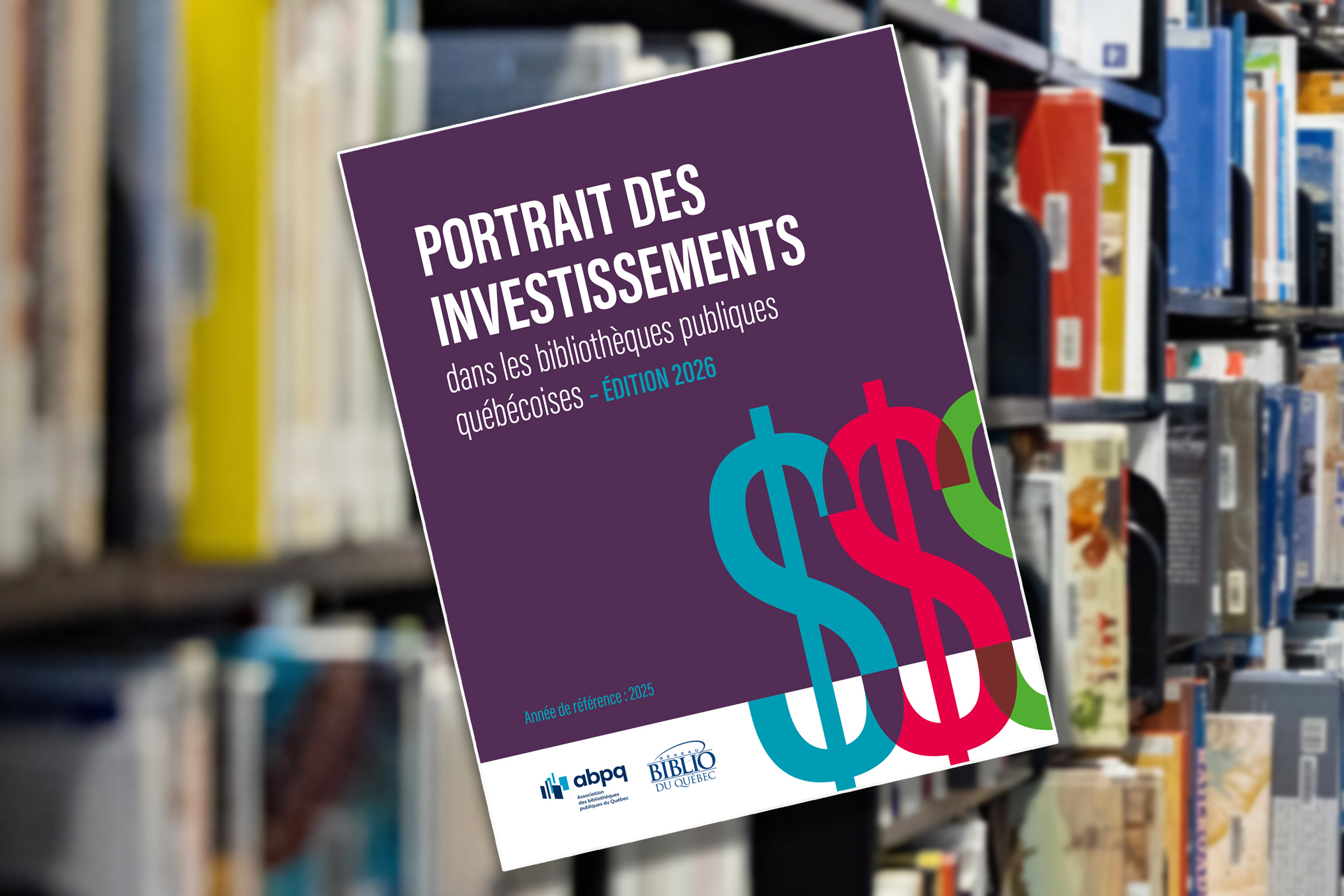
The Montreal Gazette reports on the Association des bibliothèques publiques du Québec's (ABPQ) annual report card, which found that public libraries "in all regions of Quebec" are suffering from "a severe shortage of qualified personnel" and "many lack adequate funding for new books." In a release this week, reps said the latest report card, which "assesses all public libraries in the province, gave an overall grade of 68% for 2025."
"However, the score for one indicator—investment in book-buying—fell in 2025 to 62% from 63% in 2024," noting that the indicator has fallen every year since the annual survey began in 2021. “Over the last two or three years, we’ve seen budget cuts specifically for acquiring books,” ABPQ executive director Eve Lagacé told reporters, pointing out that book prices have also risen sharply while "provincial subsidies" for library book buying "have remained stagnant for several years."
Fresno Abandons Effort to Potentially 'Privatize' Its Library System
 Pablo Orihuela
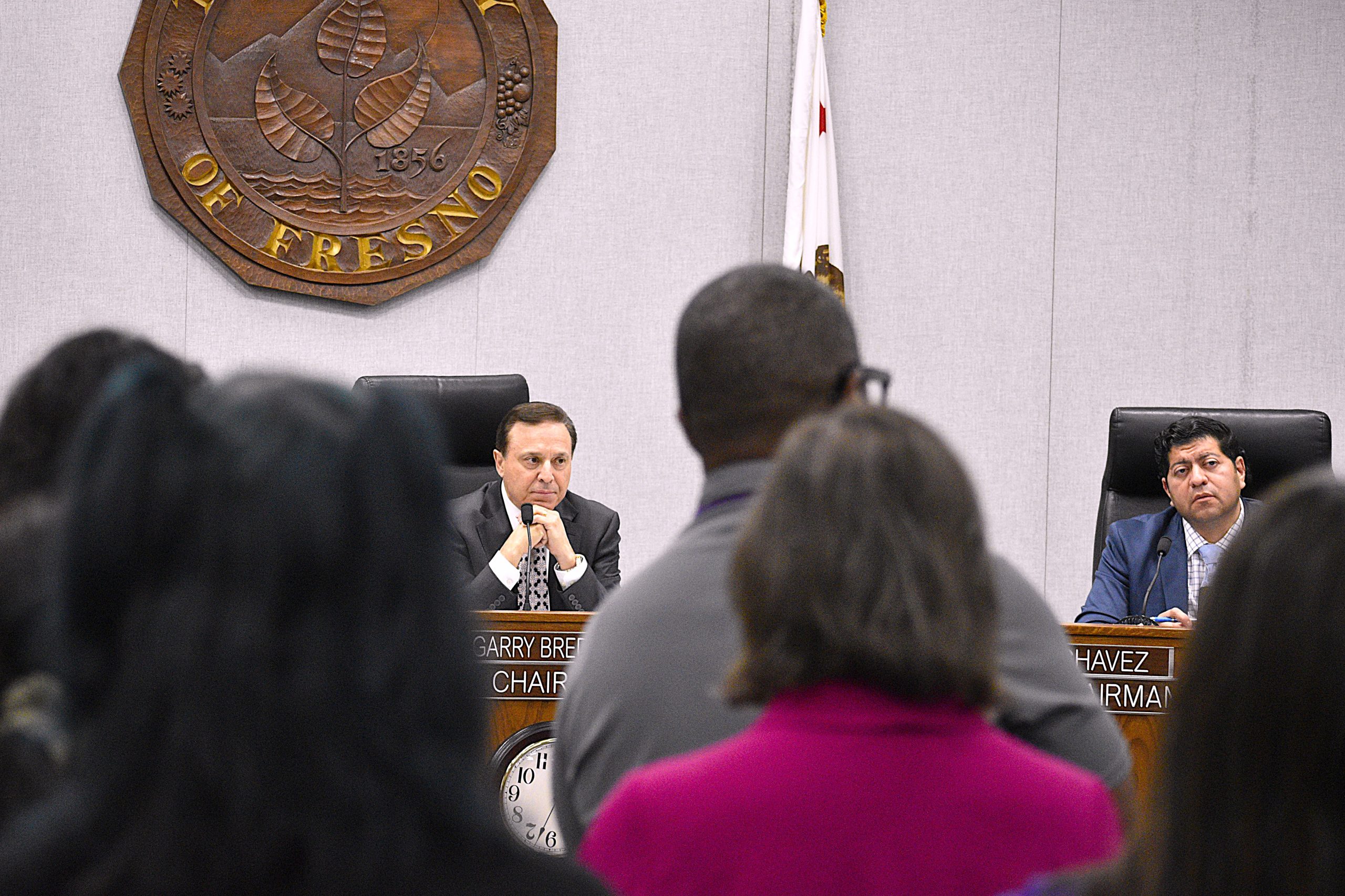
Good news from California, as Fresnoland reports that Fresno County officials have given up, for now, on a plan to explore privatizing library operations, after LSS, the "sole nationwide provider asked to submit a proposal suddenly stopped communicating with county staff." According to a memo authored by County Administrative Officer Paul Nerland, the "failure to submit a proposal under public scrutiny" raised questions about the "dependability of the organization" and "the merit of any proposal.” The potential move had generated "fierce public opposition" from residents and library staff, the report notes.
Library Ditches Its Logo Because It Resembled... a Rainbow
 Londun Christensen
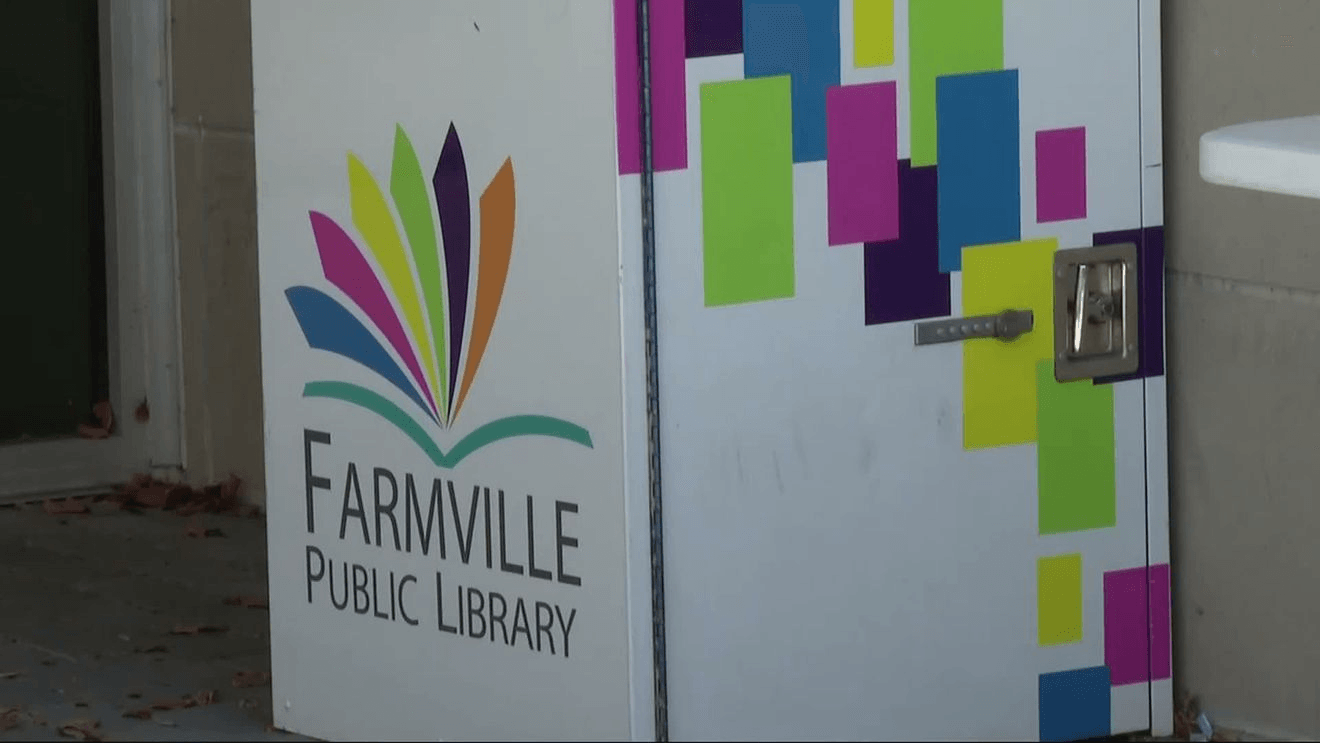
Local ABC affiliate WCTI reports that the Farmville Public Library has ditched its 14-year-old logo after a complaint that "its design resembled a rainbow and was associated with LGBTQ beliefs." Farmville Mayor Alex Joyner told reporters the move has created concerns about transparency. "Rainbows are a significant symbol of libraries across the entire U.S.,” Joyner said. “I believe we all grew up with Reading Rainbow, so to see an action like this take place in the dead of night behind a curtain is really concerning.”
What's Driving the Uptick in Prison Censorship?
 Kelly Jensen
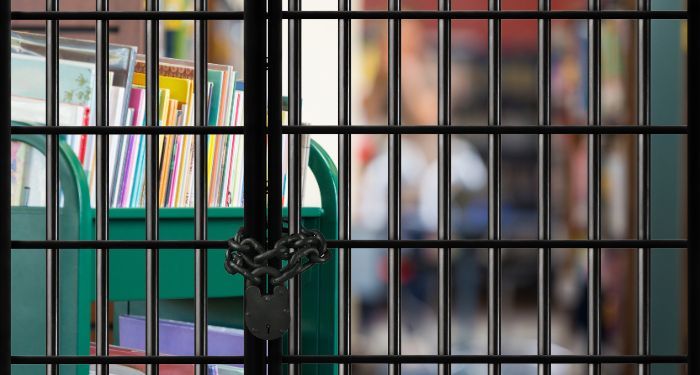
Over at Book Riot, Kelly Jensen leads off her weekly censorship news column with a collaborative piece about a recent report on prison censorship called We Need To Tell The Story: Literary Advocates Nationwide Reflect On Five Years of Relentless Attacks on the Freedom to Read,” published in mid-September. "What often gets lost or overlooked in the conversation about book censorship is prison censorship," Jensen writes. But, she notes, "prison censorship forces a much harder look at America’s history and legacy."
School Librarians Are Essential for Building a 'Reading for Pleasure' Culture
 Elizabeth Heubeck

Over at Education Week, Elizabeth Heubeck has a good piece on how school librarians are key to supporting a culture that reads for pleasure. "It is not a trend limited to youth: People of all ages are generally reading for pleasure less than ever. But for young people, the decline in the volume of reading likely is one of the factors that has contributed to a nationwide—and worldwide—slump in reading ability," she writes. "Many schools have worked to improve students’ ability to decode text over the last decade. But that doesn’t automatically translate into deep engagement in reading. That’s where building a culture of engagement in reading comes in, experts say."
And Finally This Week...

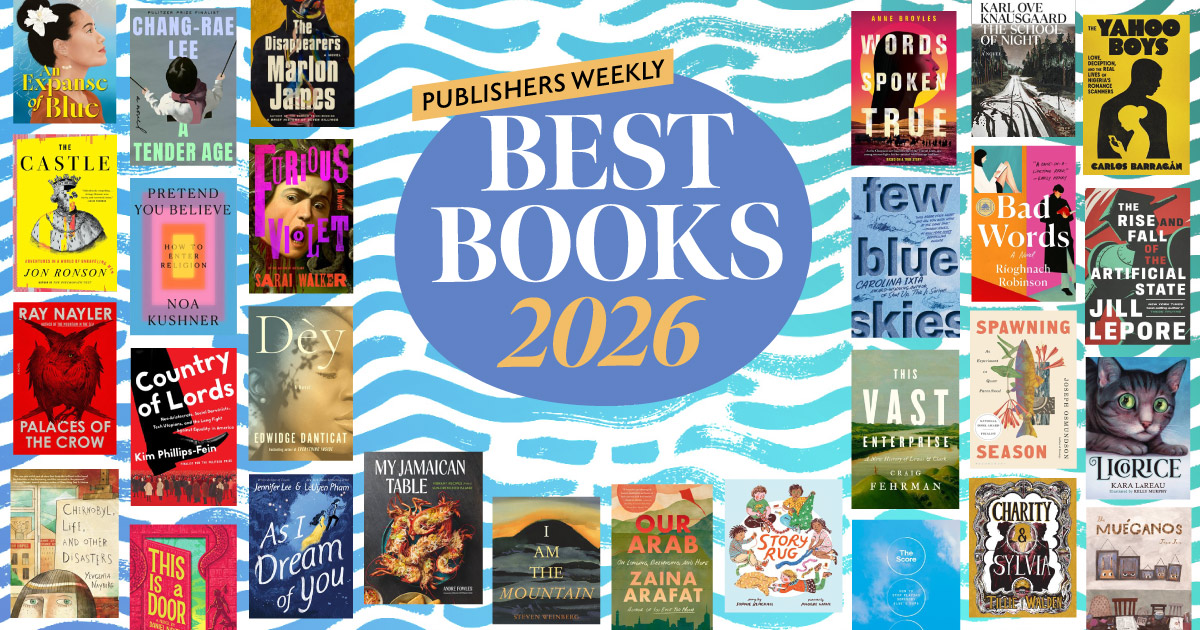
Always one of the best lists anywhere, my friends and former colleagues at Publishers Weekly this week released their annual best books of the year feature. It's another excellent list. "Our top 10, including cover author Ben Lerner’s jewel box of a novel, Transcription, might be the strongest in recent memory," writes PW reviews director David Adams, "and it easily could have been expanded to include a dozen titles from our category longlists and 50 selections for children and teens." Enjoy!