Why I am Starting Over Again with Sound Archive Books
With the launch of his innovative new venture—which envisions libraries as key partners—publishing entrepreneur and cultural producer Mitchell Davis, weighs in on books, libraries, music and art, and beginning from zero.

Entrepreneurship, at its best, is an unconventional form of art. I’ve long admired the way great art rearranges the world—whether in a novel, a painting, or a song—taking familiar materials and arranging them into something wholly original. At its core, starting a company feels similar: you work with what exists, trust an instinct, and shape something that didn’t quite exist before. There’s a particular thrill in following that instinct and discovering where it leads.
What has kept me returning to starting new ventures is the chance to do that work alongside others—learning as we go and shaping something none of us could have made alone. Sound Archive Books begins there, like everything else that has mattered to me.
I’ve spent most of my professional life working around books—how they’re made, how they’re sold, and how they move through the world. Sometimes that work has been technical, sometimes entrepreneurial, sometimes deeply personal. Books mattered to me well before they became my work; they shaped my thinking and sense of possibility. I still admire the physical book for its quiet brilliance—simple, resilient, and enduring in ways few technologies ever are.
What has remained constant throughout my work life is a belief that books are both cultural objects and products, and that the health of one depends on respect for the other. Stories don’t circulate without systems. Art and meaning can come first, but when people are willing to buy, value, and share the work, that response becomes both validation and the means for it to continue.
That belief in balancing meaning with mechanics was shaped over decades of starting with nothing and continually starting over.
In 1999, while in my late twenties, broke but optimistic, I was part of a team that built one of the first web-based print-on-demand publishing companies around the idea that in the emerging internet era, books could be manufactured only after they were sold. The infrastructure to support that model barely existed, which meant we were building the systems while trying to survive inside them. That approach fundamentally lowered the financial barriers to publishing and helped democratize who could participate in bringing books to market. Through acquisition by Amazon, the idea evolved into what is now Kindle Direct Publishing and Kindle Enterprise Publishing—platforms that have fundamentally reshaped how books operate globally.
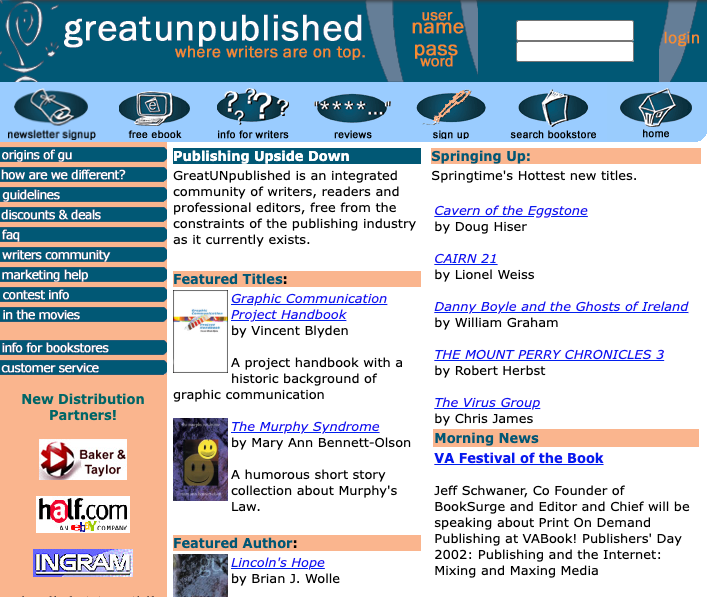
That outcome didn’t make me rich, but it did fundamentally change the trajectory of my life. Over time, it has been meaningful to see how the work—built on by hundreds of dedicated people—grew into infrastructure that now supports millions of authors and publishers around the world. Even now, it still feels surreal to order a book online, flip to the back page, and see that it was printed in a facility that grew out of our work. It’s a quiet reminder of how an idea—once fragile and uncertain—became part of the everyday infrastructure of how books move through the world.
Years later, we started over again with BiblioLabs, building software that helped libraries strengthen community engagement and steward local collections in a rapidly commoditizing content environment. We also brought a vision of how libraries could uniquely excel at preserving and amplifying local content in a world increasingly shaped by global digital platforms. That company was ultimately acquired by LYRASIS, where the work continues to serve thousands of libraries worldwide.
What these experiences taught me was not how to “win,” but how much patient, unglamorous work it takes to turn an idea into something durable. And each reinforced the same lesson: meaningful work takes time, and sustainability matters as much as vision.
Why Sound Archive Books, and Why Now
Sound Archive Books is intentionally two-fold. First, we work directly with touring musicians and bands to strengthen their creative and economic foundation through the development of books that deepen audience relationships and give fans a tangible way to support musicians outside of deteriorated streaming economics.
The timing feels right because the pressure on musicians is real. Touring is harder. Streaming pays less. Fans know that corporations have tilted the tables against artists and come to shows wanting to settle up and make right. Fans still want depth, connection, and physical objects that mean something. Books—done well—can meet that need.
Second, we focus on place-based music archiving and storytelling—documenting musical communities, regional traditions, and cultural memory in ways that are both beautifully produced and responsibly preserved.
Those two strands inform each other. The discipline required to publish well for musicians strengthens our archival work. The responsibility of archival work deepens how we think about books created with musicians.
Learning by Doing & Finding Our Voice
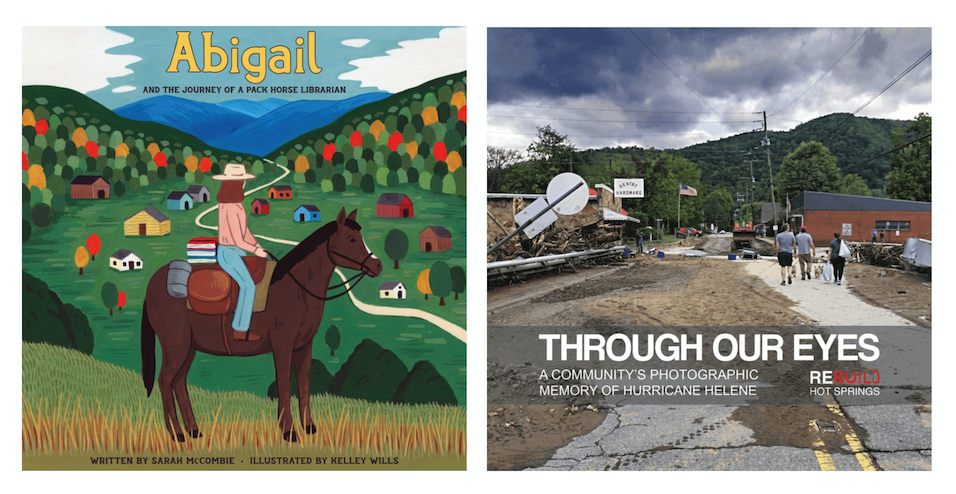
Sound Archive Books didn’t begin as an imprint. It began as a series of practical experiments over the past year. Through pilot imprint projects like the Appalachian Memory Project and Through Our Eyes, we tested whether we could responsibly move from raw oral histories, text submissions, photographs, and community supplied material to finished books that people actually wanted to hold, read, and purchase.
Released on the one-year anniversary of Hurricane Helene (Sept 28, 2025), Through Our Eyes: A community’s photographic memory of Hurricane Helene grew out of our own experience living through the storm and recognizing the need to preserve what the community endured. The book brings together 48 local contributors in a community-published photographic record of impact and recovery.
In less than six months, book sales have raised over $10,000 for Rebuild Hot Springs, the nonprofit at the center of the area’s recovery. The book was also nominated for a Weatherford Award, recognizing its contribution to Appalachian storytelling and cultural preservation. The project demonstrated that we could move quickly, produce high-quality books, preserve open-access source materials, and direct meaningful revenue back into the communities we publish alongside.
At the same time, our co-founders—who are touring musicians themselves—were helping shape a parallel track focused squarely on bands and working musicians. That perspective sharpened both the creative direction and our near-term business focus.
The work I have been doing to build Rare Bird Farm with my wife and a close group of friends over the past few years also helped clarify that our work should focus squarely on music. Working closely with independent touring artists and hosting live performances, I saw firsthand how precarious the economics of touring can be and how deeply audiences want meaningful ways to show their support.
Our debut release, Abigail, reflects our approach clearly. The story draws inspiration from the Pack Horse Library Service, a 1930s New Deal program that delivered books by horseback to rural Appalachian communities. Created by Sarah McCombie of Chatham Rabbits, one of the most respected American folk acts working today, the book brings original songwriting, storytelling, and illustration together in a way that feels complete. The band’s success has been built slowly—through touring, recording, and sustained audience trust—and this book extends that body of work.
The illustrations are by Kelley Wills, founder of Brainflower Design. Through Brainflower, Kelley has worked with dozens of leading musicians, bands, and festivals across the country—designing tour posters, album packaging, festival branding, and merchandise for artists including Noah Kahan, Jesse Wells, Phish, Tyler Childers, Brandi Carlisle and Outside Lands, among many others. Abigail is her first children’s book and carries the same warmth, craft, and narrative clarity that define her broader design work in the music world.
Libraries as Partners
Sound Archive Books wasn’t built for libraries—but libraries make obvious sense as partners.
Libraries understand long-form storytelling, stewardship, and access. They are trusted spaces where people gather not just to consume, but to learn and reflect. For musicians and bands, libraries offer environments where work can be shared without being reduced to a transaction. For libraries, music-driven books and programming create opportunities for intimate events that strengthen community relevance.
That’s why launching Abigail book at the 2026 Public Library Association Conference in Minneapolis feels right. PLA brings together librarians thinking seriously about how collections and programming evolve—and that’s exactly the conversation we want to join.
Looking ahead, Sound Archive Books is not an experiment anymore. We are actively building a pipeline of releases for 2026 and beyond—working with musicians, managers, and cultural institutions to integrate books into touring and fan engagement models in ways that are intentional, financially meaningful, and creatively aligned.
We intend to build carefully, release consistently, and prove—project by project—that books can play a meaningful role in the economic and cultural future of working musicians and the communities that shape their music. Stay tuned as we do that work.
Mitchell Davis is a publishing entrepreneur and cultural producer focused on place-based storytelling, books, music, and community archives. He is the founder of Sound Archive Books and the Million Memory Project, initiatives dedicated to preserving living traditions through books, recordings, and open-access digital archives. A version of this post was published first published on the Sound Archive Books blog.