Penguin Random House Urges Congress to Reject Republican Book Banning Bill
“The bill creates strong incentives for schools to remove or avoid a wide range of books and materials,” wrote PRH SVP Skip Dye in a letter to lawmakers, adding that the law would also lead to self-censorship, resulting in “further marginalization of vulnerable communities.”

With the U.S. Congress returning to work this week, Penguin Random House is urging lawmakers to reject a pernicious Republican-backed book banning bill, known as H.R. 7661.
Introduced on February 24, the bill, also known as the “Stop the Sexualization of Children Act,” would block funding for any federal program that supports access to books or other materials for minors (defined as under the age of 18) that includes sexually oriented material.” Critics of the bill—which was introduced hours after President Trump attacked transgender rights in his State of the Union address—say the real target of the measure is made clear in its definition of “sexually oriented material,” which explicitly calls out material that “involves gender dysphoria or transgenderism.’’

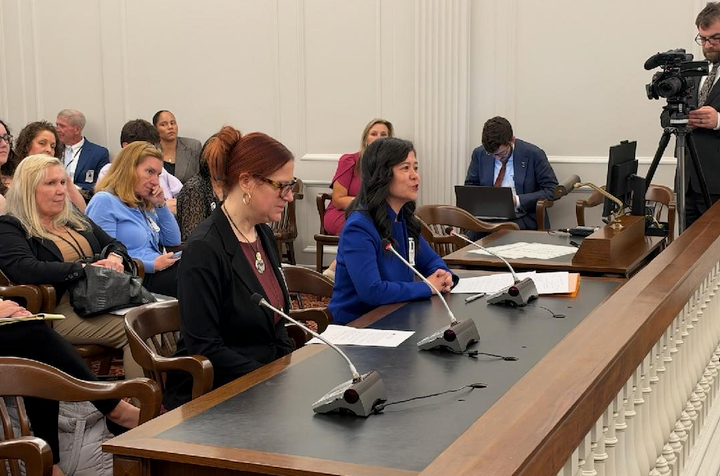
In a letter to Congress this week, Skip Dye, SVP & Director of Sales Operations & Library Sales for Penguin Random House raised concerns about the bill’s threat to intellectual freedom and to students’ ability to engage with diverse ideas.
“On behalf of Penguin Random House, the world’s largest trade publisher, we write to express our strong opposition to H.R. 7661,” Dye wrote, calling the bill “a direct threat to intellectual freedom,” and to the publisher’s mission.
“While framed as addressing explicit content, the bill’s ambiguous language and definitions extend beyond explicit material to include content related to identity and ideology, narrowing the range of stories and perspectives available to students of all identities and backgrounds,” Dye writes. “By attaching vague and expansive restrictions to funding, this bill creates strong incentives for schools to remove or avoid a wide range of books and materials. In practice, educators and librarians will be forced to self-censor to protect their budgets, resulting in further marginalization of vulnerable communities.”
Last month, the House Committee on Education and Workforce passed the bill out of committee. And while the bill is unlikely to muster enough support to get through the U.S. Senate, publishers and their allies—including the American Library Association and PEN America among others—aren’t taking any chances.
“Americans have long defended a simple principle: the government should not decide what we think, say, or read,” Dye wrote in his letter. “Educators and librarians should be allowed to do their jobs and make decisions based on what is appropriate for their students—not on federal funding constraints. We urge you to oppose H.R. 7661.”
Meanwhile, Democrats in Congress now have introduced two bills that would seek to protect the freedom to read.
As Words & Money reported last week, Massachusetts Congresswoman Ayanna Pressley announced the introduction of the Books Save Lives Act of 2026, federal legislation that, according to a release, “aims to promote inclusive literature and to counter the right wing attacks on the freedom to read nationwide.” And last December, Rhode Island Senator Jack Reed and Arizona Rep. Adelita Grijalva introduced the Right to Read Act.
A Coalition in Opposition
strimel
Meanwhile, more than 100 more organizations, including library associations, publishers (including Penguin Random House), booksellers, and advocacy groups signed on to a statement opposing H.B. 7661.
"H.R. 7661, if passed, will compel nationwide book censorship. It confuses obscenity with identity and stigmatizes vulnerable young people, particularly trans children and teens, based on who they are, the statement, hosted on the PEN America website states."Together, we say that this bill goes against the U.S. Constitution, local self-determination, access to books, and a society that is welcoming for everyone, no matter who they are. Our schools deserve better than this. Our children and teens—all of them, without exception—deserve better than this."
The statement urges the U.S. House of Representatives to vote "no" on H.R. 7661 or, "better yet, to not take it up for a vote at all."
PEN America also urges members of the public to tell their representatives to oppose H.R. 766
A version of this article also appeared in Publishing Perspectives.