Seven Takeaways From Pope Leo XIV's AI Manifesto
Amid the many calls for the regulation of AI, comes a somewhat surprising addition: In his recently released encyclical, Pope Leo XIV cogently argues for an ethical approach to our AI future based on "clarity of thought and responsibility."

The rapid emergence of AI has left lawmakers around the world scrambling to address the implications of one of the most significant technological advances in history. But while much of the debate around AI today centers around economic and geopolitical issues—or, in the publishing and creative sectors, copyright—a new voice has entered the chat: Pope Leo XIV.
In a May encyclical, which many observers have praised for its cogent, humane take on the ethical implications of our AI future, the Pope issued a clarion call for world leaders to act with “clarity of thought and responsibility.” While encyclicals are generally religious documents (and there are certainly religious elements to Leo’s writing), Leo’s broader message has resonated with readers regardless of faith (or one’s view of the Catholic Church as an institution), for offering a potent assessment of the pitfalls and promise of AI.
In writing the encyclical, the Pope leaned on a somewhat unusual collaborator: Anthropic co-founder (and atheist) Christopher Olah. As Wired reported after the encyclical's release in May, the pairing of Olah and the Pope was not accidental.
"Unlike other Silicon Valley companies that have built their reputations primarily around innovation and growth, Anthropic has made AI safety a core part of its identity," Wired reported. "In essence, the connection between the Vatican and Anthropic lies in a shared fear: that increasingly powerful systems could end up shaped solely by the economic, geopolitical, and competitive incentives driving the global AI race."
 Daniele Polidoro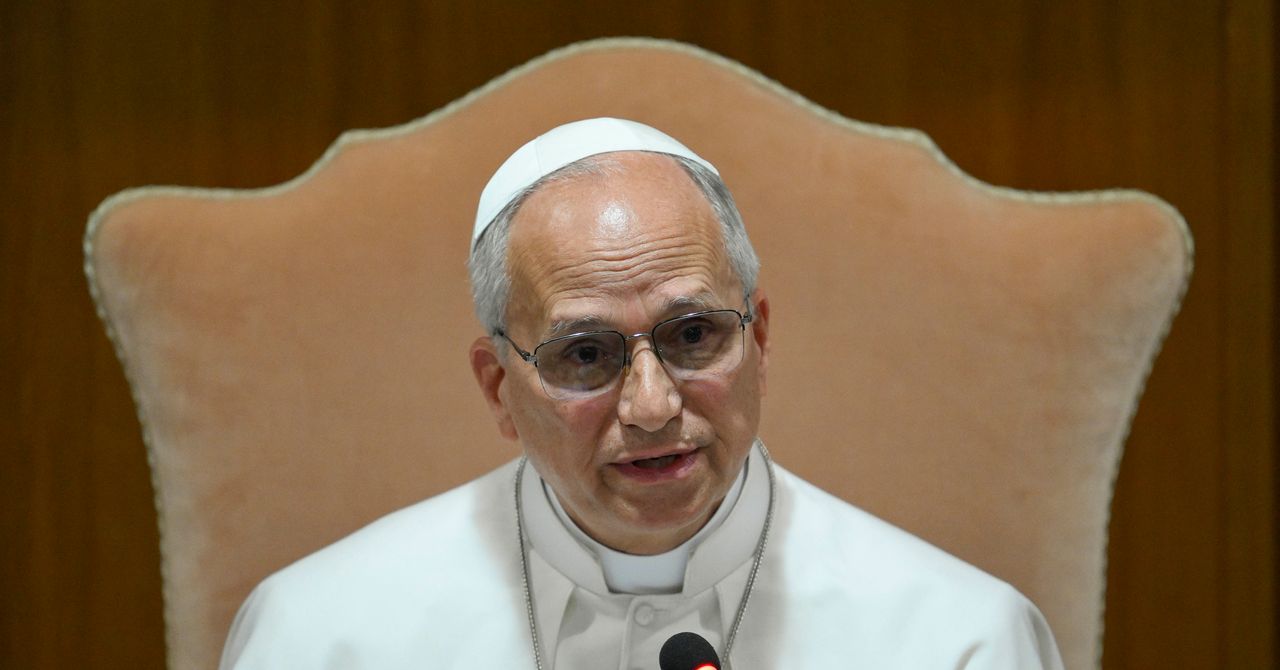
Indeed, citing the biblical story of the Tower of Babel, the manifesto cautions against "the pretense that a single language—even a digital one—can translate everything, including the mystery of the person, into data and performance.” And while the Pope writes that technology is not “a force antagonistic to humanity,” he points out that the AI arms race now underway must not be allowed to take us to a technocratic future that obscures the very humanity technology it is meant to advance. “It now falls to us to face the challenges of our time with clarity of thought and responsibility,” the Pope implores.
While the encyclical is not the church's first foray into AI—since around 2016 the church has been convening conversations with tech industry leaders through a series of conferences called the Minerva Dialogues—the encyclical, Leo's first, comes at a crucial moment. With the issue of AI regulation remaining a hot topic, and with the final approval of Anthropic's $1.5 billion deal to settle copyright infringement making headlines as several new copyright lawsuits advance, what is the Pope’s take on our AI future? Here are seven (by no means comprehensive) quick takeaways:
1. “It is necessary to establish adequate regulatory tools capable of upholding justice and curbing the distorting effects of technological power...”
In his encyclical, the Pope astutely points out that the AI era is accelerating a power shift from democratic institutions to private entities.
“In the past, it was largely up to the State to guide and direct innovation. Today, however, the main drivers of development are private, often transnational, parties that are endowed with the resources and the capacity to intervene that surpass those of many Governments,” he writes. “We cannot allow a handful of actors to dictate these processes on their own; instead, we must build forms of cooperation that respect the various levels of the global community and make them jointly responsible for the common good,” the Pope writes.
On this score, a frequent theme throughout the encyclical is the environmental impact of AI.
"The gains in efficiency and the potential to improve certain services are clear, yet rapidly and uncritically adopting them exposes us to a range of risks, including the tendency to overlook the environmental impact," Leo observes. "Current AI systems require enormous amounts of energy and water, significantly influencing carbon dioxide emissions, and place heavy demands on natural resources. As their complexity increases, especially in the case of large language models, the need for computing power and storage capacity grows too, which requires an extensive network of machines, cables, data centers, and energy-intensive infrastructure. For this reason, it is essential to develop more sustainable technological solutions that reduce environmental impact and help protect our common home."
2. “Prudence, rigorous evaluation, and even, at times, a slower pace in adopting AI does not mean opposing progress...”
Citing the “imbalance between the speed of technological growth and the slower development of awareness, norms, safeguards, and institutions capable of governing its effects,” the Pope writes that slowing AI’s roll should not be viewed as anti-progress.
“It is not enough to invoke ethics in the abstract,” Leo argues. “Robust legal frameworks, independent oversight, informed users, and a political system that does not abdicate its responsibility are required,” he writes. “Otherwise, change will be governed only by technocratic thinking and presented as necessary and inevitable, ultimately imposing rules shaped by those who control data, infrastructure, and computing power.”
In a particularly searching section of the encyclical, Pope Leo offers two important caveats: “First, any statement regarding AI risks becoming quickly outdated, given the remarkable pace at which these systems are developing.” And, second, it is “not possible to provide a single, comprehensive definition of AI.” But what we must always acknowledge, he continues, is that AI is not human, and we cannot allow ourselves “to equate AI’s ‘intelligence’ with that of human beings.”
AI systems “do not undergo experiences, do not possess a body, do not feel joy or pain, do not mature through relationships, and do not know from within what love, work, friendship, or responsibility mean. Nor do they have a moral conscience, since they do not judge good and evil, grasp the ultimate meaning of situations, or bear responsibility for consequences,” he writes. “For this reason, technological progress—valuable in itself—requires careful discernment of the anthropological vision that guides it and the ends it pursues.”
AI can “undoubtedly make life easier,” the Pope goes on to acknowledge. At the same time, however, he warns that “excessive reliance” on AI and its "ready-made answers” can “weaken personal creativity and judgment.”
3. “We cannot consider AI to be morally neutral...”
As AI becomes embedded in more and more systems that can impact “rights, opportunities, status, and freedom,” this may be one of the Pope’s more important observations.
“Important and sensitive decisions—concerning employment, credit, access to public services or even a person’s reputation—risk being fully delegated to automated systems that do not know compassion, mercy, forgiveness, and above all, the hope that people are able to change, and can therefore give rise to new forms of exclusion,” Pope Leo warns. While there are obvious harmful uses, “such as the manipulation of information or violations of privacy,” here the Pope warns of a “subtler” danger.
“When AI systems present themselves as neutral and objective, they end up reflecting and reinforcing the stereotypes or ideological bias of their designers and developers,” he writes. “For this reason, ethical discernment cannot be limited to asking whether we are using a system for good or bad purposes; it must also examine how that system is designed and what vision of the human person and society is embedded in the data and models that guide it.”
He goes on to argue that responsibility for AI must be “clearly defined at every stage," from those who design and develop the systems to those who rely on them for "concrete" decisions.
“We cannot be satisfied with merely calling for the moralization of machines—the so-called ‘alignment’ of AI with human values—without also having the courage to insist on a further condition: the possibility of openly discussing the ethical frameworks involved and subjecting them to shared standards of social justice. Otherwise, those who control AI will impose their own moral vision, which will become the invisible infrastructure of these systems.”
4. “Ownership of data cannot be left solely in private hands but must be appropriately regulated...”
“Data is the product of many contributors and should not be treated as something to be sold off or entrusted to a select few,” the Pope writes.
“In a world where data, computational resources, and regulatory influence remain in the hands of a few, to speak of the common good means exposing this new form of epistemic, economic, and political asymmetry and naming the new monopolies of AI,” he explains. “To speak of justice requires questioning the global distribution of power that decides who in fact can train these models and who is merely subjected to them. Likewise, it means acknowledging that social justice is not only a goal to be safeguarded after technologies are deployed, but a condition that must shape their very design from the outset.”
Later in the treatise, the Pope writes of a desire to “disarm” AI.
“To disarm does not mean rejecting technology but preventing it from dominating humanity. It means freeing technology from monopolistic control and opening it to discussion and debate, therefore making it human-friendly, and restoring it to the plurality of human cultures and ways of life,” he writes. “The quality of a civilization is measured not by the power of its means,” he goes on to stress, but “by its ability to recognize the other as a face, not merely as a function.”
The Pope later cites a further risk: the "social control" made possible by the massive collection of data and use of algorithmic systems. “When every action—movements, purchases, relationships and preferences—leaves a trace, a new form of power emerges, namely the power to profile, predict and influence behavior, often without individuals being fully aware of it,” he writes.
5. “The use of digital platforms and AI systems is driving profound changes in public and political communication...”
As the Pope acknowledges, this is a trend that predates the current AI boom—Fake News, anyone? But the Pope is certainly right to note AI’s role in supercharging misinformation and disinformation. “Tools that could foster dialogue and participation are often used to construct distorted narratives and blur the boundaries between truth and falsehood, mixing facts with opinions,” he writes.
Calling the “search for truth” an “essential element of democracy” Leo writes that truth is “not the property of those with power or influence,” and warns that “indifference to the truth” ultimately leads to totalitarianism.
“Only the shared pursuit of the veracity of facts, perceived as a common good, can provide a solid foundation for just communication,” Leo concludes. “On the level of public policy, this entails establishing norms so that the decision-making behind content selection and its development becomes more transparent and protects personal data. Regarding social and cultural aspects, this requires a strengthening of intermediary organizations, serious journalism, and forums for debate, where reasoned argumentation and verification carry greater weight than immediate reaction.”
6. “Rapid technological transformations reveal just how unprepared we are on the educational level.”
The rapid rise of AI has wide-ranging implications, Pope Leo writes, and the current education system is simply not able to keep up.
“The speed and ease with which answers or summaries can be obtained risk extinguishing the desire to ask questions, which is a process that bears fruit only over time,” the Pope observes. “We must learn, then, how to exercise restraint in the use of AI and to protect our young people from the promise of the perfect machine, from that subtle temptation which renders human thought seemingly superfluous precisely when it is most needed.”
In a passage that personally hit home as a parent of two teenagers, the Pope acknowledged that it is “difficult for parents by themselves to resist the influence of business models that monetize attention and time.”
7. “The convergence of automation, robotics, and AI is rapidly transforming the very structure of work.”
The Pope also centers questions about how AI will impact workers. “It is said that [AI] will bring great improvements for everyone. In reality, however, the ‘new ways’ of working are not necessarily better, for while AI promises to boost productivity by taking over mundane tasks, it frequently forces workers to adapt to the speed and demands of machines, rather than machines being designed to support those who work,” the Pope writes. “Precisely in order to avoid this drift, it is necessary to design systems that are centered on the human person and not solely on performance.”
While the Pope acknowledges that it is “desirable” for technology to “relieve humans of arduous, repetitive or dangerous tasks and to provide intelligent support for human activity," the "protection of employment opportunities and the irreplaceable role of the individual must remain the general rule.”
In what he calls a “time of transition,” the Pope calls for the establishment of “social criteria for innovation” in which “automation and AI” should be accompanied by verifiable measures to protect the employment, retraining, and participation of workers; “proactive policies” to ensure that “the cost of adaptation” does not fall solely on individuals; and finally, “a corporate commitment to include the quality and dignity of work” as indicators of success.
“To think that new technologies will automatically benefit everyone is to ignore the evidence,” Leo writes. “The pursuit of greater profits cannot justify choices that systematically sacrifice jobs, because the human person is an end, not a means, and the economic order must remain subordinate to human dignity and the common good.”