Setting Up a Massive Test, the Fifth Circuit Schedules Oral Arguments in Bid to Resurrect Controversial Texas 'Book Rating' Law, H.B. 900
The law was once the most high-profile of a wave of book banning laws emerging at the state level, and its return to the Fifth Circuit has raised significant concern among publishers, booksellers, and freedom to read advocates.

It's back. Three years after a federal judge first blocked the controversial book rating provisions of state law H.B. 900, the U.S. Court of Appeals for the Fifth Circuit has set a date for oral arguments in Texas's appeal to resurrect the measure. The state's appeal is now set to be argued on December 3, in New Orleans. At press time, it is unknown which three judges will hear the appeal, as the Fifth Circuit generally does not make that information public until the week before the hearing.
The new appeal sets up a massive test for the freedom to read, and comes after after a string of questionable recent defeats at the appeals court level that have struck at the First Amendment foundations of libraries and bookstores, and heightened concerns about growing right wing influence in the courts.
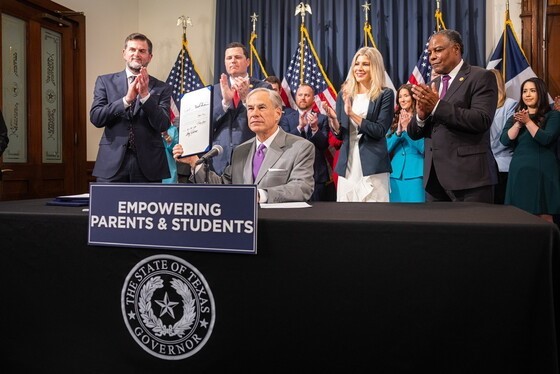
Signed into law by Texas Governor Greg Abbott on June 12, 2023, H.B. 900 (also known as the READER Act) was once the most high-profile of a wave of book banning laws emerging at the state level in the U.S. Among its provisions, the law would have required bookstores and vendors to review all books in Texas schools at their own expense and rate them for “sexual content” as a condition of doing business with Texas public schools—including every book previously previously sold, literally tens of thousands of titles.

Under the law, books rated “sexually explicit” would be banned entirely from Texas public schools. Books rated “sexually relevant” would not be banned outright, but would require written parental permission for students to access them. Most concerning, however, the ratings provision would have given the state the unchecked power to demand vendors change the rating on any book, for any reason, and to “blacklist” vendors that do not accept the state’s ratings, essentially imposing a de facto state standard administered through private actors.
Amid an outcry over the law, a lawsuit challenging H.B. 900 was first filed in July 2023 by a coalition including two Texas bookstores (Austin’s BookPeople and Houston’s Blue Willow Bookshop), together with the American Booksellers Association, the Association of American Publishers, the Authors Guild, and the Comic Book Legal Defense Fund.
After two hearings, district court Judge Alan D. Albright orally enjoined H.B. 900 on August 31, 2023 and nearly three weeks later, on September 19, issued a forceful 59-page written opinion and a preliminary injunction blocking the law's book rating provisions.
 Andrew Albanese |

In his blistering 2023 decision, Albright, a Trump appointee, called out the law's "web of unconstitutionally vague requirements," and concluded that the burden placed on booksellers and vendors from the book rating provision were “so numerous and onerous as to call into question whether the legislature believed any third party could possibly comply.”
Just three months later, in January 2024, a three-judge panel of the Fifth Circuit unanimously upheld Albright's decision. Curiously, however, after affirming the plaintiffs' standing, the appeals court made it only to the first of the plaintiffs’ multiple constitutional claims—that the mandatory book ratings at the heart of the law represents compelled speech.
“We start and end with the compelled-speech claim because we conclude that Plaintiffs are likely to succeed on the merits of that claim,” the court ruled. “Accordingly, we need not address whether they are also likely to succeed on their claims that [HB 900] is a prior restraint or unconstitutionally vague.”
 Andrew Richard Albanese
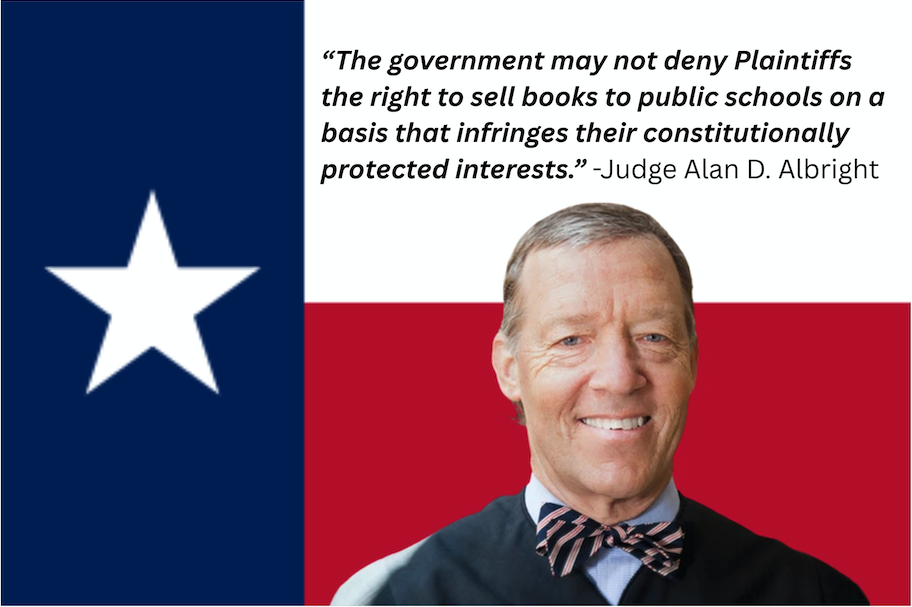
Following the initial appeal over Albright's preliminary injunction, the case then landed back in Albright’s court for final disposition. And, in an October 2025 summary judgment ruling for the plaintiffs, Albright once again eviscerated the law, and this time issued a permanent injunction blocking the book rating provisions.
"[H.B. 900] imposes unconstitutional conditions on a party’s ability to contract with the government, because it requires Plaintiffs to surrender their First Amendment rights in order to do any business with public schools," Albright concluded. "The government may not deny Plaintiffs the right to sell books to public schools on a basis that infringes their constitutionally protected interests."
Book Bans, What Book Bans?
But Albright's final judgment last October also gave the state a second bite at the apple—that is, a second chance to appeal the case to the Fifth Circuit, which the state did in February.
And in their February 19 appeal brief Texas sought to recast H.B. 900's book rating provisions under a novel "marketplace" theory, essentially arguing that Albright misinterpreted the state’s role under H.B. 900 as that of a "regulator" rather than as a mere "marketplace" participant.
In essence, Texas state attorneys say that the state, under H.B. 900, is merely requiring vendors to provide information, akin to an ingredients list.
“For all of Plaintiffs’ overwrought rhetoric about a ‘book ban’ and ‘censorship boards,’ this case concerns a statute in which the State, as a marketplace participant, seeks information about goods it purchases,” the Texas brief argues. “The statute at issue requires vendors that sell books to public schools to inform the Texas Education Agency about the sexual content of those books. Vendors can freely decline to provide this information, but if they do, the State is free not to purchase from them.”
Notably, the state’s appeal also cites the Fifth Circuit’s May 2025 decision in Little v. Llano County, which held that there was no First Amendment right to receive information in a library setting.
“Little v. Llano County forecloses the district court’s apparent theory that Plaintiffs have a right for the government to purchase their books,” the appeal argues. “As in Little v. Llano County, Plaintiffs’ arguments rest on ‘unusually over-caffeinated’ rhetoric, invoking the specter of book bans and censorship boards. In truth, [H.B. 900] concerns the State’s own purchasing decisions for its public schools and asks vendors to provide information to the State about products they sell to those schools. Vendors that decline to provide this information or that find providing the information too onerous are entirely free to take their business elsewhere.”
But in their May 13 reply brief, the plaintiff appellees pointed out several flaws in the state’s attempt to recast H.B. 900 as a marketplace issue, which they call a “belated shift in strategy” that underscores the “weakness” of the state’s case.
"First, it is pure fiction that H.B. 900 establishes a ‘marketplace’ for the State to buy books. The statute’s plain language confirms that school districts, not the State, purchase library materials, and school districts possess independent authority under Texas law,” the plaintiff brief argues. Second, "every facet of H.B. 900 carries the hallmarks of regulation," the plaintiff appellees point out.
"The State is not merely deciding what to purchase for itself," the brief explains. "It dictates what separate entities may buy; it demands what private actors must do; it imposes a comprehensive regulatory scheme for classifying books (by private actors); it empowers [Texas Education Authority] to override those private determinations; and it requires private actors to adopt the State’s views as their own. That is pure regulation of speech, and Defendant cannot sidestep the First Amendment with mere semantics.”
Cause for Concern?
But despite strong decisions in their favor from the district court and a previous panel of the Fifth Circuit—and as shaky as the state's new appeal arguments appear—multiple lawyers acknowledged to Words & Money that there is cause for concern from a second hearing before the Fifth Circuit.
 Andrew Richard Albanese
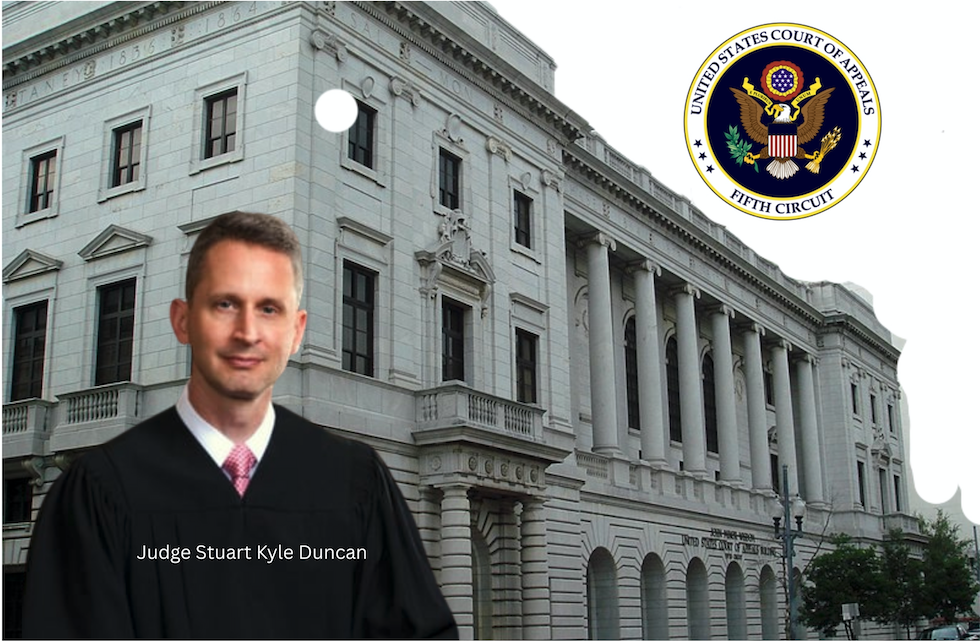
First, it's worth noting that the initial appeals court decision in the case avoided an en banc rehearing before the full Fifth Circuit by the narrowest of margins—a 9-8 vote, in which five judges published a dissent explicitly saying they would overturn Albright's decision.
"[H.B. 900] doesn’t compel anyone to say anything. It simply provides that any vendor who wishes to sell books to public schools must answer certain questions prior to the sale—just as ordinary consumers often ask questions of merchants before deciding whether to make a purchase," the dissent, written by arch-conservative Trump appointee James C. Ho, reads. "That’s not compelled speech—that’s consumer speech."
The dissent goes on to suggest that a second Fifth Circuit panel could potentially wave away the plaintiffs' constitutional arguments.
"There is no basis for holding [H.B. 900] unconstitutional under the First Amendment," the Ho-authored dissent goes on to state. "We don’t let children buy alcohol. We don’t let them gamble. They’re not supposed to smoke. We also shield them from sexually explicit materials. Nothing in the First Amendment prevents states from taking steps to shield children from such content."
And, of course, we've seen this movie before: In May 2025, another Trump appointee, conservative justice Stuart Kyle Duncan, engineered the reversal of judge Robert Pitman's March 203 decision in Little v. Llano County, the closely-watched book banning case filed in April 2022 by seven Llano County, Texas residents.
In his initial his initial decision, Pitman found that officials in Llano County ordered the removals based on illegal viewpoint discrimination, and issued a preliminary injunction barring the county from removing any more books and ordered most of the 17 books at issue returned to library shelves. And in June 2024, Pitman’s decision was affirmed by a split three-judge panel of the Fifth Circuit.
But that three-judge panel included Duncan, who wrote a fiery dissent. And just a month later, on July 3, 2024, the Fifth Circuit abruptly vacated the panel’s decision, and ordered the appeal to be reheard en banc by the full Fifth Circuit. This time, in May 2025, by a 10-7 margin, the full Fifth Circuit reversed Pitman—with Duncan now writing the majority opinion.
To get there, the court, led by Duncan, had to reverse its own three-decade unanimous, non-controversial holding in Campbell v. St. Tammany Parish School Board, a 1995 First Amendment decision involving the attempted removal of a book from a public school library that has long served as an anti-censorship bulwark for librarians. That may be the most alarming warning sign of what's to come: in the wake of the Llano decision, several court-watchers acknowledged to Words & Money that the overturning of Campbell suggests that little may stand between the Fifth Circuit's conservative majority and its preferred policy outcomes.
Meanwhile, two more recent decisions from Eighth Circuit also raise cause for concern: In July, the Eighth Circuit vacated a permanent injunction blocking two provisions of Arkansas state law Act 372, holding that the District Court erred in finding the law (which exposes librarians and booksellers to criminal charges for making allegedly inappropriate books available to minors) to be unconstitutionally vague and overbroad, with the opinion written by another Trump appointee, Judge L. Steven Grasz. A motion for reconsideration is currently pending in that case.
And in April, in an underwhelming six-page ruling, another three-judge panel of the Eighth Circuit (which featured two Trump appointees) ruled that a 2023 Iowa state law, S.F. 496, could take effect, reversing a lower court decision. Signed by Iowa governor Kim Reynolds in May 2023, S.F. 496 bans all books and materials with depictions of sex, written or visual, from school libraries, and makes librarians and educators liable for any alleged noncompliance.
Citing the Fifth Circuit’s May 2025 decision in Little v. Llano County, the Eighth Circuit panel in the Iowa case also held that the First Amendment “does not guarantee students the right to access books of their choosing at taxpayer expense.”
Furthermore, the Eighth Circuit characterized library book decisions as "school-sponsored speech," concluding that actions that can be "reasonably related to legitimate pedagogical concerns," (which includes prohibiting speech involving sexual content) do not run afoul of the First Amendment.
Amici
Of course, the Texas case differs because it places private, third party vendors in the middle of the state's bid to restrict access to certain books. And in a May 20 amicus brief, a coalition of publishers, authors, and booksellers warned the court not only of the cultural damage H.B. 900 could do, but the economic hardship it would inflict.
"In short, the Act’s ramifications for booksellers and book publishers alike are
daunting from an economic and cultural perspective," argues an amicus brief filed by several publishers and industry associations (Penguin Random House, Association of University Presses, Authors Against Book Bans, Barnes & Noble, the Educational Book and Media Association, Freedom to Learn Advocates, Half Price Books, the Independent Book Publishers Associations, Sourcebooks). "Larger publishers and booksellers will suffer a significant loss of revenue. Smaller ones could conceivably be forced to discontinue operations entirely."