The Queue: Library News for the Week Ending October 30, 2026
Among the week's headlines: a Georgia librarian fired over a trans-themed book sues; Kansas librarians gather for the KLA's annual conference; a Kentucky Library's book bans appear to be wearing thin with voters; and the University of Texas suspends a program for school librarians.

Georgia Librarian, Fired for Including Transgender-Themed Book in Display, Files Suit in Federal Court
We shared this story when it broke last year, so the news this week is totally expected: LGBTQ Nation reports that a popular Georgia librarian, LaVonnia Moore, is suing after being fired for including a transgender-inclusive book in a library display.
 John Russell
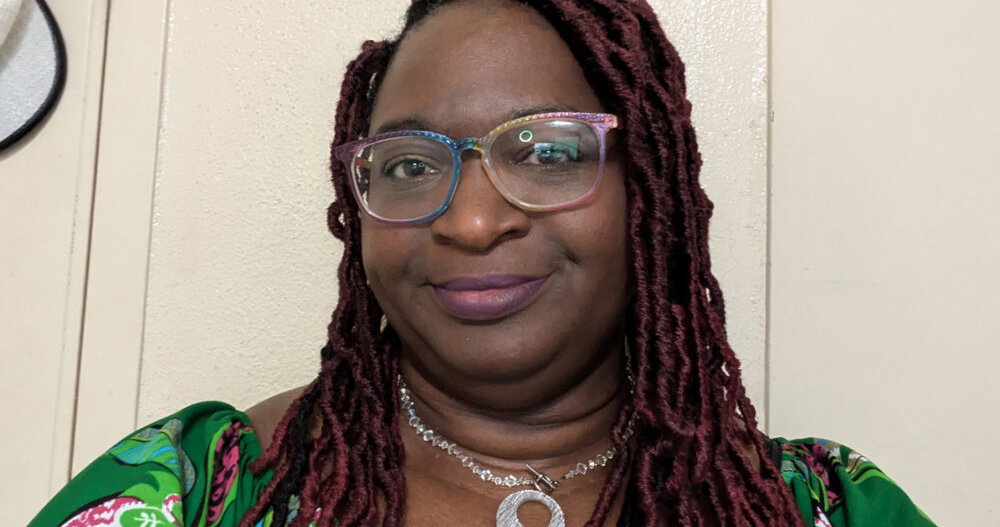
"In her lawsuit, filed earlier this week in the Southern District of Georgia, LaVonnia Moore claims Pierce County and the Three Rivers Regional Library System discriminated against her because of her religion, sex, and race in violation of the 1964 Civil Rights Act, and deprived her of her rights to freedom of speech, due process, and equal protection," the article reports. She worked at the Pierce County Library in Blackshear, Georgia, for 15 years, and was the library’s manager until she was fired.
"In June 2025, Moore invited local families and children to select books from the library’s collection to include in a 'Color Our World' display as part of Georgia’s statewide summer reading program. One family chose trans author Kyle Lukoff’s 2019 picture book When Aidan Became a Brother, which tells the story of a Black family accepting their trans child while also preparing for the birth of a younger sibling," the article notes. "But the inclusion of Lukoff’s book drew backlash on social media."
In fact, including Lukoff's book—which, the complaint points out was selected not by Moore but by a local family—caught the attention of a conservative group, the Alliance for Faith and Family (AFF), which, the suit points out, emailed county officials and demanded Moore’s termination, which the County Commissioners quickly agreed to.
Moore is seeking back pay, lost benefits and other compensation, and front pay "because reinstatement is not possible, comparable employment in the area does not exist, and Pierce County has opposed Moore’s efforts to find other employment." The suit also seeks damages for "emotional pain, suffering, inconvenience, mental anguish, loss of enjoyment of life, and other nonpecuniary losses," in an amount to be determined by a jury.
"This was not just a job, it was my calling," Moore writes on her GoFundMe page. "I want the world to know that this was not about a book, it was about bias. This was not about poor performance. It was about political pressure. It was not about leadership or decision-making. It was about bullies and cowardice. This was not right, and it cannot stand."
Sixth Circuit Hears Appeal Over Ohio Teacher's Suspension for Including LGBTQ Books in Her Classroom Library
 Kevin Koeninger

Courthouse News has a report on a recent hearing before the U.S. Court of Appeals for the Sixth Circuit over an Ohio teacher who was suspended under her school's "controversial issues" policy because she included four LGBTQ-themed books in her classroom library. The teacher, Karen Cahall, sued the district over the punishment in 2024, but district court judge Douglas Cole, a Trump appointee, rejected Cahall’s suit, holding that she knew the books were "controversial" and would lead to a confrontation.
Cahall’s attorney Mark Herron argued that the word “controversial” was too vague, and thus invited viewpoint discrimination. But the attorney for the school district, Tabitha Justice, insisted that the school's policy "provides a definition of ‘controversial’ and goes on to limit the discretion of the principals who decide what is controversial," the report notes, arguing that there is "no plausible argument" that the school's policy is "unconstitutionally vague.”
Kansas Librarians Gather for Annual Conference
 Roger Nomer
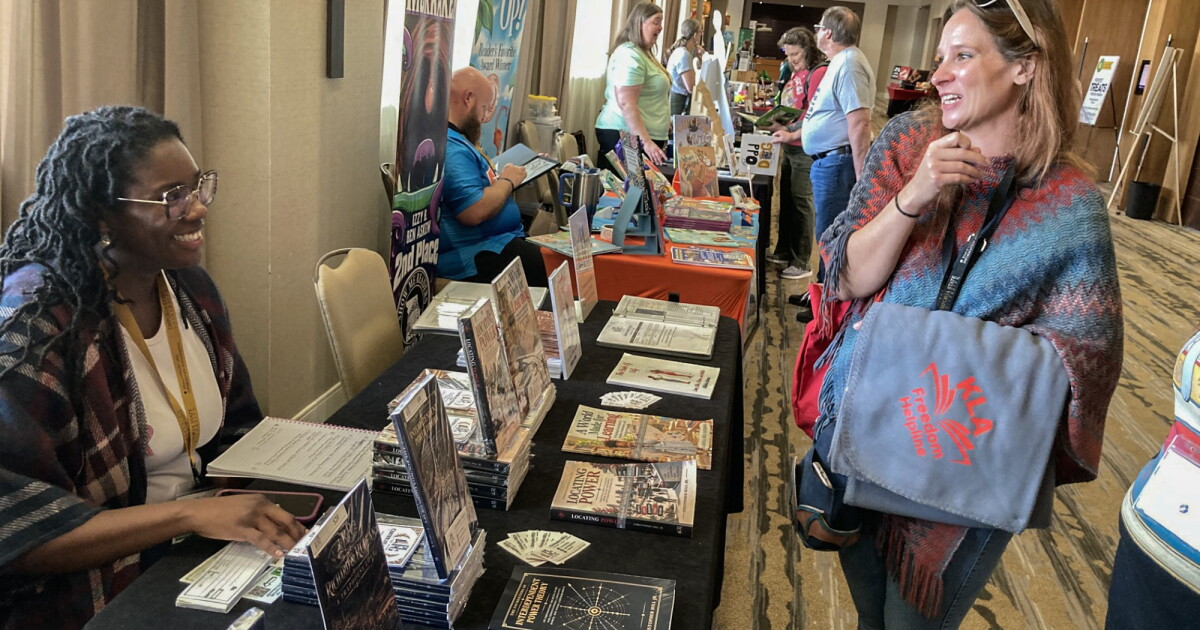
Kansas Public Radio has a report on the "nearly 500 librarians from across the state" who gathered in Wichita this week for the Kansas Library Association’s annual conference. "Pauline Stacchini, the association’s incoming president and executive director of the Emporia Public Library, said the group reaches a wide variety of directors and educators in Kansas," the report notes. "The four-day conference at Wichita’s Hyatt Regency features breakout sessions on things like using AI for health information, creating cultural programming, and building a makerspace."
One of the major issues at the conference, no surprise: funding. "Stacchini said funding is a complicated and nuanced issue because almost every library in the state is funded differently. In general, though, library budgets aren’t increasing enough to balance out expenses," the report states. "A common misconception is that libraries can make up the difference by buying fewer books, she said. 'That's not what you do when you cut funding,' Stacchini said. 'You're cutting hours. You're cutting access. You're removing that one trusted public institution.'”
The Curious Fate of Big Five Publisher Macmillan's AI Assistant, and What It Says About AI in Publishing
 Adam Morgan

This is a little weird. I honestly don't know what to make of this story. Maybe you do. But Wired has a piece that centers around how staff at Macmillan Publishers once had an AI assistant named NOA, "an acronym for No Ordinary Assistant," which many of Macmillan’s "human assistants" apparently found "offensive" and was eventually killed off.
The story eventually settles into something about the uncomfortable advance of AI into publishing, and the tension felt by publishing workers and authors, as captured in this closing line: “It’s also frustrating to watch publishers get these massive settlements [from] AI companies and then embrace AI to do their work,” an unnamed author told Wired. "It feels like they’re feeding at both sides of the trough."
How Trump Squares with Past Presidential Attitudes Toward Libraries
 Alex H. Poole
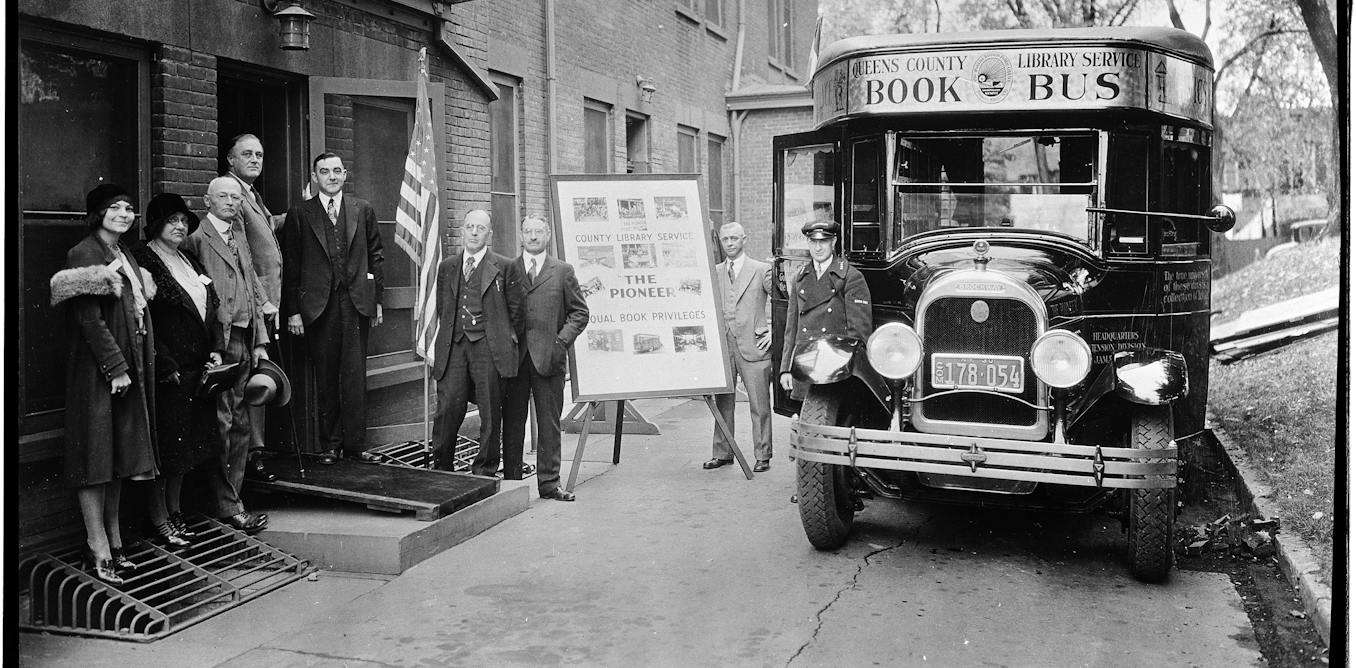
Over at The Conversation, Drexel University Associate Professor of Information Science Alex H. Poole writes that Donald Trump has rarely spoken about libraries over the course of his two presidential terms, and when he has, he has dismissed them. But that's a striking divergence from previous administrations, Poole notes, having analyzed statements about libraries from 17 presidents, going back to Calvin Coolidge.
"Nearly all presidents of both parties since 1923 have described libraries, whether public, academic, or presidential, as a prerequisite to a healthy democracy and as crucial to sustaining an informed citizenry," Poole observes. But while Trump rarely speaks of libraries, Poole points out that Trump has "taken a series of actions affecting libraries," from enabling book bans to firing the Librarian of Congress, Carla Hayden.
Library Workers Are on the Ballot in Memphis
 Kailynn Johnson
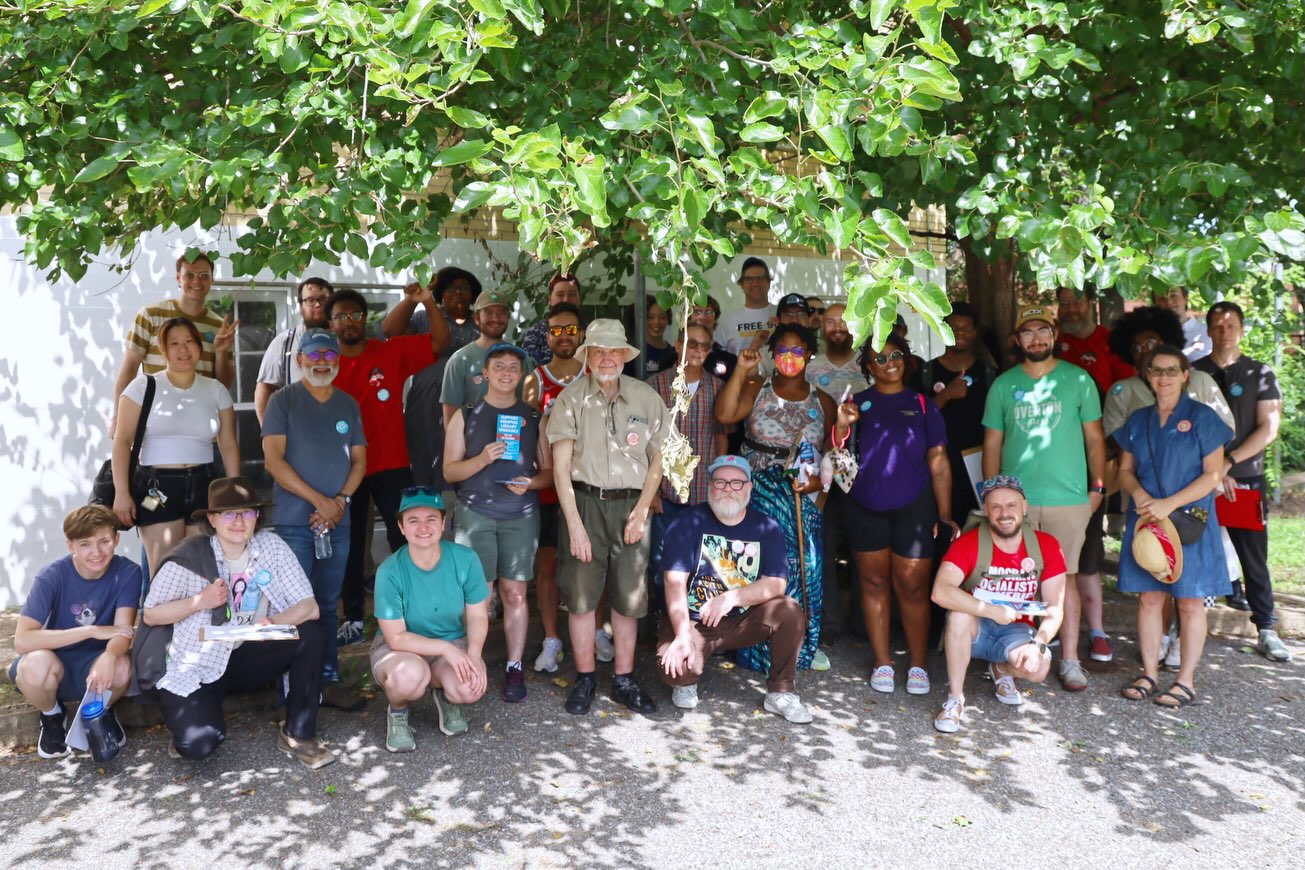
With election day coming up on Tuesday, lots of reminders this week that libraries are on the ballot (I'm already looking forward to EveryLibrary Executive Director John Chrastka's election day wrap-up next week). In Tennessee, Memphis Flyer reports that voters are set to decide whether library workers will become civil servants, or remain political appointees.
"If granted civil service status, library workers would be able to have certain safeguards and the opportunity to collectively bargain," the report explains. “Right now, our colleagues can be fired without cause,” Memphis Library worker Casey McKoon told reporters. “Other city workers have civil service so this campaign is about fairness. We just want the rights and dignity that other city workers have.”
A Kentucky Library System Known for Its Book Bans Faces the Voters
 Rainesford Stauffer
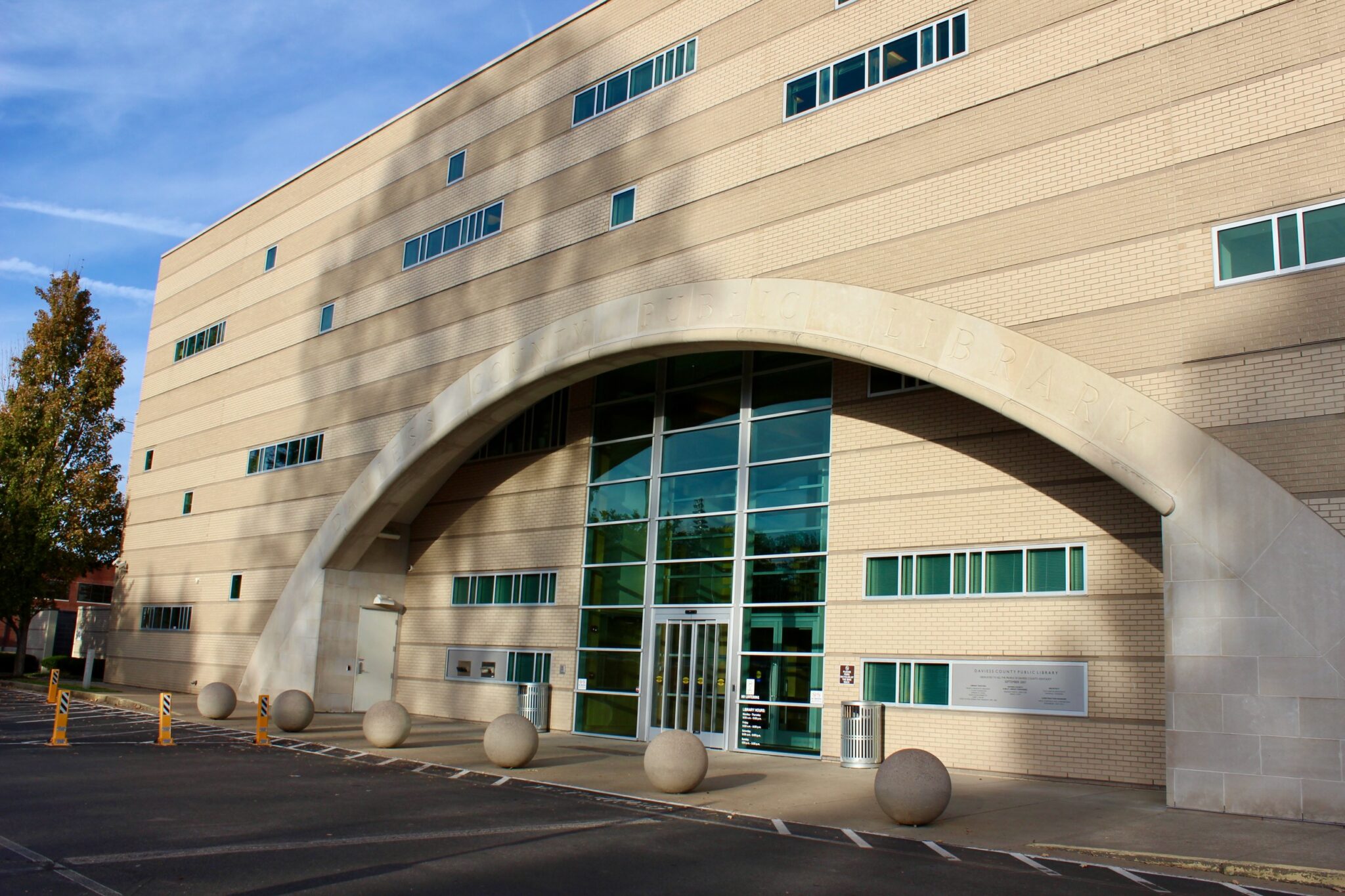
A lengthy report in the Kentucky Lantern details how the actions of the Daviess County Public Library, among the nation's most active when it comes to banning books, may be wearing thin with voters.
"In 2024, challenges to books in Kentucky public libraries jumped by 1,061%. The majority of those challenges took place in Daviess County, where the Daviess County Public Library has withstood a firestorm," the report notes. But now, many in the community are pushing back, "arguing that the library is not a political institution."
“I feel strongly that a public library belongs to the public, not a political party,” Jimmy Lyddane, an independent voter, told reporters. "As a Daviess County resident, he believes this is an important issue heading into elections. It goes beyond disagreements over books, he said, and raises questions about who gets to decide what information the public can access. 'Our community includes taxpayers with diverse backgrounds, religions, and political beliefs. No single group should have the authority to impose its personal values on everyone else,' he added."
In Florida, DeSantis Pushes Ballot Measure that Could Decimate Libraries (and Other Local Services)
 Mitch Perry
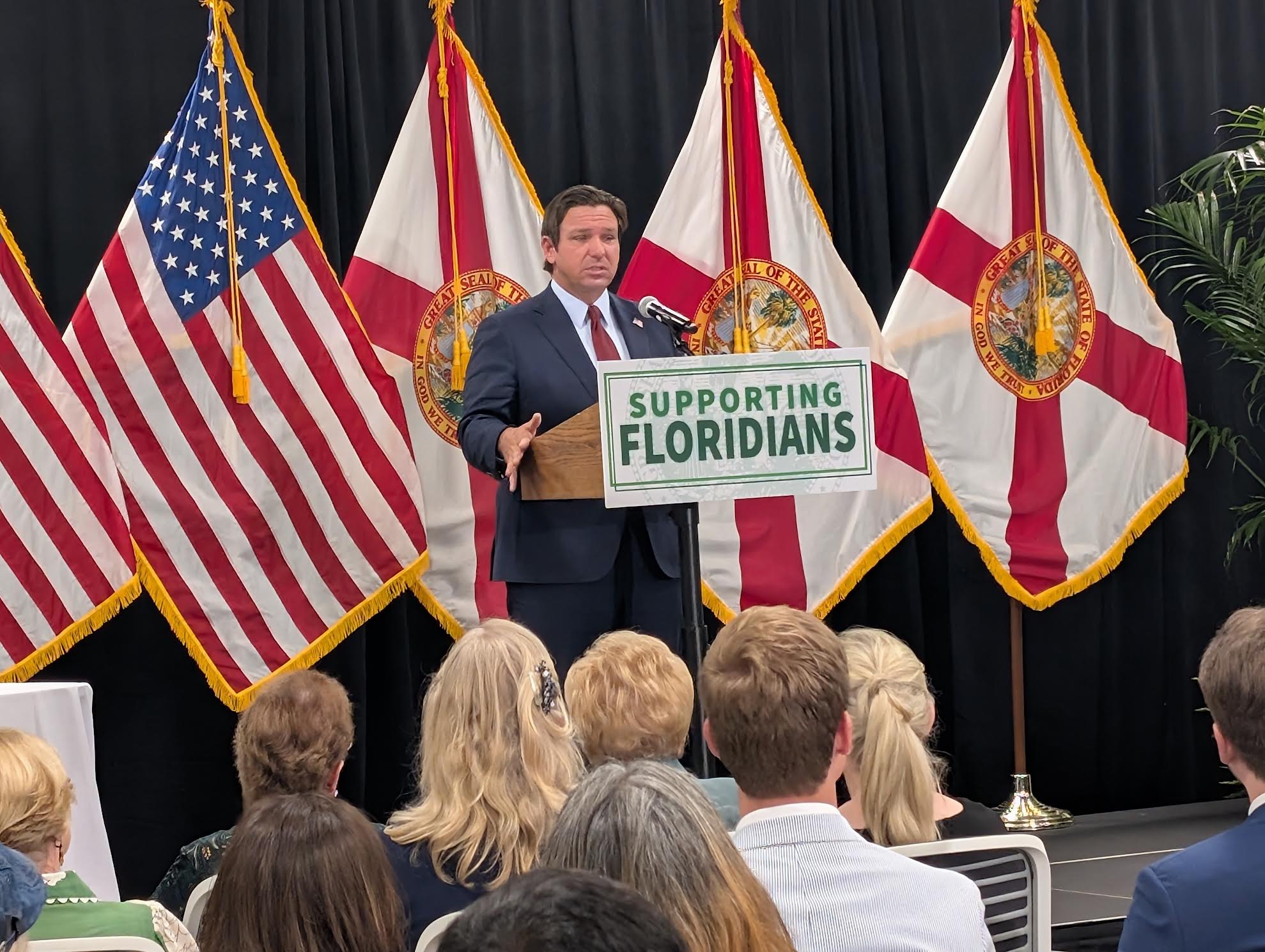
In Florida, the voters will soon decide on a ballot measure, Amendment 3, that would slash property taxes and, critics warn, decimate budgets for local services including libraries. The Florida Phoenix reports that Governor Ron DeSantis "spent nearly half of his press conference" this week making the case for Amendment 3, which library leaders strongly oppose.
The report goes on to point out that a St. Pete Polls survey released this week showed the measure with 44% support, and a University of North Florida poll last week found 50% support, both short of the 60% threshold required for passage.
The report also notes that while a "variety of organizations" say the measure, if passed, would significantly reduce tax revenues for local governments, forcing them to make "serious budget cuts," DeSantis made the case that "local governments can afford to take a financial haircut," noting they took in "$32 billion in property tax revenues in 2019 and now receive $62 billion, well above what he says the pace of inflation and population growth would justify."
African American Research Library Braces for Florida's New 'Anti-DEI' Law
 Natu Tweh
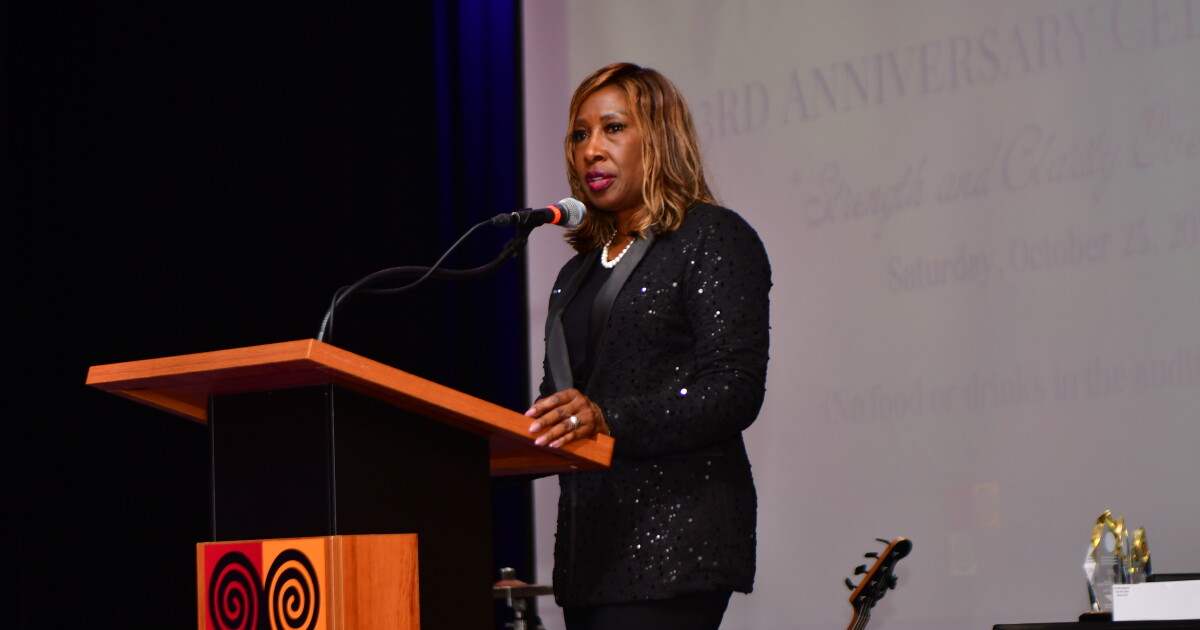
Also in Florida, WLRN reports that The African American Research Library and Cultural Center in Fort Lauderdale's historic Sistrunk neighborhood "is among many organizations in South Florida taking evasive action after finding themselves in the crosshairs" of Florida's new anti-DEI law, S.B. 1134.
The law, signed earlier this year by Governor Ron DeSantis, comes into force in 2027, and limits how local governments can spend public money on DEI programs. The library is one of the few in the U.S. focused on African, African-American, and Caribbean history, and staff told reporters they fear their work could be targeted. " The bill is so vague and ambiguous, you really don't know what is allowable and what is not allowable,” Luwando Wright, president of a philanthropic group supporting the center, told reporters.
Amid Decline in Their Ranks, School Librarians Look to Make Their Case In Connecticut
 Jeremy Chen
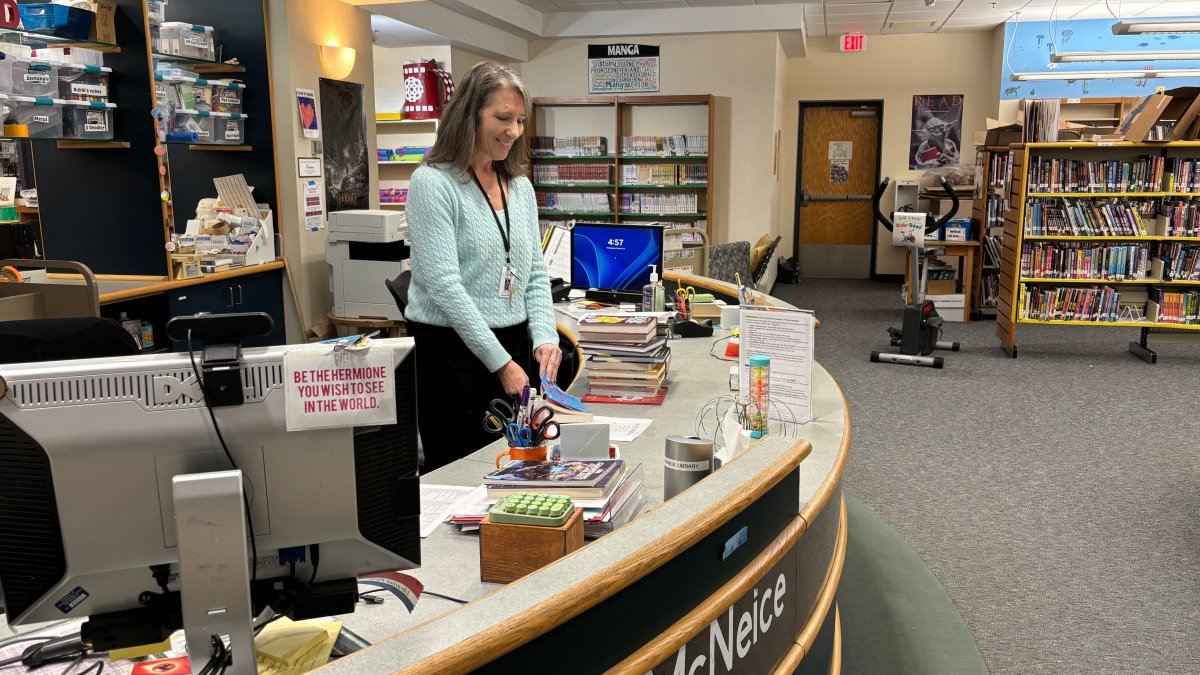
NBC Connecticut reports that school librarians across the state are making the case for their profession as budget cuts continue to shrink their numbers. "According to the nonprofit Read to Grow, Connecticut has 670 school librarians, down about 7% from four years ago, equivalent to a loss of about 80 positions," the report notes. "Data also show the cuts have had a larger impact on more urban school districts like Hartford Public Schools, which eliminated all librarian positions at its high schools earlier this year."
“Why would you be cutting the people who have the expertise, the passion to improve literacy in your district?” Valerie DiLorenzo, president of the Connecticut Association of School Librarians, told reporters. “We focus on helping students learn those really essential tech skills, media literacy skills, how to figure out what is good, reliable, credible information.”
The University of Texas Suspends School Librarian Program
 Ruchi Patel

The Daily Texan reports that the University of Texas will not accept new applicants to its school librarian certificate program for summer 2027, citing several years of declining enrollment. Fewer than 10 students are pursuing the certification, the report notes. "The program launched in 2019 to meet demand for school librarians across Texas. That shortage has not lessened," Carolyn Foote, a retired school librarian who taught in the program, told the Daily Texan. “We have a shortage of librarians, but people are more reluctant to enter the field,” Foote said. “Librarians are just tired, and people outside the field see it and go, ‘Well, that doesn’t look like something I want to face myself in my own career.’”
Kay Gooch, "a retired school librarian and current information lecturer," told reporters that she believes Senate Bill 13 "is contributing to the decline" in interest in school librarianship. “No one wants to be a school librarian because of all the restrictions,” Gooch said. “If you want a book, you have to be extremely cautious on putting it in your library,” Gooch said. “S.B. 13 has just made people more scared.”
A Book Banning Review
 Kelly Jensen

Over at Book Riot, Kelly Jensen leads off her weekly censorship news column with one of her regular reviews. "With Banned Books Week now long in the rearview and with the midterm elections next week, here’s your reminder to take small actions to defend the right to read and how to vote for pro-library, pro-book leaders and legislation."
And Finally This Week...
 Maddie Ames , Reporter
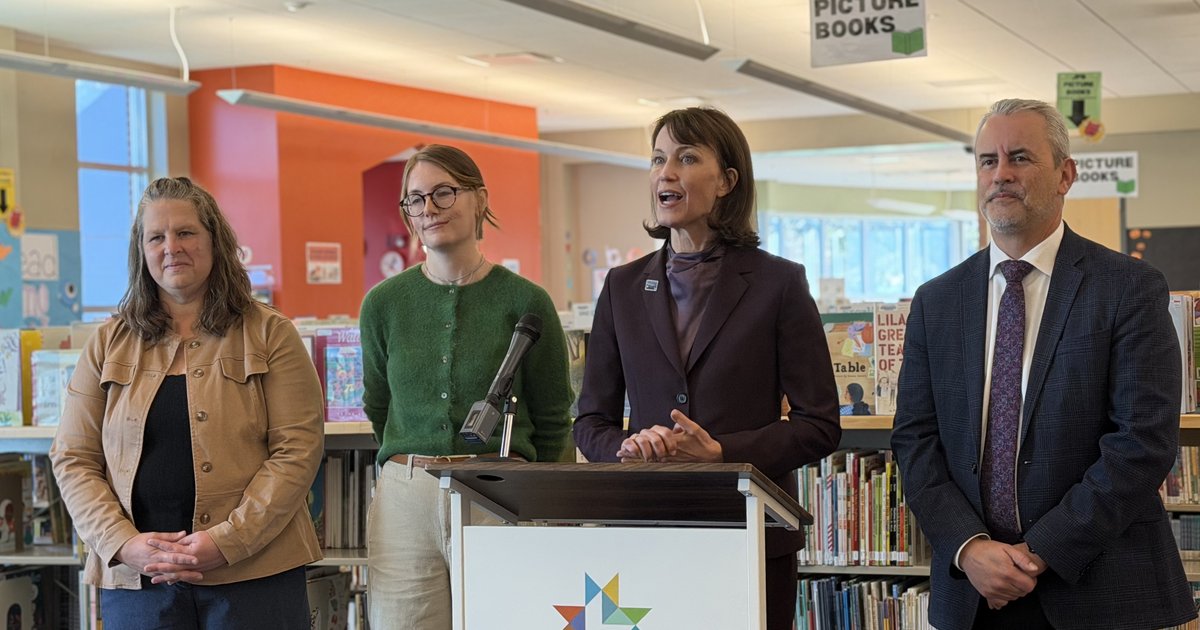
A nice reminder this week of the central importance of public libraries, as Nebraska Public Media reports on the launch of a "1,000 Books Before Kindergarten" program at the Lincoln Public Library.
"The goal is pretty straightforward. Caregivers—whether that’s a parent, grandparent, guardian, or early childhood educator—can visit any of Lincoln City Libraries’ eight locations or sign up online. Signing up allows families to track their reading," the report notes. "And then it's really simple: just read. You can read library books, books you already have at home, books from the Imagination Library, from a little free library. It really doesn't matter where you get them from. We just want caregivers and young children to be reading together,” Lincoln City Libraries Youth Services and Outreach Coordinator Ali Bousquet said during a Thursday morning press conference.
Lincoln City Libraries Director Ryan Wieber said the flexible, self-motivated structure will encourage reading at home. “The beauty of 1,000 books before kindergarten is in its simplicity, ease of participation, and the positive results, proving that a daily habit of reading together can shape a child's future one story at a time.”