The Queue: Library News for the Week Ending February 27, 2026
Among the headlines this week: An unusual election could deliver clues about how voters are feeling about book bans in Texas; Republicans introduce an anti-trans bill in Congress; a controversial book banning bill advances in Wyoming; and why a key publishing industry diversity study is on hold.

Run for Something
 Forrest Wilder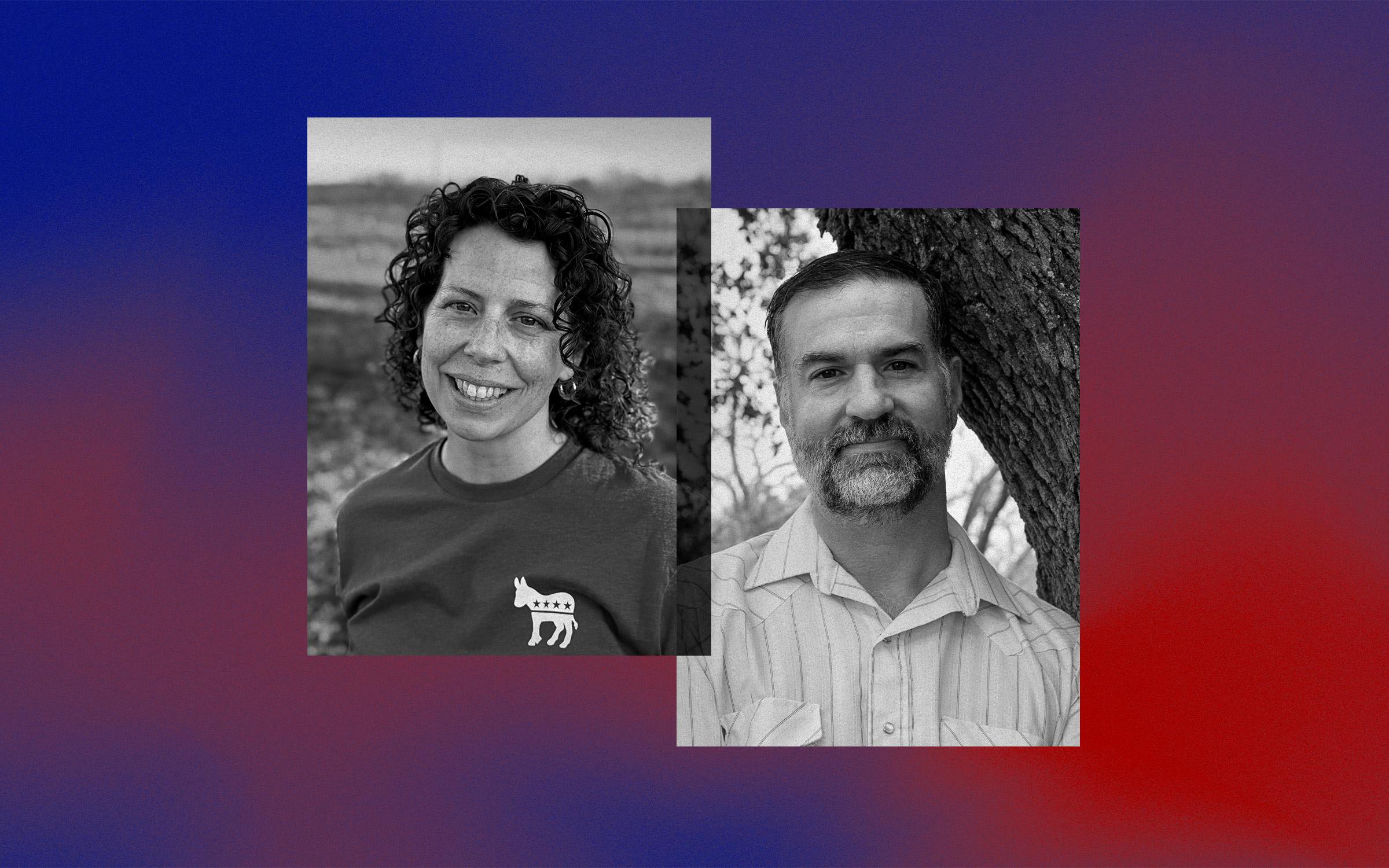
All eyes will be on Texas next week as voters turn out for one of the most high profile primaries in recent memory. On the Democratic side, the race between James Talarico and U.S. Rep. Jasmine Crockett has drawn national attention (thanks to the Trump administration's FCC), while the Republican primary between sitting Senator John Cornyn, Lieutenant Governor Ken Paxton, and U.S. Rep. Wesley Hunt is also a high-stakes match-up.
But Texas Monthly has a feature this week on another Texas race that the library community will want to pay particular attention to: In rural Llano County, Leila Green Little, the freedom to read advocate and lead plaintiff in the one of nation's most closely-watched book banning cases, Little v. Llano County, has secured the Democratic nomination in her bid to unseat the man who played a key role in Llano County's book banning saga. But after the March 3 primary, she could end up facing an opponent on the Republican side that she also knows well: her husband, Robert Little.
"In the pantheon of politically mixed couples—Mary Matalin and James Carville, George and Kellyanne Conway, Kim Kardashian and Kanye West—Robert Little and Leila Green Little don’t rank. But the Llano couple is trying something that their more famous counterparts never have: They’re running for the same elected office," the article notes. "Their target is the Llano County Commissioners Court, Precinct 4, held for the last 20 years by Republican Jerry Don Moss, a central figure in a book-banning controversy that has roiled the Hill Country county for years."
 Andrew Richard Albanese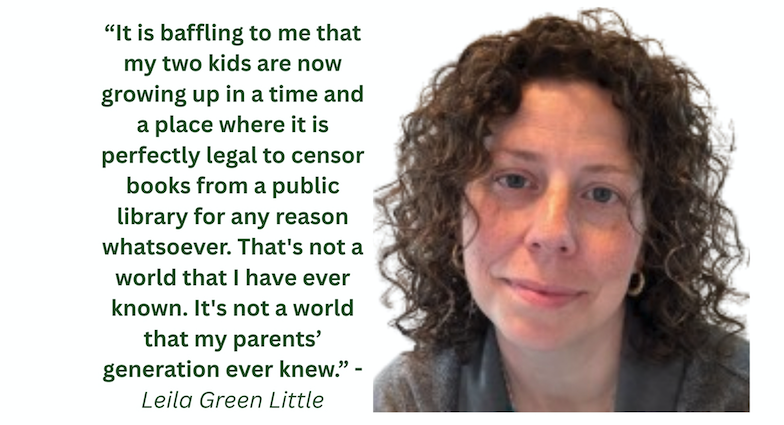
In our December 2025 feature interview with Green Little, Words & Money broke the news about the unusual race shaping up in Llano County. But now the time has come: Republican voters in Llano County will head to the polls next week to decide whether to retire Moss and take a chance on Robert Little—described by Texas Monthly as "a financial-asset manager and ranch owner," whose family has been in Llano county "since the 1880s," and who is a "lifelong Republican who believes strongly in limited government—a principle that he says Moss wantonly violated by meddling in the internal affairs of the library system."
In the article, Green Little says a potential husband/wife face off in the general election may be unusual—but that it would also be a good thing. The incumbent Moss, not surprisingly, holds a more cynical view. "What makes the race more than an obscure downballot contretemps," the article points out, "is that the root of the conflict stems from the book banning controversy."
So, are voters ready for a "Little" change in Llano County, which has reportedly been fractured over the attacks on its library? It's certainly possible. Early voting numbers show voter enthusiasm is high in Texas. And recent election results suggest voters may be souring on the right's book banning agenda.
Earlier this month, Salon. com reported that Democrat Taylor Rehmet's surprisingly decisive victory over Republican Leigh Wambsganss in a special election for state senate was fueled by voters' weariness with book bans. And last November, Popular Information reported that progressive candidates swept all three open board seats in Texas’s Cypress-Fairbanks Independent School District (CFISD), which had been controlled by a 6-1 conservative supermajority, in a rebuke of censorship.
As the national media focuses on the Texas senate primaries next week, don't sleep on the Llano race. Ahead of the midterms, it could offer some critical clues about how voters are feeling about book bans and attacks on library workers.
Congressional Republicans Introduce Anti-Trans Bill Targeting 'Sexual Content' in Schools
 Theo Harrison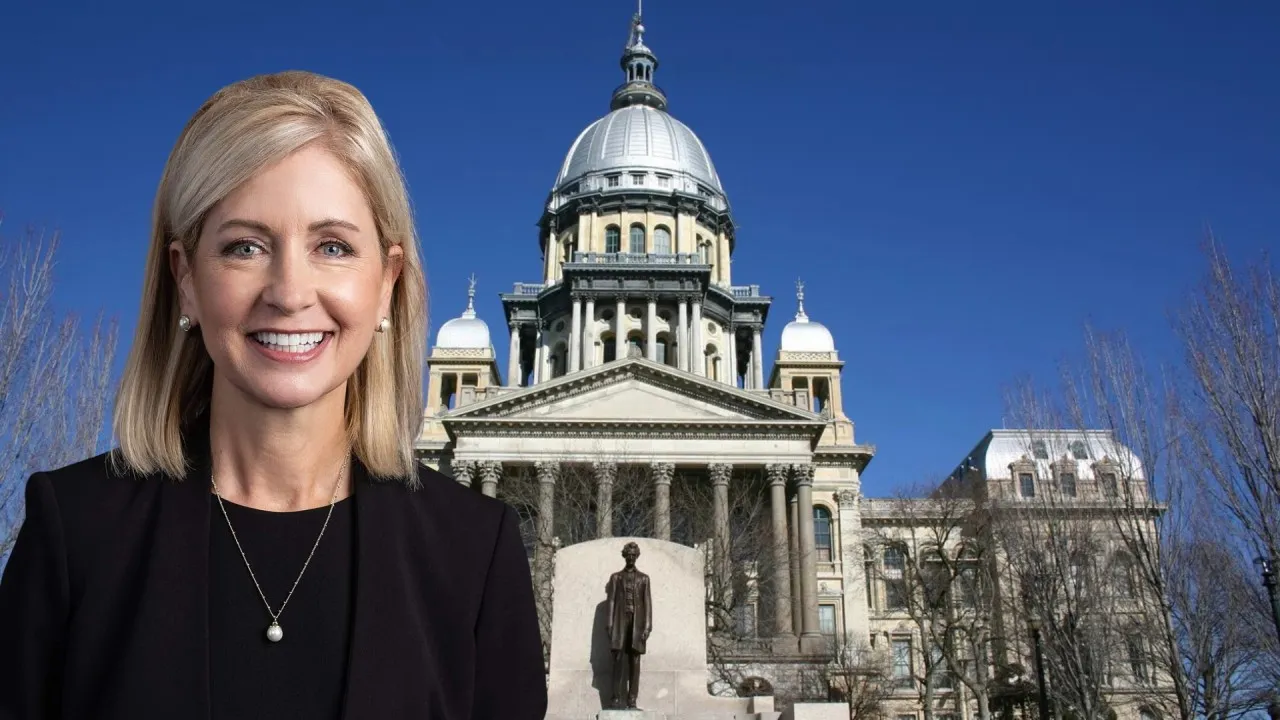
Via social justice group Freedom for All Americans, hours after President Trump attacked transgender rights in his State of the Union address on Tuesday, House Republicans dropped a bill targeting 'sexual content' in schools. "H.R. 7661 is a signal bill," the post explains. "It links a high-profile presidential messaging moment, a culture-war issue that has become central to Republican campaign politics, and federal education funding law in one package."
Of course, the real target of the bill is made clear in its definition of "sexually oriented material," explicitly calling out material that "involves gender dysphoria or transgenderism.’’ Introduced by Illinois GOP Rep. Mary Miller, the bill also blocks federal funding for any school program that includes "individuals who are stripping," or engaged in "lewd or lascivious dancing." You read that right, folks: no more strippers in schools.
Hoboken Librarian Weighs In On New Jersey's Pending Library Ebook Bill
The NJ Spotlight has an interview with Jennie Pu, director of the Hoboken Public Library, about the state's pending library ebook bill. In the Q&A, Pu proves to be a very effective advocate, concisely focusing on a key issue the bill seeks to address: the lack of any negotiation over prices and terms between libraries and the largest publishers in what has become a major marketplace. "Any normal market situation where you’re spending millions of public funds—we would have a say in that," Pu explained about the bill's aim. "How is it that public institutions, collectively spending millions on digital content, have no ability to negotiate? This [bill] would be setting some reasonable parameters for how taxpayer dollars are used in a digital market."
Arizona Librarian Discusses State Bill That Would Expose Librarians to Criminal, Civil Penalties
 Lauren Gilger
In Arizona, local station KJZZ has a very thoughtful conversation with librarian Erin MacFarlane, Advocacy Committee chair for the Arizona Library Association, about the state's latest legislative attempt to expose librarians to criminal and civil penalties for making allegedly inapproproate materials accessible to minors. "I think there is a feeling of disbelief and fear that this is something that could happen to them in their everyday job," MacFarlane told reporters. And, she adds, "anger."
And, in Georgia...
 Rachel Wright
Via Arts ATL, a good piece on S.B. 74, the bill in Georgia that would remove an existing exemption provision and expose librarians to potential criminal and civil penalties for making allegedly obscene books available to minors. Lisa MacKinney, director of the Hall County Library, told reporters that the prospect of criminalization “is a little intimidating, scary and it’s a little hurtful to feel like there’s suspicion around some of our motives."
Wyoming's Controversial 'Harmful to Minors' Bill Passes Out of Committee
 Noah Zahn, Wyoming Tribune Eagle
WyoFile reports that the state's controversial book banning bill, H.B. 10, narrowly passed out of a Senate committee this week. But in a bit of a bright spot, the bill was advanced with a significant change: county commissioners can now opt their public libraries (but not schools) out of the state policy with a simple majority vote. The outlet quotes Cristine Braddy, current president of the Wyoming Libraries Association, with a particularly cogent point of objection: "While framed as a parental rights measure, this bill selectively supports the rights of one group of parents while actively stripping away the rights of others to decide what was appropriate for their own children," Braddy said. Furthermore, the article notes that a county attorney "speaking on behalf of the Wyoming Prosecuting Attorneys Association," warned that the bill "could generate lawsuits from residents, authors, and publishers." Bet on it.
Canadian Writers Hold 'Freedom to Read' Event After Canadian Legion Cancels Over 'Policy' Conflict
 Nisha Patel
The Writers’ Guild of Alberta this week reported that they were able to hold a scheduled Freedom to Read Week event this week in another venue, after their initial venue, the Canadian Legion in Calgary, abruptly canceled their booking last week. The reason given for the cancellation: "aspects of the event conflict with Legion policy, which requires alignment with current government regulations and guidelines." Guild officials said in a statement that this alleged "conflict" could "only be a reference to the Alberta government’s controversial school library book restrictions," which the writers' groups have been "outspokenly critical of."
In their update this week, the organizations expressed gratitude for the outpuring of support and media coverage. “This shocking decision from the Legion reinforces just how important it is to celebrate Freedom to Read Week and to hold events such ours,” Edmonton writer Anne Bailey, President of the Writers’ Guild of Alberta, said in a statement.
In Hennepin County, Weeding Decisions Draw Scrutiny
 Jasmine McBride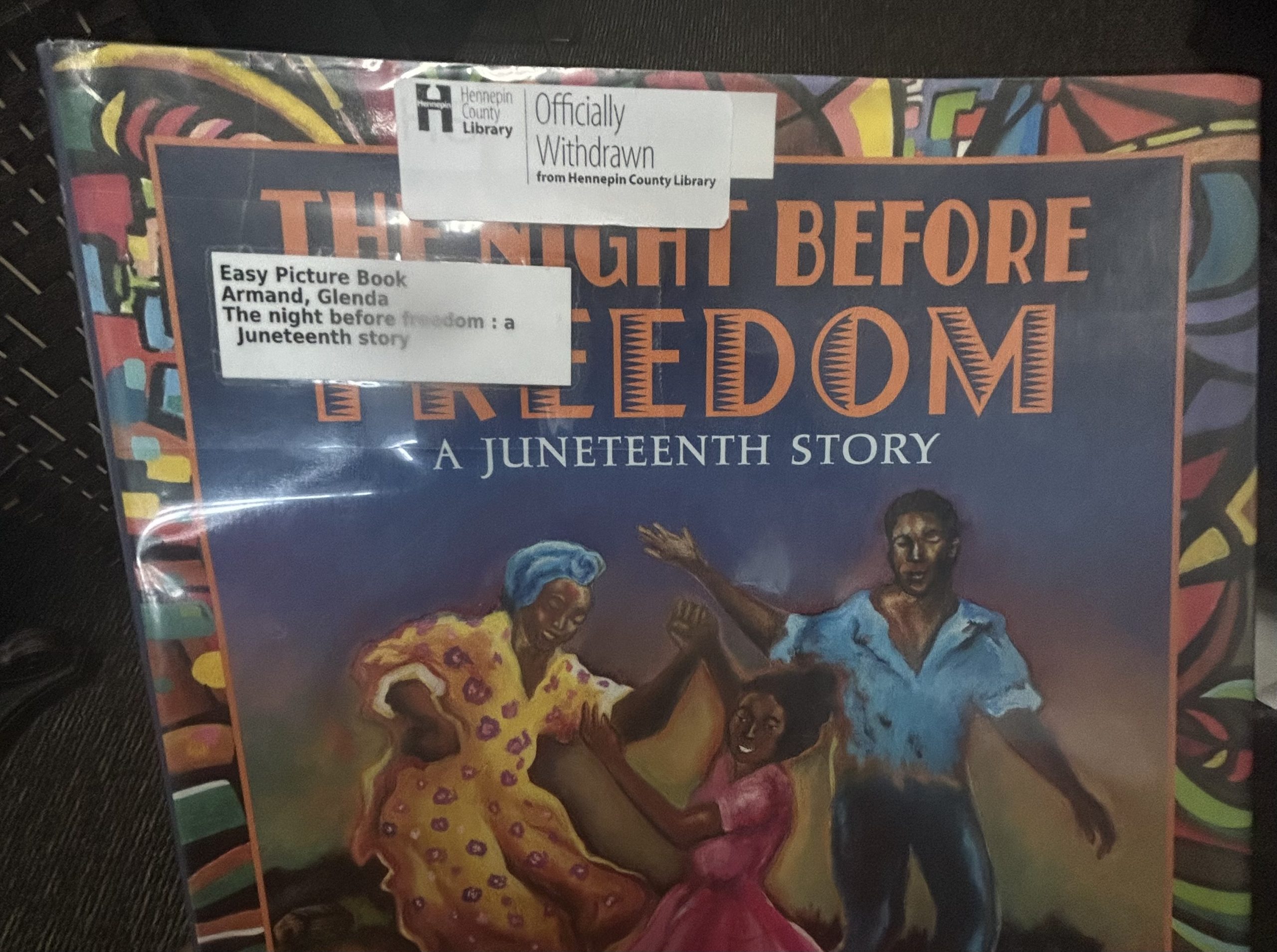
Amid a wave of book bans, some local leaders have used 'weeding' as a ruse to justify the removal of certain books for ideological reasons (most notably in Llano County, Texas). So this story from the Minnesota Spokesman-Recorder caught our attention this week, because it appears to involve an actual, legitimate weeding exercise. "When Doug Bjostad, a longtime Hennepin County resident, noticed recently published books focused on Black history and culture on giveaway carts at local libraries, he felt alarmed," the report notes.
Hennepin officials, however, were quick to justify the removals as part of a weeding exercise done according to professional standards. "Library officials say their goal remains clear: maintaining collections that serve all residents, preserve historically underrepresented voices, and support lifelong learning," the article states, adding that as "the debate over cultural representation continues nationally, local libraries may increasingly find themselves at the intersection of policy, perception, and public trust, even when their actions are routine."
Pennsylvania School District Looks to Reverse Recently Enacted Library Policies
 Jillian Forstadt
Via local news station WESA, The Pine-Richland (Pennsylvania) school board voted this week to "reverse measures passed last year that expanded the board’s role in library book selection, broadened parental control over which books are part of the district’s collection, and prohibited librarians from acquiring any materials with 'pervasive vulgarity or profanity' or 'explicit' sexual content." School board president Ashley Fortier said the district should be coming from a place of trust. "I trust the librarians, I trust the administrators, I trust the senior leadership team and I feel like that's the foundation of this [proposal].”
After Policy Changes, South Carolina Library Abruptly Fires Its Director
In an alarming turn of events, local NBC affiliate WYFF reports that Pickens County (South Carolina) Public Library director Stephanie Howard has been dismissed without explanation, a week after the county adopted sweeping changes to its book policies, including a review of the 86,000 titles in its collection and the indefinite cancellation of youth programming. In response to questions about the policy change, a board member told the station that "the majority of the board felt that content in books in the children's and teen (formerly young adult) sections contained material that elicited prurient interest in the reader," but declined to comment on Howard's firing.
A Recap of Book Riot's Censorship Stories
 Kelly Jensen
Over at Book Riot, Kelly Jensen leads off her weekly censorship news column with a look back at some of the stories she's covered. "Catch up on what you may have missed, and remember that there is nothing exceptionally new in the book—just different names and faces trying to get their 15 minutes of manufactured outrage fame."
IMLS Allocates Millions to Support Trump's AI Action Plan
 News Staff
GovTech reported this week on an Institute of Museum and Library Services plan to provide more than $4.1 million in grant funding for eight projects designed to "leverage museums and libraries as 'catalysts for AI learning and workforce preparation,'" consistent with the Trump administration’s AI Action Plan. Among the programs: Researchers at the University of Oklahoma "will embed generative AI tools into maker-based learning programs for kids at public libraries," and the University of South Carolina will produce "a national, open-access curriculum for high school librarians."
ALA Reports on Its Recent Advocacy Training
 Greg Landgraf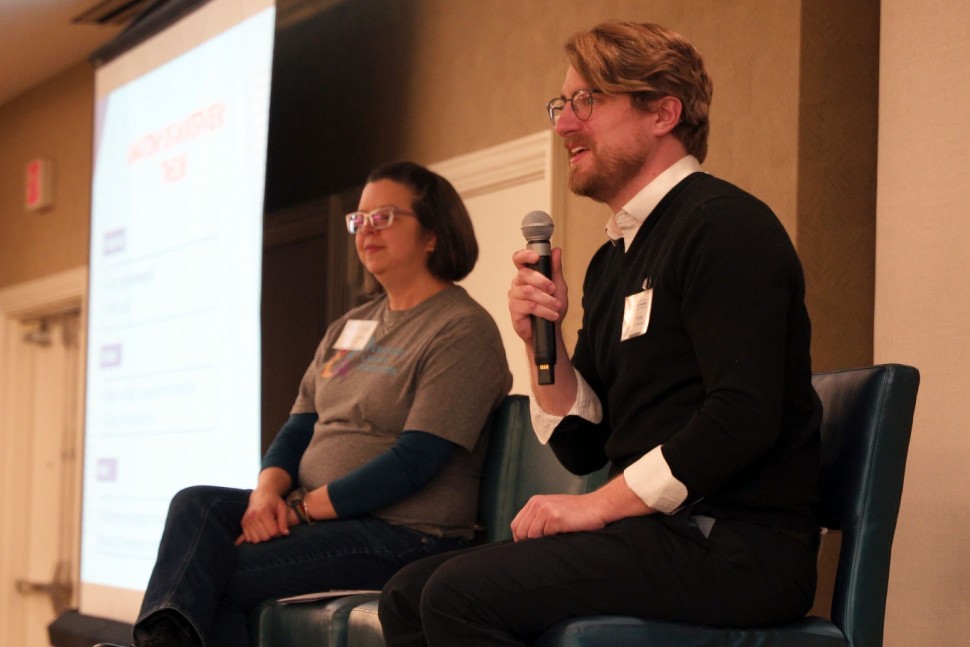
American Libraries has a good report on the ALA's most recent Chapter Advocacy Workshop. "In December, state library association leaders from around the country gathered in Chicago to learn how to be exceptional political strategists, media spokespeople, funding champions, and freedom-to-read fighters—all within 48 hours," writes Amelia Aldred, deputy director of state and local advocacy for ALA’s Office of Public Policy and Advocacy.
Memphis Public Library Workers Press for Civil Service Referendum
 Kailynn Johnson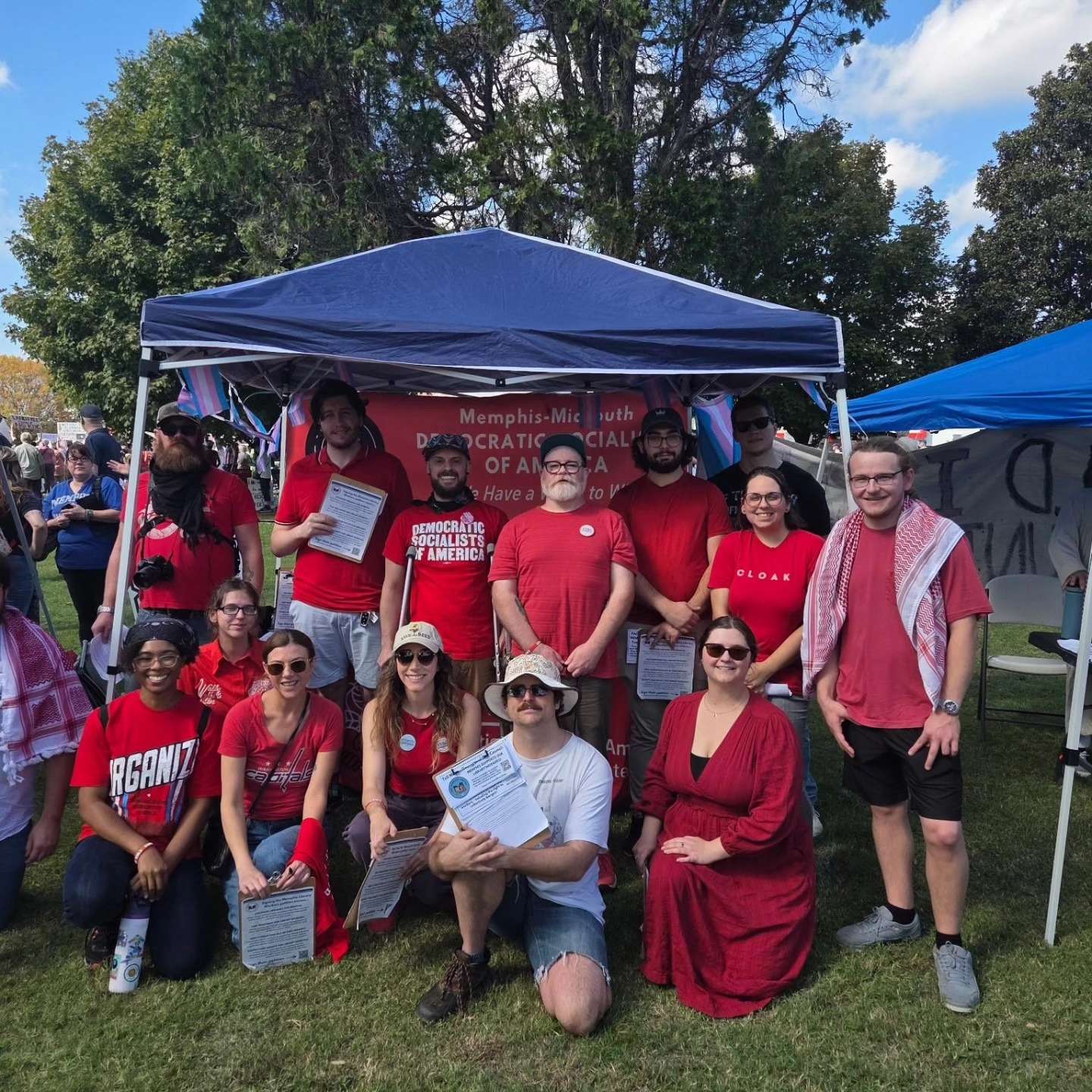
Memphis Flyer reports that voters in Memphis, Tennessee will vote on whether to extend civil service status to library employees. "If granted civil service status, library workers would be able to collectively bargain and have other safeguards," the article notes, adding that about 230 library employees would have to reapply for their jobs.
Dayton Metro Library Workers Say They Are in 'Crisis Mode'
The Dayton Daily News reports that the Dayton Metro Library is working with a consultant to "make cultural changes within the workplace" after a survey of nearly 300 library employees "found that roughly 70% of respondents did not trust the library’s administration to make decisions on their behalf." According to the survey, employees said they are "satisfied with the nature of their work," but "dissatisfied with library administration" citing concerns linked to "communication, transparency and accountability."
And Finally This Week...
 Jason Low |
In a piece for Publishers Weekly, Jason Low, publisher and co-owner of children's book publisher Lee & Low Books, reveals that the company's outstanding diversity survey will be put on indefinite hold. "While we are proud of the contributions the survey has made and what a workforce dataset tells us about our industry, we have come to the realization that a demographic survey must take a backseat to more pressing matters," Low writes. The pressing matter? Book bans.
As Low explains, since 2015, Lee & Low’s Diversity Baseline Survey has "become the industry standard" for industry accountability in terms of diversity. But, in the face of "extreme censorship that targets diverse authors and titles," the company's "first priority as publishers must shift toward continuing to publish and sell diverse books for children in contentious times. The second priority is to redirect the time and effort we would have spent on DBS 4.0 and channel it toward the fight to ban book bans."