The Queue: Library News for the Week Ending January 16, 2026
Among the week's headlines: an appeals court hears a challenge to Iowa's S.F. 496 for a second time; Alabama denies funding to a library over its refusal to censor; more on D.C.'s library ebook bill; and a former ALA exec offers a forward-looking view for library policymakers after a rough 2025.

Appeals Court Hears Iowa Book Banning Case for a Second Time
 Sheila Brummer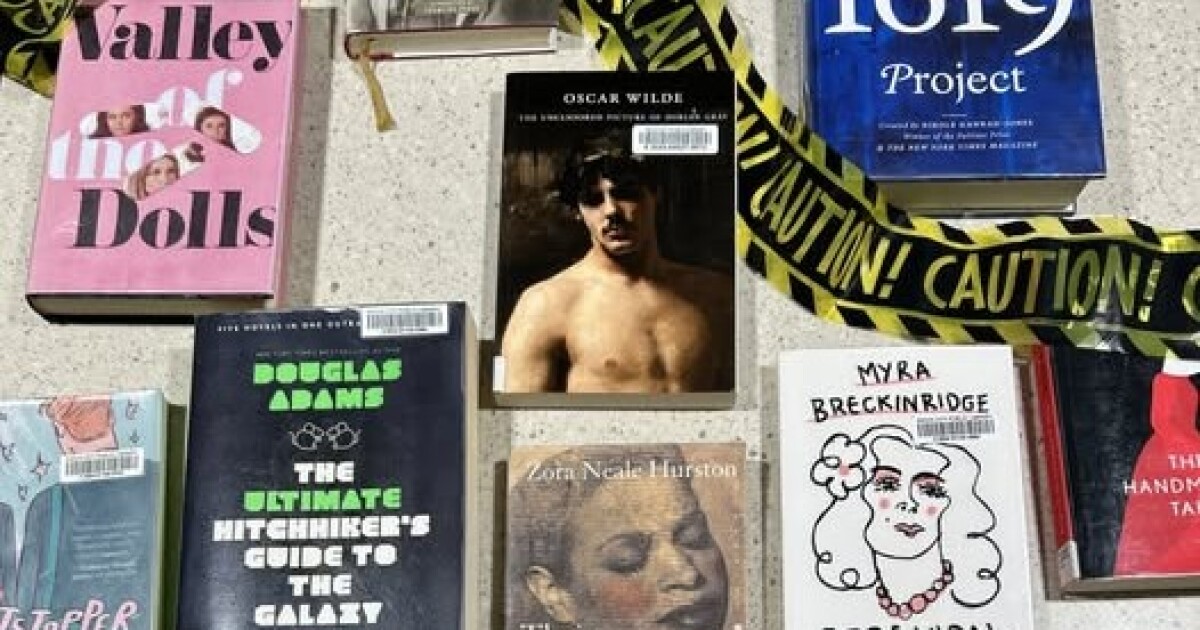
Iowa Public Radio reports on the closely watched lawsuit (two suits, actually) over Iowa state law S.F. 496, which went before a three-judge panel of the U.S. Court of Appeals for the Eighth Circuit for a second time on January 12.
Signed by Iowa governor Kim Reynolds in May 2023, S.F. 496, among its provisions, bars books that contain any depictions of sex, written or visual, from Iowa school libraries. The law prompted two separate legal challenges in November 2023: one from Lambda Legal and the ACLU of Iowa, and days later, a suit led by publisher Penguin Random House and the Iowa State Education Association.
Tuesday's appeal hearing comes after federal judge Stephen Locher in March 2025 temporarily blocked the state from enforcing S.F. 496's book ban provision for a second time in 16 months. The Eighth Circuit vacated Locher’s initial December 2023 injunction in August 2024, and sent the case back to him with instructions to more fully assess whether the plaintiffs’ facial challenge to the constitutionality of SF 496 was proper. But in his second decision, Locher found the facial challenge to be legally sound, and once again blocked enforcement of the book bans, concluding that S.F. 496's "Library Restriction" was unconstitutionally vague and overbroad.
 Andrew Richard Albanese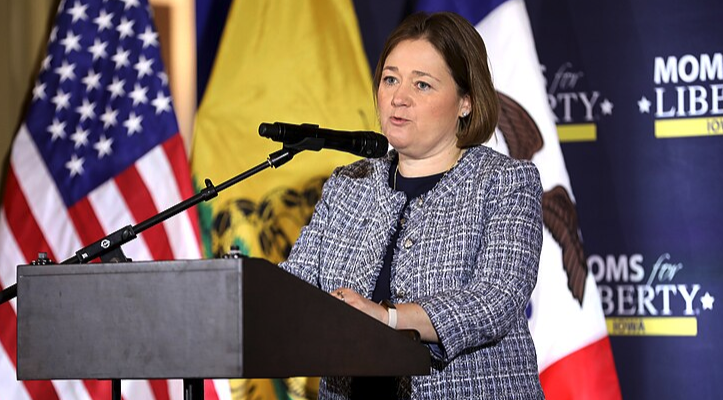
In their arguments this week, lawyers for the plaintiffs insist that Locher got it right. "The Library Restriction’s constitutional applications are few, if any, because it mandates the removal of school-library books without regard for the age of the student, the value of each book as a whole, or the discretion of schools and their educators," the plaintiffs' argue.
But lawyers for the state of Iowa counter that Locher erred in blocking S.F. 496's statewide ban on sexual content, citing the "school-sponsored speech standard" set forth in Hazelwood v. Kuhlmeier, a 1988 case in which students sued over having their articles censored from a school newspaper. And more broadly, the state once again argued that school library decisions are "government speech" and thus immune from First Amendment challenges.
That's notable, because the Eighth Circuit appeared to reject the state's government speech argument in its first decision in the case.
"Although the Supreme Court has not yet determined whether school-library curation is government speech, it has repeatedly held that when the government curates its own compilation of private third-party speech, its curation decisions are its own expressive activity," the state argues, citing the Fifth Circuit's controversial recent decision in Little v. Llano County. "Applying that principle here, when Iowa curates public-school libraries it regulates its own speech."
There is no timeline on when the court will rule, but the case has taken on greater importance in the wake of the Supreme Court's decision last month not to review the Fifth Circuit's decision in Little v. Llano County, which held there is no First Amendment right to receive information in public libraries. Will Iowa be the case that gets the book banning issue in front of the Supreme Court?
The Book Banning Cases to Watch in 2026
 Kelly Jensen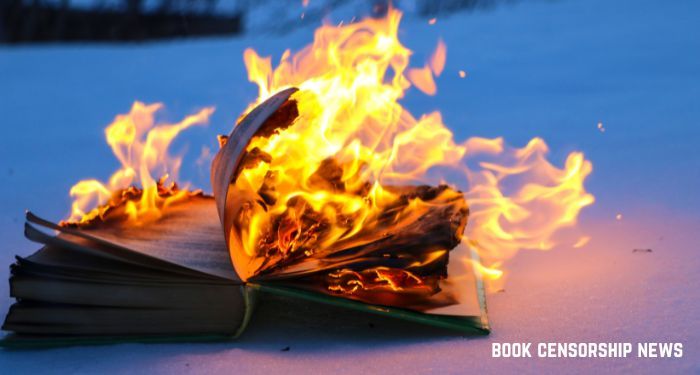
Over at Book Riot, Kelly Jensen leads off her weekly censorship news column with a look at seven-plus freedom-to-read cases to keep tabs on in 2026. "This isn’t a comprehensive survey of current right-to-read lawsuits," Jensen writes. "But it does give a sense of who is bringing these cases to court and what rights others want to strip away from you and from every other American."
Deadline Approaches for Tennessee Libraries to Submit Collection Audits
 Nikki McGee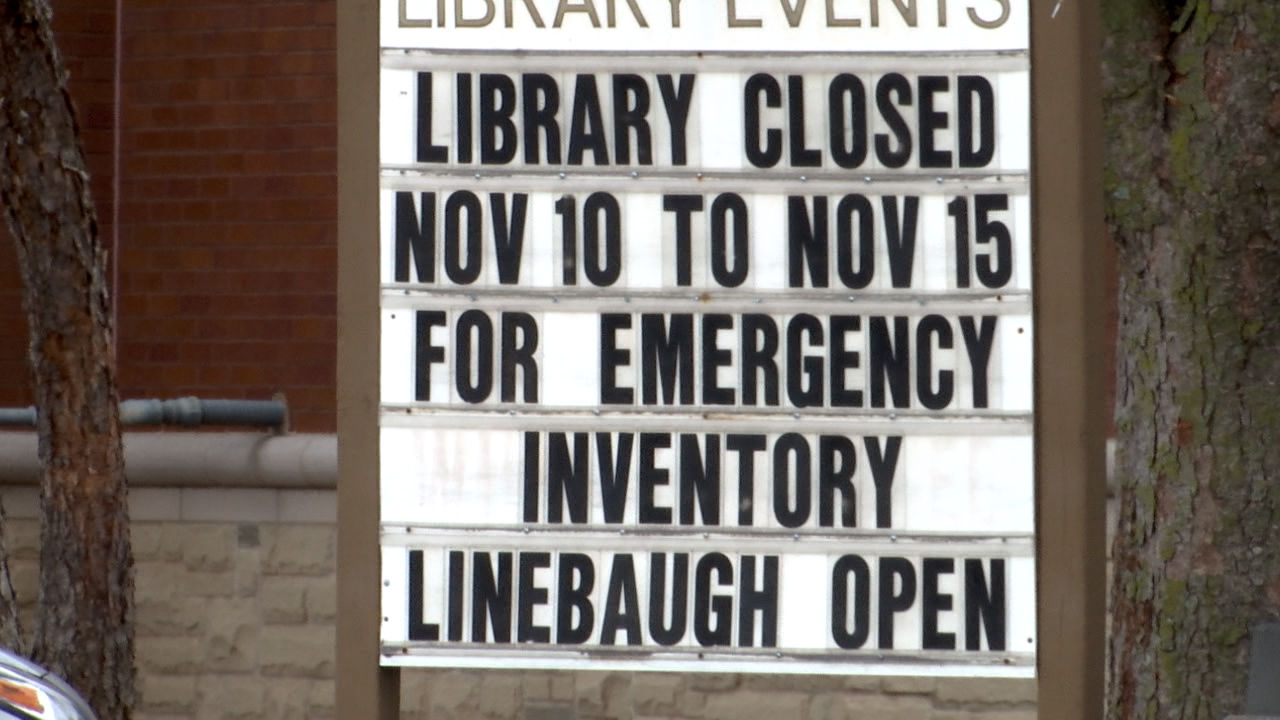
With a January 19 deadline now just a few days away, local affiliate WJHL reports on the efforts of Tennessee libraries to comply with Secretary of State Tre Hargett's demand that the state's public libraries review their collections for materials that could be considered inappropriate for minors under a new state law, or may run afoul of a Trump executive order on gender identity. In the report, Johnson City Public Library Executive Director Julia Turpin told reporters that her board has voted to affirm the "age appropriateness and the quality" of their library collection without removing any books. “I think it just affirms that, like many libraries across the state, all of our materials fall in line with state and federal laws. As they probably always have. So I think we’re all looking forward to putting this behind us,” Turpin said.
Meanwhile, as WKRN reported on January 8, Hargett recently posted a video with State Library and Archivist James Ritter, who suggested that the order to review collections was really just a suggestion, and that the audit was "routine" and and akin to the "weeding" that libraries do all the time.
Alabama Officials Vote to Deny Fairhope Library's State Funding Over Its Refusal to Move Books
 Williesha Morris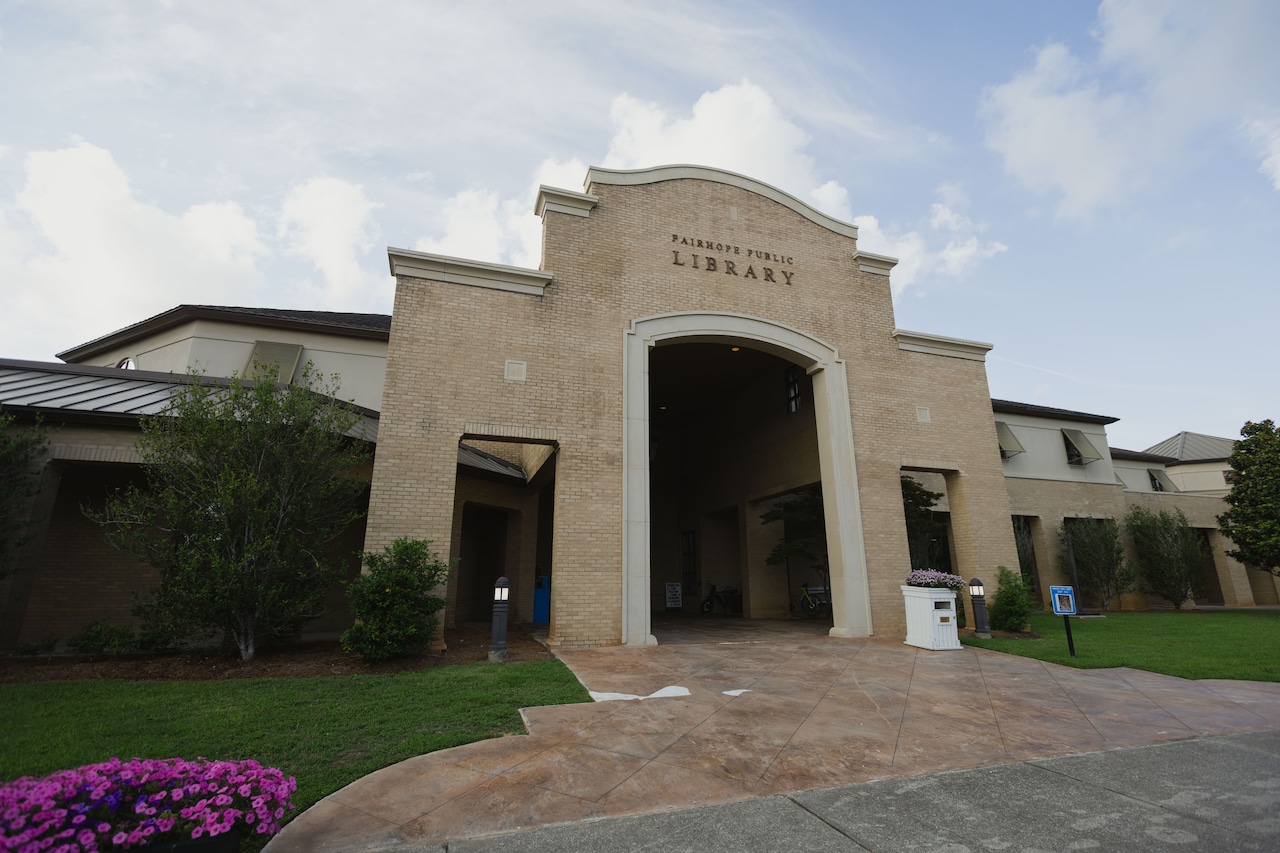
In a dispiriting if totally expected move, AL.com reports that the Alabama Public Library Service this week voted to withhold state funding to the Fairhope Public Library at "a meeting fraught with crosstalk and tension." The move comes after APLS Chair John Wahl personally read and agreed that 10 books must be moved to the adult section in order for Fairhope to be deemed in compliance with recently enacted state standards on inappropriate content. Most of the books, the outlet noted, "have appeared on banned book lists for years, including lists created by conservative groups like Clean Up Alabama and Moms for Liberty."
"At the board meeting, Wahl, who is also the president of the Alabama GOP, read aloud some passages from books he found questionable," the report adds. "Fairhope Library board chair Randal Wright and library director Robert Gourlay said the board had already read the books and decided they were suitable for the teen section," the report goes on to note, with Wright suggesting that moving the books to satisfy state officials "would equate to censorship." The board also reportedly discussed "a new code change" that will bar books for minors that include "positive portrayals of transgender characters."
Meet Alabama's New Library Service Director
 Williesha Morris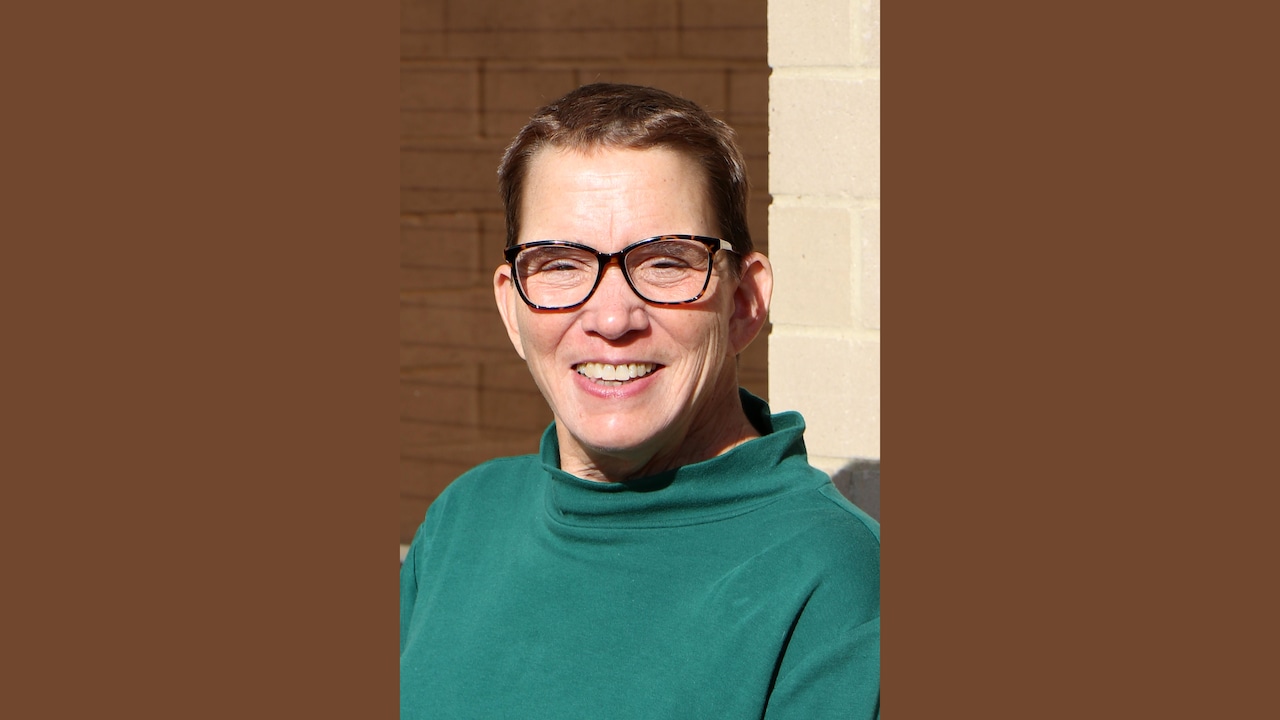
AL.com this week also had a piece on the new Alabama Public Library Service director, Kelyn Ralya. "Ralya has worked in libraries for 30 years. She now will lead the state Public Library Service, which administers state and federal funding to more than 200 libraries and provides resources and programming to librarians," the report states. "Political controversies and book challenges have been 'overshadowing the good that public libraries do every day, and I think that’s very unfortunate,' Ralya said."
Amid New Statewide Book Bans and a Federal Lawsuit, Utah Schools Are Reportedly Reviewing Book Policies
 Arielle Harrison, KUTV
Local affiliate KUTV reports on the state of play in Utah. "Utah’s public school book policies are under review as the state faces a lawsuit and additional titles are removed from school library shelves," the report states. "The discussion intensified this month after three additional books were removed under a state law governing 'sensitive material' in schools. A new review from the Utah Office of the Legislative Auditor General is also adding to questions about oversight, consistency, and accountability in the process."
The American 'Culture War' Spreads to Canada
 Eric Wilkinson
A very thoughtful essay in Canadian Dimension looks at how the right wing playbook for book banning in the U.S. is being adopted in Alberta, Canada. "A book demands something of its readers that few things do today: careful attention," Eric Wilkinson writes, questioning why officials are attacking library books in the age of the internet. "A generation ago, parents fretted about the influence of television. Marshall McLuhan called TV and film 'hot media' because they demanded little participation from their audience compared to 'cold media' like literature. Yet, a 22-minute television episode from that generation moves glacially slow and requires more attention to follow compared to the 10-second TikTok clips and Instagram reels of today."
More Reporting on D.C.'s Library Ebook Bill
 Martin Austermuhle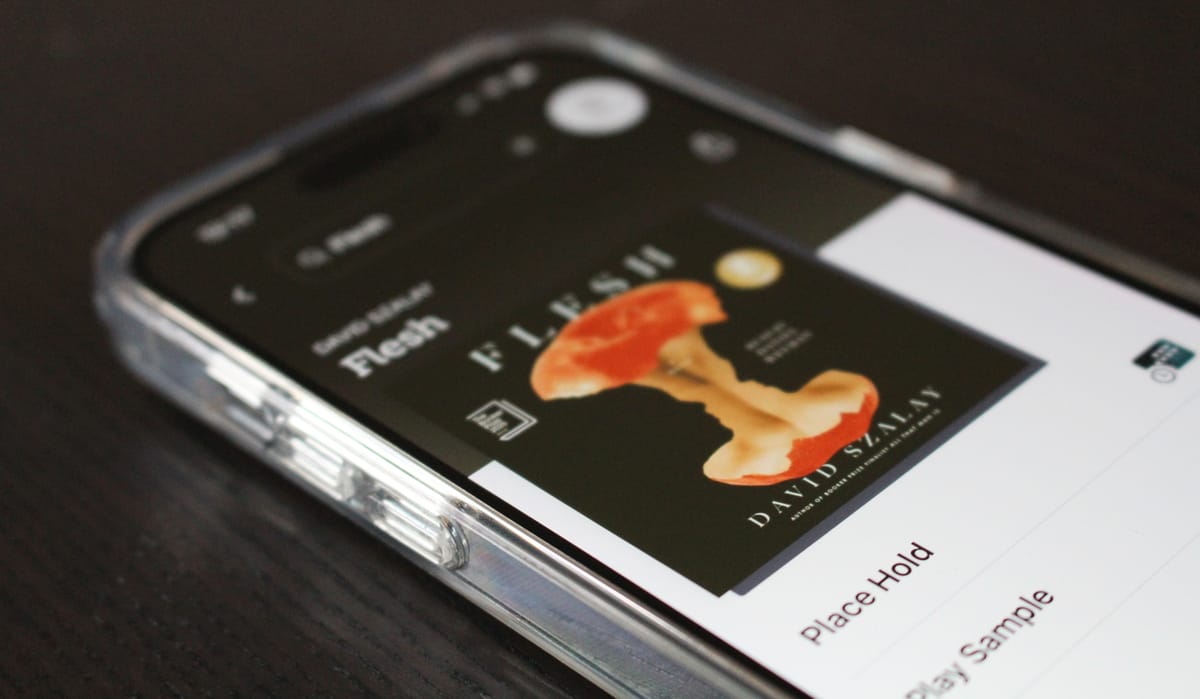
The 51st has a good piece on Washington D.C.'s recently introduced library ebook bill, which burst into prominence last week when OverDrive CEO Steve Potash shared his 54-page testimony opposing the measure. "While the effort to force a collective negotiation with publishers in hopes of lowering e-books prices has drawn support from librarians and groups like the Urban Libraries Council and the American Library Association, publishers are far more critical," the report notes. As for Potash, he finds himself "stuck somewhere in the middle," The 51st writes.
Comics Plus Hits Two Million Checkout Milestone
 Guy LeCharles Gonzalez
In a post this week, LibraryPass reported that 2025 was a record year for its Comics Plus, service, "with readers in 3,500+ libraries and schools in the U.S. and abroad checking out more than two million graphic novels, manga, and picture books." LibraryPass’ CEO, Ian Singer said the milestone was exciting, but that he expects more growth in short order. "Why? The quality of the content in Comics Plus and our focus on working with only library-friendly publishers who enable us to offer unlimited, simultaneous access to all the titles in our corpus," Singer said.
CloudLibrary Wins 'Modern Library' Award
 OCLC
OCLC
In a release, CloudLibrary, the OCLC-owned digital lending platform (formerly owned by Bibliotheca) has received "Gold recognition" as part of the 2026 Modern Library Awards from LibraryWorks. "This recognition is especially meaningful because it's judged by our customers—the libraries that rely on our products and services every day," said Drew Bordas, Chief Operations Officer at OCLC.
RBMedia Reports a Strong 2025
 rwyattrecordedbooks.com
In a release this week, RBmedia, the world's largest audiobook publisher, reported "record results" in 2025. "In 2025, RBmedia reached significant milestones, including surpassing 100,000 audiobooks in its catalog. The company published audio for 126 New York Times bestsellers, marking a new company record and a more than a 25% increase over 2024," the release notes.
Amazon Launches Digital Arabic Library
 Amazon Staff
Amazon has announced the launch of the Digital Arabic Library, "a dedicated storefront featuring more than 38,000 Arabic-language titles accessible to readers around the globe in digital formats." Built in partnership with the Abu Dhabi Arabic Language Centre (ALC), a release notes that the initiative seeks to address a significant gap: "Despite Arabic being spoken by more than 400 million people worldwide, Arabic content represents a small percentage of material available online."
Amid Ongoing Uncertainty, IMLS Opens Its 2026 Grant Cycle

Amid the Trump administration's efforts to kill the agency and questions about what the agency will look like if it survives, the Institute of Museum and Library Services this week announced that its 2026 "discretionary" grant cycle is now open. Although, it feels quite different than in past years. "As the leading source of federal funding for American museums, libraries, and related institutions, IMLS funding opportunities play a crucial role in furthering the Trump administration’s commitment to heritage preservation, workforce development, and civic education." OK, then. Applications are encouraged to be filed by March 13, 2026.
ALA Intellectual Freedom Round Table Seeks Nominations for Annual Immroth Award

The ALA Intellectual Freedom Round Table (IFRT) is accepting nominations for the 2026 John Phillip Immroth Memorial Award, which honors "notable contributions to intellectual freedom and demonstrations of personal courage in defense of the freedom of expression." For more on the criteria of the award, past recipients, or to submit a nomination (self-nominations are accepted), please visit the John Phillip Immroth Memorial Award page. The deadline for submitting a nomination is March 1, 2026. The award winner will be announced in the spring of 2026, with the award to be presented during the 2026 ALA Annual Conference in Chicago.
Former ALA Leader Reflects on Library Policy Challenges
 Alan S. Inouye
Library Journal has a good piece on the state of federal library policy from Alan Inouye, who retired from his role as the ALA's Interim Associate Executive Director of Public Policy & Advocacy in 2025 after 18 years at the association. "An important task for the coming year is developing and agreeing upon a strategy and vision for the time when the policy environment is more favorable for libraries—such as, hopefully, in 2029," he writes. "Thus, 2026 is the prime time for brainstorming, producing white papers, and holding convenings."
KU Libraries Launches Global Librarianship Series
 Kevin McCarty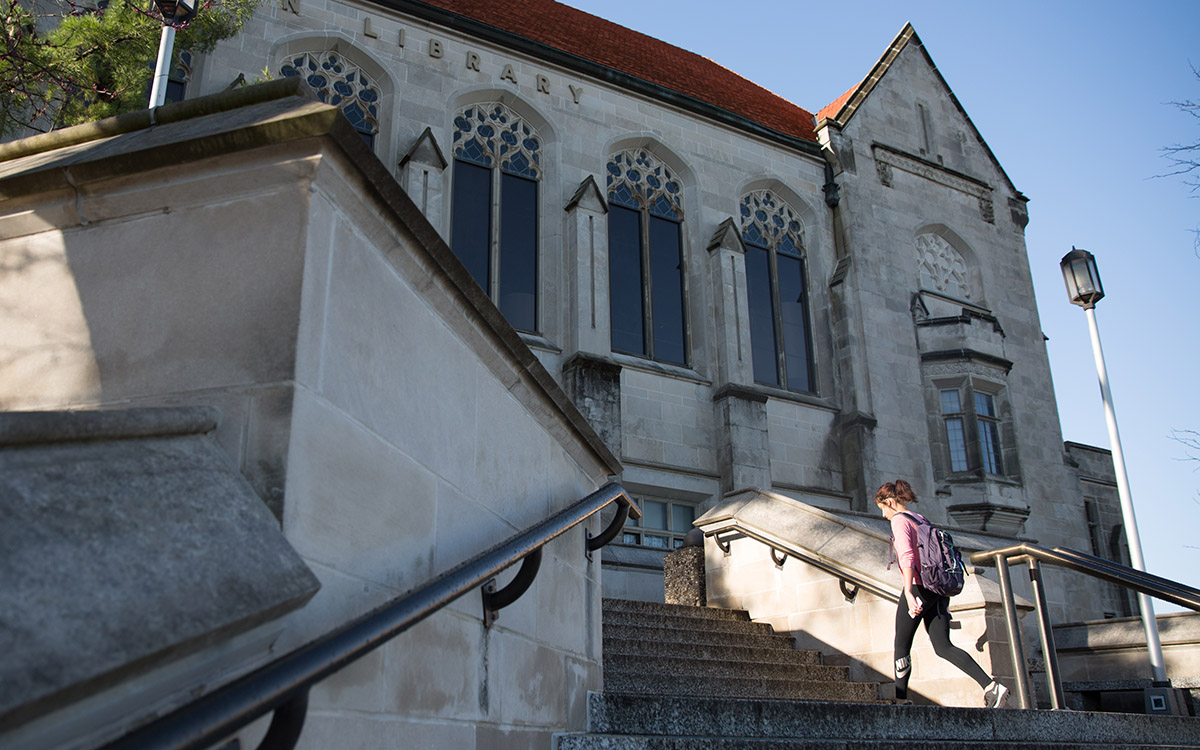
This looks excellent: "The University of Kansas Libraries will launch Global Conversations in Librarianship, a new speaker series highlighting international perspectives on libraries and information work." Ukrainian library leader Tetyana Yaroshenko will be the inaugural speaker, on Feb. 26. Yaroshenko, deputy director for research and international affairs at the State Scientific and Technical Library of Ukraine, will present Ukrainian Libraries in the Time of Russia's War Against Ukraine via Zoom webinar at 10 a.m (CT). "Yaroshenko will analyze how the deliberate targeting of cultural heritage constitutes what she terms 'cultural genocide,' aimed at erasing Ukrainian culture, history and national identity."
And Finally This Week...
 0
0
It's been said that if you want to make change, run for something. Iris Halpern, the lawyer who has been defending librarians wrongfully terminated for speaking up against censorship, is doing just that: running for a seat in the Colorado House, District 6. Halpern has been making a difference already, of course, winning settlements for librarians Brooky Parks in Colorado, Suzette Baker in Texas, and Terry Lesley in Wyoming.