The Words & Money Weekly Newsletter: May 29, 2026

Thank you for supporting Words & Money and helping to establish an independent media venture that aims to properly center libraries in the 21st century reading, writing, and publishing enterprises. If you're already a subscriber, thank you, and we encourage you to please share this newsletter with your friends and colleagues and ask them to subscribe as well. And if you can, consider supporting us with a premium subscription for just $45 annually.
Among the headlines in our weekly news roundup, The Queue: ALA staff members get their union; Knox County officials return Alex Haley's Roots to school libraries; librarians in several states continue to make the case for change in the library ebook market; and New Yorkers push for better library funding. And librarians have been calling for negotiation in the digital library market for more than 15 years, but a call for negotiation released this week by five public library associations just might work this time.
With a Simple Statement, Have Five Library Organizations Just Called the Publishing Industry’s Bluff on Library Ebooks?
The Queue: Library News for the Week Ending May 29, 2026
ALA Staff Members Get Their Union
Via American Libraries, news this week that American Library Association staff members have voted to establish their union.
 Rosie Newmark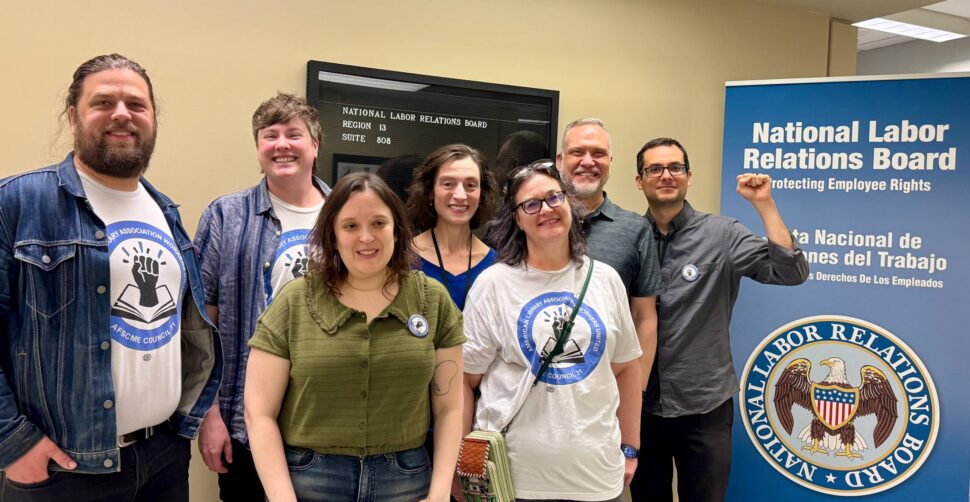
Known as American Library Association Workers United, the union will be part of the American Federation of State, County and Municipal Employees (AFSCME) Council 31, and will represent some 100 ALA workers. American Libraries reports that the final vote count, tallied on May 27, was 77–4.
"The National Labor Relations Board will now certify the union, a process that may take approximately 10 days, allowing workers to begin collective bargaining," the report notes. "The union effort followed months of internal reorganization at ALA, including workforce reductions, voluntary buyouts, and ongoing concerns about the organization’s finances."
In a May 27 statement, ALA Executive Director Dan Montgomery, who joined ALA last November after a long career as a union leader, congratulated employees on establishing their union, and called its establishment "a pivotal moment" for the ALA and "a valuable opportunity to build meaningful collaboration around workplace matters" that impact both ALA staff and membership.
"I look forward to engaging thoughtfully, constructively, and in good faith as we begin the next phase of this process together. I know firsthand that organizing efforts reflect a deep investment in the future of a workplace, and I want to recognize the passion, care, and thoughtfulness that employees brought to these conversations," Montgomery said. "Together, we will continue working to ensure the Association is well-positioned to live up to our mission: to support libraries, library workers, and the communities they serve for years to come.”
Amid Public Outcry, Knox County, Tennessee Reverses Roots Book Ban
 , Knoxville News Sentinel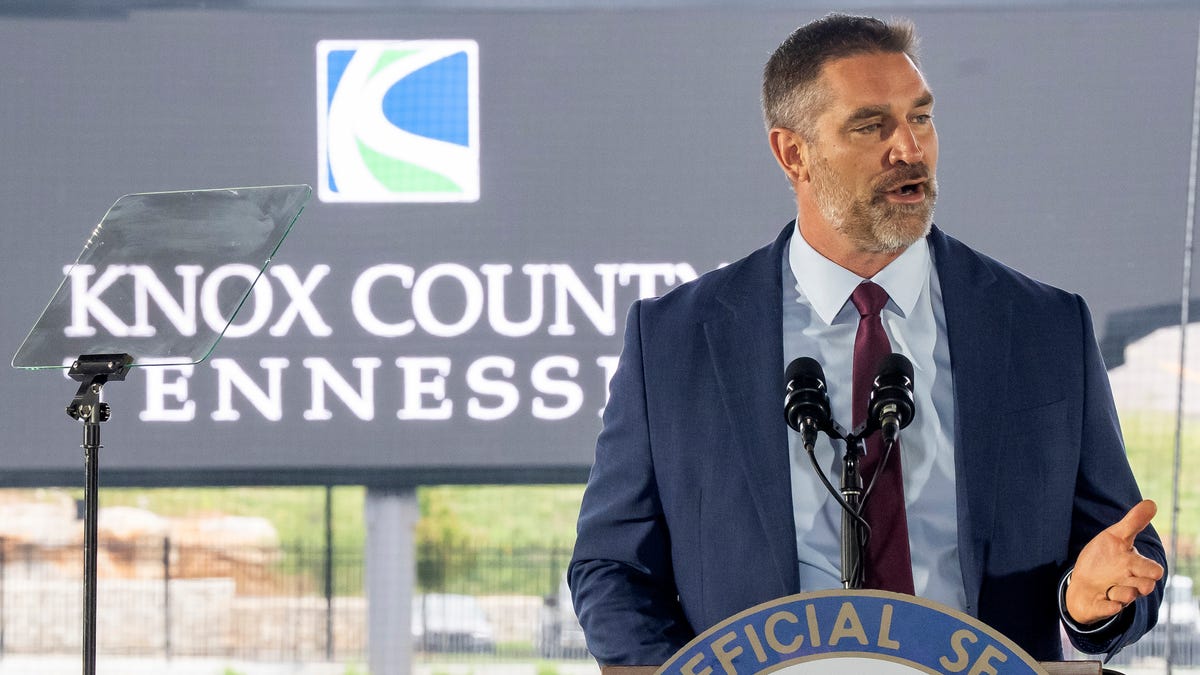
The Knoxville Sentinel reports that Knox County, Tennessee will put Alex Haley’s novel Roots back on the Knox County Schools library shelves, just weeks after a district committee had ordered the book removed following a challenge under the state's Age-Appropriate Materials Act. In a memo, Superintendent Jon Rysewyk said he consulted with “legal experts” who came to “different conclusions regarding the application of the state's Age-Appropriate Materials Act to a passage describing the rape of an enslaved woman.”
The memo, however, provides no clarity on how the state law should be applied or why it was overruled in this case, beyond the fact that the banning of Haley’s award-winning work had drawn widespread (and bipartisan) criticism. “Removing any book from circulation is–and should be–an immense decision. Our intent will always be to err on the side of access, which is the decision I have made with regard to Roots,” Rysewyk said in the memo, although critics have pointed out that a 2024 update to the Tennessee law imposes a broad ban on sexually explicit material that has led to a wide array of books being pulled from libraries across the state.
Major Library Groups Urge Big Five Publishers to Work with Libraries On Fair Digital Licensing Terms


As we reported this week, library ebook legislation picks up support at the state level, five major library groups this week released a joint statement urging the major publishers to come to the table and negotiate fair terms for digital content. "Mutually-beneficial solutions exist," reads the statement, organized and released by the Urban Libraries Council, this week. "It’s time for a new dynamic, based in collaboration and mutual respect, that can build off those shared interests. It’s time to finally address–rather than ignore–this crisis. This helps everyone–libraries, authors, patrons, publishers–thrive. The full statement is here.
Illinois Libraries Continue to Rally for The State's Library Ebook Bill
 Ben Howell and Eric Stock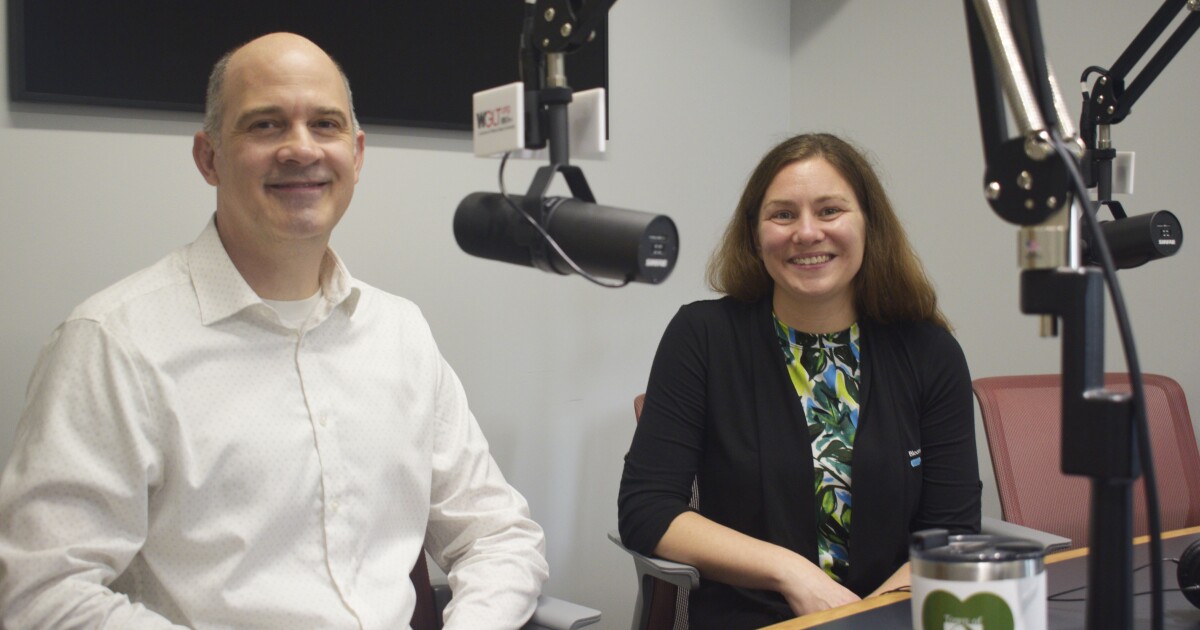
Librarians in Illinois are continuing their campaign in support of the state's library ebook law, H.B. 5236. WGLT this week featured the directors of Bloomington and Normal’s public libraries, who explained how high prices and restrictive terms are leading to long wait times for digital books, and impacting the ability of libraries to create diverse collections.
In the interview, John Fischer of Normal Public Library [NPL] said his library currently spends 42% of its collection budget on digital content, which accounts for 20% circulation. Bloomington Public Library’s Jeanne HamiltonHamilton said her library's stats were similar, with 27% of Bloomington's checkouts going to digital. “Libraries are a public good, right, and we’re providing services to people that maybe can’t afford it or maybe if they are able to get it from the library, they can spend that money on something else, and so e-books are an important part of that as well,” Hamilton said. “Because if we don’t provide e-books, then where are those people going to go that can’t afford it?”
With Its Library Ebook Law Waiting to Take Effect, Connecticut Libraries Grapple with Surging Digital Costs, Demand
 Julia Casola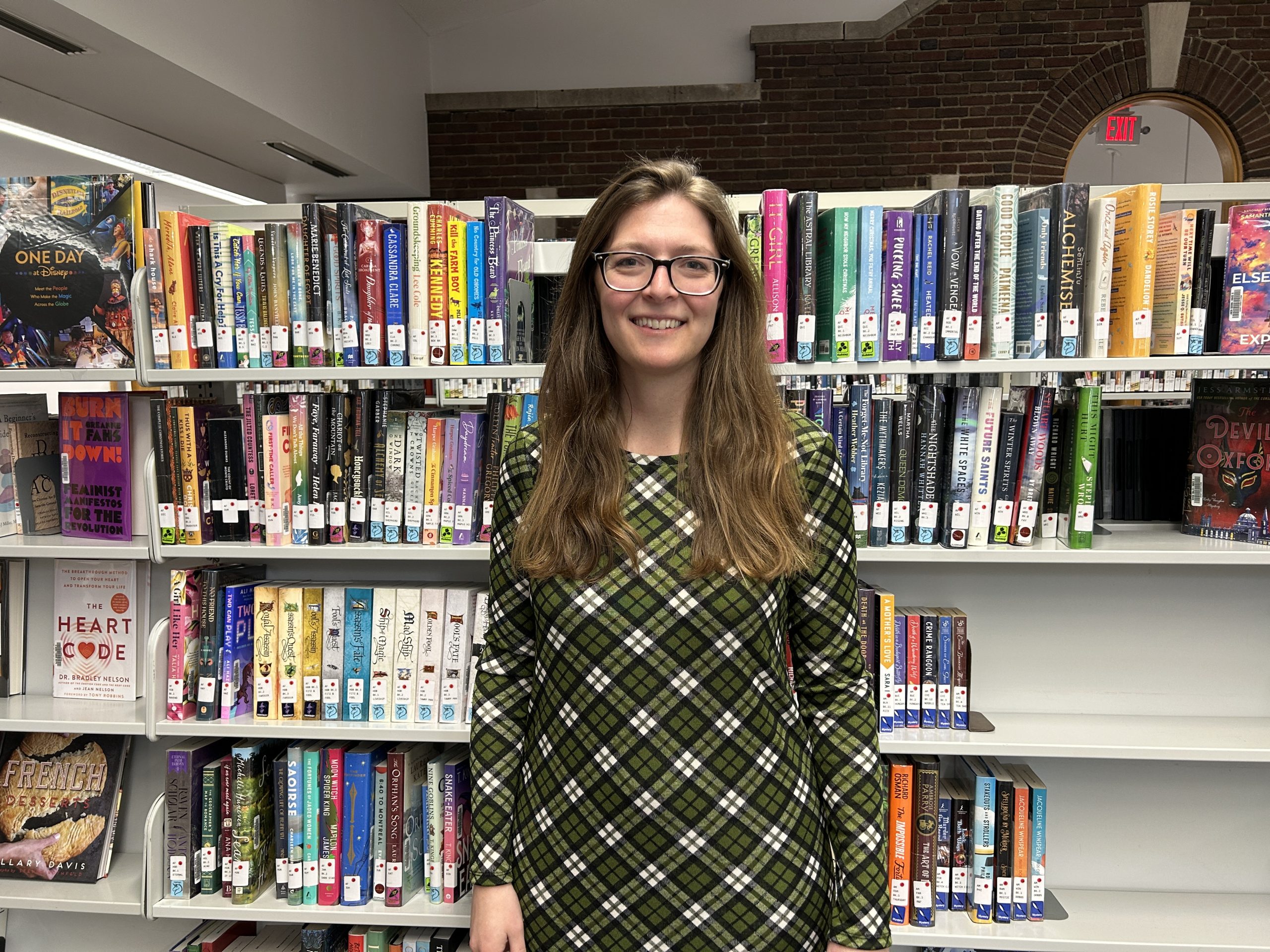
Via the CT Examiner, a well-reported look at the growing financial pressure on Connecticut libraries as demand for e-books and audiobooks from the major publishers continues to surge. "Electronic materials now account for 23% of total library circulation in Connecticut as of fiscal year 2025, up from 10.3% in 2019, according to a state library report. Audio downloads have also increased 19% over the past year and more than 120% since fiscal year 2019," the article notes.
The article comes as five library groups this week urged the major publishers to negotiate fair prices and terms with libraries, which Ellen Paul, executive director of Connecticut Library Consortium, told reporters hasn't happened in Connecticut. "Specifically, there have not been any of the Big Five publishers who have come to the table and said, ‘Let’s talk this through. Let’s come to a solution on our own, rather than going this legislative route.’” Paul added that she fully expects publishers to sue when the law does take effect, but remains "fully confident" the law will withstand any legal challenge."
Rhode Island Library Association Honors Legislators for Their 'Leadership and Advocacy'
 Rob Borkowski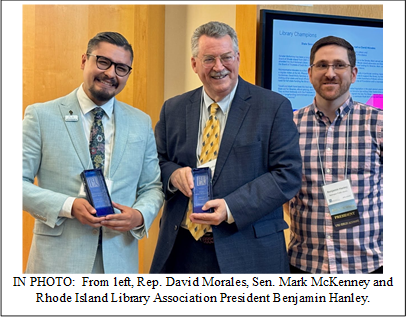
It's important to say thanks. Via the Warwick Post, the legislators who championed Rhode Island's Freedom to Read law in 2025, Senator Mark McKenney and Rep. David Morales, have been honored with The Rhode Island Library Association's Library Champion award.
“Representative Morales and Senator McKenney have been the lead sponsors of some of the most important library related legislation in the past several years, including state aid for libraries, eBook pricing and the Freedom to Read Act, which would not have become law without their leadership and advocacy,” said Cranston Public Library Director Ed Garcia and Community Libraries of Providence Executive Director Cheryl Space in a joint statement.
Five Years Into the Current Surge in Book Bans, Signs that Queer Books and Authors Are Feeling the Effects
Danika Ellis
Kelly Jensen is away this week, but over at Book Riot, Danika Ellis steps in with a chilling report that suggests that after the last five years of right wing attacks on LGBTQ+ books and authors, sales are suffering and new title acquisitions are in decline.
"It’s clear that five years of unrelenting and escalating censorship has brought us to a breaking point. It’s not sustainable for authors, librarians, and teachers to endure years of anti-LGBTQ abuse. It’s becoming harder to get queer books published, harder to sell queer books, and harder to make a living doing it—especially when it comes to queer kidlit and YA," Ellis writes. "I have no doubt that queer writers will continue to find a way to get their stories into the world. What’s needed, though, is reinforcements: new people to step up as queer lit advocates."
Is 'Parenting' to Blame for the Surge in Book Bans?
 Glenn Sonnenberg
Over at Katie Couric Media, columnist Glenn Sonnenberg argues that a shift toward overactive parenting is playing a major role in the current surge in book bans.
"We live in a world where parents increasingly are insinuating themselves into the lives of their children, curating activities and friends, drafting their kids’ college essays, and limiting play they consider too hazardous," he writes. "But in banning books, parents are also preventing their children from learning one of the most important skills for being better consumers of information and better citizens—the ability to think critically."
Sure, but as freedom to read advocates frequently note, parents are free to set the rules around what their own kids read (and other things, too, of course). The problem arises from those parents who seek to dictate what other people's kids can read.
After Budget Cuts Are Restored, New Yorkers Continue to Push for Better Library Funding
 Katie Honan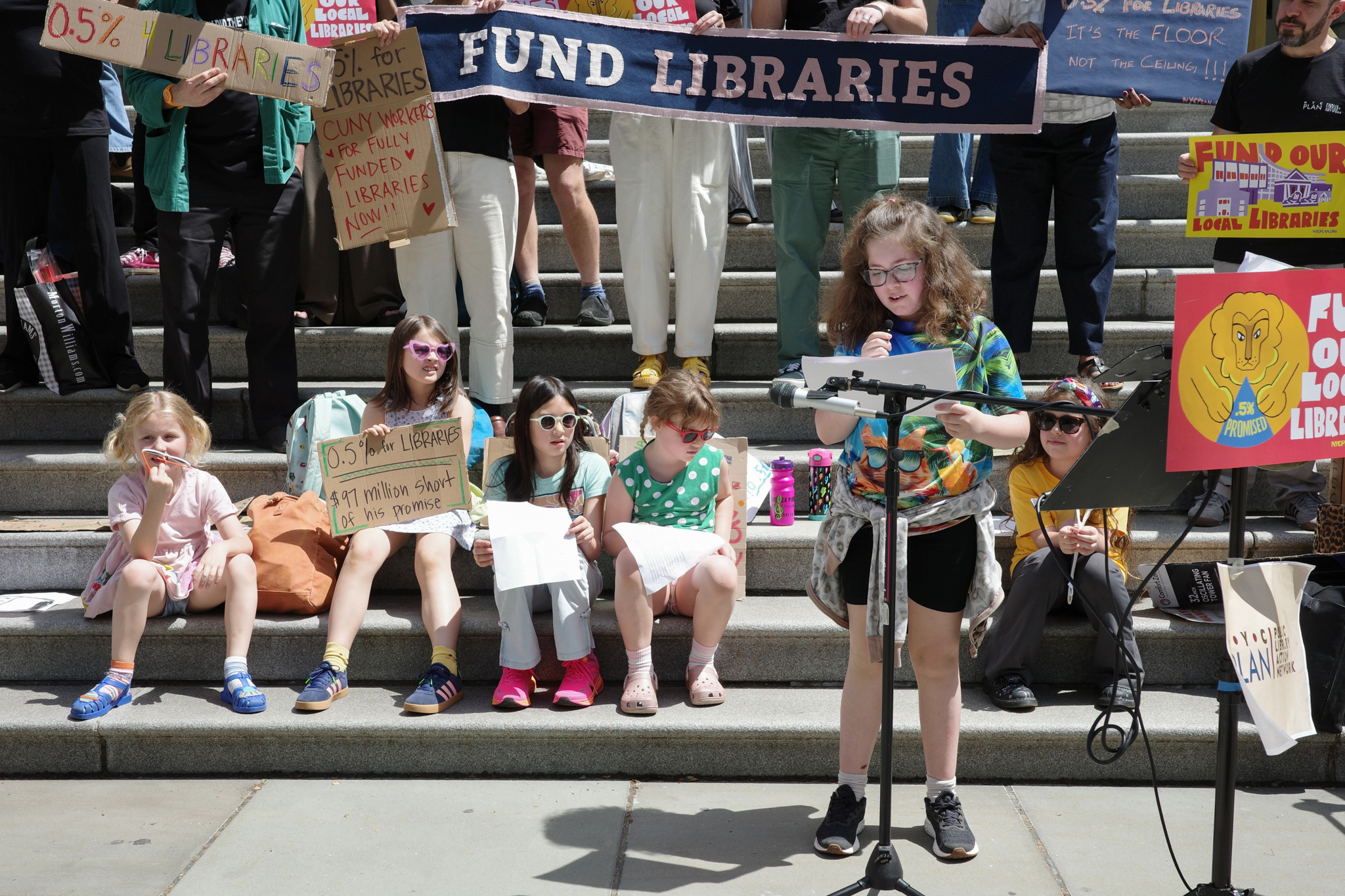
After New York Mayor Zohran Mamdani reversed proposed library funding cuts and added $31.7 million, City Reporter reports that library advocates descended on City Hall this week to remind the mayor that he still has a ways to go to make good on his campaign commitment to dedicate 0.5% of the city's budget to library funding.
"Members of the NYC Public Library Action Network, or NYC PLAN, rallied Tuesday on City Hall’s steps ahead of an executive budget hearing on the libraries. The organization is made up of library workers and others pushing for more money for the Queens, New York, and Brooklyn public library systems," the article notes. At the rally, Anastazia Neely, a member of NYC PLAN said libraries "would receive an additional $97 million with the 0.5% Mamdani promised." In response, the mayor's office said Mamdani "is committed to continuing to work with advocates and the City Council toward a total commitment of 0.5%."
Historic Massachusetts Library Faces Critical Funding Vote
Submitted Content
An update this week on a story we've been following from Massachusetts: The Marblehead Current this week featured a letter from the leaders of the recently renovated Abbot Library, which is facing a drastic budget situation, urging community members to support the library in a potential make-or-break vote set for June 9.
"Without an override, Abbot Public Library will face severe limitations in maintaining core services. The current town-approved 2027 budget will result in a significant reduction in services and operating hours. Residents could lose access to new books and reciprocal borrowing privileges in surrounding towns," the letter reads. "Abbot Public Library also risks losing its state certification—a distinction held by 99% of all towns and municipalities in Massachusetts. Losing certification would cut off access to state funding, interlibrary loans and regional resource networks."
In Arkansas, Patrons Challenge Decision to Put a Deep Cut to Their Library's Funding on the November Ballot
 Andrew Mobley
Via local affiliate KATV, library patrons in Saline County, Arkansas are alleging that the county's Quorum Court decision to put a potential cut to the county library system's budget on the November ballot is illegal, while county officials this week insisted that the measure is proper. "Concerned library patrons point to Amendment 38 of the Arkansas Constitution, which only describes one method to raise or reduce a library tax—whenever 100 or more taxpaying electors file a petition asking for it, a county must put it on the ballot," the report states. "Some library patrons believe the tax measure is politically motivated and simply the newest chapter in a fight between conservative county officials and liberal librarians."
And Finally This Week...


A game seven tomorrow night will determine whether the San Antonio Spurs will face my New York Knicks in the NBA finals next week, but one winner has already emerged: Via local affiliate KENS 5, the San Antonio Public Library's display inspired by Spurs star Victor Wembanyama's voracious reading habits has been, well, a slam dunk.
"The idea for the display grew after online accounts began tracking the books Wemby was seen carrying in public. Library staff then turned those titles into a featured display at the Central Library and also created online reading lists for visitors to explore," the report notes. "At the Central Library, staff said visitors are stopping to snap photos with the display, which highlights books connected to Wembanyama and his reading habits," adding that after a piece appeared in The New York Times, the library has seen increased traffic in the library online and in-person, and, more checkouts."