With a Simple Statement, Have Five Library Organizations Just Called the Publishing Industry’s Bluff on Library Ebooks?
A joint statement released this week by five public library organizations renews calls for the Big Five publishers to negotiate with libraries in the digital library market. Amid surging usage and a spate of library ebook bills, it just might work this time.

Amid a growing legislative movement at the state level, five major library associations on May 27 released a joint statement calling for the nation’s largest publishers to come to the table to negotiate fair pricing and access terms for public libraries in the digital library market.
Citing an “explosion in usage,” the joint statement reiterates the long-held view among librarians that the current dynamic in the digital library market—in which a handful of large publishers are charging high, non-negotiated prices for temporary access to the most popular ebooks and digital audiobooks—is simply not sustainable.


“Publishers, authors, and public libraries should be partners, but with the exponential growth in digital content demand, libraries are unable to provide and sustain access under current licensing models,” said ULC executive director Brooks Rainwater, in a release accompanying the joint statement. “The moment is ripe for large publishers to meet with libraries across North America, to hear our concerns, and address them so we can continue building a mutually beneficial future for literacy and reading.”
The joint statement—signed by ARSL (the Association for Rural and Small Libraries), COSLA (Chief Officers of State Library Agencies), the Canadian Urban Libraries Council, PLA (Public Library Association), and the Urban Libraries Council, makes a simple ask: “It’s time for a new dynamic, based in collaboration and mutual respect, that can build off those shared interests,” the joint statement reads. “It’s time to finally address—rather than ignore—this crisis.”
The latest statement comes after the Urban Libraries Council in April released a statement titled “The E-Book Pricing Crisis” in which it called for two potential "concrete fixes" needed immediately in the library ebook market: the elimination of time-based licenses, and the return of perpetual access, and said libraries "are eager for dialogue to develop mutually beneficial models with publishers."
A Shift in Market Power?
Notably, nothing in the joint statement's ask is new: As Words & Money recently reported, librarians have been trying to get the major publishers to come to the table to negotiate the contours of the digital library market for more than 15 years.
Andrew Richard Albanese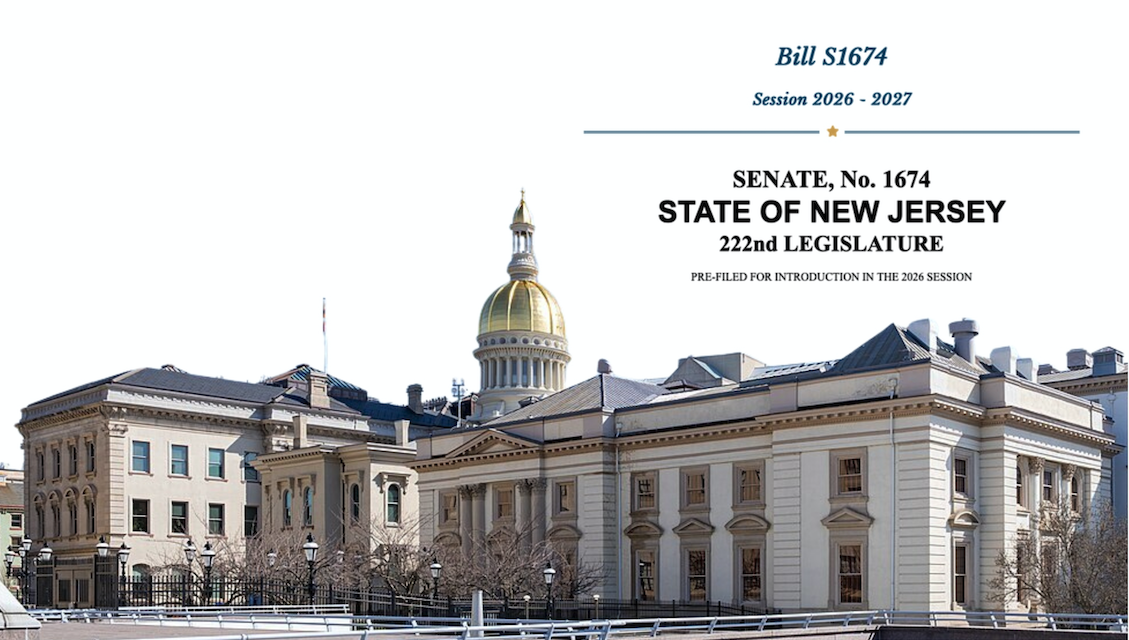
But the release does come at a critical moment, with library ebook legislation advancing in a handful of states and as the issues around digital library access are beginning to gain traction with the public, amid surging usage and frustration over long hold times.
Furthermore, the library associations’ modest ask—that the Big Five publishers treat taxpayer-funded public libraries like valued partners and negotiate sustainable terms—stands in stark contrast to recent efforts by publishing industry lobbyists, who have come out swinging against library ebook legislation with what librarians have described as something of a misinformation campaign.
In a release sent to media outlets after the Illinois House of Representatives unanimously passed the state’s first library ebook law, H.B. 5236, on April 17, a joint statement attributed to the Association of American Publishers and the Authors Guild said the Illinois the bill was “a backdoor attempt to infringe on the rights of authors and creators across creative mediums and limit their ability to earn a living from their craft,” and warned that, if enacted, libraries risked “losing access to digital books entirely.”
Publishing industry lobbyists have also sought to portray the current wave of library ebook legislation (in Illinois and other states—including Connecticut, which passed its library ebook law in 2025) as in violation of federal copyright law, clearly an attempt to tie the current legislation to the 2021 law passed in Maryland that was struck down by a federal court on copyright grounds in early 2022.
Library library leaders tell Words & Money that such claims are patently false, and that the new library ebook bills have been carefully rewritten to avoid the copyright issue that doomed the Maryland bill.
Instead, the new bills would only regulate the terms that libraries—as stewards of public dollars—would be able to accept. As Connecticut Library Consortium executive director Ellen Paul explained to Words & Money, the legislation is not designed to be a panacea, but rather has an overarching goal: to establish negotiation in a marketplace where terms are currently unilaterally dictated by the publishers.
At the very least, tasking its trade association with defeating library ebook legislation suggests that the major publishers remain uninterested in negotiating and are treating the bills as a political problem. But librarians tell Words & Money that with the growth of the marketplace in 2026, they are beginning to see a shift in power.
While it is certainly possible, as the AAP suggests, that libraries could lose access to some of the most popular new content from the Big Five publishers should the major publishers not agree to negotiate under these new bills, librarians are aren’t so sure that will happen. Urban Libraries Council COO Angela Goodrich, told Words & Money that ULC members alone spend upwards of $300 million annually on digital content (which some members believe is a conservative estimate) suggesting a market that would be hard for publishers to walk away from.
“This is not 2018. We're really at a different stage than we were at pre-pandemic,” Goodrich said. “Ebooks and digital audio are no longer new formats. This is now normal. It's normal for libraries, especially the larger libraries. It's normal for the general public. And it's normal for publishers. So, it's time to come to the table and talk about what's working, what's not working, and how can we all do better, because what’s going on today is not sustainable for public libraries. We believe we are in a different moment.”
Goodrich also stressed that, outside of the Big Five, the vast majority of indie publishers and authors are working well with public libraries. “I think there is a lot more competition in the marketplace, and potentially a lot more to come," she says.
And while a solution doesn’t need to be—and shouldn’t have to be—adversarial, state legislation, she agrees, is "obviously putting pressure" on the major publishers.
The bottom line, however, is that things just can’t continue the way they have been going.
“The challenge we face is that many public libraries are spending 50% of their collection budgets on ebooks and audiobooks and it's buying a lot less in terms of access and titles. So as demand goes up, our ability to actually serve the public is going down,” Goodrich says. “Libraries have always been great partners to publishers and authors. So we're hoping that we can work together we can figure out how to create a sustainable solution, because we know there is more growth out there in this marketplace. But in order to get there, we have to have models that work for us, too. We can't continue to spend more money and get less in return. That's just not the way public funding works.”