How to Blow $50 Million on the Nonprofit Literary Arts
Open Letter Books founder and publisher Chad W. Post sees the recently launched Literary Arts Foundation as not only a funding opportunity, but a once-in-a-lifetime chance to rethink how we support serious book culture in the U.S.

Last October, the Literary Arts Fund (LAF) came into existence to do something no other group of funders has ever done: give away $50 million over five years to the nonprofit literary arts—a field of more than 1,200 publishers, magazines, festivals, institutions, and other organizations. Last month, the LAF announced their first round of funding, allocating $7.7 million in “general operating grants” to 40 organizations, ranging from the National Book Foundation to Woodland Pattern bookstore in Milwaukee, Wisconsin.
The announcement sent shockwaves through the nonprofit literary arts field, mostly because of the amount of money awarded. To put this round of funding in context, the National Endowment for the Arts gave out just over $1.5 million to 54 organizations in the “literary arts” in all of 2025.
But the first funding announcement also raised eyebrows because of the LAF’s sort of vague communications. Many of organizations I spoke with on background for this report said they were somewhat dismayed by the LAF’s decision not to provide feedback on why their applications were rejected. Still more questioned why just 40 organizations were selected for awards during a time of such immense need, especially following the targeting of the NEA in May 2025.
No one, however, has questioned the absolute good that such a large amount of money going to the nonprofit literary arts can accomplish. Getting seven foundations (Mellon Foundation, Ford Foundation, Hawthornden Foundation, Lannan Foundation, John D. and Catherine T. MacArthur Foundation, Poetry Foundation, and an anonymous foundation) to agree to support serious literature is nothing short of a miracle for which Jen Benka, Michelle Campagna, Nikay Paredes, and everyone else involved in the LAF deserve a long, standing ovation (or a series of odes written in their names).
Still, one of the major takeaways from the first round of LAF funding is that (as with almost everything in the modern age) more transparency is needed. In speaking with many leaders in the space, the general reaction to the LAF’s first round of funding was gratitude, but also a question: what is the LAF up to?
I reached out to the LAF for this report, and while they weren’t able to address all of my questions (it seems like they are understandably still figuring some things out themselves) they did fill in some details.
But rather than focus on what the LAF is or isn’t doing—it’s still early days, after all—I wanted to look more broadly at how the funding world works in general for literary nonprofits, and some possible ways one could spend such a significant amount of money, if so inclined.
The First Way: Big Money, Few Orgs: ($500,000/year to 20 Organizations for Five Years)
From my experience working for nonprofit literary presses, this is the sort of private foundation funding that I’m used to.
For example, in the early 1990s, the Mellon Foundation provided support to nine select nonprofit literary presses in the form of three significant grants (including Milkweed Editions, which received $50,000 in 1990; $65,000 in 1992, and $325,000 in 1994). The Lila Wallace Reader’s Digest Fund did something similar, also in the mid-1990s, funding around a dozen presses for projects related to “audience development.”
From a practical perspective, it’s way easier to manage a grant like this. Rather than having to weed through hundreds of applications and assess which deserve support, under the “Big Money, Few Orgs” model you just choose your dozen or so grantees, cut their checks, and let them cook.
Stabilizing a modest number of impactful, sustainable nonprofit literary organizations via large, annual gifts puts them in the best position to do what they do best—which is find great books to publish, support translations, and dream up new ways to reach readers—rather than having to spend so much time drumming up funding. And any nonprofit press would be thrilled to have that kind of steady funding—after all, the average nonprofit literary press or magazine receives anywhere from 40% to 60% of its annual revenue in the form of donations and other gifts, which is critical to producing and promoting authors and books that would otherwise not be available.
A side-benefit to this sort of funding scheme is the way it can act like a cheat code for lifting organizations into the public consciousness and transforming them into valuable institutions. Being able to point to publishers like Graywolf Press, Copper Canyon Press, Milkweed Editions, Coffee House Press, or BOA Editions, which have published many award-winning and critically acclaimed titles that have reached millions of readers, “thanks to the support of people like you,” can really help build the argument for funding smaller nonprofits filling different but vital niches.
The downside? funding only a small group of organizations is just that: a small group. And it raises the question: why these few organizations and not others?
Another Way: Little Money, Wide Reach ($25,000/year to 400 Organizations for Five Years)
A lot of the applicants I spoke to who applied for the LAF’s inaugural general operating grants said they view the LAF as a potential replacement for the politically embattled NEA—a new fund that would hand out little chunks of money to tons of organizations. I can’t say for certain where this impression came from—a combination of initial media coverage when the LAF was announced, and probably some projected hopes.
But the number one reaction I heard in response to the initial list of 40 LAF grantees was: “that’s it?”
That’s not surprising. After all, the National Endowment for the Arts awarded almost $37 million to 1,474 organizations in its first round of funding for 2025, so of course the LAF giving $7.7 million in grants to 40 organizations was always going to feel, well, a little anticlimactic.
The main concept behind a model of supporting as many organizations as possible with some level of funding is that every little bit helps. And that’s certainly true. Beyond the obvious benefit of getting a little money, a grant of any size can give an organization credibility that it can take to other funders—proof that it has been vetted by professionals and experts, that it both deserves funding and knows how to handle it.
For decades, this is how the NEA operated, with grants as modest as $10,000, which may not seem like much given the rising costs of publishing, but meaningful if it allows even a handful of authors to reach readers. And, again, the cumulative impact can be gigantic over time: modest grants can often serve as the catalyst that help an organization grow.
But there are also the obvious downsides of this kind of “shallow but broad” funding approach. For one, with the NEA, you have to reapply every year and demonstrate that you are still viable—a logical request, but also burdensome for small organizations that want to spend their limited time and resources on actual publishing.
Worse, it’s hard under this model to get enough money to truly implement your organization’s vision and take the kinds of risks needed to find and publish deserving works. Small grants can help keep an organization alive, but often on life support.
Hybrid: ($200,000 One-Time to 40 Different Organizations Each Year for Five Years)
This is more or less what the LAF is up to. In an email, LAF reps confirmed that the “general operating grants” were awarded in a one-time, single payment, ranging from $40,000 to $500,000, and are “intended for use over multiple years.”
So, the LAF will, theoretically, end up giving an average of $200,000 to around 200 nonprofit arts organizations it identified in its research over its planned five rounds of funding, with grant amounts informed by an organization’s annual operating budget. And while this year’s recipients can apply for “innovation project grants” in the future, they are not eligible for future iterations of the “general operating grant.”
Since this funding is meant to last for five years, I’m going to treat these LAF grants as “multiyear” grants, although I do want to highlight an important point: Receiving $200,000 today is far more valuable in terms of real money than having the same amount doled out in chunks of $40,000 a year for five years. At a return rate of 6%, the five-year future value of $200,000 is around $267,000, so you can see why organizations would want the full amount immediately, rather than broken up over time.
On the other hand, if I was giving out $50 million, I would be wary about handing out such a large amount of money as an upfront, lump sum. Not everyone will have spotless track records when it comes to financial management or paying their artists and vendors, and it raises the chances that at least some part of the $7.7 million handed out in the first round will be wasted—something that could be partially prevented by doing annual check-ins with awardees before cutting their next check.
Nevertheless, if there’s one structural element that funders (agencies, foundations, or individuals) should take away from the LAF as a best practice, it’s this: Straight multiyear grants are ideal for all nonprofits. Cash flow issues are the bane of us all, especially given how sales bunch around the holidays and how distributors like Ingram usually assess expenses the month they occur but pay out revenues quarterly. Smoothing out cash flow concerns allows small nonprofits to pencil some amount of guaranteed funds into future budgets.
Assuming the LAF ends up providing five-year grants to around 200 literary nonprofits by the end of its project, they will have done something historically unique, and arguably the most sustained literary funding outside of the NEA ever. That’s a major accomplishment, and something the industry should applaud.
But how…
At this point, allow me a quick aside. While the first round of LAF funds is something to celebrate, it is also a lens through which to highlight the needs of literary nonprofits, and to call for more funding, distributed differently, to support the presses and other lit orgs left to patiently wait their turn.
Because that’s where we are now. Several organizations I spoke with were disappointed at not receiving funding this time around. And while they are hopeful that they’ll receive something between 2027 and 2030, the question is whether they will be able to hold on that long, given the current economic and political climate.
Not to be the prognosticator of doom, or a Cassandra, but over the next few years, I suspect we’ll see a number of literary nonprofits—especially those currently based at universities—fade away or fold abruptly. My semi-educated, mostly pessimistic viewpoint is based on the drying up of funding and the continued collapse of book sales, as much as 10% of the smaller literary organizations operating today could be forced to cease operations by 2029. If that happens, it would certainly put a damper on the LAF’s “robust literary culture” goal.
Of course, this isn’t the responsibility of the LAF—and no matter who they fund or how, their money is a lifesaver for the field at large. At the same time, however, their approach calls into question the rationale for why one set of organizations should receive money before others, and whether there’s enough research available to soundly determine which organizations should be prioritized.
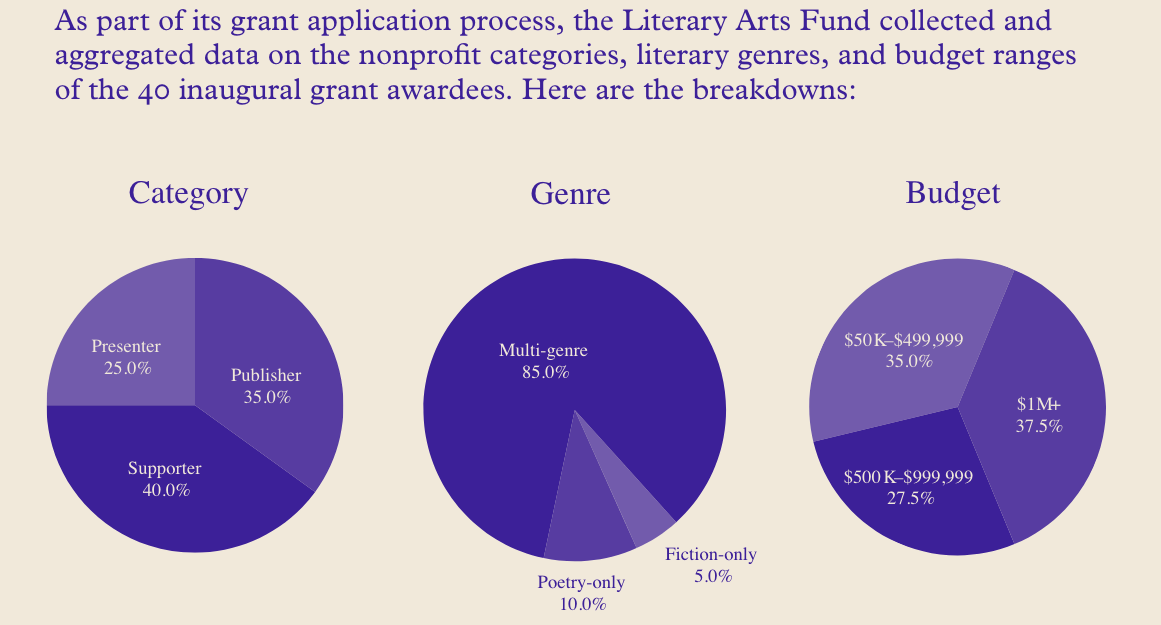
In its press release announcing the first round of grants, it appears the LAF wanted to spread the grants out geographically (recipients are from 19 U.S. states) and in terms of organization size (14 with budgets under $500K, 11 between $500K and $1 million, 15 with budgets over $1 million). Beyond that, we just don’t know how they decided.
I’ll admit there may not be a way to objectively determine the sequencing of grantees to best achieve LAF’s—or any fund’s—stated mission. At the same time, though, it would make sense to focus different grants on different “areas of greatest impact,” to use the LAF’s terminology. Which, in a roundabout way, brings us to the point this article starts to get more speculative.
Don’t Spend the Money—Yet ($50 Million Awarded in 2028–30)
Although the details aren’t public, the LAF must have been in process for years. While it’s launch has been cast as a reaction to the current threats facing the NEA and arts funding more broadly, anyone in the literary nonprofit world knows there’s not a funder in the country that could move that quickly.
No shade here—I’m sure that all decisions were implemented in good faith, with the desire to do as much good as possible for the literary arts with this previously unheard of amount of money. But the LAF wasn’t launched in a bubble, and the LAF surely spent significant time doing research, debating strategies, and working out what criteria and grants would satisfy all the voices in the room.
That said, things do change, fast. The nonprofit scene in 2026 is not what it was in 2023—concerns that were of utmost importance a few years ago have been supplanted by new crises. For much of the publishing world issues like how much paper or shipping costs is beyond our control, and what you need money for today may not match what you need money for nine months later when a grant arrives.
This is why the LAF’s “general operating” grants are so wonderful. The NEA could only fund projects—carve outs of an organization’s activities, with specific categories of what the grant money can and can’t be used for. “General operating” lets you do you, which is the ideal form of funding—and one that should, in part, help address the current, ever-evolving slate of crises.
Nevertheless, let me get back to the thought experiment that kicked this article off: if you had $50 million to give away, what’s the strategy?
Here’s an idea: announce the program, engage with community to identify inflection points, and make even more targeted gifts. The more information sessions, the more opportunities for discussion, and the more exchanges of ideas and schemes, the healthier the literary arts field will be. And there’s no greater motivator for getting organizations to open up and collaborate than the promise of substantial funding to solve their most intractable—and often unpredictable—problems.
For example: In terms of literary presses and magazines, funding a distributor that would have an explicit focus on promoting nonprofit presses, is probably more valuable to the long-term health of the field than a $200,000 grant to crank out ten new books that fall into oblivion almost immediately due to a lack of sales and marketing support.
So, if I had $50 million to give away, I might consider keeping the bulk of the money back and then giving out substantial grants to new initiatives developed through a couple years of seminars and conversations with experts in the field.
Maybe We Give It All Away Right Away? Or, Maybe Not…
But then again, I'd also feel drawn to the idea of blowing it all at once. You’ve probably noticed that the world is pretty messed up in 2026. So, it’s fair to ask: what’s the point of waiting? If I had $50 million to spend on supporting serious book culture, I just might consider giving it all away immediately to as many organizations as possible. I might even require them to spend it all within six months.
The fact is, we’ve never seen what a mass infusion on this scale might do. To suddenly inject $50 million into the literary arts field could have unforeseen positive outcomes. For sure it would be much easier for organizations to collaborate when they each have $50K to work with. It could quickly get some presses out of debt (not a terrible way for some of the LAF 40 to blow the entirety of their first grant, given some of the 990 tax filings I’ve reviewed). And it might offer the opportunity for some pie-in-the-sky, swing-for-the-fences ideas that a lot of organizations have in their back pocket but will otherwise never have the funds to put in motion.
Or, maybe we go the other way. Perhaps the best pathway to impacting the nonprofit literary arts is to use the money as an incentive?
On the day I started writing this article, Elon Musk became a trillionaire with the SpaceX IPO. Penguin Random House made more than $800 million in profits last year, or more than 16 times the total of the Literary Arts Fund. The Ford Foundation alone gave out more than $1 billion in charitable disbursements in 2024.
The point I’m making: $50 million dollars is a ton of money within the nonprofit world, but it isn’t remotely adequate to address the issues and challenges nonprofit literary orgs face. But is it possible to use this $50 million as a starting point to seed something like a Literary Trust that could be self-sustaining and capable of giving $50 million every year?
Maybe this idea buys you access to a meeting where one of our newly minted billionaires will actually think about humanity and write a check that just might change the face of the literary arts forever.
Thank You, LAF, But…
I want to be clear that the LAF is a tremendous endeavor, and I hope it is the beginning of a new age of funding (and funders) for the nonprofit literary arts. But I also need to spend a minute on how the LAF is currently set up to operate.
“There are 1000-plus independent, incorporated literary arts nonprofits. Many hundreds more literary arts groups and publishers are not incorporated, use fiscal agents, or are housed at universities,” according to an April 2026 LAF information session. The LAF then goes on to subdivide this number into 267 literary arts nonprofits with revenues of more than $50,000, of which are 47 are book publishers and 35 are magazines.
But there are in fact far, far more nonprofit presses operating in this country than stated above. Rather, what the LAF seems to be focused on by quoting this research are literary arts organizations they’ve deemed eligible for funding—not the literary arts field as a whole.
For example, among those NOT eligible for LAF funding: “dramatic arts” nonprofits, “storytelling” nonprofits; initiatives and projects (including publishers) that are fiscally sponsored by a college or university; nonprofits whose “primary mission is to present, publish, or support” young writers; and “trade and service organizations whose mission is focused primarily on serving other nonprofits.”
If I may be frank, these eligibility requirements reinforce many of the market and funding structures that already work against more than 40% of the nonprofit arts field. Why?
As the founder and publisher of Open Letter Books, a nonprofit publishing house exclusively dedicated to publishing literature in translation and currently based at the University of Rochester, the “no university” requirement stings. Open Letter is grossly underfunded, and no longer receives material support for its publications from the University of Rochester, which is experiencing its own financial tensions, as are many higher education institutions these days.
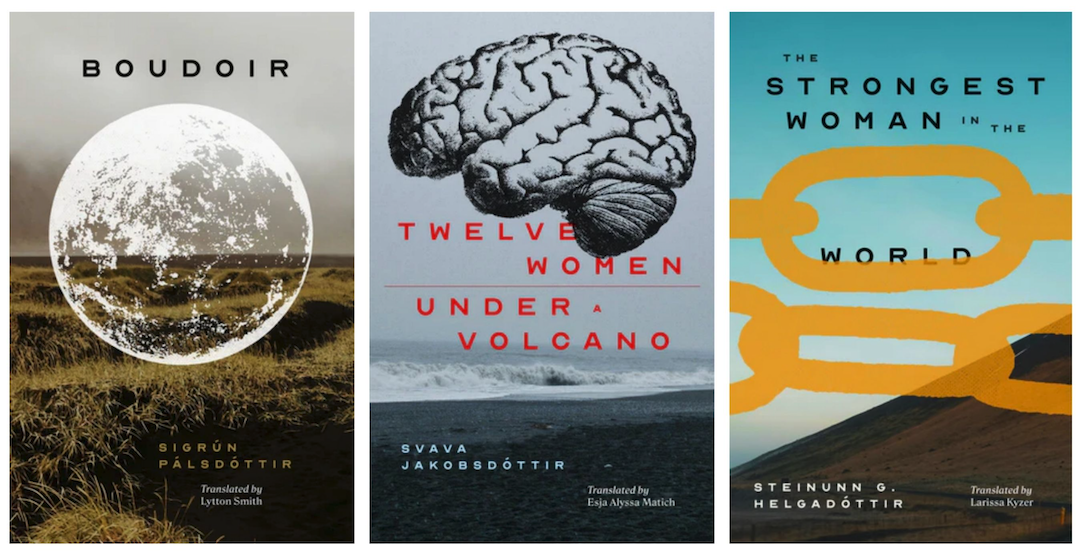
And if I may forego modesty for a moment, Open Letter Books has provided incalculable good for the literary world over its history: more than 190 publications; the creation of the Translation Database for use in research by the field; the success of the Best Translated Book Award, which set the scene for the return of the National Book Award for Translated Literature and the National Book Critics Circle Gregg Barrios Book in Translation Prize; and various translation and nonprofit-oriented podcasts and web initiatives promoting books from a wide range of presses.
So, I’ll close with an honest, good-faith question to the LAF as they undertake their important work: Are you really doing as much good as you could be if you’re excluding around half of the organizations and programs that make up the nonprofit arts field from even applying?
Ultimately, the LAF is free to give their money to whomever they wish, of course. But beyond the grants themselves, the LAF is a once-in-a-lifetime chance to deeply consider how we can better support literary culture—a conversation I hope to advance with this article. Because, with great respect to the LAF staff and funders, if this historic, potentially transformative initiative is to truly succeed, it must be about more than $50 million.
Chad W. Post is publisher of the nonprofit literary translation press, Open Letter Books, and an expert on literary translation.