The Queue: Library News for the Week Ending April 3, 2026
Among the week's headlines: supporters stand with fired Tennessee librarian Luanne James; the Urban Libraries Council proposes two fixes for the library ebook market; Idaho enacts a new law to give politicians control over library leaders; and two reports on how AI is supercharging book bans.

Tennessee Librarian Fired for Standing Up for the Freedom to Read
Some great local reporting from Nashville Scene captured the drama as the Rutherford County (Tennessee) Library Board on March 30 voted 8-3 to fire library director Luanne James, after James refused to relocate some 132 children’s books, many of them with LGBTQ+ characters or themes, to the adult section of the library as ordered by the board.
 Hamilton Matthew Masters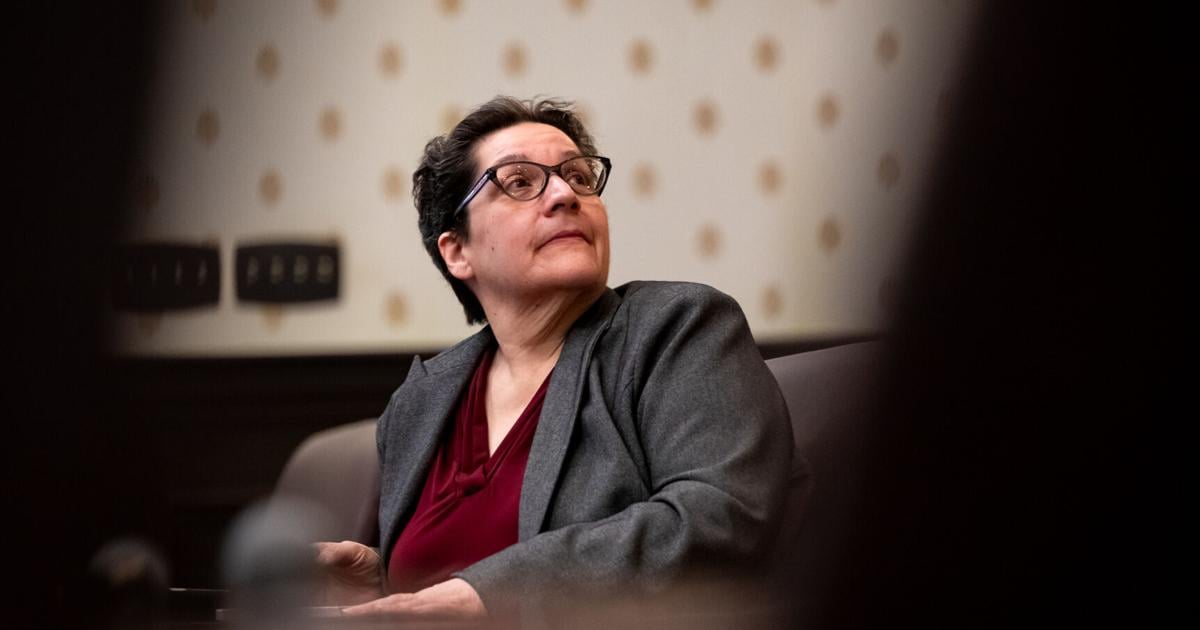
"The dramatic special-called meeting saw hundreds of demonstrators—both for and against the removal of books, and for and against James’ employment—fill the Rutherford County Commission chambers," the report stated. "James sat alone throughout the meeting and spoke only once, saying, 'All I’m going to say is that I stand by my decision. I will not change my mind.'"
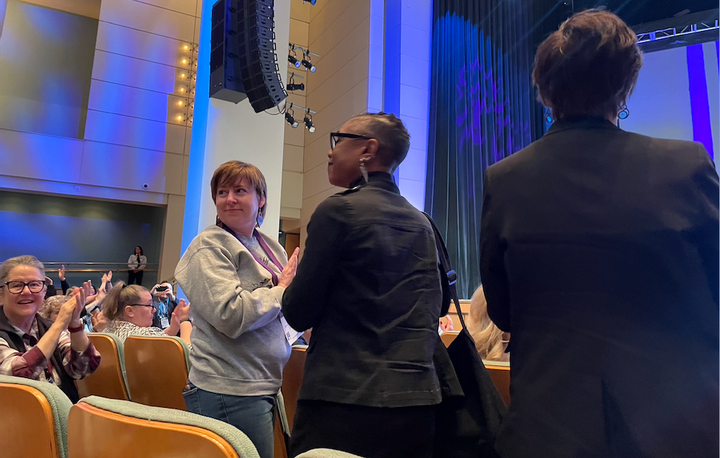
Following the vote, James was escorted out of the commission chambers by Rutherford County Sheriff’s Office deputies, the Scene reports, "as the room exploded in shouts of 'Shame!' and chants of 'We stand with Luanne!' by free speech advocates."
James's firing comes after Secretary of State Tre Hargett last fall ordered all of the state's libraries to review their collections' “age-appropriateness” and for compliance with a controversial Trump executive order on gender identity.
But in a March 18 email to the board, James said she would not move a selection of titles as ordered by the board following the review. "My duty to protect public access is not merely a personal opinion," she wrote. "As an arm of the county government, the Board cannot legally limit the public’s access to materials owned by the people based on the content of the ideas expressed within them."
James's firing almost certainly creates more problems for the board—and likely some serious legal bills. In a statement issued by her attorney, James suggested she may sue.
"I believe my firing is unlawful, an act of viewpoint discrimination," James said, through her lawyer. "I’m exploring all legal options to challenge this retaliatory termination. It’s my understanding the board’s action tonight is unlawful. I hope my actions encourage others to stand against the targeting of our public institutions."
Meanwhile, the pressing question now is who will replace James, and what that next appointment means for the freedom to read in Rutherford County. As the Scene reports, prior to firing James, the board also voted to hire an attorney described on his firm’s website as offering "legal guidance from a Biblically-informed perspective."
Supporters Launch Fundraiser For Fired Tennessee Librarian Luanne James
 , The Tennessean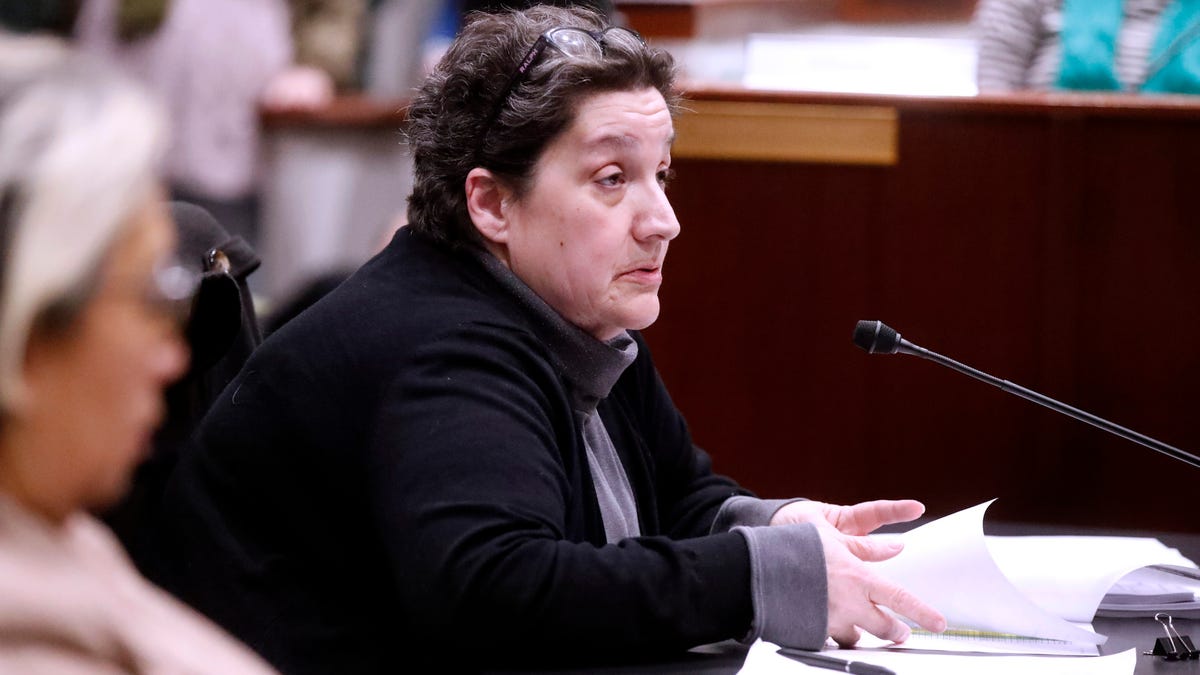
The Tennessean reports that supporters of fired library director Luanne James have donated more than $82,000 so far after she was fired this week for refusing to relocate books as ordered by her board. "Luanne has dedicated nearly her entire adult life to public libraries, working tirelessly to expand free access to information, technology, and essential services for library patrons and local communities," reads a statement on the GoFundMe page, adding that all of the funds raised will go directly toward supporting James's family. If interested, you can donate here.
New Idaho Law Gives Politicians More Power Over Library Leadership
 Rose Evans Idaho Statesman (Boise)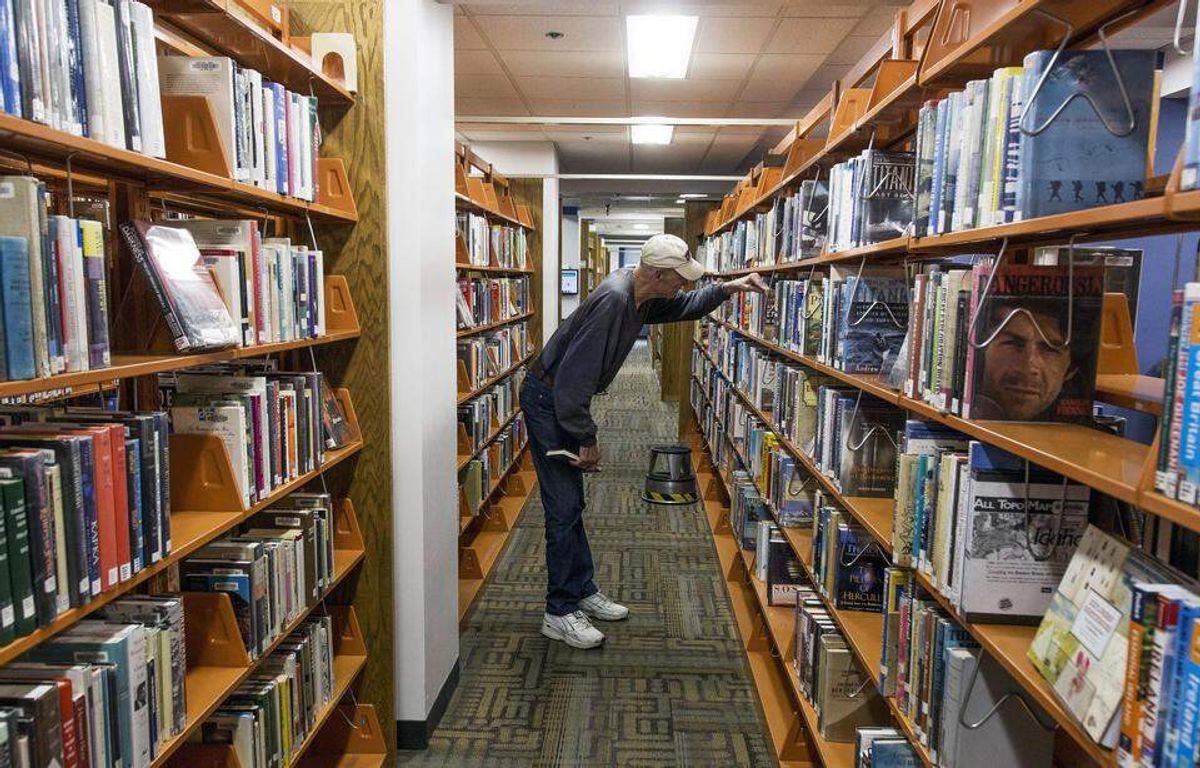
The Moscow-Pullman Daily News reports that Idaho Governor Brad Little has signed a new law that gives city councils the final word over the hiring and firing of library directors in 55 libraries across the state, authority that was previously held "exclusively by library boards.” The bill passed despite significant concern from librarians who said the measure will expose library directors to “political overreach” and give officials with little library knowledge an outsized role in library administration. “Heather Stout, a Latah County resident who said she had ‘worked in libraries for years,’ testified at a hearing that the bill ‘completely changes’ the role of the director,” the report notes, and called the measure "yet another attempt to bypass local control."
Idaho Senate Passes Bill to Amend Controversial 2024 'Harmful to Minors' Law
Meanwhile, also in Idaho, the Idaho Capital Sun reports that the state senate this week passed a bill to clarify terms in its controversial 2024 “harmful to minors” law, House Bill 710, which looks to bar public libraries in the state from making allegedly inappropriate materials available to minors. The law has since led to two separate legal challenges, and a finding by an appeals court that H.B. 710’s “context clause,” the portion of the law that purports to define what materials are inappropriate, is in fact overbroad and unconstitutional.
Among the bill’s changes, it would clarify that the law “doesn’t restrict materials that, when considered as a whole, have serious literary, artistic, political or scientific value for minors aged 13 to 17,” the report notes. “The bill requires materials considered harmful to be moved to an ‘adults-only’ section of libraries, and it allows people to bring private lawsuits if materials aren’t moved after a request has been made to do so.”
ReadersFirst Releases Latest Data on Library Ebook, Digital Audio Prices
 RF PPV and ULC Ebook Pricing Crisis
ReadersFirst this week released updated data for its Publisher Price Watch feature. "Some good news here: ebook prices from three of the Big Five have remained steady, while PRH has generally held the line on audio," writes Michael Blackwell. Compiled by Carmi Parker, a librarian with the Whatcom County Library System in Washington State, the latest numbers show that, excluding HarperCollins, whose prices have risen significantly (though they still remain well below the other Big Five publishers), library prices from the major publishers are essentially flat over the last four years. However, "the cost of a library ebook as a multiple of both the cost of a print book and a Kindle book continues to creep up," the report notes.
Urban Libraries Council: Publishers Should End Time-Metered Licenses for Library Ebooks and Audio; Restore Perpetual Access
 Andrew Richard Albanese
The Urban Libraries Council (ULC) has released a statement titled “The E-Book Pricing Crisis” in which it calls for two potential "concrete fixes" needed immediately in the library ebook market: the elimination of time-based licenses, and the return of perpetual access. "Libraries are eager for dialogue to develop mutually beneficial models with publishers," the statement reads. The ULC's proposal comes as a legislative movement is underway across several states to address issues in the digital library market, as we reported last week here at Words & Money.
The document notes that "time-metered e-book licenses (e.g. 1- 2 year licenses) are rarely a responsible use of taxpayer funds." And perpetual licenses are about libraries "maintaining their ability to build and sustain a collection after initial demand has waned," the ULC explains, noting that all the Big Five publishers once offered them (and several continue to provide perpetual access to audiobooks) while many indies offer perpetual access licenses now.
In Key Next Step, ALA Staff Seeks Voluntary Recognition for Their New Union

Last month, ALA leadership reacted positively to news that ALA staff had voted to form a union, with ALA Executive Director Dan Montgomery, a former union leader prior to joining ALA, saying that ALA respects their employees' right to organize and would engage in this process "thoughtfully and in good faith." Now ALA staff are hopeful the organization will back up those words with action, as the union has officially asked ALA management to voluntarily recognize their union (ALA Workers United, as part of AFSCME Council 31).
"Voluntary recognition is an established process that allows workers to freely exercise their right to choose union representation without the unnecessary duplication and delay of an election," ALA union leaders explained in a statement. “This is an opportunity to begin building a foundation of mutual respect and trust between our union and ALA’s leadership.” ALA employees have also filed a petition with the National Labor Relations Board, and if ALA management declines voluntary recognition, the petition will trigger an election in the coming weeks.
In a Legislative Twist, Anti-Library Bills Resurface in Iowa
 Teodora Mitov
Sources tell Words & Money that several library bills in Iowa that failed to advance out of committee have resurfaced as amendments to unrelated legislation, including a bill that would open libraries up to legal liability for making allegedly inappropriate material available to minors in public libraries. According to local affiliate WHO13, a bill that would have allowed civil lawsuits against libraries and librarians has now been attached as an amendment to a bill seeking to eliminate a city’s ability to create a city board of health or health department.
ALA president Sam Helmick (a past-president of the Iowa Library Association) criticized the measure, as well as the legislature's bid to attach it to a bill unrelated to libraries. "There seems to be a vocal minority that is confusing what they find offensive to what they find obscene," Helmick told reporters. "Obscene materials don’t exist in libraries, so if we open up the pathway to sue local communities because somebody finds something offensive, we’ve pretty much completely eradicated the idea of intellectual freedom.”
In Canada, Alberta Introduces Bill Targeting 'Sexually Explicit' Books in Public Libraries
 News Staff
CityNews Calgary reports that the Alberta government has introduced legislation to keep "sexually graphic" books away from kids at public libraries. "Municipal Affairs Minister Dan Williams, at a news conference, stressed they will not ban books," the report notes, although his later comments belied that position. "We will require that they are put behind a counter in a place that children cannot find them." Or, anyone else, apparently. In response, opposition leader Naheed Nenshi savaged the bill. "This is insanity, and it’s taking away the ability of people to make their own decisions," Nenshi told reporters. "This government doesn’t believe in human rights, it believes in dictating what people read, what people see, what people think."
Gaming Out Freedom to Read Challenges
 Kelly Jensen
Over at Book Riot, Kelly Jensen turns over her weekly censorship news column to a special guest, Siena Oristaglio, MLIS student at Indiana University, who writes about an interactive "freedom to read" program created by Library Futures called Imagine IF, designed to offer a "lighthearted environment" in which librarians can "mentally prepare" for some of the challenges they may face in the current, politically-motivated book banning environment. "Although the game playfully encourages players to 'choose chaos,' the goal for each scenario is to de-escalate the interaction, practice patron interaction skills, and build relationships with community members in the process," the post states. "The game aims to help librarians strike a balance between ensuring patrons that they are being heard while also protecting intellectual freedom principles."
Massachusetts Library Facing Severe Cuts, But Will Stay Open
 Leigh Blander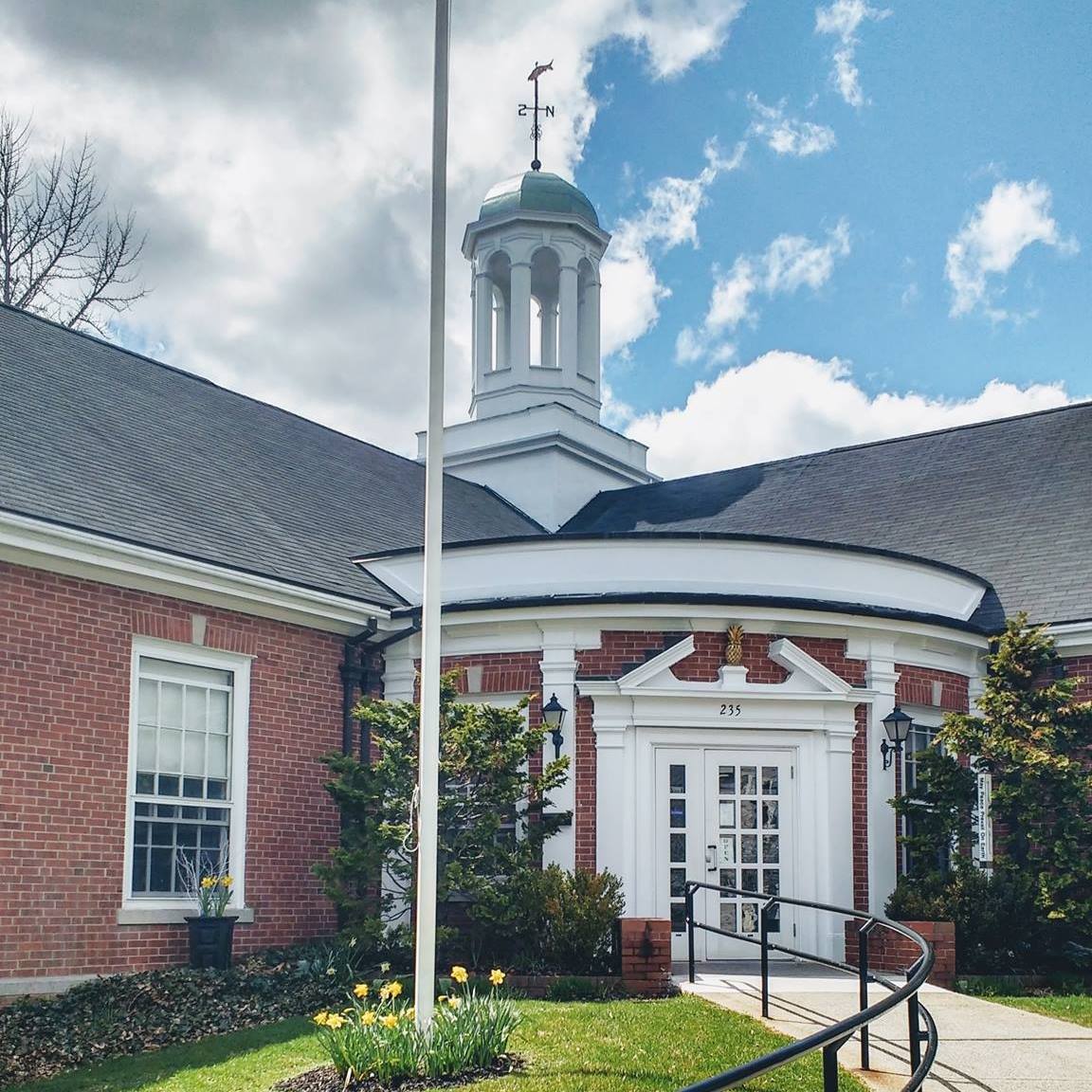
The good news is that it appears the Abbot Public Library in Marblehead, Massachusetts isn’t going to close. But according to the Marblehead Current, the library will only be open three days a week under a FY 2027 budget plan that would cut a massive $700,000 from the library’s spending plan. Furthermore, the plan will mean “significant” programming and youth service reductions, and no budget for new books and materials. The follow-up comes after the Marblehead Current reported last month that the Abbot Library—which was newly renovated in 2024 and is approaching its 150th anniversary in 2027—could be forced to close its doors by the end of the year in the wake of a projected $7.7 million budget deficit.
More Reports on How AI is Supercharing Book Bans
 Naaz Modan
K-12 Dive has a good report on how AI is being used to facilitate book bans in Texas in the wake of S.B. 13, the state's recently enacted law governing school library collections. "In New Braunfels, the district has so far removed, restricted, or aged-up around 1,500 books from its school libraries," the report notes, adding that "the district has reviewed or will review over 3,000 books using AI."
 Claire Woodcock
And over at 404 Media, Claire Woodcock reports that conservative advocacy groups "have been experimenting with using commercially available artificial intelligence tools" to help them target more books they believe to be inappropriate for removal. “One such experiment indicates a desire to accelerate content production of book reviews for conservative book-rating sites. BLOCKADE, which stands for “Blocking Lustful Overzealous Content, Keeping Away Depravity and Extremism,” relies on xAI or OpenAI API keys to generate book reports from PDF/ePUB files,” the report states. “The program’s script includes a list of roughly 300 words, each assigned a severity score that contributes to an overall appropriateness score based on their own metrics.”
ALA Bestows Its Highest Honor on Acting Librarian of Congress Robert Newlen, Barbara J. Ford


The American Library Association is set to confer an honorary lifetime memberships upon Acting Librarian of Congress Robert R. Newlen, and former ALA president Barbara J. Ford. Honorary membership is the highest honor given by the Association, and is conferred upon "a living person whose outstanding contributions have made a lasting impact on librarianship, libraries, and the communities they serve."
“Robert has spent more than four decades living the values of our profession—service, stewardship, and a firm belief that libraries open doors for everyone,” said ALA President Sam Helmick, and Ford "exemplifies the best of librarianship—visionary leadership, steadfast service, and a deep belief that libraries strengthen communities everywhere.” ALA is slated to officially confer the honorary memberships upon Newlen and Fordthis June during the ALA Annual Conference & Exhibition in Chicago.
And Finally This Week...
 , The Columbus Dispatch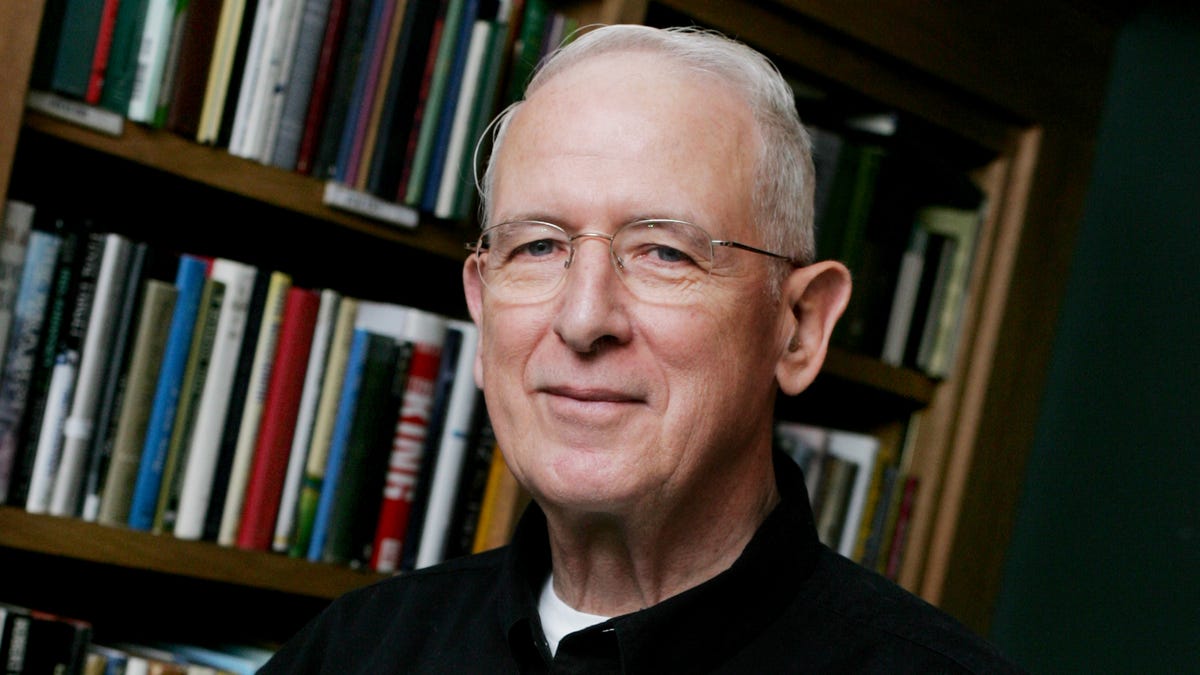
You may recall that the Columbus Metropolitan Library’s short video tribute to one of its most devoted patrons recently took the internet by storm. Now, the Columbus Dispatch reports, the video, What Dan Read, has been nominated for a Webby Award.
“Dan Pelzer was a Columbus father whose lifelong habit of writing down every book he read became a viral tribute after his death. Pelzer died July 1, 2025, at age 92, leaving behind a 109-page handwritten log of 3,599 books dating back to 1962, when he began with The Blue Nile by Alan Moorehead,” the article notes. “The library's ‘What Dan Read’ campaign celebrated Pelzer’s 60-plus years of reading, nearly all of it through Columbus libraries, and has since inspired millions while encouraging people to reconnect with public libraries and the joy of reading. The library has also created its own searchable version of Pelzer's list, making more than 2,000 titles available for readers to explore and borrow from, a fitting continuation of the public library love that defined so much of his life.”