Rhode Island Passes Its Library Ebook Bill
With the passage, librarians say there is now a palpable sense of momentum building for action in the library ebook marketplace, with Rhode Island the third library ebook bill to pass into law since 2025.

In another legislative victory for the library community, Rhode Island's library ebook bill, H7606/S2525, cruised through a final vote this week, and is now headed to Rhode Island governor Dan McKee’s desk.
Despite a last-ditch lobbying effort to sink the bill—including a Providence Journal op-ed by bestselling author James Patterson, and a portable billboard parked outside the legislature, the measure passed unanimously in the house, 69 to 0 and by a 37 to 1 margin in the Senate.
With the passage, librarians say there is now a palpable sense of momentum building for action in the library ebook marketplace, with Rhode Island the third library ebook bill to pass since 2025, following Connecticut’s law last year and Washington D.C.’s law that was signed by Mayor Muriel Bowser in June 4. Two more bills are expected to be taken up again the fall—in Illinois, where the state’s closely-watched library ebook bill—H.B. 5236 in Illinois—passed the House in April by a 99-0 vote, and a bill in New Jersey.
For now, however, like the laws in Connecticut and D.C., Rhode Island’s victory won’t have an immediate direct impact. The Rhode Island bill also contains a so-called “trigger clause” and won’t take effect until four states or municipalities with a total population of 10 million has passed similar legislation. In D.C., the bar is slightly higher—10 states with an aggregate population of at least 50 million people.
Negotiation?
 Andrew Richard Albanese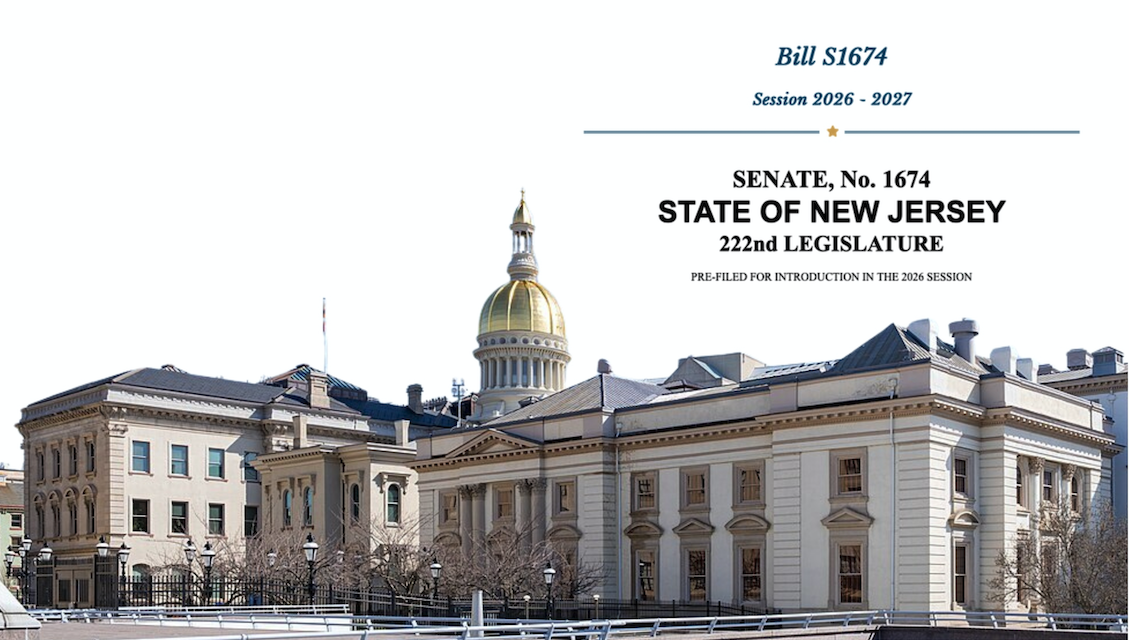
“This is something that we've been working on for about six years,” Ed Garcia, Director of the Cranston Public Library, told Words & Money. Garcia said the bill is not expected to vetoed by Governor Dan McKee, and pointed to the nearly unanimous vote in the legislature.
“Every Republican that was present in both chambers voted for these bills yesterday, and that doesn't happen too often in Rhode Island," he said. "But they all understood the underlying issue was about being good stewards of public money. In fact, the Republican the House Minority Leader, Michael Chippendale spoke on the floor in favor of the bill, and called it a great bill.”
In seeking to defeat the bill, Garcia told Words & Money that publishing industry lobbyists had relied on an outdated strategy of linking Rhode Island’s bill to a 2021 Maryland law that was struck down for conflicting with federal copyright law—despite the Rhode Island bill being completely different—a strategy that finally hit the wall.
“That had been successful in previous years. The bill never got of committee because legislators were afraid of getting sued. Every time the bill came up, they heard, ‘Maryland.’ And legislators have so much to do that that they didn't want to deal with that and they listened,” Garcia said. “And then, this year, they didn't. I think legislators were actually frustrated by the fact that they’ve asked for multiple years that the publishers work with us on a solution, or they’d pass a bill. And the publishers chose to not come to the table.”
Garcia—who recently completed a three year term as Chair of the American Library Association's (ALA) Committee on Legislation (COL), and worked closely with the publishing and author communities in passing Rhode Island’s gold-standard freedom-to-read law last year in 2025, also praised the work of assistant library director Julie Holden, who he said led on the ebook legislation.
The best outcome now, Garcia said, would now be for the major publishers to finally negotiate with libraries on fair prices and terms for digital content. “I don't think we or any of the states wanted to go this route,” Garcia said. “We honestly hope that this will at some point finally force the big publishers to come the table.”
But Garcia also agreed that with budgets under stress and digital demand surging, the issue has reached a tipping point for libraries, who have long complained that the prices and restrictions demanded by the major publishers are no sustainable. and that, if the major publishers do decide to pull back from the digital library market, as has been threatened, libraries would find a way forward.
“I think if that were to happen, and we no longer had access to some of these ebooks, we would we would have a ready-made PR campaign that would really be effective," Garcia said. "We aren’t going to spend less money. We just want to be able buy and collect more authors. More new authors, more local authors, more mid-list authors. And if it means educating the public about why we may not have these big bestsellers anymore, we will do that. But we can also say, look, we now have all these other books from these great writers. So, if that’s what has to happen, that's unfortunate. But, yes, I am ready to have that battle.”