The Queue: Library News for the Week Ending July 31, 2026
Among the headlines this week: the Ebook Study Group responds to a former ALA official's take on library ebook laws; Missouri lawmakers threaten a public library over an LGBTQ+ reading; Author Hugh Howey's take on writing in the age of AI; and R. David Lankes on the future of information science.

Library Ebook Advocates Respond to Former ALA Official's Policy Paper: 'We are not firefighting anymore'
At Library Journal, the ebook study group this week offers a response to the 9,000-word "policy paper," published in LJ last month by former ALA public policy leader Alan Inouye (which was underwritten by Big Five publisher Penguin Random House).
In an editorial titled Moving Beyond the Publisher Playbook: Why State-level Contract Law Is Essential to the Future of Digital Library Rights, the authors (Kyle K. Courtney, Juliya Ziskina, Heather Joseph, Meikle Hall, Tucky Taylor, and John Chrastka) push back on Inouye's "pivot" from once leading the library community's push for a fairer digital marketplace—which included support for state library ebook legislation—to warning against such laws.
 Andrew Richard Albanese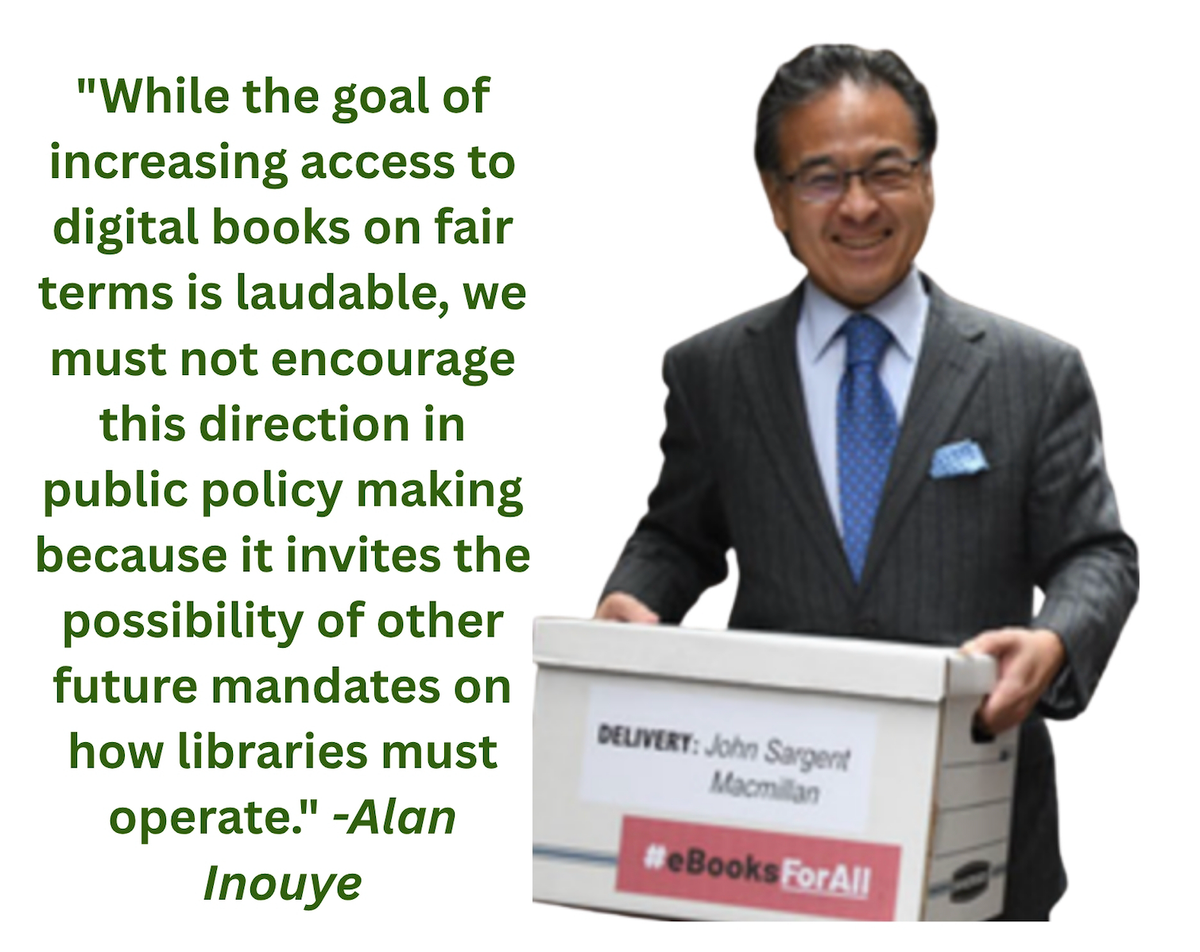
In his policy paper, Inouye wrote that "allowing state governments to mandate how libraries are operated" is a "slippery slope," that could invite "future mandates on how libraries must operate." Instead, he called for an end to the "firefighting" of the last two decades in the digital library market, suggesting more "independent study" and a national strategy at the federal level.
In their editorial, the EBook Study Group rejects Inouye's assessment. "Libraries cannot wait for a multi-year federal study while their budgets bleed out today," they argue. "By dismissing state-level baselines, the only alternative [Inouye] actually leaves room for is forcing all libraries to submit to a single, dystopian, non-negotiable master contract dictated by publishers nationwide."
One point of agreement: the era of "firefighting" is indeed over. "The eBook Study Group (ESG), alongside a coalition of state legislators and frontline librarians, has moved beyond waiting for voluntary vendor reform," the editorial states. "We are steadily reasserting the rights of memory institutions through established state contract law, consumer protection, and procurement policy."
First off, kudos to LJ for publishing the ebook study group's response to Inouye's paper. Whichever side you fall on, the discussion is worthwhile.
Second, and more to the point, whoever thought commissioning Inouye's paper would be an effective counter to the 15-plus years of librarians' experience in the digital marketplace was seriously mistaken.
If the objective was to blunt the growing momentum for state library ebook laws, Inouye's paper was always likely to have the opposite effect. Reaction to the paper has been muted at best. Librarians who have been working in the digital space for years quickly dismissed it. And publishers didn't exactly rally around it either. After all, aside from John Sargent's ill-fated embargo, the AAP 's and OverDrive's attempts to portray librarians who support the legislation as anti-copyright, and the Authors Guild's attempt to link digital lending to declining author earnings, Inouye's paper at 9,000 words was about 8,500 words more than the major publishers have said on the subject over the last decade.
On the other hand, the ebook study group's response will now very likely serve as a rallying point for library supporters. After a quiet summer, this editorial will help inject some energy back into legislative efforts ahead of the fall legislative session, and ahead of 2027. If anything, the failure of Inouye's paper to do anything but steel librarians' resolve on the issue should send a clear message to the major publishers: the way to stop the advance of state library ebook legislation is to work with libraries like the partners they are, not to stonewall them.
"For over a decade, national organizations pursued a strategy of incremental negotiation, asking publishers to voluntarily reform a highly lucrative, predatory licensing market. That approach failed," the editorial concludes. "We are not firefighting anymore. We are changing the building code."
After Appeals Court Loss, Arkansas Librarians Are Once Again 'in Peril'
 Austin Gelder
As Words & Money reported this week, the Eighth Circuit U.S. Court of Appeals this week reversed an injunction barring the enforcement of two controversial book banning provisions of Arkansas Act 372, the latest gut punch to the freedom to read from a U.S. appeals court.
As the Arkansas Times reports, the decision puts librarians back in the crosshairs, facing consequences including potential jail time for exposing minors to allegedly inappropriate books in public libraries. "Arkansas booksellers and librarians are back in dicey legal territory," the report states. And in a press release, Arkansas Attorney General Tim Griffin said the ruling means that Arkansas can now "move forward in enforcing a law" that increases "accountability for public library curation decisions.” That sounds ominous.
In Missouri, GOP Politicians Threaten to Slash a Public Library's Funding Over an LGBTQ+ Reading Event
 Justice Covert, Columbia Missourian
The Columbia Missourian reports that librarians at the Daniel Boone Regional Library are on the defensive after hosting an LGBTQ+ themed “Rainbow Story Time” for toddlers and preschoolers, which has prompted Republican lawmakers to threaten the library's funding. Robin Westphal, the library’s executive director, said in a statement that the event was in “full compliance with all statutes and regulations,” and included only "age-appropriate picture books, songs, and activities suitable for toddlers and preschoolers.”
The outlet reports that Secretary of State Denny Hoskins warned the library before the event that he would seek to strip their funding if the event continued as planned, and at a press event this week was joined by another GOP state senator to reiterate his intention to go after the library's funding after the event took place. "The two Republicans continued to compare the books shown during the story time to pornographic material, asserting the staff need to be held accountable," the report notes.
Meanwhile, in an editorial this week, the Missouri Independent criticized the lawmakers' actions. "Roger Johnson, the Boone County prosecutor, told KOMU it is not a crime to talk about LGBTQ+ issues," to which Hoskins responded that "if the story time was legal" he would "work with the legislature 'to ensure this is illegal' in the future,” the editorial notes. "Politicians propose restrictions on legal conduct all the time. That’s not the notable part," the editorial observes. "The sequence is. An attorney general’s warning, a secretary of state’s threat to the library’s funding, and repeated accusations of grooming and criminality, all without anyone identifying conduct that violated the laws they invoked."
Florida Professor Sues After Being Fired for 'Teaching Literature in a Literature Class'
 FIRE
FIRE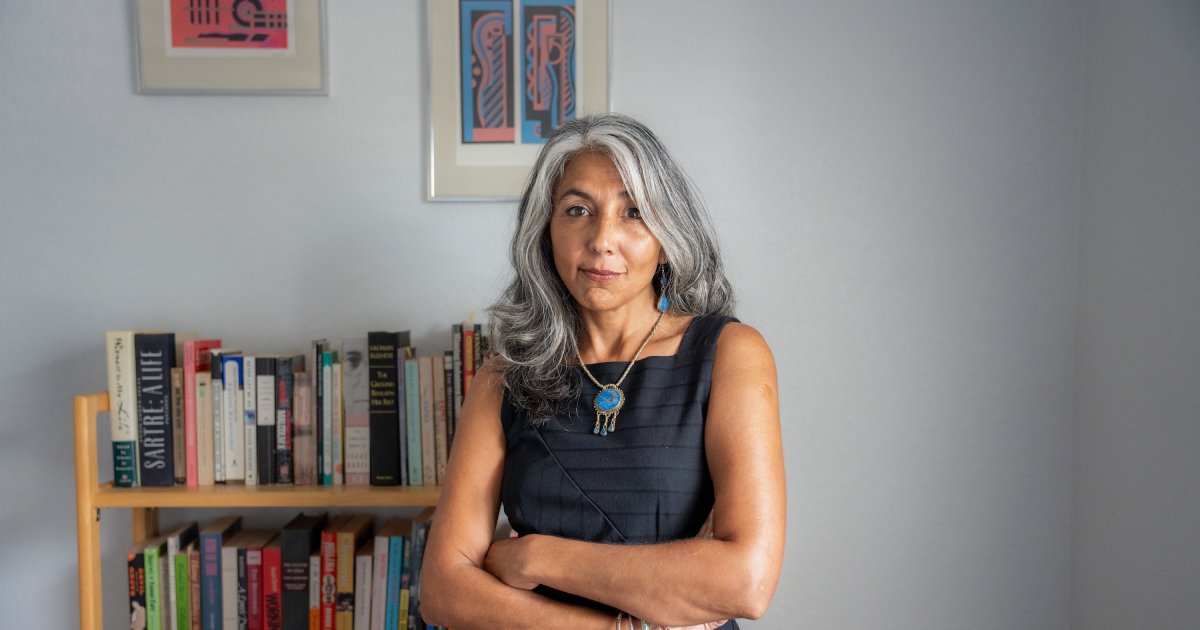
FIRE (the Foundation for Individual Rights and Expression) reports that a Florida college professor who was summarily fired for teaching a short story to her freshman English class has now filed a federal lawsuit on First Amendment grounds. "After professor Vinita Prabhakar assigned a commonly-taught short story for her freshman English course, South Florida State College President Fred Hawkins dragged Prabhakar into a meeting, complained the story was political,' and ordered her to stop teaching it," FIRE reports. "A day later, he unceremoniously fired her. No hearing. No due process."
The story in question, Bettering Myself by Ottessa Moshfegh, revolves around "an alcoholic and directionless teacher at a Catholic school who engages in self-destructive behavior and makes inappropriate sex jokes to her teenage wards," Fire notes, pointing out that Prabhakar had taught the short story in question for nearly a decade. "For 20 years, I’ve taught students how to engage with stories that excite them, challenge them, and broaden their experience of what it means to be human,” said Prabhakar. “If what happened to me becomes the norm, colleges across America will become less curious, less vibrant, and less free."
Alaska Librarians Worry About the FCC's E-rate 'Review'
 Lori Townsend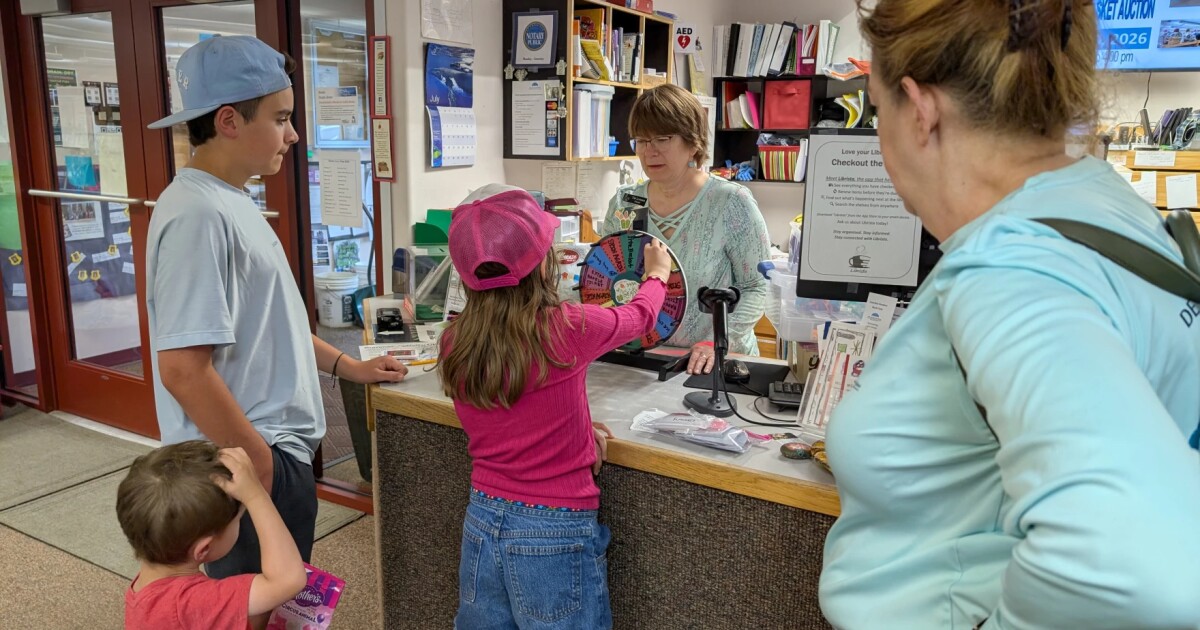
Alaska Public Media reports on what's at stake in Trump FCC chair Brendan Carr's controversial bid to revamp or eliminate the federal E-rate program, which helps schools and libraries with broadband and connectivity costs. "The advocacy group, Schools, Health & Libraries Broadband Coalition, lists Alaska’s E-rate subsidy at $806.1 million between 2021 and 2025. The funds supported 710 different school and library locations in Alaska," the report notes.
“It would be a definite hit to the budget if school districts were to lose E-rate," Executive Director of the Association of Alaska School Boards, Tiffany Jackson, told reporters, calling E-rate "absolutely critical" for libraries and schools in the state. "In the island community of Kodiak, Public Librarian Laurie Madsen said losing the E-rate subsidy would increase the library’s monthly internet bill from $310 per month to $1,600. And for the small, volunteer-run libraries in Port Lions and Chiniak, it could doom their ability to even stay open," the report added.
Library Professor R. David Lankes on the AI 'Information Shock'
 R. David Lankes
At Information Matters, University of Texas professor R. David Lankes writes about a new preprint article he's written which explores how generative AI is causing an "Information Shock" that will require "a new information science." It's fascinating stuff.
"The ripple effects of the shock will continue even without some mythical artificial general intelligence or Singularity. It is caused by the wide availability of a non-human, stochastic conversant that ultimately dissolves the concept at the center of information science: the document," he writes. "A conversant is a participant in an exchange, the other side of the back-and-forth through which understanding gets built," he goes on to explain. "Two people talking are conversants. What is new is that one of these conversants can now be a machine, and the exchange, not any document it produces, is where learning happens. These conversants need not be conscious to participate in the conversation; the capacity for exchange is what qualifies them. The exchange, not the document, is what our tools will need to describe and hold accountable."
The Latest AI Publishing Scandal, and a Study that Alleges AI 'Dilution' in the Book Market
 Will Oremus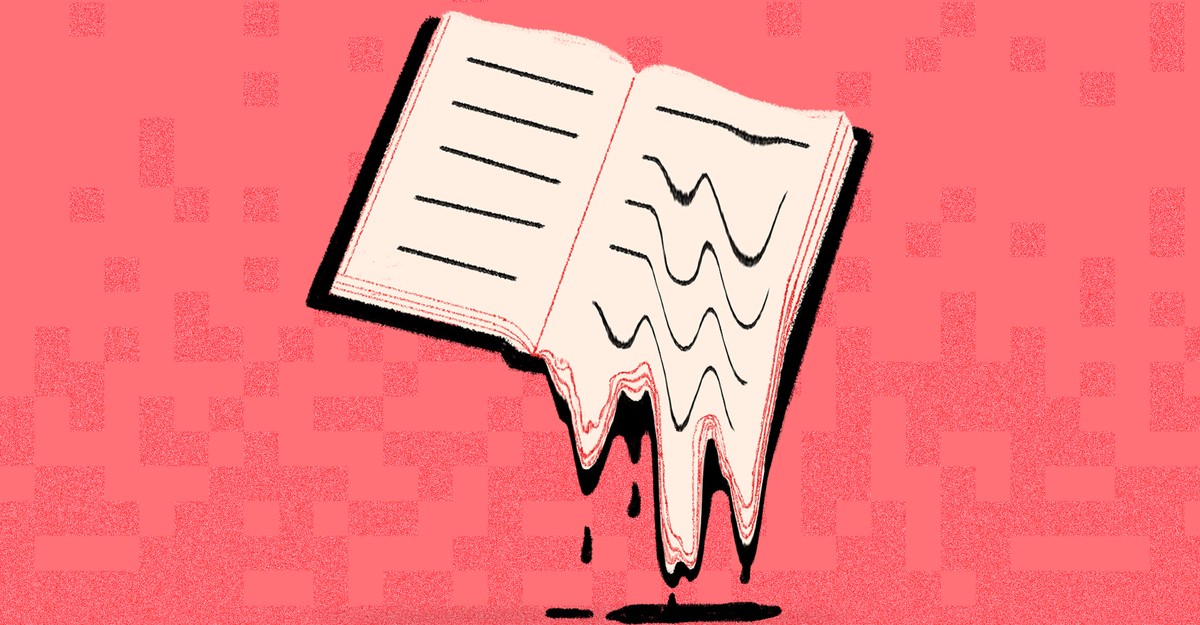
An article in The Atlantic this week purports to blow the whistle on the latest potential AI scandal in the publishing world: Daggermouth by H. M. Wolfe, a self-published BookTok hit that has since been picked up by Simon & Schuster. But Will Oremus reports that the book appears to have been substantially created with AI, according to an analysis conducted with detection software Pangram. Wolfe has denied the accusations, and Simon & Schuster is so far standing by the book. The revelations come after publisher Hachette canceled publication of a book earlier this year, Mia Ballard's Shy Girl, amid allegations that the book was written with AI.
But behind the story of Daggermouth, the more interesting development revealed in the Atlantic article is the revelation of a study, uploaded this week to the ArXiv preprint server, that analyzed more than 14,000 Kindle ebooks using Pangram, concluding that the rise of AI-created books is displacing human-authored book sales. That's significant, because the study reads like expert testimony for the plaintiffs in the current wave of copyright litigation in the AI realm, including two recent lawsuits filed by publishers, one against Meta, and one against Google.
“Generative AI can produce book-length works of fiction at near-zero cost. These books are often dismissed as low-quality ‘slop’ that buyers will ignore, and are assumed to carry little commercial weight,” the study notes. “Even so, they reach commercial scale, winning a growing share of sales over time and taking more of the scarce top-rank positions once held by books with no detected AI text,” the authors write, meaning that “generative AI can thus reshape a creative market through scale rather than quality,” a finding that “bears directly on the market-effect question at the center of the fair use defense to copyright infringement.”
Indeed, that kind of market dilution claim is at the heart of the publisher suits, and seize on federal Judge's Vincent Chhabria's June 2025 decision in an author suit, Kadrey v. Meta, in which the judge found Meta's use of copyrighted works to train its AI was fair use, but complained that the plaintiffs failed to argue that the broader market for books was being "diluted" by the works created with AI that trained on copyrighted works. That market dilution, Chhabria suggested, if proven, could be enough to tip the all-important fourth fair use factor (market impact), leading to a finding of infringement. We'll have more on this report soon, stay tuned.
Minotaur Said to Cancel Hot Debut Book After AI Accusations
 Mike Fleming Jr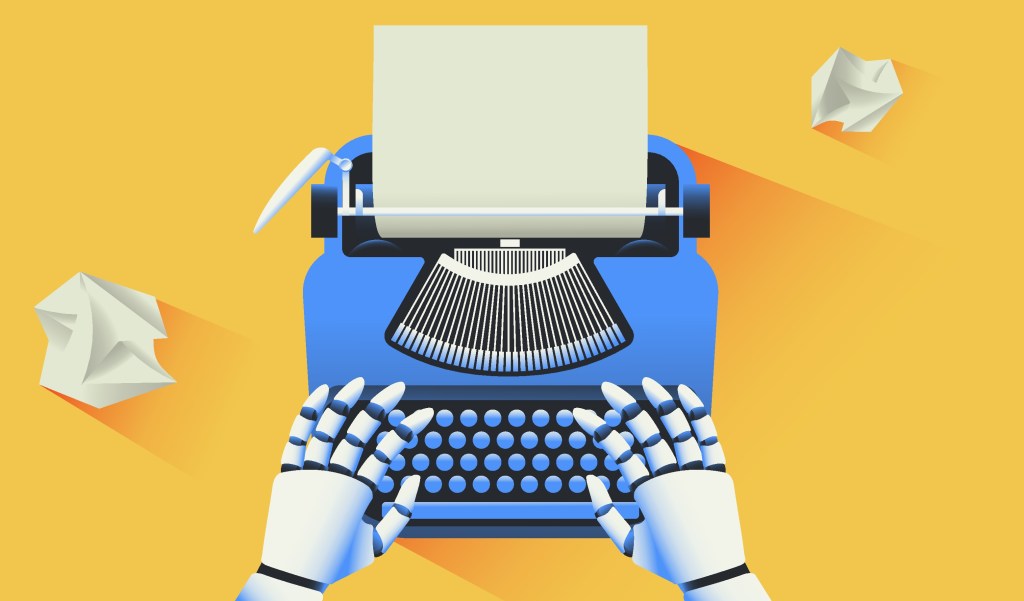
Meanwhile, Deadline reports on yet another AI controversy: a novel titled Call Me, I’ll Hide the Body, said to be acquired in a “$2.4 million deal" was reportedly pulled from international submissions this week and canceled by Minotaur (an imprint of Macmillan Publishers) after “questions were raised over whether the author used AI as a tool" in writing the book. “From what I’m hearing, this will be an important teaching moment for writers with aspirations to become serious bankable authors," the report states. "The lesson: stay the hell away from AI.”
Author Hugh Howey's Must-Read Take on the Unfolding AI Era
 Hugh Howey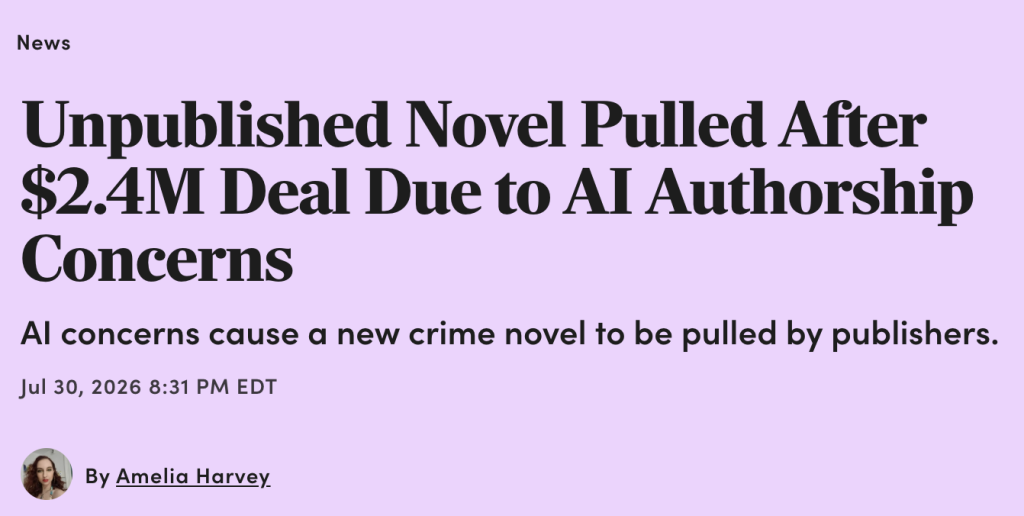
Amid all the AI news this week, this post from author Hugh Howey is fantastic. Howey reacts to the news of Minotaur’s reported cancellation of Call Me, I’ll Hide the Body with a wide-ranging reflection on how technology has impacted and will continue to impact writers.
“I’ve always felt bad for authors who lived and worked before 2007. The choices unavailable to them made life harder than it needed to be. Getting their work out into the world was brutal. After [Self-Publishing], that brutality became a choice, not a necessity,” he muses. “I now feel awful for anyone who wants to tell a story post-2026. You will forever be doubted.”
I won’t try to summarize further—read the post, it's worth it—except to share two more of Howey's observations: “It’s never been easier to be an artist. It’s also never been easier to make money PRETENDING to be an artist. Which means it’s never been more challenging and confusing to be an artist whose goal is to make a living.” he writes.
And his advice: “Do the thing for the love of it. Others will do it for clicks or money,” he writes. “Some sliver of you might get jealous when those things come for them, or awards come for them... Let that jealousy pass through you, not pool up inside you. Remember that you are doing it for the love. Go sit down and write.”
The Threat Posed by the Recent Wave of State Property Tax Measures
 Kelly Jensen
Over at Book Riot, Kelly Jensen leads off her weekly censorship news column with a look at all the property tax initiatives advancing in several states. We cover these proposals as they come, but seeing them together in one column is bracing. And Jensen offers a not unreasonable read on their proliferation: "Perhaps it’s a wildly cynical read, or it’s a read fostered by having watched coordinated attacks on libraries and their services for as long as I have now, but it’s hard not to see this tax reduction strategy as a more sly way to dismantle public libraries by the same actors who’ve failed to pass the massively overreaching laws that would give them the power to determine what is–and is not–in public libraries over the last five years."
Bill to Study Prison Libraries Introduced in the House
This week, U.S. reps Rick Larsen (WA-02) and Emmanuel Cleaver (MO-05) introduced the Read for Reentry Act, legislation that would "authorize a study into state and federal prison libraries in the United States" to better understand "and further the role of prison libraries in reducing the number of prisoners who return to prison." The lawmakers cite a 2025 ALA report in the release that suggested that access to prison libraries and educational materials "may dramatically reduce" recidivism rates. “Access to the world of books through libraries changes lives,” Larsen said, in a statement. "Prison libraries provide incarcerated people with important tools and opportunities for growth.”
And Finally This Week...
 Lauren Smetzer, University Communications and Marketing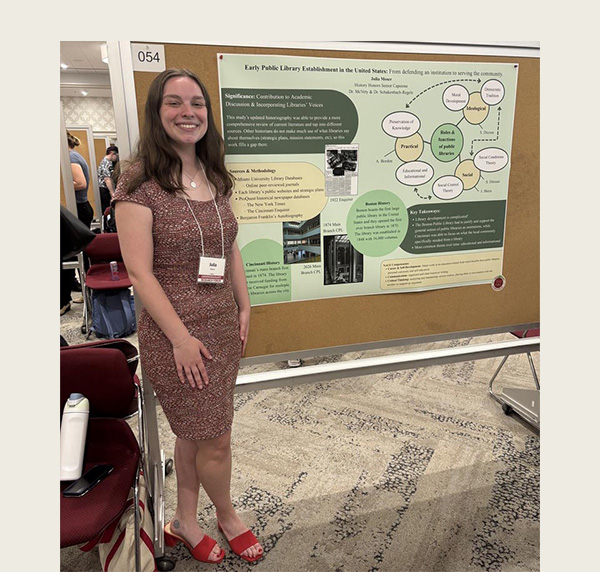
Is this Miami University (Ohio) undergrad headed to library school? In a release this week, University officials shared Sport Management and Psychology double major Julia Moser's presentation on the modern history of public libraries. "Moser’s love for books inspired her to pursue this historical research," the release notes. “We never really hear about public libraries. We all know they exist. We see them in our communities, but in school, we don’t learn why they exist and how they came to exist. It’s really not talked about. This was my opportunity to dig into this question." And what a fascinating moment in time to explore the question of why libraries exist, isn't it?