District of Columbia's Library Ebook Bill Is Signed into Law
The District of Columbia is now the second state or municipality to pass a reworked library ebook law. Meanwhile, a similar bill in Illinois will have to wait until legislators return in the fall, while Rhode Island's effort could head to the floor next week.

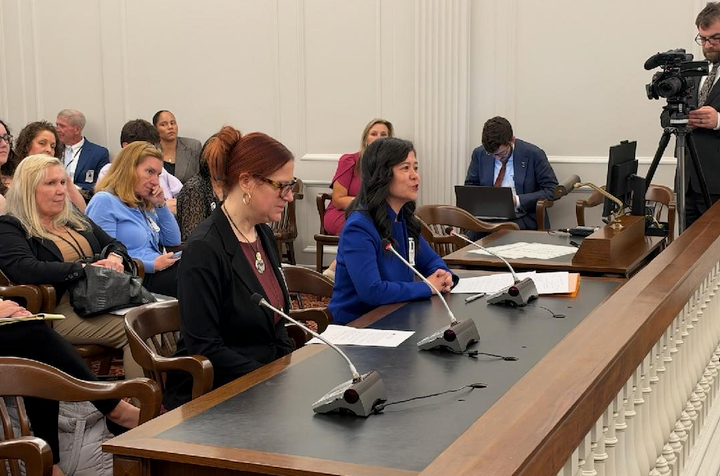
Despite opposition from publishing industry lobbyists, library ebook legislation continues to gather momentum, with Washington D.C. Mayor Muriel Bowser signing the District of Columbia’s library ebook bill, the Library E-book Pricing Fairness Amendment Act of 2026, into law on May 28. The bill is now with Congress for a standard 30-day review period, as provided for under the 1973 District of Columbia Home Rule Act.
The District of Columbia is now the second state or municipality to pass a re-worked version of library ebook legislation, after Connecticut passed its library ebook law in May 2025.
For now, however, the victory is mostly symbolic. The D.C. law—like Connecticut’s landmark law passed last year—contains a trigger clause and won’t take effect until several more states or municipalities enact similar legislation. D.C.’s act won’t be enforced until the library’s board determines that “substantially similar” laws have been enacted in at least 10 states with an aggregate population of at least 50 million people. That’s a significantly higher bar than Connecticut, where the law is set to take effect when a state or states with an aggregate population of at least seven million enacts similar legislation.
Nevertheless, the passage of D.C.'s library ebook bill is being hailed as a victory by library advocates—and a sign that pressure is building on the major publishers to finally address some of the pain points for libraries in the digital marketplace.
Like legislative efforts advancing in several states, the D.C. law follows a legislative framework developed by the Ebook Study Group, a coalition of librarians and lawyers who created the current model legislation after Maryland’s first-ever library ebook law was struck down by a federal court in 2022 for conflicting with federal copyright law.
Unlike the Maryland law, library advocates say that the D.C. law (as well the bills in other states) avoids the copyright conflict that doomed Maryland’s law, and instead regulates the ability of public libraries, as taxpayer-funded institutions, to enter into contracts that may conflict with the library’s mission.
The D.C. bill’s passage comes after a particularly tense lobbying campaign against the bill—including a blistering 54-page submission by Steve Potash, CEO of OverDrive, the dominant digital vendor in the digital library market.
"This is a massive win, but what makes it particularly sweet is how we got here,” said Kyle Courtney, founder of the Ebook Study Group, in a statement. “This law we helped draft for D.C. passed despite an absolute mountain of opposition, corporate pressure, and a bizarre, desperate lobbying effort by OverDrive to kill the bill on behalf of big publishers.”
A Timeout in Illinois; Rhode Island in Play
The D.C. bill’s passage comes as the most closely-watched library ebook bill—H.B. 5236 in Illinois—ran out of time before the current legislative session ended on May 31.
In an update, the Illinois Library Association said it expects the law to be picked up again after the summer break.
“After passing unanimously in the House in April, House Bill 5236 is currently under legal review with the Senate General Counsel to confirm that it is legally sound,” ILA reps said, “but we hope that our bill will be assigned to a committee when the Senate returns to session in the fall.” ILA reps said they would continue “outreach efforts to gain support for the bill over the summer while Senators are in their home districts,” and urged library advocates in the state do the same.
Meanwhile, after being held for study earlier in the year, Rhode Island's library ebook bill, S.2525, has sprung back to life. The bill passed out of committee on June 4, and advocates told Words & Money that the bill could proceed to a floor vote in both the House and Senate next week.
That development prompted bestselling author James Patterson to publish an op-ed in the Providence Journal blasting the Rhode Island bill and library ebook legislation more generally.
 James Patterson, The Providence Journal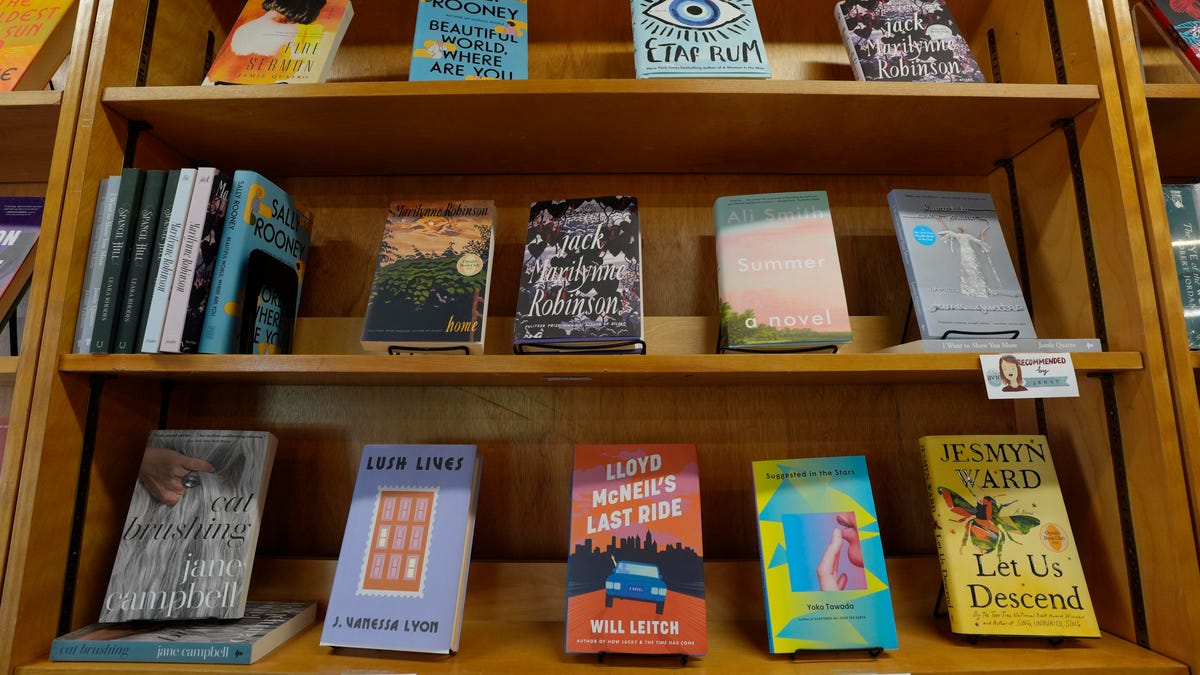
"The bills currently pending in the Rhode Island General Assembly (H7606 and S2525)," Patterson wrote, "would force authors and their publishers to license digital books to libraries on whatever terms the state decides, handing state governments unprecedented power over how authors distribute their work and undermining how authors are compensated for their creative contributions."
In response, the Authors Alliance and the Ebook Study group issued a statement rejecting what they characterized as "misinformation" and publishing industry talking points.
"The sky-is-falling rhetoric from publisher associations should be understood for what it is," the groups said in a release this week. "An attempt to preserve a market in which public institutions, like libraries, must accept non-negotiable, expiring, and often overpriced digital licenses. Rhode Island lawmakers should see through that rhetoric and advance this carefully drafted, pro-access, fiscally responsible legislation."
Is the Pressure Mounting?
 Andrew Richard Albanese
The news comes as five library associations issued a statement last week urging the major publishers to come to the table and negotiate fair contracts in the digital library market.
Publishers, authors, and public libraries should be partners, but with the exponential growth in digital content demand, libraries are unable to provide and sustain access under current licensing models,” said ULC executive director Brooks Rainwater, in a release accompanying the joint statement. “The moment is ripe for large publishers to meet with libraries across North America, to hear our concerns, and address them so we can continue building a mutually beneficial future for literacy and reading.”
The joint statement—signed by ARSL (the Association for Rural and Small Libraries), COSLA (Chief Officers of State Library Agencies), the Canadian Urban Libraries Council, PLA (Public Library Association), and the Urban Libraries Council, makes a simple ask: “It’s time for a new dynamic, based in collaboration and mutual respect, that can build off those shared interests,” the joint statement reads. “It’s time to finally address—rather than ignore—this crisis.”
The latest statement comes after the Urban Libraries Council in April released a statement titled “The E-Book Pricing Crisis” in which it called for two potential "concrete fixes" needed immediately in the library ebook market: the elimination of time-based licenses, and the return of perpetual access, and said libraries "are eager for dialogue to develop mutually beneficial models with publishers."