Tennessee Library Advocates Sue Over Secretary of State Tre Hargett’s Public Library ‘Review’
The suit comes after Hargett ordered library leaders across the state to ensure their collections were in compliance with a Trump executive order on gender identity. But executive orders are not laws, the suit asserts, and Hargett lacked the authority to order the 'unconstitutional' reviews.

A coalition of library advocates in Anderson County, Tennessee have a filed a federal lawsuit in the Eastern District of Tennessee, seeking to block their local library board from removing or relocating books stemming from Tennessee Secretary of State Tre Hargett’s recent audit of public library collections.
In their July 15 complaint, two local library users and the Anderson County Library Alliance, a local organization that supports public library services in the county, argue that Hargett lacked the authority to order the state’s librarians to ensure their collections were in compliance President Trump’s Executive Order 14168, Defending Women From Gender Ideology Extremism and Restoring Biological Truth to the Federal Government, and with a newly enacted state law, the “Age-Appropriate Materials Act of 2022.”
The complaint asks the court to declare Hargett’s order—and Trump’s executive order as it pertains to public libraries—null and void, and to order the defendants in the case, the Anderson County Public Library Board, to immediately “cease and desist the removal or restriction of any work already in a public library” until “a content-neutral process is enacted to safeguard the First and Fourteenth Amendments of Plaintiffs and those similarly situated protected by the United States Constitution.”
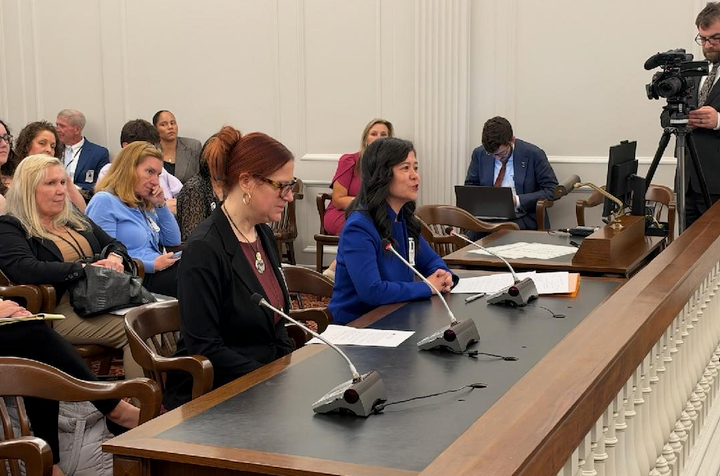
 Hamilton Matthew Masters
The suit comes after Hargett, in an Oct. 31, 2025 letter to library leaders across the state, requested that each library “undertake an immediate age-appropriateness review” of all materials available to minors to “identify any materials that may be inconsistent with Tennessee age-appropriateness laws, in violation of any federal law, including President Trump's Executive Order, or otherwise contrary to any other applicable state or federal laws.”
Hargett's request drew significant criticism, including a letter of opposition signed by more than 30 publishers, library associations, and freedom to read advocacy groups.
 Andrew Richard Albanese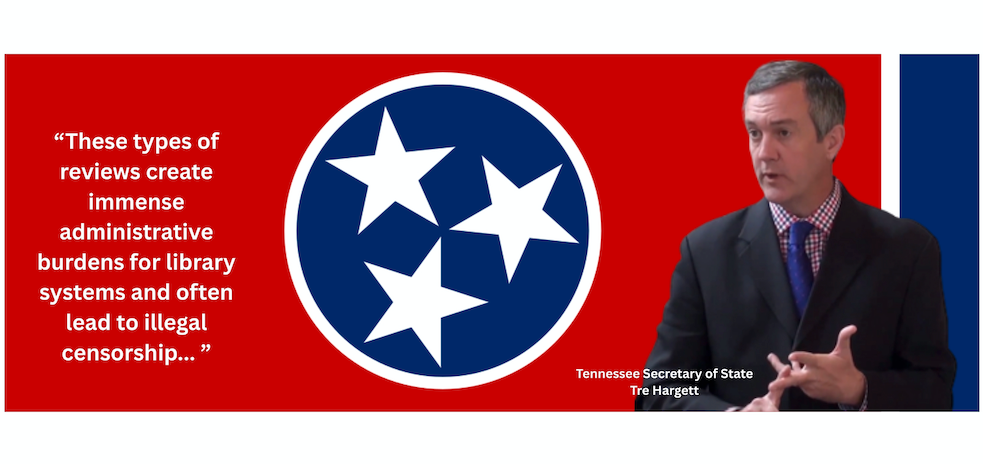
Since its completion in January, the review has reportedly led to books being pulled or relocated in multiple libraries across Tennessee. And most prominently, the review cost Rutherford County library director Luanne James her job, after she refused to relocate some 132 children’s books, many of them with LGBTQ+ characters or themes, to the adult section of the library as ordered by the board.
In a March 18 email to the Rutherford County library board, James said she would not move a selection of titles as ordered by the board following its review. "My duty to protect public access is not merely a personal opinion," she wrote. "As an arm of the county government, the Board cannot legally limit the public’s access to materials owned by the people based on the content of the ideas expressed within them."
 Hamilton Matthew Masters
'Executive Orders Are Not Laws'
In their complaint, the plaintiffs assert that Hargett had no authority to direct public libraries to review their collections for compliance with Trump’s Executive Order, or a newly passed state law pertaining to materials in schools.
“Executive Orders are not laws. An Executive Order is not an independent source of legal authority; it is an instrument which the President directs the operations of the Executive Branch,” the complaint states, adding that executive orders cannot “regulate any state government directly,” or “create obligations for entities outside the Executive Branch.” Furthermore, all executive orders “must be consistent with federal statutes and the Constitution,” the complaint states.
"Public libraries are not political tools to be utilized by one party over another," the filing continues. "This lawsuit is not only addressing the concept of utilizing executive orders to promote a political agenda, it seeks to address those unlawful practices to the context of public libraries… In the public library context, Plaintiffs seek to declare illegal the discrimination and other infringements against those desiring to erase established underpinnings of the United States Constitution.”
The complaint argues that Hargett’s reliance on Tennessee's Age-Appropriate Materials Act of 2022 is also misplaced.
“The Act, by its text, applies only to local school bodies, not public libraries,” the plaintiffs argue. “The Hargett letter’s attempt to apply the provisions and/or spirit of the Age-Appropriate Materials Act of 2022 law into the arena of public library regulation, is illogical, repugnant to established constitutional principles seemingly forgotten by the letter, and classic overreach by not only the state agency directly, but indirectly through this particular Executive Order.”
In one particularly sharp observation, the filing notes that “outright bans” have in many cases "given way to regulation of book purchasing," including policies, like those in Tennessee, that call for "restricted access to certain books, restricted library cards, legal pronouncements of government speech, unprotected speech, and book criteria review.” These mechanisms, however, “while not as unhinged as a book ban, still cannot remove the stench of government regulation violative of the First Amendment of the United States Constitution,” the complaint states.
'Null and Void'
 Kaitlyn Walsh
In addition to seeking a permanent injunction barring the Anderson County Library Board from pulling materials identified under Hargett’s allegedly unconstitutional review, the suit also asks the court to declare that the order from the Tennessee Secretary of State, "or any other state agency" be declared null and void and "of no constitutional significance, or legal effect under state or federal law."
Furthermore, it asks the court to declare Trump’s Executive Order 14168, “or any other Executive Order issued advancing or tending to advance a particular political position or viewpoint” be “declared null and void" and "of no legal effect" against public libraries" under the First, Fifth, Tenth, and Fourteenth Amendments. The plaintiffs also ask the court to block any attempt by the Office of the Tennessee Secretary of State (or any other state agency) to attempt to apply the state's Age-Appropriate Materials Act of 2022 outside of school libraries.
"The primary fallacy of the Hargett letter, and there are many, is the reckless assumption that local government bodies, such as ACLB, did not already have in place a process for challenging a particular source of information housed in the local public library," the complaint also points out, noting the the library had a review policy in place that guarded against "one faction deciding as a matter of policy" what the public can access.
Deciding "the value or lack thereof of a particular work" demands "an apolitical process," the complaint argues, "not the censorship of a work that one faction does not like or thinks subverts its political agenda."