In U.K. Appearance, Amanda Jones Talks Censorship, and the Role of Librarians in the Fight for Democracy
"When we allow political groups to pull books that feature marginalized characters, we are sending a clear, devastating message to students that their stories, their identities, and their very lives do not matter," Jones said. "We cannot, and we will not, abide by that."

Amid a five-year surge in book banning in U.S. schools and libraries, few advocates have fought harder and with more conviction that Louisiana librarian and freedom to read advocate Amanda Jones. Four years ago this month, in July 2022, Jones, School Library Journal’s 2021 Co-Librarian of the Year, attended a meeting at her hometown public library in Livingston Parish, where she briefly spoke up against a proposal to pull a number of mostly LGBTQ-themed books. In response, she was attacked online by two men who accused her of grooming children.
Rather than take it, Jones fought back by filing a defamation suit against two men who publicly accused her online. And after years of legal wrangling, the tide has turned in Jones’s favor. Last fall, Jones accepted a settlement from one of the men that defamed her—which included Jones’s demand for relief: $1 in damage and a public apology. And last month, a state judge cleared the way for her suit against the other man to proceed to trial—and ordered the man to pay Jones’s legal fees to date, some $54,000.
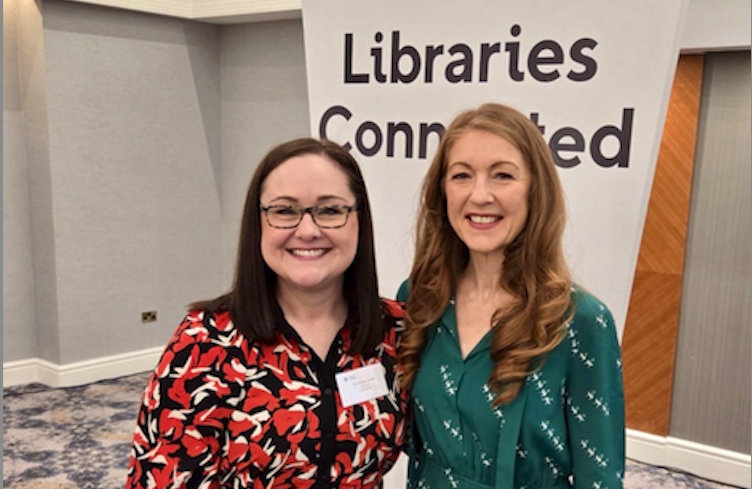
Last month, Jones was invited to address Libraries Connected, an independent charity that supports, promotes, and represents public libraries in the U.K., at their annual symposium, where she spoke about her personal and professional fight in support of the freedom to read, and the importance of standing up to would-be book banners. At our invitation, Jones now shares her remarks.
'It Can Happen Anywhere. It Happened in My Community'
For 25 years, I have been an educator. For 25 years, I have walked through the doors of the exact same middle school that I attended as a child. Think about that for a second. The very halls where I used to pass notes, worry about tests, and daydream about the future are the exact same halls where I have spent my entire professional life.
My colleagues today include people who used to be my middle school students. I have "grandstudents" in my library now—which means I am teaching the children of the kids I taught years ago. My roots in this school and this community go down deep. I love my job. I love my community. I say it to anyone who will listen because I mean it from the bottom of my heart: I have the absolute best job in the world.
But something has fundamentally shifted in the landscape of American education and public literacy. You may have seen the news segments on television or watched the documentaries. You’ve probably seen some of the viral clips of people screaming, red-faced, pounding tables, and hurling insults at school board and library trustee meetings all across the United States. I am here to tell you tonight, from the front lines, it is exactly like that—in fact, sometimes it is much worse.
Many schools and libraries across the U.S. have been transformed into political battlegrounds. This is not a regional issue, and it is not isolated to one political party or one pocket of the country. It is happening in red districts, blue districts, and purple suburbs. It is happening in major metropolitan hubs, quiet suburban neighborhoods, and rural farming communities. There is a massive, highly orchestrated, heavily funded push to censor books, control information, and strip professional autonomy from librarians.
And it can happen anywhere. It happened in my community.
Here’s how it started in our local public library: an outside extremist group, one that has publicly stated its explicit, systematic goal to target all 64 public library systems in our state, began deploying its national playbook: they took a single page of a book, completely stripped it of its literary context, and plastered it all over local community Facebook pages to manufacture immediate outrage, whipping up a digital storm and urging everyone to pack the upcoming library board meeting. This was not a harmless group of concerned parents. These were political actors who had already cost a neighboring community millions of dollars in vital library funding by destroying their tax propositions.
Because I am a lifelong resident of the town where I was born and raised, and because I care deeply about the freedom to read and the protection of public spaces, I went to that meeting to speak. I stood before the board and gave a speech about censorship. I spoke about longstanding library policies, about constitutional rights and intellectual freedom, and I urged the board to ignore the political noise. I cited mental health statistics from The Trevor Project to remind them of the human cost of erasure.
Honestly, it was not a groundbreaking speech. It was an average, standard issue speech that any librarian worth their salt would give on any given Tuesday night board meeting. Virtually every other resident who spoke up that night said the exact same things I did. And when the meeting ended, I went home believing I had simply done my civic duty.
But four days later, I woke up one morning to a living nightmare. Two separate men whom I did not know, and had never met in my entire life, had launched an online smear campaign against me. One posted that I actively advocated for teaching anal sex to children. The other posted a photograph of my face with a target drawn around my head, explicitly identifying the exact middle school where I work. These posts were shared thousands of times across the internet.
The most heartbreaking part was watching people I had known my entire life—people I grew up with, neighbors I loved, and parents of kids I taught—join in with comments. without asking a single question, they picked up the digital pitchforks, and amplified these devastating attacks on my character.
The trauma of that betrayal hit me physically. I had a massive panic attack. I cried so hard and for so long that my eyes swelled completely shut. My sinuses became so inflamed that I could not breathe out of my nose for days. I was mortified, completely humiliated in the very town that raised me, even though I had done absolutely nothing wrong.
When I contacted the local sheriff's department, they responded that their hands were tied. Criminally, they said, there was simply nothing they could do. So, I had a choice to make: I could let the lies win. Or, I could stand up.
I decided to fight back, by filing a civil defamation lawsuit.
The Anatomy of the Fight
I was terrified out of my mind. Before this happened, I had never even stepped foot inside a police station or a courthouse. I had no idea what I was doing or how the legal system worked. Furthermore, I did not have the money for a massive legal battle.
But I decided to file the lawsuit because this is not just happening to me, but to many librarians all across the United States, who, like me, were left to suffer in silence. Every single day in our schools, we teach children to stand up to bullies, to seek help, and to fight for what is right. I realized I had to practice what I preach.
 Kelly Jensen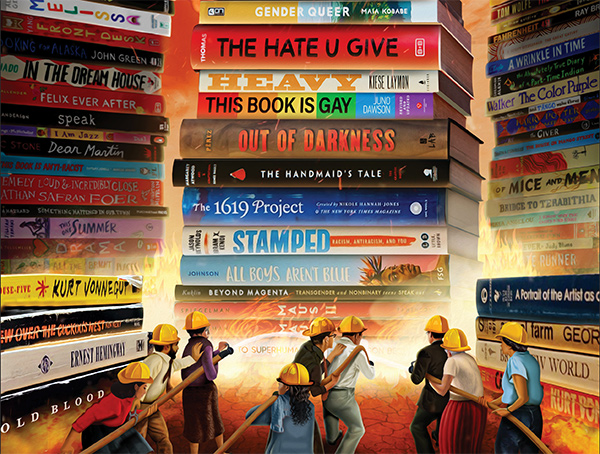
And make no mistake, the national data show that what happened in my hometown really is happening in communities all over the country.
Statistics from the American Library Association and PEN America continue to show an unprecedented, historic surge in censorship, with thousands of unique book titles targeted in a single year. These are not random, organic objections by individual moms and dads—the ALA found that 92% of the book challenges filed today are driven by organized political pressure groups, partisan organizations, and politicians, not by local parents, systematically targeting books written by or featuring members of the LGBTQIA community and people of color.
 Andrew Richard Albanese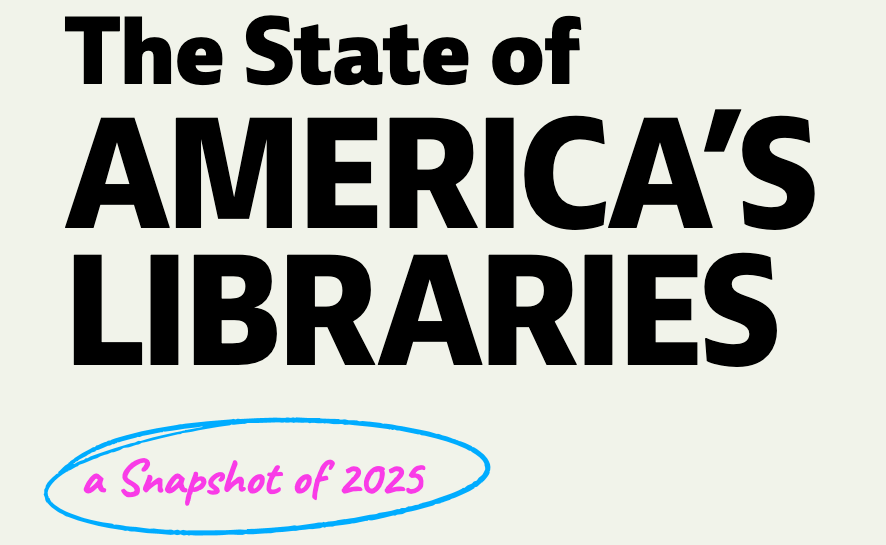
The human toll on our profession has been devastating. Librarians are being stalked, harassed, fired, and driven from their careers. This politically organized surge in censorship has even altered the very nature of our professional gatherings—annual library conferences now include dedicated trauma care suites, quiet rooms, and mental health services to help attendees cope with the severe anxiety, panic, and post-traumatic stress disorder now running rampant through our field.
This chaos follows a specific, well-funded script that I mapped out in an interactive graphic called The Roadmap—a repeatable, weaponized blueprint used by these extremist groups. And you need to know the warning signs:
- First: outside groups plant seed posts on local community social media pages, stripping a book of context to spark outrage.
- Second: they orchestrate the meeting swarm, packing local board meetings and screaming the word pornography to drown out established policies and standard operating procedures.
- Third: they use political leverage. Opportunistic politicians or people running for office latch onto the fake crisis, amplify the lies, and tell people to vote for them so they can fix a problem that does not actually exist.
- Fourth: once they get into office, they begin the phase of institutional ruin. They cut funding, defund libraries, stack library boards with partisan actors, and strip professional standards by trying to eliminate Master of Library and Information Science requirements.
In several states, these groups are even pushing legislation. In 2024, my own state representative filed House Bill 777, which, had the bill passed, would have made it a criminal offense—a $1,000 fine and up to two years in prison—for a public employee to request or accept reimbursement for attending an American Library Association conference.
It sounds absurdly dystopian. But this was a real bill, and this legislator was deadly serious. And variations of this exact playbook are being pushed in state legislatures across the nation.
Why We Must Pick Up the Torch
 Andrew Albanese |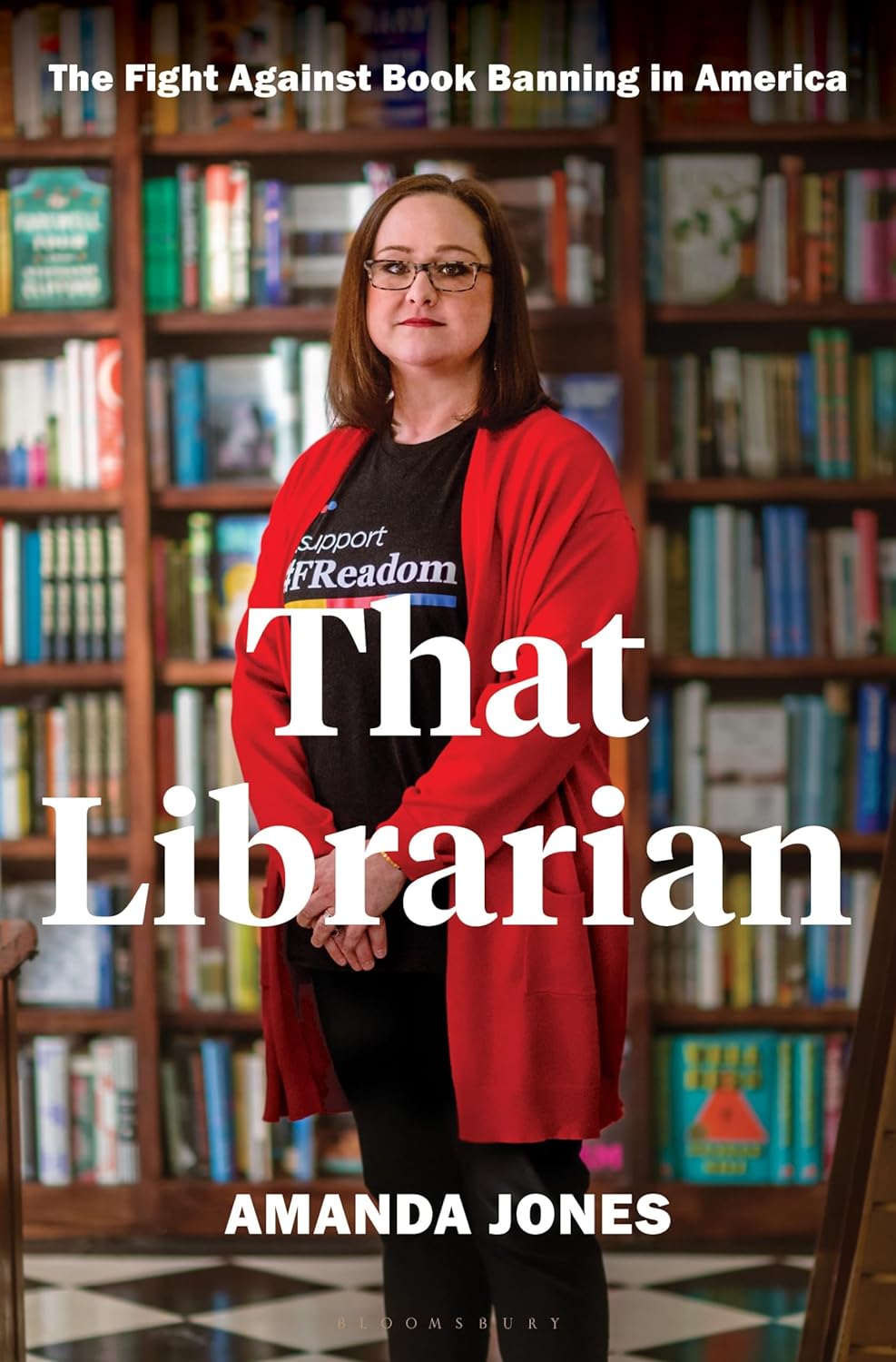
Four years later, I remain locked in my own legal battle, which has come at a great personal cost. But I will not give up. My grandfather landed on the beaches of Normandy on D-Day to fight fascists. He put his life on the line for freedom. What kind of legacy would I be leaving behind if I sat back, took the abuse, and refused to pick up the torch for freedom?
And I urge librarians and library advocates around the world to also stand tall against these fundamental threats—even when the personal and professional cost is so high.
Because wrong is wrong. And what’s happening in our schools and libraries is not only is a violation of our professional standards, but wrong on a basic, human level. We are not just fighting for our profession. We are fighting for the survival of American democracy. We are fighting for people.
When we allow political groups to pull books that feature marginalized characters, we are not just removing ink and paper. We are sending a clear, devastating message to students that their stories, their identities, and their very lives do not matter. We cannot, and we will not, abide by that. Every single child that walks into a library deserves to feel safe, loved, and seen.
School librarians have an immense responsibility. For many kids, the school library is often the safest physical and emotional space in their lives. As Dr. Rudine Sims Bishop beautifully established, all of our students and patrons deserve to have books that act as mirrors to see themselves, windows to look into other worlds, and sliding glass doors to step inside them.
Over the years, I have developed a routine that keeps me anchored to this mission Once a year, every year, when the weight begins to feel too heavy, I sit down and listen to a specific speech by Doctor Martin Luther King Jr. titled “What Is Your Life Blueprint.” It grounds me completely.
In that address, King spoke directly about our calling: "And when you discover what you will be in your life, set out to do it as if God Almighty called you at this particular moment in history to do it. don’t just set out to do a good job. Set out to do such a good job that the living, the dead or the unborn couldn’t do it any better.”
Those words remind me exactly why I fell in love with library work. And it inspires me to be the absolute best educator and librarian I can possibly be for my students. We should all strive to provide that exact same level of dedication, excellence, and safety for our patrons, no matter how loud the storm rages outside our doors.
Moving to Offense: The Blueprint for Local Action
So, how do we fight back? We fight back by refusing to stay silent.
National organizations can provide critical support. But they cannot win the fight for us on the ground. They do not know the local players. And they do not know the local game. This fight is, ultimately, is local. It requires you.
At the same time, we also have to recognize that everyone fights in the way they feel most comfortable. Activism is a tiered ecosystem, and there is a role for everyone.
For some, the fight means filling out petitions and joining email campaigns from home. For some, it looks like showing up to local meetings, and speaking out. For others, it is spreading the word on social media, demystifying professional terms like collection development, or publicizing meeting results to keep the community awake and aware. If you are terrified of public speaking, show up with a group, perhaps wearing the same colors to send a visual message of solidarity.
And never forget that one single person, and one simple act, can indeed start a ripple effect can lead to meaningful change.
When I chose to speak up at my library, it was a personal choice. But when I decided to keep speaking out, I knew I could not do this alone. So, with the support of a national political organization called EveryLibrary, I founded a local library alliance that has grown by leaps and bounds. We then joined forces with the leaders of two other local groups, and together we founded a statewide coalition called Louisiana Citizens Against Censorship. Under the tireless direction of our Executive Director, Lynette Mejia, we now train people all across the state on how to fight back.
Proceed with Empathy

As we build these coalitions, we must remember that we are facing a highly organized, well-moneyed machine. We cannot give up. But we also must not become like them. We cannot resort to the screaming, personal harassment, and toxic tactics they use. As former First Lady Michelle Obama famously urged us, "When they go low, we go high."
Now, I will be completely honest with you: some days, I feel a lot more like Cardi B, who famously said she would rather go low all the way to hell at them. Trust me, I get it. I have been there, and I feel that way some days.
But we must set a good example for our children. These extremists who loudly claim they are acting to protect children consistently set the most horrible examples of human behavior imaginable. As author and activist Stacey Abrams (whose own mother is a retired librarian) once said: "We must advocate with empathy and measure our success in progress and not victories."
Slowly but surely, the pendulum in the United States is beginning to swing back toward the freedom to read. The general public is finally waking up to the danger. Things are moving at varying rates across the country. Each day we speak out is a day of progress. But we must remain vigilant.
My deepest concern is that the damage from the last five years of relentless, organized political attacks on intellectual freedom will be felt for decades to come in the form of quiet budget cuts and pervasive soft censorship, in which librarians become too afraid to buy diverse books out of fear of retaliation. Even if we right every single wrong in the legislature tomorrow, I fear those institutional scars will linger.
Which is why we must continue to fight. Because this fight is about all of us. This is about not ably about protecting our libraries and librarians, it is about our communities, and the very fabric of our democracy.
I'll leave you with the brilliant words of Amanda Gorman, which serve as the ultimate marching orders for our profession: "For there is always light, if only we're brave enough to see it. If only we're brave enough to be it." We must continue to be the light in the face of this darkness.
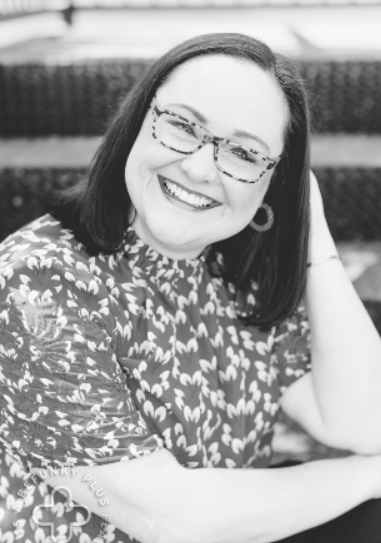
Amanda Jones is an American school librarian, author, and advocate known her work supporting intellectual freedom and defending the freedom to read. She is the author of That Librarian: The Fight Against Book Banning in America, and her experience was featured in the award‑winning documentary The Librarians, directed by Academy Award nominee Kim A Snyder and executive produced by Sarah Jessica Parker.