The Queue: Library News for the Week Ending September 18, 2026
Among the week's headlines: meet the honorary chairs for Banned Books Week; a federal court says lawsuit over Utah book ban law can go on; 'Book Riot' looks back at the last five years of book bans; Denver Public Library calls out high ebook prices; and a chilling new copyright bill in Congress.

Looking Ahead to Banned Books Week 2026
In a release, the American Library Association this week announced that award-winning authors and free expression advocates Bess Kalb (Buffalo Fluffalo series) and Tony Weaver, Jr. (Weirdo), have been named honorary chairs for Banned Books Week 2026, set to run October 4–10, 2026. They will be joined by youth honorary chairs Marshall Romero and Azeemah Sadiq.
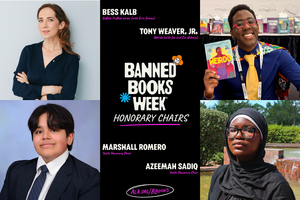
Romero and Sadiq are student advocates from Texas, where they have led student advocacy for SEAT (Students Engaged in Advancing Texas).
“I am grateful to the Banned Books Week Coalition for defending what censors fear most: critical thinking and diversity of opinion,” Kalb said in a statement. “I’m thrilled to be an honorary chair of Banned Books Week because if it weren’t for books in my elementary school library, like Are You There God? It's Me, Margaret, The Giver, and The Bridge to Terabithia, I would not be a writer.”
"Book bans are pervasive and insidious threats to creative expression and intellectual freedom," Weaver added. "Stories are an unparalleled tool for truth, and in the face of fear of misinformation, it is paramount that truth prevails."
This year's Banned Books Week comes as the ALA’s Office for Intellectual Freedom (OIF) found that the number of unique titles challenged in 2025 spiked dramatically, with 92% of all book challenges tracked by ALA initiated by pressure groups and government officials, up from 72% in 2024. Less than 3% of challenges in 2025 originated from individual parents. In 2005, just 6% of challenges came from pressure groups. Of the unique titles challenged in 2025, some 40% (1,671) represent the lived experiences of LGBTQIA+ people and people of color.
This year’s theme for Banned Books Week is “Let Books Be. Protect the Freedom to Read.” Among the highlights, October 10 will be Let Freedom Read Day, a day of direct action against censorship. A variety of free downloads and materials to support Banned Books Week activities are available here.
Federal Judge Allows Authors' Lawsuit Over Utah Book Banning Law to Proceed
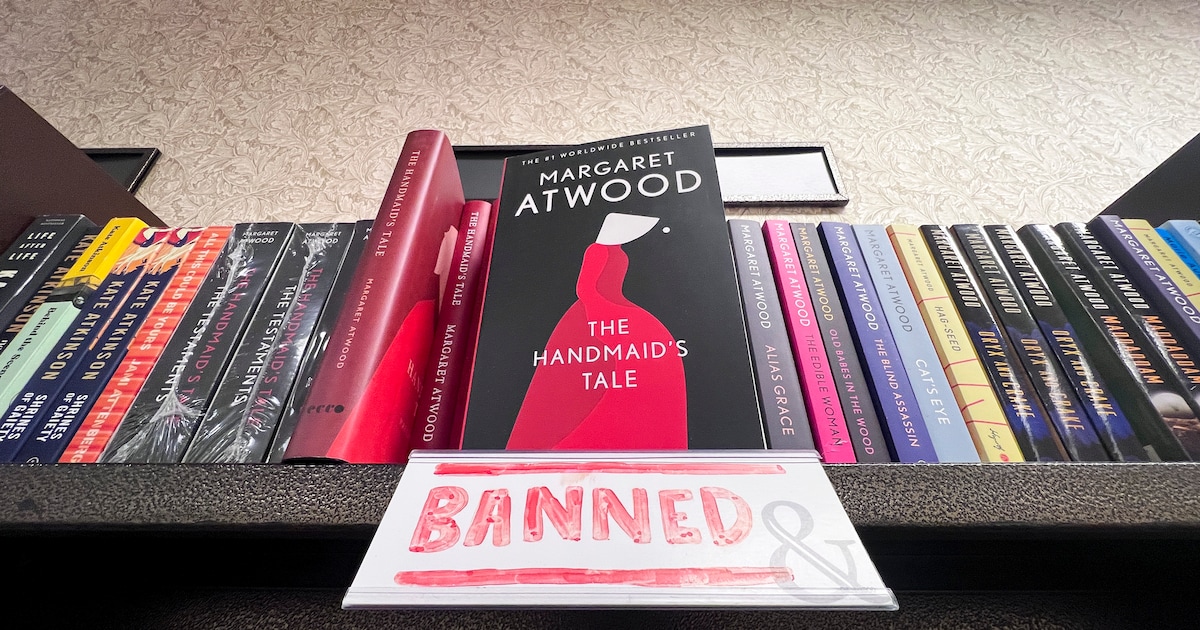
Via the Salt Lake Tribune, a federal judge has ruled that a group of bestselling authors can sue over a 2024 law that has led to sweeping book bans statewide, denying the state’s motion to dismiss the case. “The book ban has damaged the Plaintiff Authors financially, reputationally, and professionally,” judge Richard Shelby wrote in his ruling. “This is sufficient to establish standing.”
As Words & Money has reported, the lawsuit was first filed in January on behalf of the Estate of Kurt Vonnegut, authors Elana K. Arnold, Ellen Hopkins, and Amy Reed, and two unnamed Utah public high school students, and alleges that H.B. 29, the state’s “Sensitive Materials Law,” is overbroad and in violation of the First and Fourteenth Amendments. Under the law, a book must be removed from all public schools if at least three school districts (or at least two districts and five charter schools) determine it amounts to “objectively sensitive material” that meets state definitions for pornographic or otherwise indecent content. So far, 37 titles have been banned from schools statewide under the 2024 law.
Alabama Public Library Service Board Member Pushes Enforcement of Anti-Trans Policy
 Jacob Holmes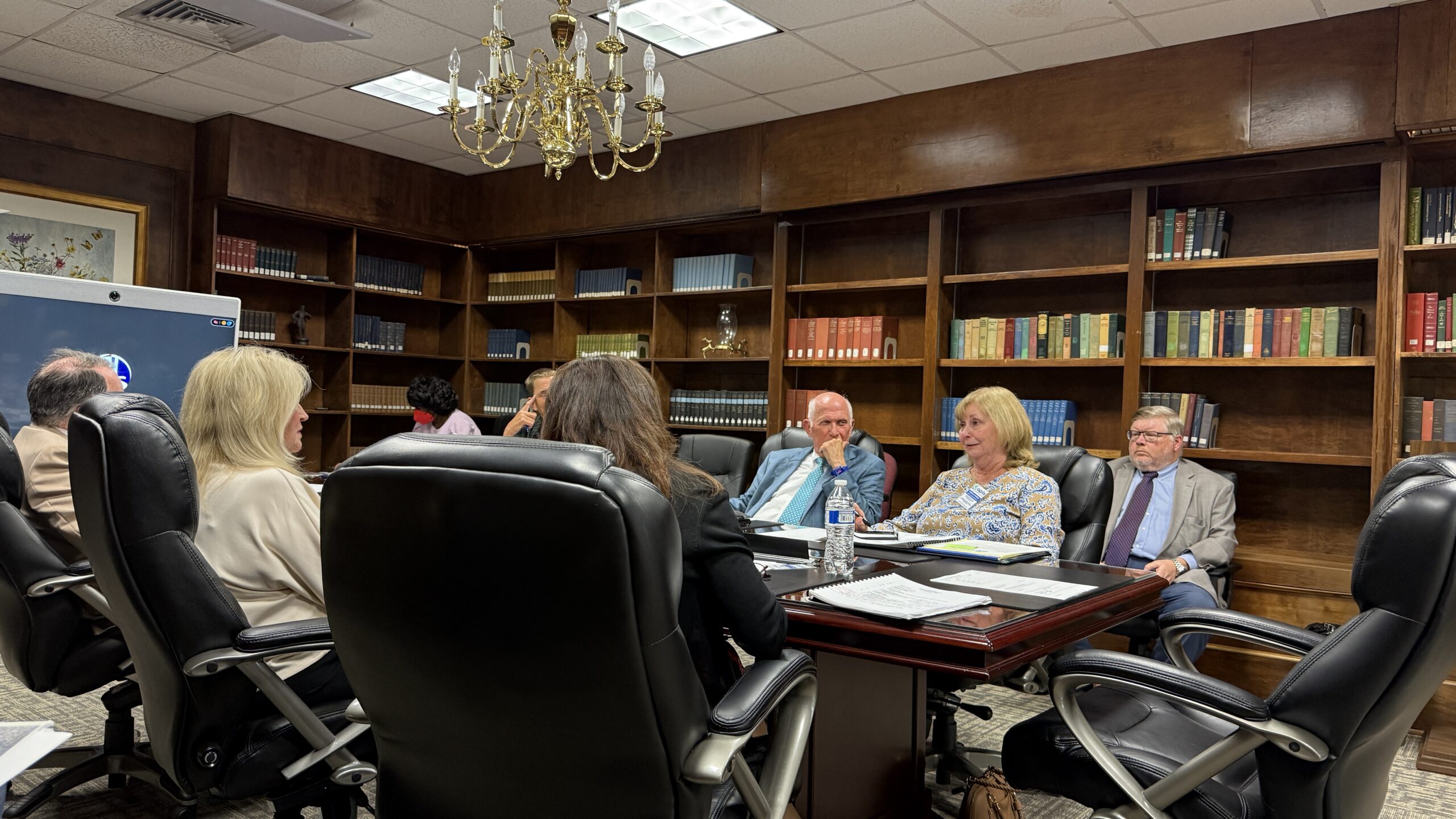
The Alabama Political Reporter reports that speakers with ties to right-wing groups seeking to ban books with LGBTQ+ themes from children’s and youth sections in Alabama libraries are urging the Alabama Public Library Service (APLS) board this week to "either hire an assistant director to enforce a ban on transgender books in youth sections" or to "strip funding from libraries that have not complied."
The hearing comes after APLS board member Amy Minton reportedly pushed the agency to hire “a temporary assistant director to identify books that violate the rules at libraries across the state.” But as the position remains unfilled, the Reporter notes that Minton has since published an article that contained a list of libraries that could be in violation based “primarily on searches of online catalogs” and using terms such as “gender ideology.” However, “many of the nearly 900 results Minton listed were not shelved in youth sections," the report states, and “included books that do not violate the rules, such as Louisa May Alcott’s Little Women."
Two librarians who also addressed the board this week criticized Minton’s actions. “This article placed library directors and staff in the position of having to defend themselves against allegations that never should have been advanced without careful verification,” Lindsy Gardner, president of the Public Library Directors of Alabama, said, according to the report. “That a board member elevated these claims is especially troubling.”
Book Banners Cry Foul as North Carolina School District Adopts Strict Reading of State's New Book Challenge Rules
According to the News & Observer, the Wake County school system “will no longer allow people to file challenges to get books removed from school libraries” after attorneys for the system interpreted recent changes in state law to mean “that parents can now only restrict their own children from borrowing specific school library books,” rather than forcing books to be removed from the library. “Each parent controls their own child’s access to library books,” Neal Ramee, one of Wake’s attorneys, told the school board’s policy committee, according to the report. “No parent has a right or community member has a right to challenge books just sitting on the shelf in a library.”
If that seems perfectly reasonable to you, you're right, of course. And here's the proof: right wing critics are insisting that Wake's reading is “not faithful to the intent” of the law, which the state changed in a budget bill adopted in July. Furthermore, the outlet reports that Wake’s position could be adopted by other districts. “The law does not provide a means for a parent or community resident to request the removal of a book from a library,” Crystal Roberts, a Durham Public Schools spokesperson, told News & Observer reporters this week. “However, a parent can restrict their child’s access to any book in the library.”
Reflections on Five Years of a Book-Banning Onslaught
 Kelly Jensen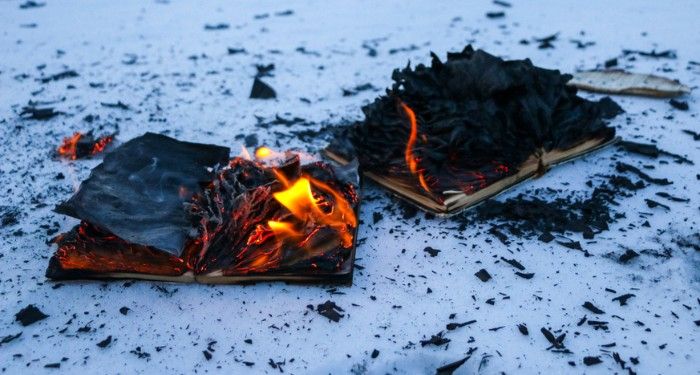
Over at Book Riot, there is no weekly censorship news update this week, but there is a must-read story in its place: a report from Kelly Jensen (Book Riot), Tasslyn Magnusson, and Sarah Lamdan (American Library Association), Stephana Ferrell (Florida Freedom to Read Project), and Arielle Haughee (Freedom to Read Project), "as well as dozens of right to read champions nationwide looking back on the last five years of escalating book censorship."
"This fall marks the start of year six of relentless book bans—that’s more than half a decade," the report states. "This is in no way a comprehensive picture of book censorship in the 2020s so far. There’s no way any report could ever do that, particularly as we understand the hurdles that make reporting and recording censorship a Herculean task—the loss of local media, the suppression and reimagining of factual information, and the pervasive nature of quiet/soft/internal censorship to name just three. But the insights here are robust, and they underscore the vital need for those who champion the right to read to show up in their own communities—it really makes a difference."
Denver Public Library Calls Out Mile-High Library Ebook Prices
Local ABC affiliate Denver 7 reports on the high prices facing libraries for digital access to books. "E-book checkouts at the Denver Public Library have grown 50% since 2019, but that surge in popularity comes with a significant price tag—and long waitlists for borrowers," the report notes, adding that the library "spends an average of $42,000 to keep the wait time for a single bestselling novel below two months." By comparison, DPL officials said it would cost the library $400,000 "to purchase one copy of a current bestseller for every person on a waitlist."
"It is an issue for libraries all over the country," Kristen Calvert, director of library services and community outreach at the Denver Public Library, told the outlet. "And to that end, libraries are working together to kind of try to meet with the big five publishers to talk about how we can make this a little bit easier on libraries, because what we're ultimately doing is just trying to supply books to those who are using our libraries." Calvert added that people "can raise awareness about the e-book crisis by speaking to their elected officials."
Report: Texas Libraries Return Enormous Value
 Wendy Woodland
The Texas Library Association this week released a new statewide study, Beyond the Stacks: Measuring the Economic and Community Value of Texas Public Libraries, that shows how much value public libraries bring to their communities. Among the key findings: Every $1 spent by local libraries results in $4.74 of statewide economic activity; Public library expenditures directly and indirectly support 11,200 jobs in Texas; Texas’ public libraries generated $3.829 billion in the total economic benefits in FY2024.
"Libraries facilitate information exchange, providing individuals access to books, magazines, music, movies, computers, the internet, and community meeting space. Librarians provide a human resource to stakeholders, helping to guide the discovery of information," the report states. "Beyond the function of the library is an economic driver—libraries as businesses employ thousands of workers in Texas, buy goods and services from local vendors, and invest in capital improvements."
Bill That Would Politicize the Copyright Office Is Amended and Passed Again, Setting up Potential Senate Showdown

The U.S. House of Representatives this week quietly passed by voice vote an amended bill, H.R. 10204, that could have grave implications for the future of the U.S. Copyright Office. As Words & Money previously reported, the bill was originally passed as H.R. 6028, in June, but needed minor corrections to ensure its smooth transfer to the Senate. With those corrections made, the bill now moves to the upper chamber, where GovTrack estimates it has a 34% chance of passing.
On the plus side, the bill would officially transfer authority to hire and fire the Librarian of Congress and the head of the Government Publishing Office to Congress, which would be a welcome move after President Trump's shock firing of Librarian of Congress Carla Hayden in May 2025. But, more significantly, the move would give the president the power to hire and fire the head of the U.S. Copyright Office, and at a time when the Copyright Office is at odds with the administration over key issues, including AI training.
Technology, library, and public interest groups have come out strongly against the bill and its plan for the Copyright Office, saying it would politicize the Copyright Office. "Each administration will be pressured to pick nominees aligned with their own policy preferences, and the powerful copyright owning industries will invest even more heavily in lobbying to get their way," observed Joe Mullin, in a post for the EFF. "The Copyright Office should serve the public—not presidential administrations, and not industry lobbyists."
New U.S. Copyright Bill Would Enable Global Website Blocking
 Shiva Stella
Public Knowledge this week responded to a new bill introduced by Rep. Darrell Issa, the “American Copyright Protection Act of 2026,” which would empower rightsholders to secure “blocking orders” against foreign websites accused of copyright infringement.
“Rather than attacking the problem at its source by bringing the people running overseas piracy websites to court, Congress and its entertainment industry allies have decided to build out a sweeping infrastructure for censorship," warned Meredith Rose, Senior Policy Counsel at Public Knowledge. "Site-blocking orders force any service provider, from residential broadband providers to global DNS resolvers, to disrupt traffic from targeted websites simply accused of copyright infringement," Rose adds, noting that the law would allow a single court to cut off access to a website globally, "based on a single individual’s filing and an expedited procedure."
On Public Libraries and Journalism
 Sophie Culpepper
Nieman Lab has a great Q&A with Terry Parris Jr., who, after several years leading "engagement journalism initiatives" at ProPublica, The New York Times, and The City, and "securing an MLIS" along the way, is now "refining his vision for the Library Newsroom Project."
"Journalism is a tool, and a valuable one, because it offers a structured way to ask questions, evaluate evidence, check claims and make information understandable. The difference is that those practices do not have to remain exclusively inside a newsroom or serve only the production of professional journalism. Journalism can live inside the public library and allow people to take part in it together," Parris Jr. says. "And I would go one step further and say this is also an evolution libraries can undertake. Libraries have always helped people find, access and understand information. They can also help communities create information for and about themselves. They already provide public space, information exchange, continuity and established community relationships."
Head of Free Library of Philadelphia Foundation Steps Down
 Peter Crimmins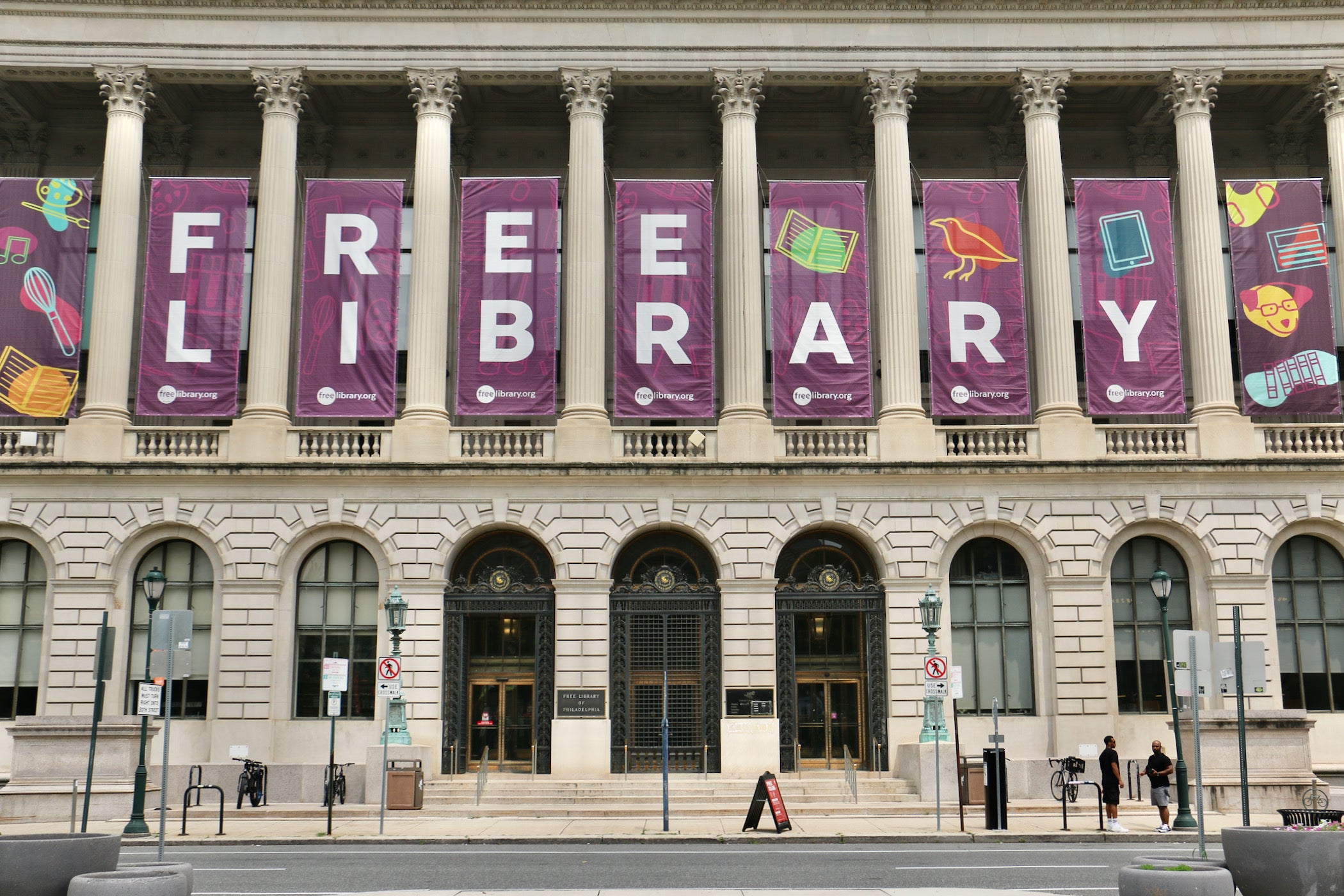
WHYY reports that Monique Moore Pryor, president of the Free Library of Philadelphia Foundation, the library's fundraising arm, is out after three years on the job. "In a joint statement issued with the foundation board, Pryor said she is resigning to 'attend to pressing family matters.' Board chair Jeffry Benoliel praised Pryor for expanding and diversifying the foundation’s donor base," the report states. The report also notes that Pryor faced "significant pushback from employees, particularly from the staff of the Author Events series. The staff resigned en masse in June 2024 to protest Pryor’s management and programming decisions, but the foundation board fired them later that same day."
And Finally This Week...
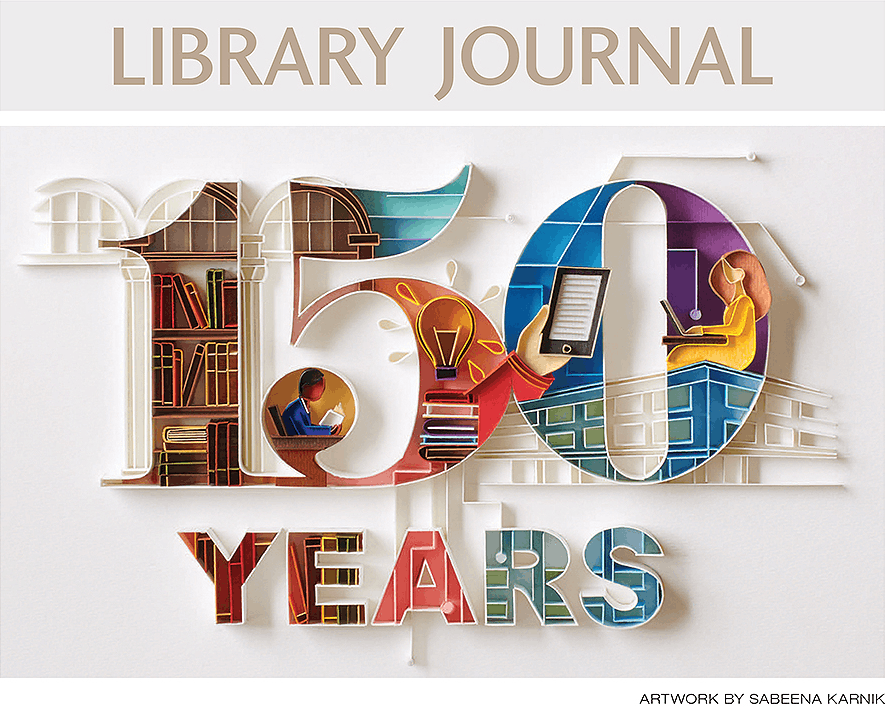
I've waited a couple weeks to post this, wanting a chance to dive in to the issue, but don't miss Library Journal's 150th Anniversary issue, which is jam-packed with great articles. As readers may know, I spent nine great years at Library Journal, from 1999-2008, and I am honored to have played some small part in the magazine's history. Here's to 150 more.