The Words & Money Weekly Newsletter: August 14, 2026

Thank you for supporting Words & Money and helping to establish an independent media venture that aims to properly center libraries in the 21st century reading, writing, and publishing enterprises. If you're already a subscriber, thank you, and we encourage you to please share this newsletter with your friends and colleagues and ask them to subscribe as well. And if you can, consider supporting us with a premium subscription for just $45 annually.
We're in the final weeks of summer, so a slightly abbreviated newsletter this week, although there is still plenty of news to share. Among the headlines in our weekly media roundup, The Queue: more on the fallout in Arkansas after an appeals court rules that a book banning law can take effect; Massachusetts Governor Maura Healey signs the state's freedom to read act into law; more on how AI will impact the work of libraries; and a U.S. Library takes top honors at IFLA's 90th World Library and Information Congress in Korea.
The Queue: Library News for the Week Ending August 14, 2026
Fear and Loathing in Arkansas
As Words & Money reported in July, a federal appeals court has lifted a three-year-old injunction that had blocked parts of a controversial 2023 Arkansas state law, Act 372, from taking effect. Now, more local reports are sounding the alarm over the potential chilling effects that appeals court decision will have.
 Tess Vrbin
“The Independence County [Arkansas] Library in Batesville announced July 31 via Facebook that it would no longer allow patrons under 18 to check out manga content,” reports Tess Vrbin at the Arkansas Advocate, who also notes that Independence library staff have been “putting stickers" on books with "sexually explicit" prose as a warning that minors cannot access them.
Nate Coulter, executive director of the Central Arkansas Library System, a lead plaintiff in the 2023 lawsuit that challenged Act 372, told Vrbin that libraries in the state now face a dystopian choice: segregate or remove books from the library entirely, or risk prosecution. “Public librarians are not in the group that you should lie awake at night worrying about your kids [being around], and to raise up teachers and librarians as a threat to your children is a mind-boggling thing,” Coulter told Vrbin, who noted Coulter's frustration with the state’s implication that "libraries and librarians are unsafe for children.”
Furthermore, Vrbin reports that the situation could soon get worse for Arkansas librarians. That's because the state's education department is now considering new content restrictions recommended by the Arkansas State Library Board that would condition public library funding on "ensuring patrons age 16 or younger cannot check out materials that depict or describe sexual contact and behavior.” Despite significant public opposition to the proposed rules, there is little question as to how that vote will go: As Vrbin points out, state legislators in 2025 passed a law that allowed Sanders to summarily dismiss the previous library board and appoint a new, hand-picked, all-conservative slate.
As Words & Money shared last week, librarians say the vagueness of Act 372 leaves librarians unsure of what materials could be considered "harmful to minors" under the law, as well as who exactly would be exposed to jail time: the person who purchased the item for the library? The person who processed it and made it available? The person who processed the checkout? One librarian told Vrbin they hoped the appeals court would add more guidance when they issue their mandate.
That, however, seems unlikely. In his July 2023 decision, district court judge Timothy Brooks suggested that the vagueness in Act 372 was likely intentional. “After all," the judge wrote, "by keeping the pivotal terms vague, local governing bodies have greater flexibility to assess a given challenge however they please rather than how the constitution dictates.” And in striking down Brooks's thoughtful ruling, the Eighth Circuit—citing...the dictionary—needed just seven paragraphs to decide that the law was clear enough, suggesting they have little desire to better define what the legislature declined to define at all.
Meanwhile, the Eighth Circuit this week granted the plaintiffs an extension to August 27 to file for a rehearing en banc before the full Eighth Circuit. That is almost certainly the plaintiffs' best bet to blunt some of the damage about to be unleashed on Arkansas libraries, even if it may be a longshot. Watch this space.
Meanwhile, in Massachusetts...
 Alan Earls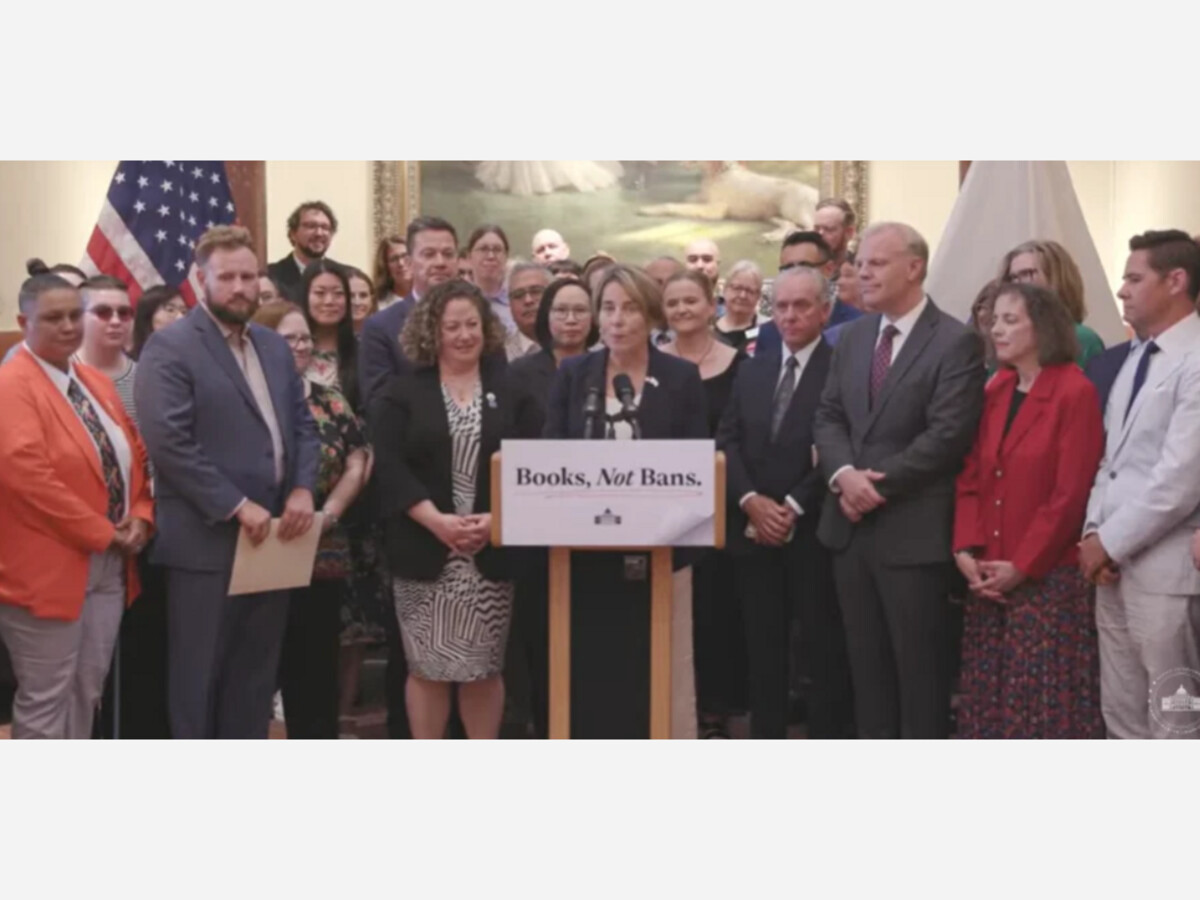
In contrast to what's happening in Arkansas, some good news this week in Massachusetts. At an August 10 signing ceremony at the Franklin Public Library—the oldest public library in the United States—Massachusetts Governor Maura Healey signed the state's new freedom to read bill into law. The law, S. 2726, was passed on July 31 by a 152-1 vote in the House, and by a voice vote in the Senate later that day.
As reported by the local Franklin Observer, the new law seeks to block ideological book bans in the state's schools and libraries; establishes transparent processes for reviewing library materials; and, crucially, the Massachusetts law strengthens protections for librarians and educators at a time when Arkansas and several states have chosen to scale back protections and expose educators and librarians to criminal and civil penalties simply for doing their jobs.
“This bill is about protecting the freedom to read, to learn, to ask difficult questions and to encounter ideas we might agree or disagree with. It’s also about protecting our teachers and librarians and allowing them to do their jobs," Healey said, in a statement. "At a time when President Trump is defunding education and trying to censor any ideas he doesn’t agree with, it is more important than ever that states step up to lead."
The bill's journey into law comes after more than three years of legislative work in the state, which started in June 2023, in the teeth of an organized, right-wing attack on libraries and the freedom to read.
After Illinois enacted the first freedom to read law in June 2023, Massachusetts is now one of at least a dozen states (by our count) that have enacted such legislation (California, Colorado, Connecticut, Delaware, Illinois, Maryland, Massachusetts, Minnesota, New Jersey, Rhode Island, Vermont, and Washington). New York passed a freedom to read law in 2025, but it was vetoed by Governor Kathy Hochul.
In a statement, ALA president Maria McCauley, Director of the Cambridge (Massachusetts) Public Library, applauded the new law. "In 2023, the Massachusetts Board of Library Commissioners conducted a survey in which 48.5% of the school librarian respondents reported that they reconsidered displays and books or items featured due to negativity surrounding book challenges," McCauley said, adding that library workers had also reported "unprecedented" threats and harassment. "This law will safeguard Massachusetts libraries against censorship and create clear guidelines to make sure that everyone can access information in libraries."
FCC Publishes Official Notice for E-rate Comments in the Federal Register
 Jericho Casper
The FCC today published its official Notice of Public Rulemaking (NPRM) in the Federal Register, seeking public comment on its controversial plan to review the agency's E-rate program, which provides roughly $3 billion annually to subsidize broadband connectivity in schools and libraries across the nation.
The notice gives a deadline of October 13 for public comments to be submitted. ALA reps told Words & Money that they will release a guide and template for filing comments next week, and, with their coalition partners, are urging librarians to make their voices heard.
Notably, prior to the notice in the Federal Register, the FCC's initial notice for comment was released in late June and has already garnered more than 12,000 comments from all 50 states. Among them, newsletter Broadband Breakfast this week reported on a coalition of libraries in Wisconsin that, in comments submitted last week, warned that if the FCC "terminates or limits" E-rate funding, libraries throughout Wisconsin will face cuts to services.
Under Chairman Brendan Carr, the FCC has been accused of using its power to go after speech the Trump administration dislikes—and in announcing his proposed review of the E-rate program, censorship also appears to be a motivating factor.
In his E-rate announcement, Carr said the review was being done with an eye toward "empowering parents," hallmark language of the current right-wing movement to ban books. The FCC announcement also expressly seeks comment on whether the FCC's current interpretation of the Children’s Internet Protection Act (CIPA) "sufficiently protects children from inappropriate and harmful content when using school and library computers," which would appear to be far afield from the FCC's mandate with E-rate.
Furthermore, the review comes after Carr's FCC last fall ended a popular program that allowed E-rate funds to be used for Wi-Fi access on school buses and by lending hotspots (a program that was unveiled at the 2023 ALA Annual Program in Chicago), alleging that the expansion was funding "unsupervised screen time for kids without accounting for the risks."
Can Librarians and Information Professionals Become the 'Accountable Conversant' Our AI Future Needs?
 rdlankes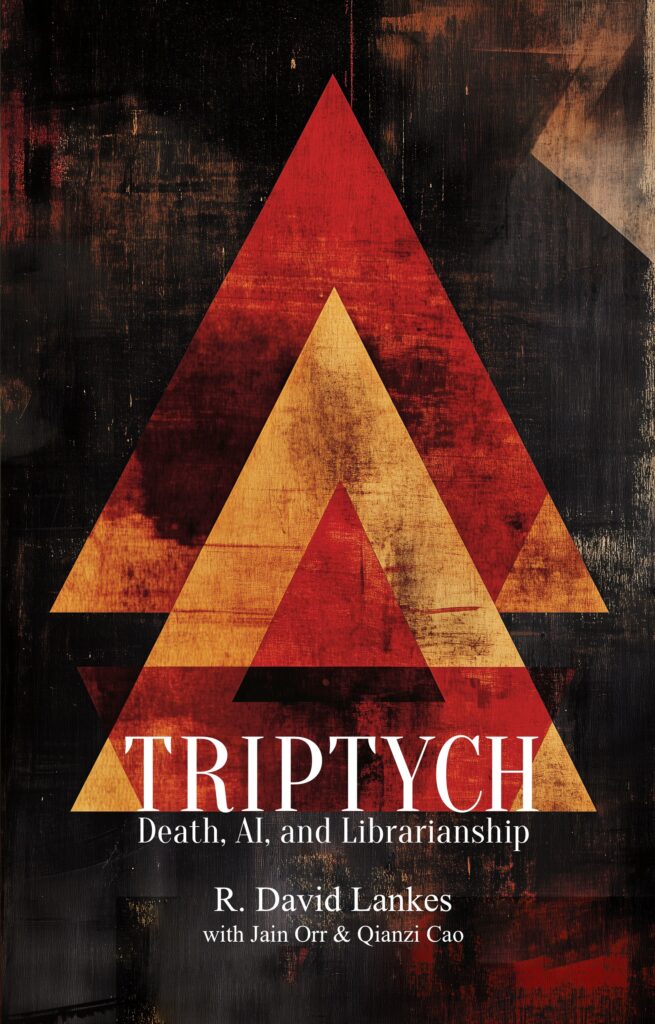
At the end of July Words & Money shared a new preprint paper by University of Texas professor R. David Lankes on the "Information Shock" that is poised to change the work of library and information professionals. This week, on his personal website, Lankes shared a video talk (and script) he prepared for IFLA's 90th World Library and Information Congress, which concluded this week in Busan, Korea. Again, this is fascinating stuff, well worth a watch (or a read).
In his talk, Lankes continues to explore the dramatic change AI portends for information science, and offers a glimpse at what he sees for the future of libraries and information professionals. Crucially, he separates the way we should view the AI industry as it is forming today from the information "exchange" that AI can deliver.
"So what is the path forward? It is not to walk away from the exchange. Librarians can and should reject these systems as they stand today. The water-hogging data centers. The training built on uncompensated human labor. The handful of companies extracting value from a global commons and selling it back to us. We have every right to fight for AI that is ethical and sustainable, and every duty to refuse to normalize what is not," he writes. "But refusing these systems as they are is not the same as leaving the exchange. Our communities are already inside these tools. The underlying business model is already reshaping their lives. They need us there with them."
How Libraries Are Helping Patrons with AI Today
 Chelsea Lubbe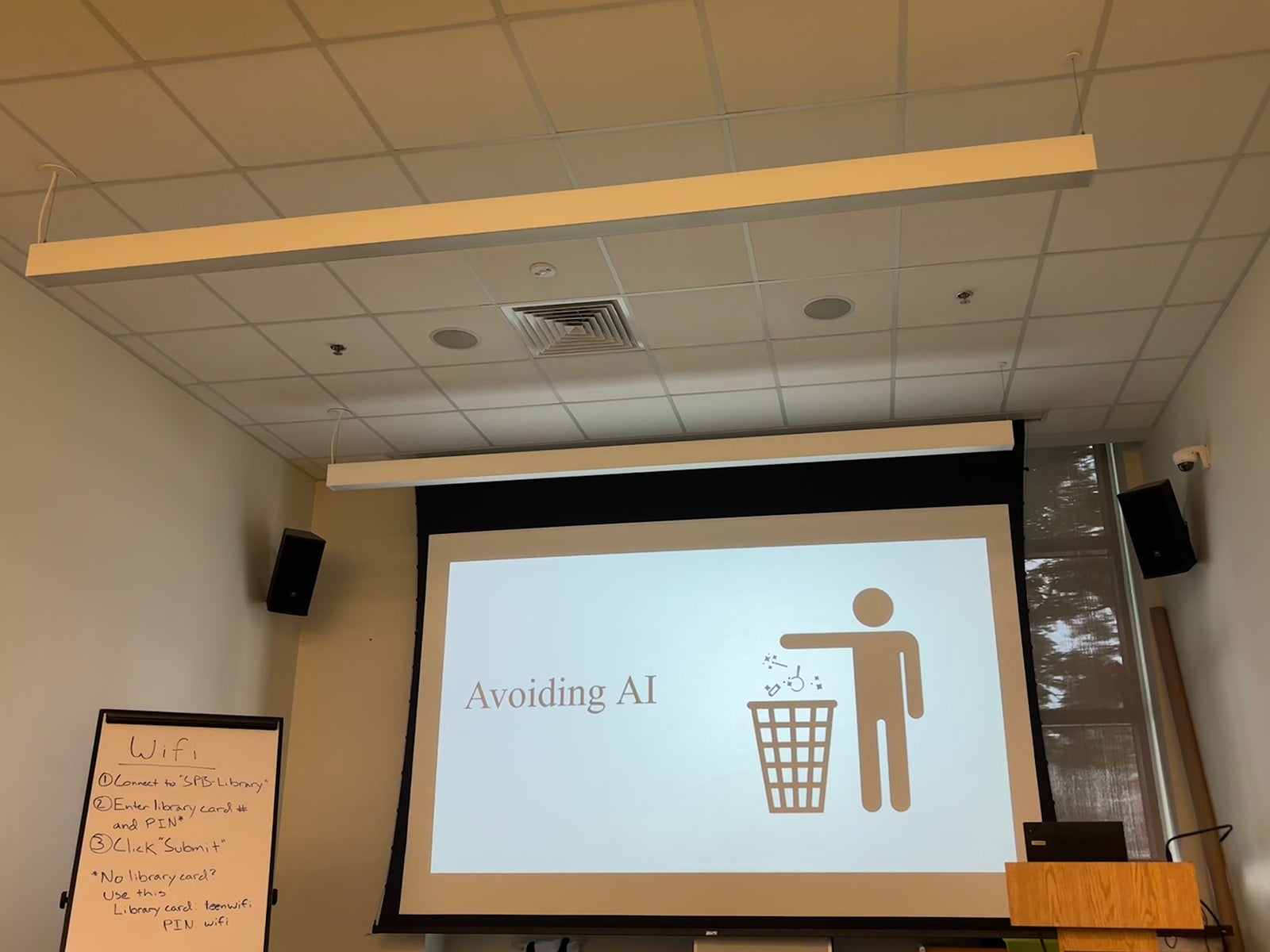
Via Local affiliate WHYY, a look at how the Free Library of Philadelphia is helping patrons deal with the advent of AI. "On Tuesday, the Free Library of Philadelphia hosted 'Avoiding AI: A Hands-on Workshop,' the second event in its Critical AI Literacy series, showing participants how to disable unwanted AI features in operating systems and popular apps while protecting their privacy," the report states. "Charlie Bailey, a librarian at the South Philadelphia Library, said people are increasingly frustrated as AI features appear across websites and apps, altering familiar interfaces without users actively choosing them."
While much of the article focuses on how the library is helping people avoid AI, which is a fair representation of where many people are, the piece also delves into the role of the library in our AI future. "There are a lot of reasons why people trust the library,” Tess Wilson, a representative of the Library Freedom Project, told reporters. “We’re here, we’re not selling you anything. We provide you information and we want to give you the best information there is.”
Is the AI 'Market Dilution' Legal Theory Being Embraced by Publishers Viable?
 A Lowry
Also at the end of July, we shared news of a paper, Generative AI Floods and Dilutes the Market for Books that seeks to bolster the publishing industry's legal case against AI companies: that the proliferation of AI-generated or AI-assisted books trained on unauthorized copies of human-authored works is copyright infringement because an influx of AI works "dilutes" the marketplace for these works.
This week, Brandon Butler at the Re:Create Coalition has a short but persuasive post that casts doubt on the paper's theory. For my fellow copyright nerds, the post is well worth checking out, as it delves into a few reasons why market dilution is a questionable theory of infringement, settling on a conclusion that is pretty hard to dismiss. "Copyright is not a collective right to a particular set of market conditions," Butler writes. "It did not protect painters from photography, silent film actors from talkies, or composers from player pianos. Copyright has never been the right policy tool for managing disruptions from technological change. The advent of AI is no exception."
U.S. Library Takes IFLA's Public Library of the Year Honor
 Andrew Albanese
Congrats to the Gateway Library (Mesa, Arizona, U.S.A.), which was named the IFLA/James Bennett Public Library of the Year at the 90th World Library and Information Congress, which closed this week in Busan, South Korea. In addition, the Rami Library (Istanbul, Turkiye) took home the 2026 IFLA Green Library Grand Scale Project Award, for its transformation of a 19th century historic barracks into a “climate-resilient urban commons.” These are two absolutely extraordinary libraries.
The IFLA Public Library of the Year Award celebrates a newly built or expanded public library that has “best managed to combine open and functional architecture with sustainable and creative IT solutions” and “has included both digital developments and local culture.” Starting this year, Australia-based library supplier James Bennett has taken over sponsorship from U.S.-based Baker & Taylor, after B&T’s collapse late last year.
Washington Names New State Librarian
 MALLORY KRUML and MKRUML@PTLEADER.COM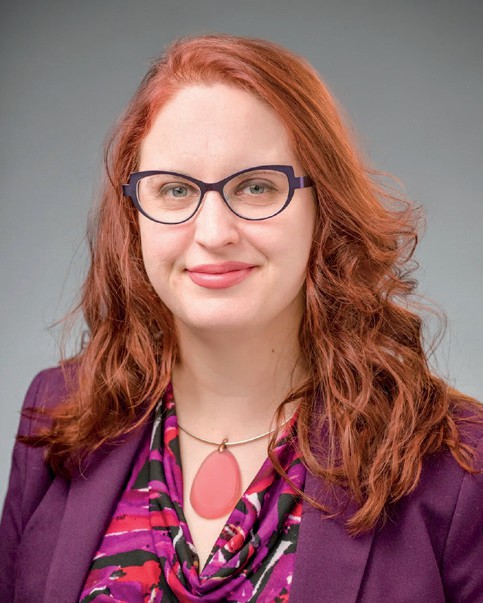
The Port Townsend & Jefferson County Leader reports that their local public library's first ever community services director, Melody Sky Weaver, has been named the Washington State Librarian. "Melody has truly put our public library on the map, and helped make it a shining example of how a small, nimble, and creative library team can have a major positive community impact,” City Manager John Mauro told the paper. Sky Weaver said that while she is “delighted and honored” to accept the new role, her departure is also bittersweet. "I will always treasure and feel heartfelt gratitude for my time in this vibrant victorian seaport and arts community and look forward to visiting and supporting the Carnegie library as your new Washington State Librarian.”
Embattled Florida Library Director Quits Just Months Into the Job
 Rick Outzen
NorthEscambia.com reports that West Florida Public Library director Christal Bell-Rivera has abruptly resigned. The resignation comes just months after County Administrator Wes Moreno rejected the library board's recommendation for its new director and instead picked Bell-Rivera, despite questions over her qualifications, one of several controversies surrounding the library. Meanwhile, local blogger Rick Outzen reports that Bell-Rivera's resignation has prompted a letter from the chair of the library board, urging Moreno to break past patterns and resolve to work better with the library board.
Book Riot Takes a Deep Dive into Prison Censorship
 Kelly Jensen
Over at Book Riot, Kelly Jensen leads off her weekly censorship news column with the first in a three-part series exploring the current state of prison censorship, written by guest writer and librarian Aaron Blumberg. "Prison censorship has been increasing as much as–if not more than–censorship in public libraries and schools over the last six years," Jensen writes. "Blumberg’s posts aim to add even more depth to this ongoing conversation."
And Finally This Week...
 WTVC
WTVC
In Tennessee, news this week that a library with strong ties to Civil Rights history will be preserved. “Rosa Parks walked through its doors. So did Dr. Martin Luther King Jr. Now, the Highlander Folk Library is permanently protected from changes that could erase the history built into its walls,” reports WTVC. “Preserve Chattanooga announced Tuesday that a preservation easement has been placed on the library, part of the former Highlander Folk School campus and a nationally significant site in the history of the American labor and civil rights movements.”
Built in 1949, the library was once surrounded by other buildings on the Highlander campus and became “a gathering place where labor organizers, educators, civil rights leaders, and grassroots activists exchanged ideas, developed leaders and worked on strategies for social change.” Much of the campus was “destroyed or dramatically altered after the Highlander Folk School was forcibly closed in 1961” the report adds, “making the surviving library an especially rare physical link to what happened there.”