In the Library Ebook Market, Can Librarians Learn to Just Say No?
If recent tensions over library ebook legislation has shown librarians anything, it is that maintaining the status quo in the digital library market is ultimately a choice being made by librarians. Legislation or not, can librarians change their approach?

At the 2026 American Library Association Annual Conference, Ellen Paul, executive director of the Connecticut Library Consortium, joined Hoopla’s Jeff Jankowski and Ann Ford at the Hoopla booth for a live recording of company's podcast, The Straight Download. During their insightful conversation on the state of digital library lending and the movement for library ebook legislation, Paul caught my attention with a candid observation I’ve rarely heard publicly stated.
Even if several states succeed in passing proposed library ebook legislation, the major publishers will almost certainly sue to stop it, Paul predicted. Thus, any potential legislative relief in the digital library market remains many months away, at least; potentially years. At the same time, however, “there's nothing stopping libraries from not accepting [the Big Five’s] terms right now," Paul pointed out.
“You didn't have to think so deeply about digital collection development back when the pricing and the terms between print and digital were closer,” Paul explained, alluding to just how much things have changed in recent years, with digital demand surging in libraries, and the Big Five publishers refusing to discuss a sustainable path forward.
 Andrew Richard Albanese
“Maybe this is just the ultimate wake-up call?” Paul suggested. “We have to start thinking about [digital] differently."
The Cards Are on the Table
In the months following Paul’s appearance on the Hoopla podcast, the “wake-up call” for librarians has only grown more urgent.
With support for library ebook legislation continuing to gain support in several states, the Association of American Publishers (AAP) and the Authors Guild (AG) have spent the summer rolling out a convoluted campaign in opposition. From a rambling 9,000-word policy paper and a misleading local op-ed attributed to James Patterson to, most recently, a questionable economic study—commissioned by the AAP and AG, prepared by a Washington D.C.-based litigation consultant called Secretariat Advisors, industry lobbyists have deployed considerable resources to portray digital library lending as a threat to the publishing industry.
 Andrew Richard Albanese
It's a curious choice. In most industries, a shift in consumer preferences like the one identified in the Secretariat study would be seen as a chance to work more closely with key partners; to talk, to ask questions, to identify strengths and weaknesses, and to consider ways to diversify revenue streams and optimize sales. Instead, the major publishers are choosing to strike an adversarial posture toward public libraries—major customers and critical partners that marshal significant public resources and goodwill to reach and engage readers every year.
And so, the major publishers have shown their cards. Hiring a “litigation consultant” to conduct a market study certainly suggests, as Paul predicted on The Straight Download, that rather than collaborate with libraries on a mutually beneficial path forward in the digital library market (something which libraries have been seeking for some 15 years now) the publishers’ primary trade organization instead appears to be gearing up for a court battle, and bringing authors along with them via the organization that’s supposed to protect them from bad publishing deals.
Whatever happens with library ebook legislation, in the face of such industry resistance, the key question now may be whether librarians are, as Paul suggested on The Straight Download, finally ready to “think differently” about the digital marketplace?
If they aren’t, they should be.
After all, as Paul noted, if library ebook legislation is enacted in several states, a court battle would likely delay implementation. But even if such laws are ultimately upheld (which library leaders are confident will happen), they are not a magic bullet. The library ebook bills now advancing are designed to encourage the major publishers to negotiate with libraries in good faith. But in their lobbying efforts, AAP reps have suggested that if legislation succeeds, the major publishers will likely choose to pull back from the digital library market rather than pull up to the negotiating table.
That would be unfortunate. Understandably, library selectors want to give their patrons access to the books they want to read in the formats they want to read them. But as librarians have long pointed out, they have limited public funding with which to build broad, diverse, and enduring collections that serve their entire communities—not just fans of the latest bestsellers. And they simply can’t do that if they are paying significantly higher, non-negotiable prices to license and re-license the most in-demand ebooks and audiobooks from a handful of multinational conglomerates.
But if the recent tension over library ebook legislation has shown librarians anything, it is this: the major publishers have the power to dictate terms for licensing their content, but maintaining the status quo in the digital library market is ultimately a choice being made by librarians. And the reality is that libraries have other choices.
There are literally hundreds of independent publishers and thousands more indie authors who are eager to work with libraries in the digital marketplace, and who are already offering digital access under reasonable prices and terms, including perpetual access. As Paul suggested on The Straight Download, librarians don't need a law to say no. So, why haven't they?
Rethinking ‘Demand’
Admittedly, pivoting digital collections away from chasing bestsellers wouldn’t be easy. Many librarians fear that patrons would be upset at losing digital access to new and bestselling books, even if they are available in print, and that these users will blame the library.
Furthermore, there are structural barriers to finding and delivering a broader and deeper selection of books from indie publishers and authors, which don’t get the kind of media hype that the bestsellers do.
 Andrew Richard Albanese
So, what would it take for more libraries to refocus their attention and collection budgets on the independent publishers and authors who want to work with them in the digital marketplace? I spoke with Ellen Paul a few weeks after she recorded the Hoopla podcast and asked her that exact question.
“The best thing indie authors and publishers can do is to create more demand for their titles,” Paul said. “If the public is asking for a title, and if it's being well-reviewed, it's going to be a contender for the collection.”
Paul’s recommendation that publishers create more demand may seem obvious, and even a bit reductive. In fact, it’s an industry-wide challenge for all publishers, many of whom rely on authors to do their own marketing. Even the Big Five struggle to create demand for the majority of books they publish every month, despite a supply chain that has evolved to support their scale.
For libraries, the challenge also takes on a different dimension. As institutions tasked with providing broad, diverse collections for their communities, digital “demand” in libraries shouldn’t be judged solely by Libby users stacking up holds for the bestselling books getting all the mainstream attention. Public libraries have historically been the biggest supporters of debut authors, midlist titles, and regional publishers, helping create demand beyond their own collections and local communities, a role they should not relinquish.
“Most librarians do want to support indie and small press titles,” says Stephen Sposato, a collection development manager at Chicago Public Library. “But patrons expect libraries to stock the Big Five titles that get promoted across the media. And that leaves libraries with less flexibility to look beyond those.”
“I can only buy what I know about,” says Robin Bradford, a collection development librarian at the Pierce County Library System, in Washington. “When it comes to independent and smaller publisher titles, I just don't see them. Before we even get to the affordability problem, we have discovery issues.”
Ann Lehue, the director of collection and metadata development for Ingram Library Services, agrees.
“Most librarians want to find great books, regardless of who published them,” Lehue says. “But it’s a crowded market, and many of the tools libraries traditionally use—professional reviews, established vendor relationships, and collection development workflows—have evolved around traditional publishing models.”
These observations recall one of my primary takeaways from Foreword’s 2026 Library Insights Summit at this year’s ALA: the so-called “friction tax” non-Big Five publishers and indie authors face when working with libraries. Simply put, the harder a title is to acquire, the less likely that it will be acquired.
 Guy LeCharles Gonzalez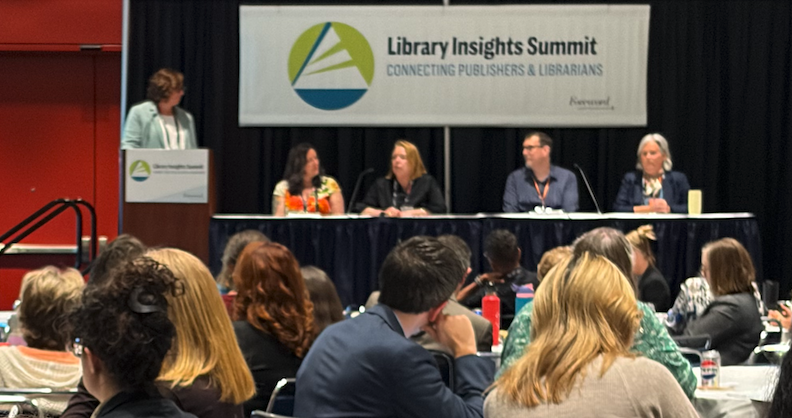
While there are tweaks that can help librarians better filter the thousands of books that aren’t getting major media attention (and thus the holds in Libby)—such as improving metadata—librarians also say that vendors have a key role to play.
“Vendors can make it easier for indie authors to work with libraries by simplifying onboarding, improving metadata tools, supporting wide digital distribution, and spotlighting vetted indie titles so librarians can find them quickly despite tight budgets and limited staff time,” suggests Sarah Hawkins, assistant director for Anoka County Library in Minnesota.
"Library vendors can use the power of curation to shine a spotlight on quality indie titles that will appeal to public libraries and their patrons,” Sposato says. “To some extent, they already do some of this. They can create lists, shelves, carts, and reports that highlight what’s new and what’s selling and find ways to market them. They can include indie review sources.”
“If I pull up a list of thrillers coming out in September, don't just show me titles from the Big Five and bigger indie pubs like Sourcebooks or Bethany House,” said Bradford. “Show me everything you have on that. Don't segregate them into their own category.”
Vendors can also continue to educate publishers about how libraries actually work, whether in direct conversations and improved sales reporting, or by engaging with industry organizations like the Book Industry Study Group (BISG) and the Independent Book Publishers Association (IBPA), to develop dedicated initiatives.
“Straightforward contract terms can make it easy to offer libraries the variety of options they want at fair prices, based on standard ONIX metadata," adds Micah May, the director of business development for The Palace Project, now a part of Lyrasis. "And, to provide preferred visibility when library-friendly offer models are used.”
Furthermore, vendors have access to the kind of data that can help publishers truly understand how their books are being discovered and engaged with in libraries, rather than relying on flawed anecdotal research efforts, or Amazon’s selective insights.
The OGs
 Guy LeCharles Gonzalez |
Meanwhile, librarians have something else in their favor, too: they don’t just respond to patron demand, they are the OG influencers with a long, proven history of creating demand. For libraries, their role in discovery is a potentially huge chip to play.
Should the Big Five publishers continue to threaten to pull their bestselling digital titles from libraries rather than negotiate, librarians would be wise to call their collective bluff, and to remind these publishers that libraries promote their books and authors long after their pub dates, and after their preorder marketing campaigns run out. Indeed, libraries have been creating and nurturing readers long before TikTok existed. And, for millions of readers across the country without a local bookstore, the library is their primary book discovery channel.
I understand that many librarians may be wary of a patron backlash should they adjust their digital collections away from ephemeral bestsellers. But I also believe they have less to fear than they think.
That librarians can convince legislators to unanimously support legislation that is being aggressively challenged by multinational conglomerates points to both the strength of their argument, and to the value they deliver to their communities. Surely, librarians can also explain to patrons why they may no longer have access to specific digital books from specific publishers.
Some 15 years into the library ebook market, patrons today are likely to understand what's causing problems in the marketplace. And if properly engaged, most library users will appreciate the library’s desire to build sustainable digital collections, as well as their commitment to fiscal responsibility.
Furthermore, even if forced to back away from robust access to bestselling ebooks, librarians will still have incredibly rich digital collections to offer.
Rather than chasing holds on expensive, time-limited licenses, why not lean into the role of tastemaker they’ve always played, highlighting curation and readalikes as a central part of their collection development policies and programming efforts? And, they can use the money they are not spending on licensing and re-licensing expensive bestsellers to expand their digital collections with services beyond OverDrive—and to make those services as visible and accessible as they’ve helped make Libby.
 Guy LeCharles Gonzalez
Some of you may remember Katie Dunneback’s infamous “21 steps to download a library ebook” presentation in 2011—back when several of the then Big Six didn’t make their ebooks available to libraries at all. The marketplace has come a long way since then. Part of that is due to advances in technology. But, more fundamentally, I'd argue that such changes came for another overarching reason: because librarians demanded better.
They've done it successfully many times before, and I wholeheartedly believe they can do it again. The choice is theirs to make.
Guy LeCharles Gonzalez is an industry veteran, including senior roles with LibraryPass; Panorama Project; Writer’s Digest; Library Journal & School Library Journal; and the original Digital Book World. You can find him at loudpoet.com.