The Queue: Library News for the Week Ending October 2, 2026
Among the week's headlines: a new federal education bill recognizes school librarians; the freedom to read appears in danger in yet another appeals court case; librarians in Iowa and Arkansas grapple with new state laws; and the 'New York Times' hears from dozens of librarians.

ALA, AASL Praise New Federal Education Bill that Includes School Librarians
With the midterm elections a month away, a new bill introduced this week by Democratic lawmakers in the House and Senate offers a more hopeful, competing vision for American education from the book banning, anti-Department of Education agenda of the current administration.

The bicameral Quality Educator Partnership Act (QEPA), introduced in the Senate (S.5549) by Senator Jack Reed (D-RI) and in the U.S. House of Representatives (H.R.10530) by Congresswoman Alma Adams (D-NC), seeks to establish “a comprehensive strategy to recruit, prepare, retain, and advance high-quality educators.” Among its provisions, the bill would create a dedicated “Office of Educator Workforce” at the embattled Department of Education and would earmark roughly $1 billion in funding to “incentivize partnerships between school districts and educator preparation programs and to help states design and implement educator workforce strategies.”
And, in a welcome move for the library community, the bill specifies the inclusion of “school library media specialists,” and includes school librarians under its definition of “educator.” In a release this week, the American Library Association (ALA) and American Association of School Librarians (AASL) endorsed the bill and praised its recognition of school librarians and media specialists.

“AASL is proud to support the Quality Educator Partnership Act, which recognizes library media specialists as a valuable part of the educator pipeline and offers an opportunity to strengthen the school librarian workforce," said AASL President Dr. April Dawkins, in a statement. “Regardless of local title—media specialist, teacher-librarian, library information specialist—school librarians are essential educators. An investment in school librarians is an investment in student success, especially in high-need schools.”
Let's be clear—this bill has zero chance of proceeding in the current legislative environment. But it is a timely reminder of what’s at stake in the upcoming midterm elections.
“While the Trump Administration fails our students and schemes to dismantle the Department of Education, Congress must step up to ensure we have teachers who are ready and able to equip our students with the skills they need to thrive in a challenging environment,” said Reed, in a statement. "Our nation’s future is directly tied to the strength of our educators."
Banned Books Week Begins on October 4
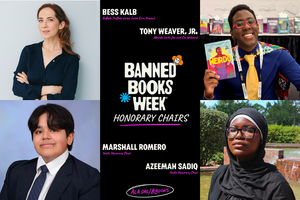
You probably don't need reminding that Banned Books Week 2026 gets going this Sunday, October 4. But what the hell, here's one last reminder that the ALA's Banned Books Week website hosts a wealth of resources to help libraries and library advocates get the word out. With the midterm elections upon us, this year's Banned Books Week is an important reminder of what's at stake.
A Worrying Sign from the 11th Circuit During Oral Arguments in Key Florida Book Banning Case
 Jim Saunders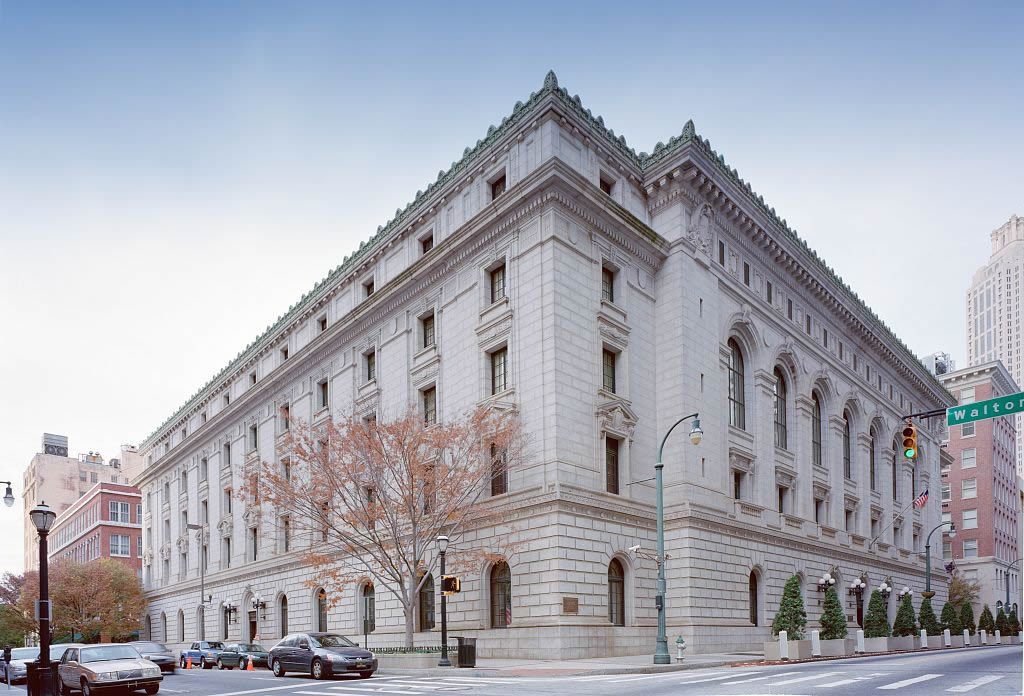
Is the freedom to read facing another potential setback from a U.S. court of appeals? State Affairs Florida reports that the 11th Circuit U.S. Court of Appeals in Atlanta appears poised to uphold a Florida judge's 2025 decision that there is no First Amendment right to receive information in a library—a decision that, if it stands, would give politicians virtually unchecked power to ban books at will from Florida school libraries.
The appeal comes in a 2023 lawsuit filed by authors Peter Parnell and Justin Richardson, whose bestselling 2005 picture book And Tango Makes Three, about two male penguins who raise a penguin chick, was removed from Escambia County school library shelves based on what the authors allege was unconstitutional, anti-LGBTQ+ “viewpoint discrimination.”
 Andrew Richard Albanese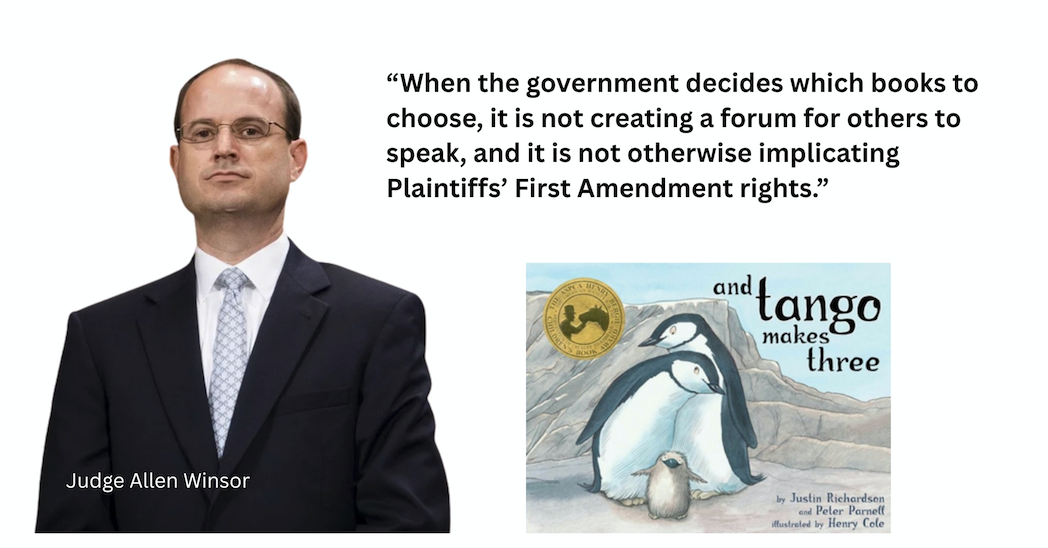
In a September 30, 2025 decision (on the eve of Banned Books Week 2025), federal judge Allen Winsor, a Trump appointee, held that "school library curation does not implicate any students’ or authors’ First Amendment rights," and thus, even if the school board "removed a book based on its viewpoint, the removal would not be unlawful." This week, one year later, the 11th Circuit appears poised to affirm that decision.
"During Tuesday’s hearing, Chief Judge William Pryor indicated he supported upholding the school board decision, describing the case as being about 'government speech' instead of 'private speech.' He said school officials have always decided what books will be on shelves," the outlet reports. "The government is deciding what books it wants to pay for, maintain and make available to the public,” Pryor said.
If the 11th Circuit issues such a ruling, it would be yet another devastating blow to the freedom to read from a U.S. appeals court, including a May 2025 Fifth Circuit ruling in Little v. Llano County, and two recent decisions by the Eighth Circuit: one allowing Iowa's S.F. 496 take effect, and another allowing Arkansas's Act 372 take effect.
The 11th Circuit is also considering another closely-watched book banning case from Florida, in which federal judge Carlos E. Mendoza held that the book banning provision of Florida State law H.B. 1069 was unconstitutional.
And, yes, I can work in a midterms message here, too: specifically, a reminder that elections have consequences. All four of the recent appeals court decisions attacking the freedom to read were written by Trump appointees.
After Appeals Court Reversal, Iowa Librarians Grapple with State's Book Banning Law
School Library Journal reports on how Iowa librarians are grappling with the sweeping book banning provisions of S.F. 496, after the Eighth Circuit recently allowed the book banning provisions of the controversial state law to take effect. The report comes (as Words & Money reported last week) as the ACLU of Iowa recently issued guidance to Iowa librarians and educators urging them not to widely ban books with LGBTQ+ content from schools, citing the appeals court's specific read on the law's applications.
"Beyond the sheer volume of removals, educator groups report that the law has fostered a climate of fear. Under S.F. 496, librarians and teachers can face formal disciplinary action and potential threats to their state licenses from the Iowa Board of Educational Examiners if they fail to comply," the article states. "Additionally, while high-profile literary classics frequently draw headlines, data from PEN America show that the vast majority of removed titles center on race, adolescent health, and LGBTQIA+ identities—stories that often reflect marginalized students."
Central Arkansas Library System Pledges to Defend Librarians if Charged Under State Book Banning Law
 Andrew Mobley
Local ABC affiliate KATV reports that the Central Arkansas Library System board has "voted to fund the legal defense of its employees if they are charged under a state law concerning obscene materials in libraries" after the Eighth Circuit U.S. Court of Appeals ruled in July that the state could enforce Act 372, a 2023 state law that makes librarians criminally liable for providing access to materials deemed "inappropriate" for minors.
"There is a considerable concern and anxiety on the part of library leaders and particularly the people in the front lines of the library that someone may somewhere get charged by a prosecutor," Nate Coulter, executive director of the Central Arkansas Library System, told reporters. "I don't think that's going to happen. Hope and pray it doesn't happen. But if it does, I need the employees to be confident that if you're going to work in the central library system, that the board and whoever takes my place will have your back."
Utah Bans Seven More Books Statewide
 Carmen Nesbitt
On the eve of Banned Books Week, The Salt Lake Tribune reports that Utah just banned seven more books from all public schools under its recently enacted state law, the most it has ever banned in one shot since the state’s "sensitive materials" law took effect. The additions bring the total number of books now prohibited in Utah public schools to 44. According to the Tribune, the newly banned titles include: House of Earth and Blood, by Sarah J. Maas; Perfect and Identical by Ellen Hopkins; Me and Earl and the Dying Girl by Jesse Andrews; Kingdom of the Cursed by Kerri Maniscalco; Storm and Fury by Jennifer Armentrout; and The Invisible Life of Addie LaRue by V.E. Schwab.
Authors Discuss Their Lawsuit Against Los Angeles Over Cancelled Library Appearance
 Jenan A. Matari and Nora Lester Murad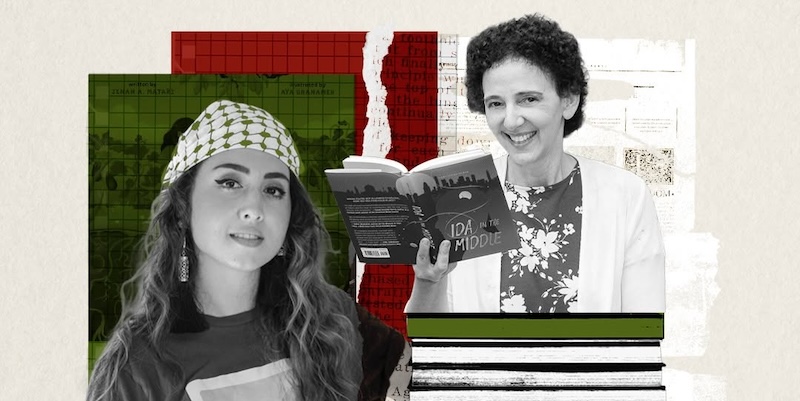
LitHub features a conversation between authors Jenan Matari and Nora Lester, "award-winning authors with children’s books featuring Palestinians," who have filed a lawsuit against the City of Los Angeles "after their invited author talk for teen patrons at Los Angeles Public Library was cancelled without explanation" in December 2025.
"I think all Palestinian authors and speakers have faced various levels of censorship," Matari said. "My cancellation from Watchung Booksellers in New Jersey was even covered by the New York Times, but I realize now that when the censorship comes from a public library, it’s really dangerous. We can’t even dream of a functioning democracy without public libraries that are strong enough to stand against racist political pressure, whether from without or within."
Seattle's 'Books Unbanned' Digital Program Tops One Million Checkouts
 KOMO News Staff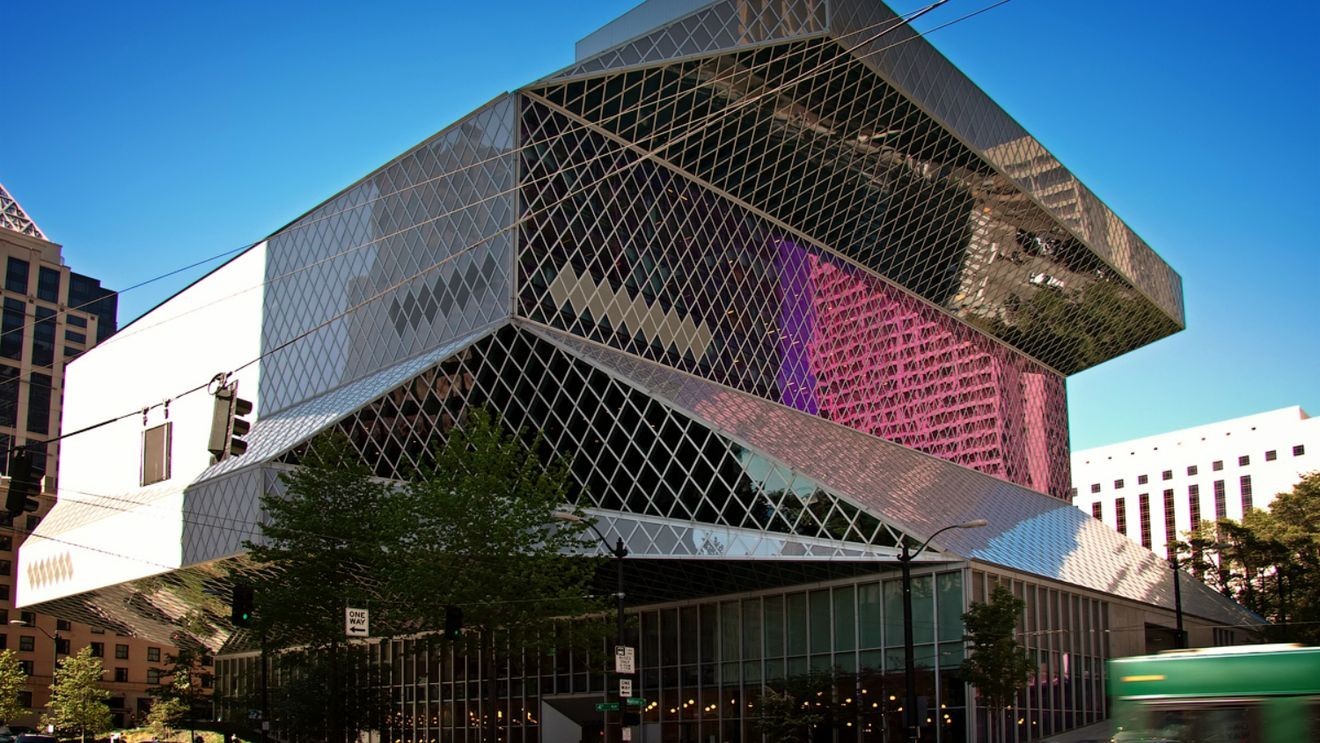
Local affiliate KOMO reports that the Seattle Public Library’s Books Unbanned program has passed a major milestone: more than 1 million ebook checkouts by teens and young adults. "The library said young people from all 50 states have checked out 1.1 million ebooks and e-audiobooks since the program launched in 2023," the report notes.
"I think about the kid I was, looking for a book that would tell me it was okay to be who I am," said Brian Lawrence, CEO of The Seattle Public Library Foundation. "That's exactly who this program is for. We're proud to fund a program that puts a book in the hands of a young person who needs it, no matter where they live or what their local library can offer.”
Books Unbanned began with the Brooklyn Public Library in 2022 and has since expanded to include several more libraries, including Boston Public Library, San Diego Public Library, LA County Library, and Long Beach Public Library. "The most sign-ups have come from Texas, California, and Florida, with Washington state ranking sixth. Utah, Idaho, and Alaska have the most sign-ups per capita, according to the library."
Free Webinar: What Are Reasonable Library Ebook Costs?
 Michael L. Blackwell
COSLA, Lyrasis, and ReadersFirst are hosting a free webinar on what are reasonable costs for library ebooks. The online event is set for October 13, 2026, from 1-2 p.m. ET, with an optional 30minutes afterwards for group discussion of “the affordability crisis” in the digital library market. Speakers include Amy Mikel, N.Y. State Ebook Working Group; Carmi Parker, Librarian, Whatcom County Library System; Lisa Radha Vohra, Director, Collections & Membership Services, Toronto Public Library; and Michael P. Santangelo, Director for Collection Management at BookOps. You can register here.
“Library conversations about what ebook costs should be have gone on since HarperCollins introduced a metered access model in 2011," reads an event description. “Should we begin with some comparison to consumer costs? Terms which we often already get from Indie publishers? To some equivalent with our print costs? Some model that factors many variables? Join a panel of library selectors and others who have studied this issue in-depth for a lively discussion of the vexing question: What is Reasonable?
'Many Borrowers of Ebooks Are Unaware of the Costs to Libraries'
 Bill O’Driscoll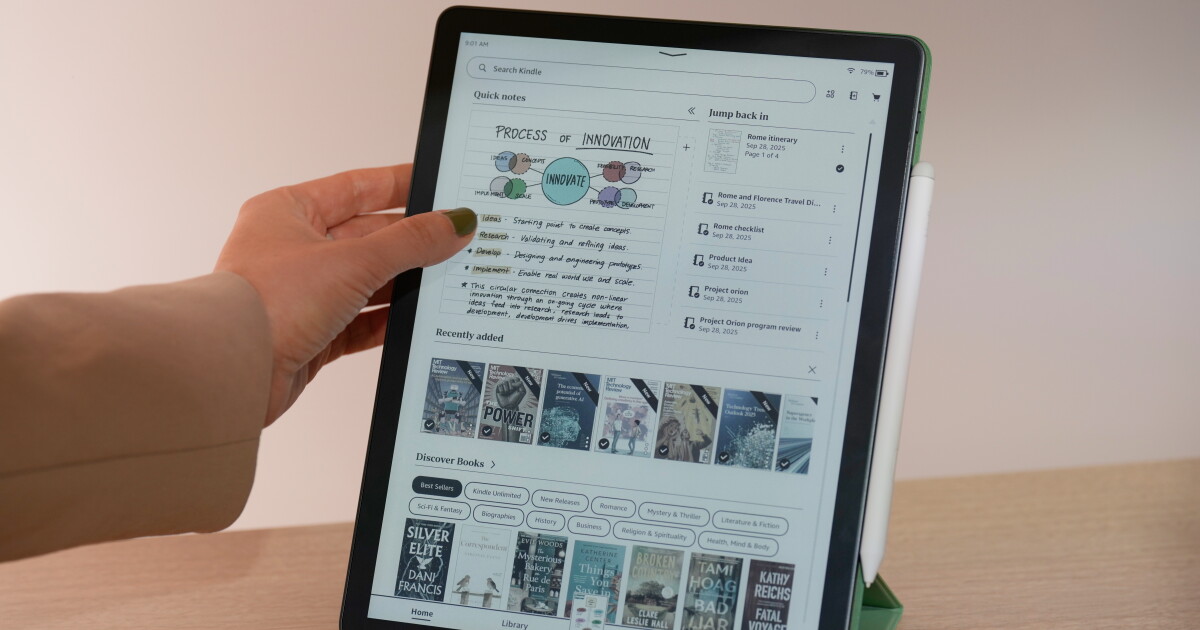
WESA has a good report on how the Carnegie Library of Pittsburgh is—like many libraries across the country—trying to cope with rising ebook costs. “E-books are more expensive for us to provide than print books and other materials that we offer,” director Andrew Medlar told reporters, pointing out that, of the 4.8 million checkouts from the Carnegie Library last year, “about 30% were e-books,” but that 30% accounted for "half the library’s collection expenses." Furthermore, he explained, "with e-books consuming so much of the collections budget, the library can’t acquire as many materials as it used to, or as wide a variety. That means even more of a focus than before on the most in-demand titles, like new bestsellers, and less on more niche items.”
"Many borrowers of e-books are unaware of the costs to libraries of their preferred format," the report notes, but Medlar told reporters he doesn’t want anyone "to feel guilty about using e-books,” a refrain often heard among librarians. But one library patron—an author and writing teacher—told reporters she did feel “a little guilty” when she learned what ebooks cost libraries, explaining that she started borrowing ebooks more during the pandemic, and now likes “having an ebook handy at all times keeps her from less productive scrolling.”
Trump Is Still Trying to Fire the Register of Copyrights
 Colin Kalmbacher
Law & Crime reports that The U.S. Department of Justice urged a federal appeals court this week to reverse its own September 2025 decision barring the Trump administration from interfering with the employment of Register of Copyrights Shira Perlmutter. As Words & Money previously reported in August, Perlmutter (who Trump has been trying to fire since May 2025) remains in her role. But in their 71-page appellate brief this week, DOJ lawyers argued that the appeals court decision saving Perlmutter's job "cannot be reconciled" with a recent Supreme Court decision, arguing that because the register exercises "executive power" it must be construed as part of the Executive Branch.
OpenAI Wants Judge to Strike Paper that Found AI Is Diluting the Market for Books
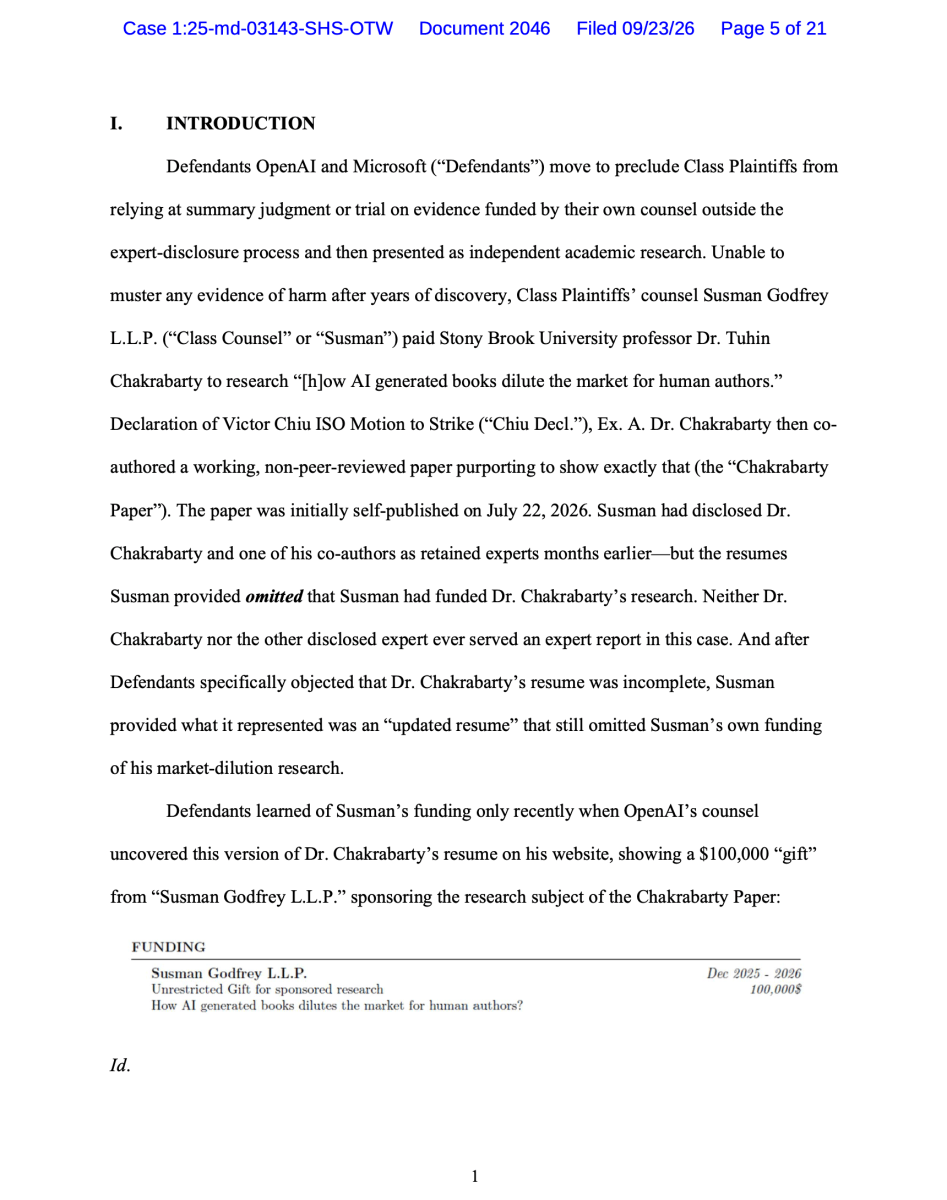
Chat GPT Is Eating the World reports that lawyers for OpenAI are apparently outraged that a team of researchers failed to disclose that the lawyers opposing OpenAI in a high-profile copyright infringement lawsuit apparently paid for a scholarly paper finding that AI books are displacing human-written works. As Words & Money reported in July, the paper, uploaded to the ArXiv preprint server, purports to show how AI is reshaping the market for books "through scale rather than quality,” a finding that “bears directly on the market-effect question at the center of the fair use defense to copyright infringement.” Attorneys for OpenAI now want the judge in the case to strike the paper over the failure to disclose payment.
How You Can Support Independent Media (Like Words & Money!)
 Kelly Jensen
Over at Book Riot, Kelly Jensen leads off her weekly censorship news column with a good look at the importance of independent media, and how you can support it (and, bonus, she reached out to Words & Money and quoted me in the piece). "Despite the challenges and the dwindling budgets we have as individuals, it is crucial to support independent media," she writes. "In the same way that public libraries and public schools squeeze multiple dollars out of a single penny, so, too, does independent media."
NYPL Releases 'Best New Comics' List for 2026
 Ricardo Serrano Denis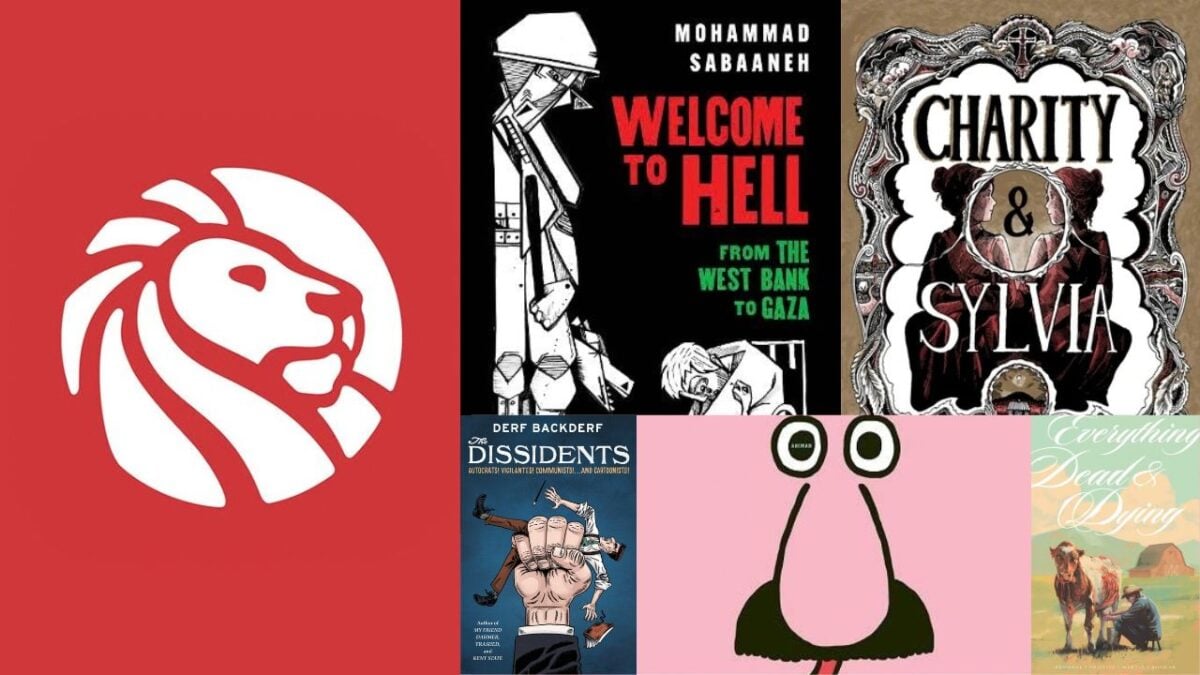
The Beat has a look at the New York Public Library's list of the best new comics of the year. "We spend a lot of time reminding people of the importance of bringing new readers into libraries, especially those in their younger years. Through them, we get a sense of what moves a community, what interests them or worries them or even makes them dream. It’s simple, libraries inform and reveal the cultural waylines of a people," the report opens. "One group of readers that doesn’t always get the same level of attention but is just as crucial to the readership conversation are librarians, the people who curate and purchase the books we can check out at our local book temples. Their ability to engage with the wide range of genres, formats, and styles largely dictates what’s available on shelves. They are among some of the most voracious readers in existence."
And Finally This Week...
The New York Times this week has an extensive piece giving voice to dozens of librarians, compiled at this year's ALA Annual conference in Chicago.
"These librarians want you to know that they don’t sit around reading all day. They want you to know about book bans and budget cuts, but also about career counseling and crafting groups and pop-up medical clinics," the piece begins. "They want you to worry, the way they worry, about artificial intelligence, looming legislation and harassment of their staff. But most of all, they want you to know what the library really is: a safe place for people to gather around books, ideas and one another."
Well-timed for Banned Books Week, and insightful stuff from these great librarians. Props to Elisabeth Egan and John Maher.