The Queue: Library News for the Week Ending November 6, 2026
Among the headlines this week: librarian Ellen Paul wins a seat in the Connecticut state legislature; EveryLibrary weighs in on a mixed election for libraries; Alabama is sued over its anti-trans library policy; and Urban Libraries Unite launches a press focused on 'library work.'

Amid a 'Blue Tsunami,' Librarian Ellen Paul Wins a Seat in the Connecticut State Legislature
There's a lot of potentially good news for libraries after the historic midterm elections, which have been cast by many political observers as a repudiation of the Trump administration. But we start this week with news about a librarian: Connecticut Library Consortium executive director Ellen Paul, who, running as a Democrat, won her race to represent Connecticut's 55th District in the state legislature, defeating GOP incumbent Steve Weir.
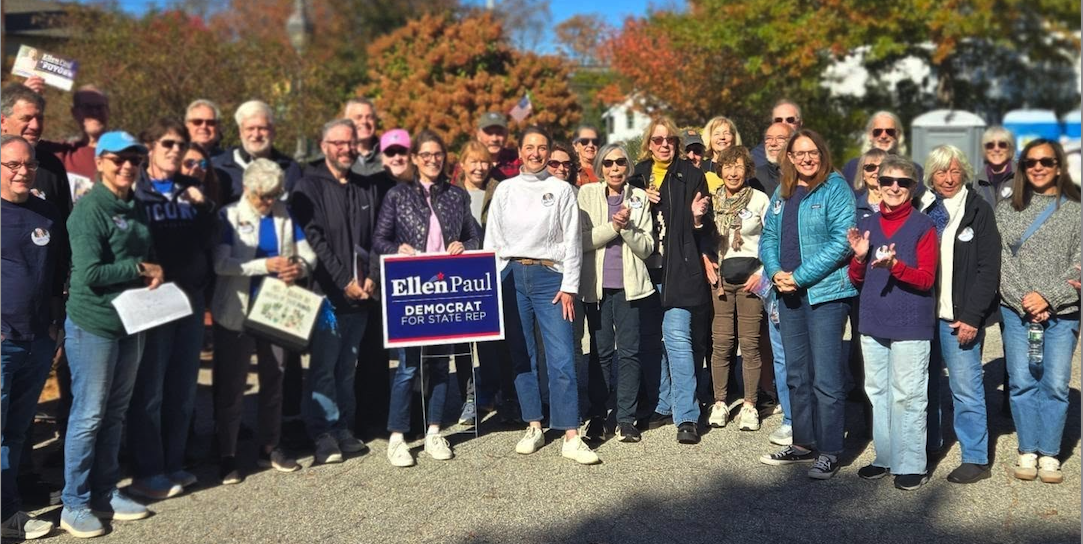
Yes, Connecticut is a blue state. But Paul's victory is nevertheless a massive flip: a Democrat hasn't represented the Connecticut 55th since 1981—a 45-year drought.
“I'm incredibly honored to have been elected to represent the people of the 55th District, and I'm proud to bring my experience as a librarian to the Connecticut General Assembly," Paul told Words & Money. "I didn't run for office to represent libraries, I ran to represent my community and the people who live here. But I believe the skills and values that have guided my career as a librarian—listening, serving the public, protecting intellectual freedom, and ensuring access to information, will serve me well as a legislator."
Across the nation, anger and weariness with the Trump agenda was seen as a major factor in voters handing Democrats historic gains. Another factor, however, has also been widely cited: candidate quality. And that certainly applies to Ellen Paul, who plans to remain as executive director of the CLC.
 Andrew Richard Albanese
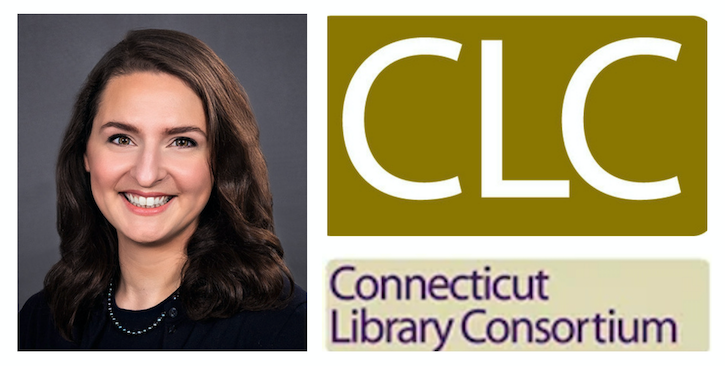
No question, Paul understands the legislative process, and knows how to lead. In her role at the Connecticut Library Consortium, she was a driving force behind Connecticut passing both a freedom to read bill and a landmark library ebook bill in 2025. What's especially notable is how she worked with stakeholders statewide, and, perhaps more importantly, how she worked with both sides of the aisle (which librarians necessarily do) to see these bills across the finish line. And her successful campaign was also inspiring: in true librarian fashion, it was pure shoe leather, getting out there and listening to voters at every opportunity.
So, we begin this post-election week report with a hearty congratulations to Ellen Paul. We wish her great success in her legislative career. And we hope her win will inspire more librarians to run for local office. When it comes to candidate quality, you can't do much better than library values.
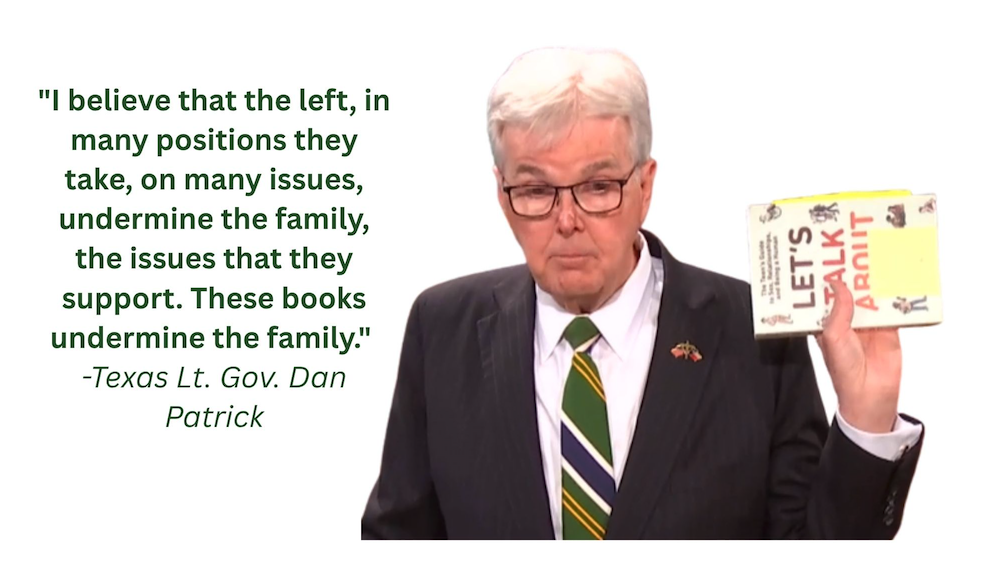
In Texas, Lt. Governor Dan Patrick Threatened Schools for Not Banning Enough Library Books... Voters Turfed Him Out

As reported by MultiState Elections, it was a generational blowout in Texas, with Democrats flipping a U.S. Senate seat, the governorship, flipping the state assembly to Democrat control for the first time in more than 20 years, flipping the state's Board of Education, and sweeping all six major state leadership positions. Several observers are also pointing out an especially welcome flip among those results: "State Rep. Vikki Goodwin (D) beat Lt. Gov. Dan Patrick (R) by about 6 points, unseating a lieutenant governor who had held the office since 2015."
As Words & Money reported, at an August press conference Dan Patrick stood with right wing activist Bonnie Wallace and warned school administrators across the state to remove every book on a list of some 2,200 titles prepared by Wallace, or face new legislation that could pave the way for state intervention, or possibly threaten a school's funding. Suffice it to say, Patrick's threat is now off the table.
 Andrew Richard Albanese
"The upcoming legislative session is going to be a lot better for us advocates. At least we know that no pro-censorship bills are going to get passed," said Leila Green Little, a freedom to read advocate and one of the plaintiffs in one of the first lawsuits filed in this current wave of book bans, Little v. Llano County. "With Republicans still in charge of the Senate, it will be more difficult to undo some of the damage they've inflicted over the last five years, but the wind is at our backs for the first time since this new McCarthyism began."
Notably, as MultiState Elections reports, "the Texas lieutenant governor plays a central role in which Senate bills advance," making Patrick's ouster especially important. And, of course, Governor-elect Gina Hinojosa is widely regarded as an ally, with the Texas Library Association in 2023 passing a resolution honoring Hinojosa's commitment to libraries and the freedom to read.
 Andrew Richard Albanese
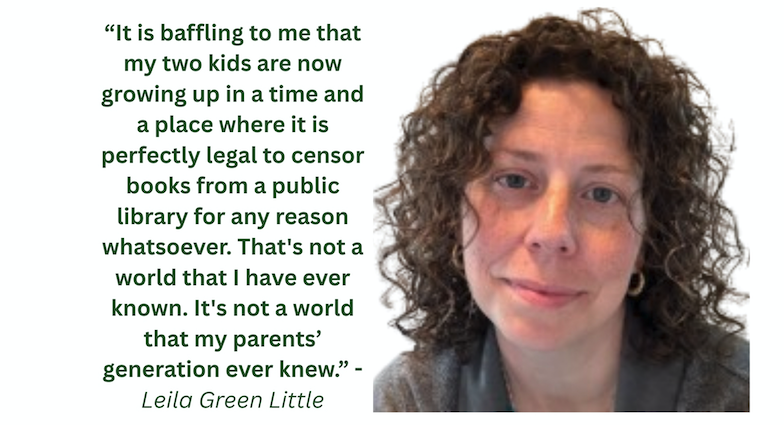
Meanwhile, as Words & Money previously reported, Green Little was also a candidate this year. Alas, she lost her (very) longshot bid to unseat 20-year incumbent Republican Jerry Don Moss (a central figure in the book-banning controversy that has roiled Llano County) from the Llano County Commissioners Court. Nevertheless, her campaign in the rural Texas community made an important statement.
"I was honored to have given voters an alternative to censorship and the status quo," an upbeat Green Little said. "The forces that have fractured Llano County have lost in the larger arena, and I look forward to working with our Democratic state legislators to undo some of this damage."
EveryLibrary's John Chrastka Recaps a Mixed Election Night for Libraries Nationwide
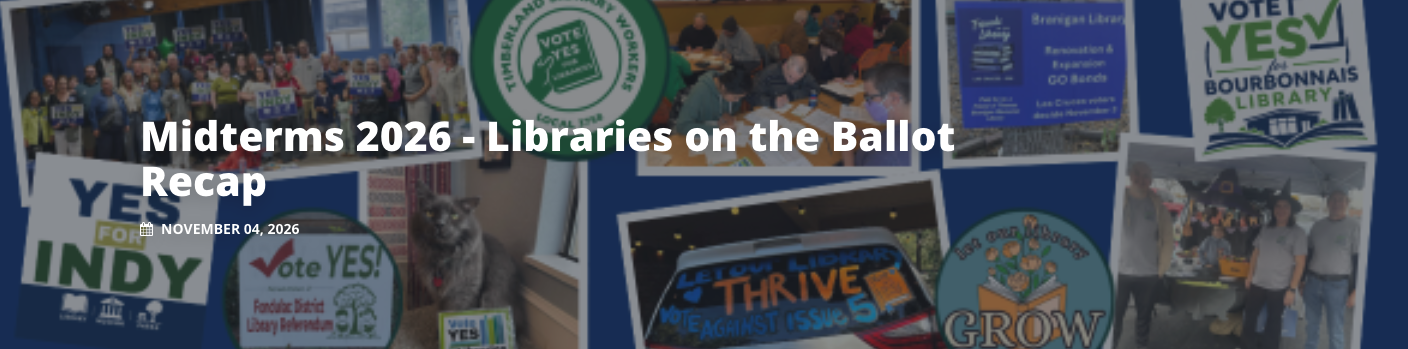
Over at EveryLibrary, Executive Director John Chrastka offers his illuminating recap of election night, noting that 10 of the 13 campaigns EveryLibrary worked on were successful (with all three losses coming in Illinois, where, Chrastka notes, libraries had a “very difficult” night). Among the most notable wins: Saline County, Arkansas, rejected a controversial defunding measure, and voters in the city of Bridgeton, N.J., declined to permanently close their public library by referendum. More broadly, EveryLibrary tracked 60 local library measures in 22 states, with 41 passing and 19 failing.
EveryLibrary also tracked five statewide “tax policy questions” including a very frightening outcome in Florida, where voters passed Amendment 3, a measure to slash property tax assessments across the state, despite polls showing the measure underwater. The passage will mean “hundreds of millions of dollars” cut from city and county budgets, including from libraries, Chrastka notes. “North Carolina passed its property tax amendment, which will cut county budgets, too,” he adds, while “Wyoming, Oklahoma, and Utah voters rejected their versions of tax caps, preserving stable property tax revenue for municipalities and their libraries.”
At the federal level, Chrastka notes that flipping the House and Senate highlights the need to block “bad legislation like H.R. 7661, the national book ban bill, from passing during the Lame Duck,” and to work with the new Congress on issues “like $1 per capita funding for IMLS, the future of the National Archives, and the stability of the Library of Congress.”
Also on that list, I’d add, is the future of E-rate, the popular and vital broadband subsidy which Brendan Carr’s FCC is attempting to limit, or potentially eliminate, an attack that Democrats have urged the Trump administration to abandon.
"We were especially encouraged to see voters reject two proposals to defund or permanently close their local libraries. But there are real warning signs in these results, too,” Chrastka told Words & Money. “Changes to property tax policy and state funding formulas are putting libraries under increasing financial pressure, even in communities that value and use them. And the freedom to read depends on more than fighting censorship. It depends on having well-funded, professionally staffed libraries with collections that reflect the needs and interests of their communities."
Alabama Is Sued over Its Anti-Trans Library Policy
 Ralph Chapoco
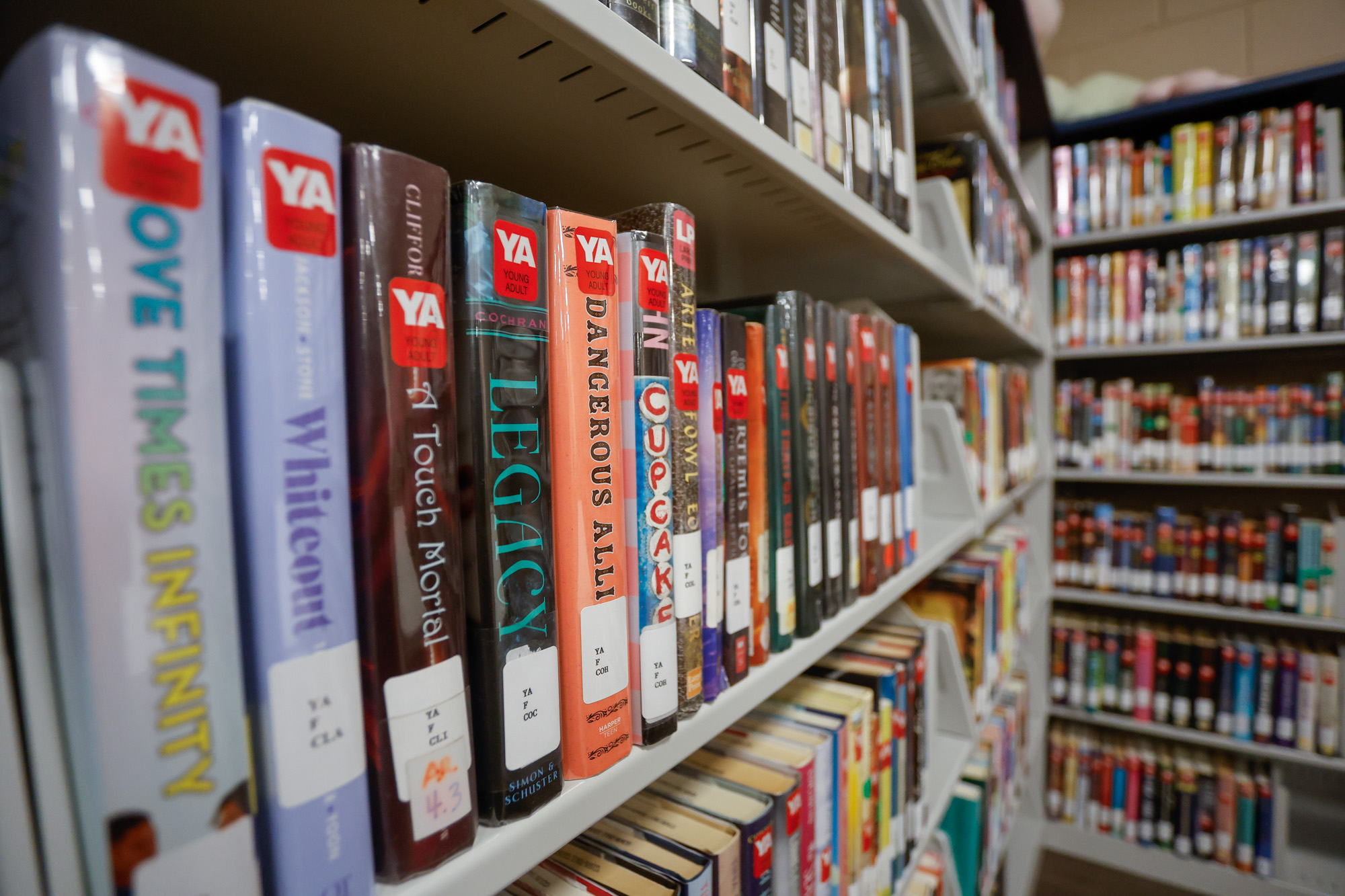
The Alabama Reflector reports that three authors and advocacy group Read Freely Alabama have filed a federal lawsuit against the Alabama Public Library Service over a controversial change to the administrative code that "prohibits library materials with transgender-related content" in the children’s sections of libraries statewide.
"Plaintiffs allege in the lawsuit that the rule is unconstitutional because it violates the First Amendment rights of specific groups, like members of Read Freely Alabama, a grass-roots organization whose members are unable to borrow library books with transgender-related content, and hinders the financial interests of authors who write books about transgender issues," the report states. "The lawsuit also states that the language in the administrative code is vague and overly broad," the article notes.
“The APLS Board’s own subjective judgments about what is appropriate should not determine what materials all Alabamians can access,” Angie Hayden, co-founder of Read Freely Alabama, said in a release. “That is not protecting children or parental rights. It is imposing government decisions on private family matters.”
“Readers, specifically young readers, who walk into places like libraries, look around and either not see themselves reflected if they identify as a transgender person, or they are just not going to see the mention of transgender people,” one of the plaintiffs, author Kit Rosewater, author of Buried Feelings, told reporters. “Culturally, we lose empathy, we lose compassion, and then we lose support and validation of a very small part of the population who has already been picked on from every possible angle.”
The controversial policy has garnered national headlines, with at least one library system, the Fairhope Public Library, denied state funding for refusing to move books as ordered by the APLS. Meanwhile, one of the policy's architects, APLS chair John Wahl, who is named in the suit, won his election this week, and will become the state's next Alabama Lieutenant Governor.
Urban Libraries Unite Launches a Press Dedicated to Library Work
 Leah Dudak

This is a great idea: Urban Libraries Unite is launching a press that will focus on library work. "If you want to write or talk about library work right now, your options are basically: hope you get accepted into ALA, write an academic article, or write a whole book. Both take TIME. Both usually expect you to sound like a scholar, cite the right people, and go through channels that were never built with library workers in mind. And with the decline of blogs (although there are still some amazing ones out there), even the informal, 'let me just tell you what happened at my branch' kind of writing doesn’t have much of a home anymore," writes Leah Dudak. "That leaves a real gap between what library workers actually live through, and what ends up in print as 'the literature' of our field."
 Andrew Albanese |
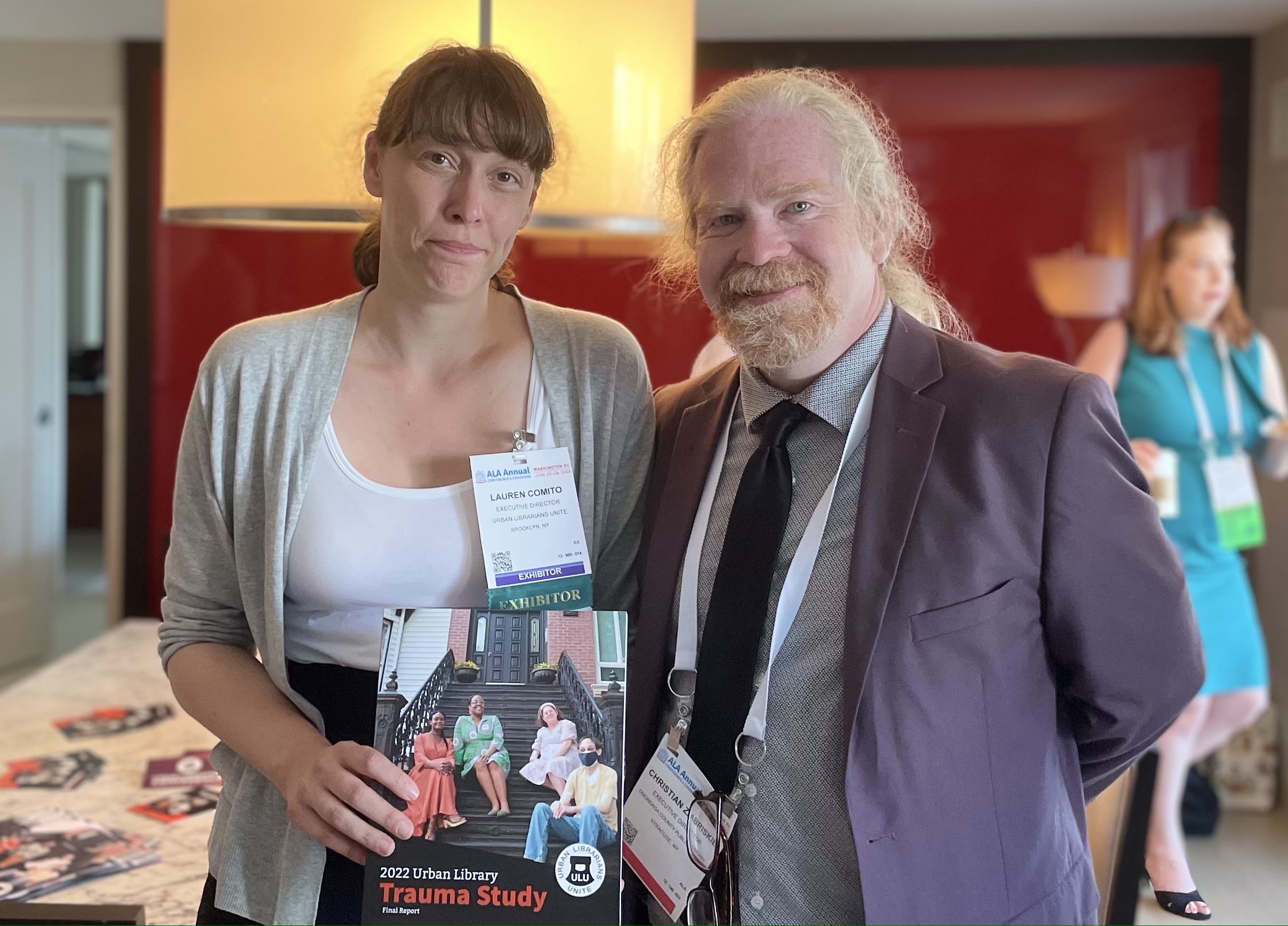
Urban Libraries Unite is very well-situated to step into that breach. In 2022, the group published the outstanding Urban Libraries Unite Trauma Study, which painted a vivid picture of the difficult working conditions facing many urban librarians and library workers, and offered a framework through which the library community could begin to address its needs.
"Because we’re independent, we can publish things others might not touch, on our own timeline, without asking permission first," Dudak writes. "We want work that’s honest and useful, not filtered down to something safe, adding that "if you’ve got something to say about the work, that’s enough of a reason to submit. We want to hear your authentic voice." A call for submissions is now open. More information, including how to submit your work, is available here.
New Hampshire Librarians Say They Are at an 'Impasse' Over New Contract
The New Hampshire Union Leader reports that employees at the Nashua Public Library have been working since July without a contract, and concerns are mounting. "The union declared an impasse over a contract with the trustees in June after an inability to reach an agreement on wages to match inflation, and address job security during next year’s library renovation," the report notes, adding that patrons at a public meeting this week "expressed how much the library’s employees mean to them and the roles they play in their daily lives."
Amid Inflation, Economic Struggles, Library Use Picks Up
Over my career I’ve read (and written) quite a few of these stories, and I'm a little surprised I haven't seen more headlines like this given the state of the economy: NPR this week reports that library use is on the rise as Americans face a tough economy. But in 2026, is the uptick also a sign of libraries doing a better job marketing their services, including ebooks and other events and non-book lending programs?
“It is something of a truism in the library world that, when economic conditions worsen, people use libraries more. Patrons and librarians across the U.S. tell NPR they're seeing that pan out now,” the report notes. “Data shared with NPR by several of the largest public library systems in the U.S. show recent upticks in cardholder membership, circulation, and event attendance. Librarians say part of that can be attributed to the rising cost of living—and the growing recognition that libraries' resources extend far beyond physical books.”
On the Banning of Banned Books Week
 Kelly Jensen

Over at Book Riot, Kelly Jensen leads off her weekly censorship news column with a fascinating look at what's happening with Banned Books Week.
"Sitting at the convergence of out-loud book bans and quiet censorship is the outright and implied ending of book displays, events, programs, and discussions of book censorship during the American Library Association’s annual Banned Books Week," Jensen reports. "Last fall, numerous library workers across the country reported on the banning of Banned Books Week in their institutions. When surveyed this year, responses were similar; however, fewer respondents indicated that Banned Books Week was suppressed in 2026. There were a couple–in one specific state, thanks to one specific law–but most of the responses talked about how the annual public awareness campaign disappeared from their libraries over the last few years as book bans rose astronomically across the country."
Queens Public Library System Faces Ransomware Attack
 Catalina Gonella
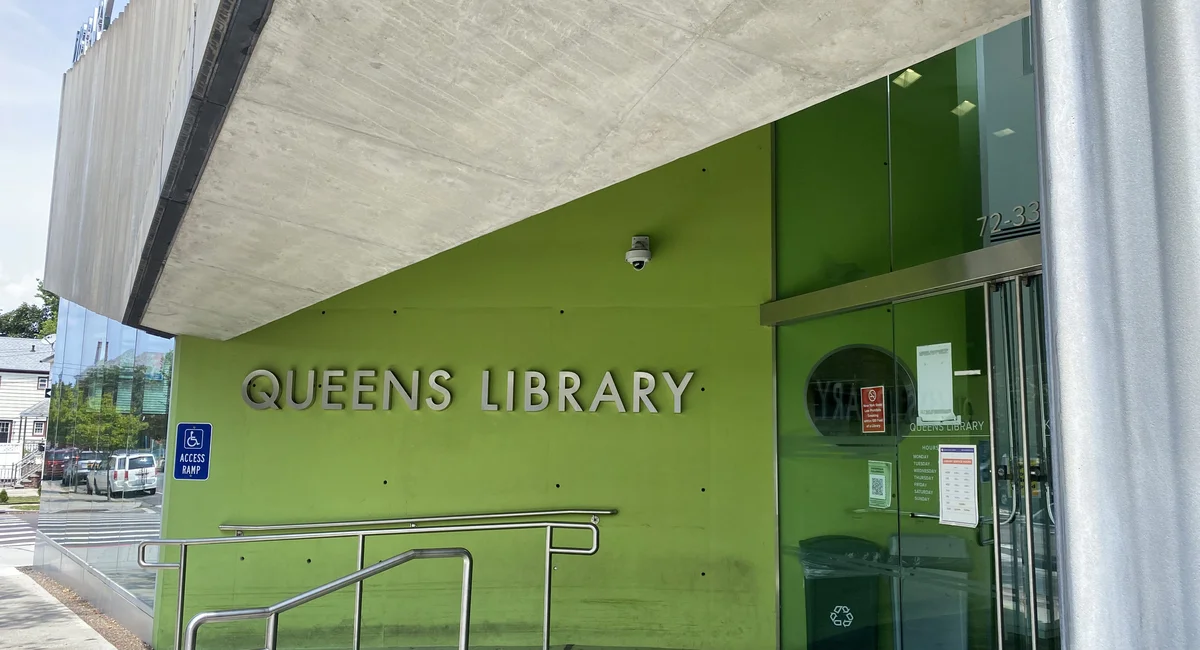
Gothamist has a report on the ransomware attack that has led to a system-wide outage for the Queens Public Library. "In posts on social media, the library said while all branches are open to the public, several services including the website, on-site computers, check out and return machines, and free Wi-Fi were unavailable. The library’s app and digital media services were also down," the report notes. “ Unfortunately, it's part of the world that we live in right now,” CEO Dennis Walcott told reporters, adding that the library was working closely with law enforcement including the NYPD and the FBI.
Where Everyone Stands as a Closely Watched AI Lawsuit Advances
 Nora Duffy

As Words & Money reported this week, interested parties filed more than 50 amicus briefs in a key consolidated copyright infringement lawsuit (combining more than a dozen actions) over AI: In Re Open AI, Inc, Copyright Infringement Litigation. I shared excerpts from 17 briefs across the spectrum, which offers a great look at what's at stake. But if you really want to geek out, this post by librarian, lawyer, and ReCreate Coalition Executive Director Brandon Butler is really insightful.
In the post, Butler breaks down all the briefs by their perspectives: for example, "fair use stalwarts" like the ReCreate partners (which includes libraries), and "wannabe licensors" like publishers, who, Butler suggests "make two slightly contradictory arguments: AI tools threaten to replace us, and we would be happy to authorize them to do so for an appropriate fee."
Library Scholar R. David Lankes Creates an AI 'Information Shock' Dashboard, Seeks Feedback
 rdlankes
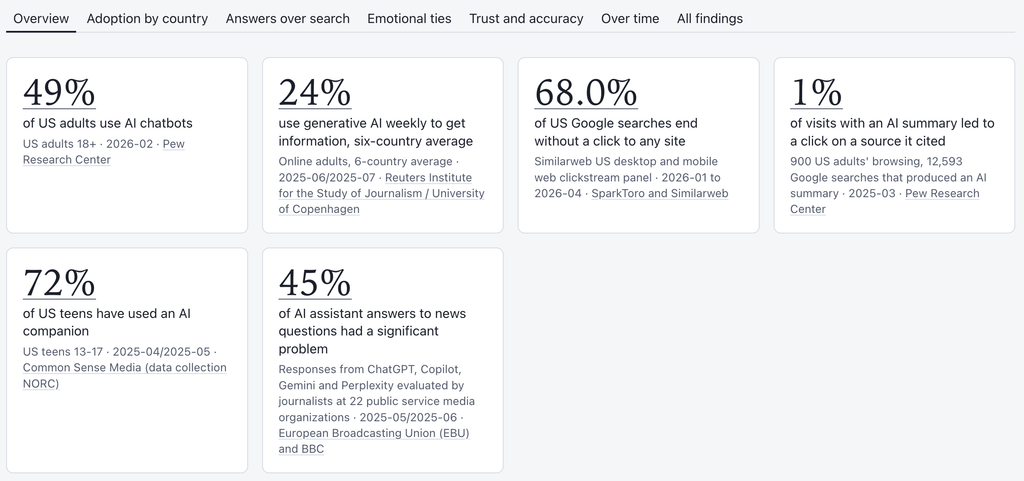
We've previously written about University of Texas library professor R. David Lankes's fascinating argument that generative AI is causing an unprecedented "information shock." Now, Lankes has created a "dashboard" on his personal website to test his argument. "For the past year I’ve argued that generative AI is causing an Information Shock. The problem is not the flood of synthetic documents. It’s that people now learn through exchanges with systems that leave no document behind. That’s a big claim, and big claims about AI are cheap. So I built something to test mine against the evidence," Lankes writes.
"The Information Shock Evidence dashboard is now live," he writes. "It gathers published surveys, telemetry studies, audits, and company announcements into one place, and every value links back to where it came from. The core of the shock shows up in a few lines on the overview page. 49% of American adults now use AI chatbots. Across six countries surveyed by the Reuters Institute, 24% use generative AI weekly to get information. And when Google shows an AI summary, people click a source cited in it on just 1% of visits. The answer, not the source, is what people carry away."
Lankes stresses that the dashboard is "a living record, not a finished report," and is seeking feedback. "What studies am I missing, especially from outside the United States and Europe? What evidence cuts against the argument? If the numbers stop supporting the claim, I want to know. Did you find a figure that’s wrong, outdated, or misread? Is it readable enough to put in front of a library board, a dean, or a skeptical colleague? Leave a comment or get in touch. Critical feedback is the most useful kind," he writes.
What's Taking So Long for a 'Deal' on Library Ebooks?
 ReciproCard
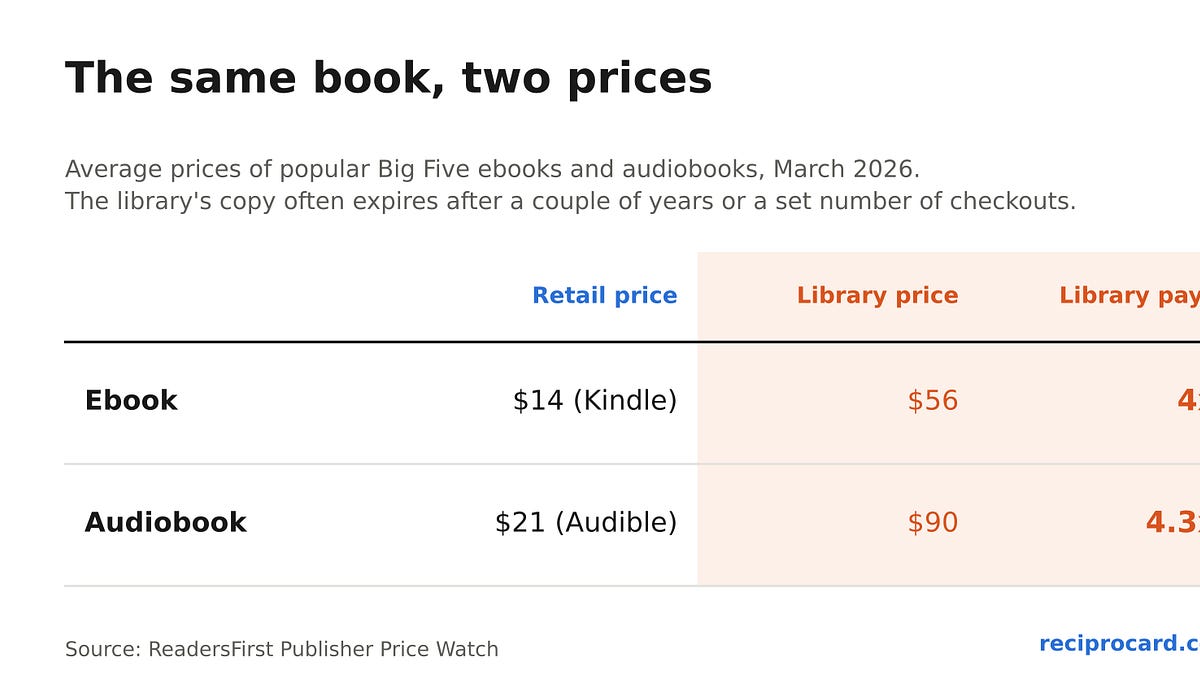
Tim Murphy, the founder of a service called ReciproCard, a service that helps library patrons track down additional digital library cards to borrow books via Libby (via reciprocal agreements or paid arrangements), got in touch this week to point me to a new post on his Substack on the state of digital library lending and state library ebook laws. It's worth a read. Of note, he reports that OverDrive's Steve Potash told him two major publishers are exploring a pilot that would ditch time-based licenses.
New 'Digital Shelf' Webinar to Focus on AI
 Alissa Bankowski
A reminder that the next Digital Shelf webinar, presented by the Palace Project in collaboration with Lyrasis, ReadersFirst, and COSLA, is set for Tuesday, November 10, and will focus on how artificial intelligence can reshape "library workflows, vendor products, and community needs," and the decisions facing library staff and leadership around "policy, procurement, programming, and collection management." Presenters will include Brooke Doyle, Program Manager at WebJunction (OCLC); Marshall Breeding, independent library technology consultant, author, and speaker; Mike McQueen, a school librarian and author of The AI Toolkit for Librarians; and Nick Tanzi, Assistant Director at the South Huntington Public Library and an internationally recognized library technology consultant. Registration is free and available here.
And Finally This Week...
Don't miss this year's Thinking Outside the Box | Year in Architecture 2026 feature from Library Journal.
"This year’s libraries—whether part of larger systems refreshing at scale or modest renovations in rural communities—are showcasing their ability to reimagine delivery mechanisms, collections, and experiences in spite of rising construction costs and limited funding opportunities," writes Emily Petty Puckett. "These libraries stretch their dollars and keep their design focused on creating immersive and imaginative experiences across all aspects of their projects."
In a week where libraries got a little hope at the ballot box, looking at some beautiful libraries is a great way to head into the weekend.